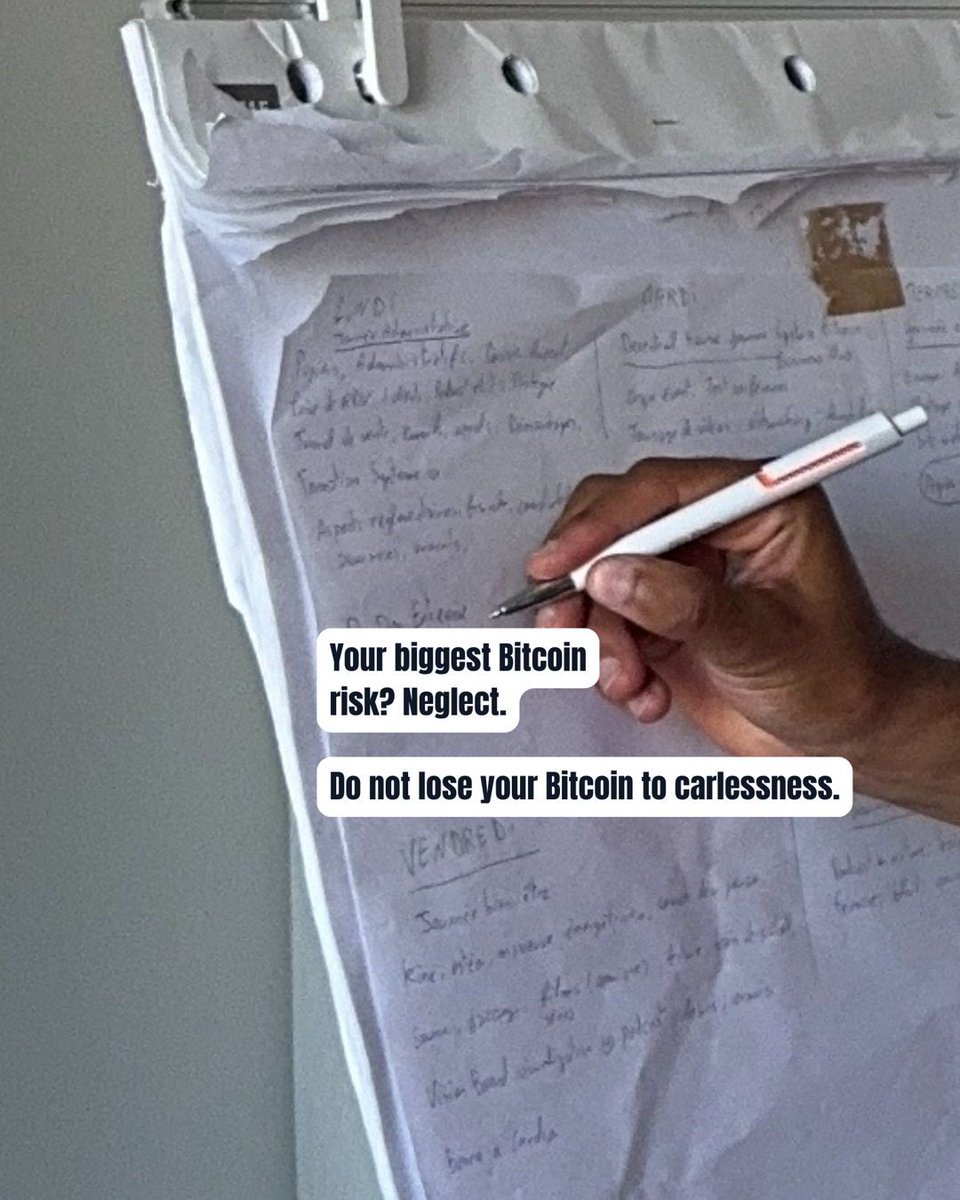
I've seen some buy Bitcoin in 10 seconds.
But to keep it safe for 10 years?
That’s where most FAIL.
→ People lose access to their coins.
→ Their exchange freezes withdrawals.
→ Or worse, their hardware wallet setup is never tested.
And suddenly, what was “long-term wealth” disappears in a moment.
Here are 3 signs you’re storing your Bitcoin wrong:
(and how to fix them)
-1-
❌ You keep your Bitcoin on an exchange.
If someone else holds your keys, you don’t own Bitcoin, but a promise.
Exchanges go bankrupt. Governments can seize assets.
And KYC leaks have already exposed millions of users.
✅ Fix it: Move your coins to self-custody.
Buy a reputable hardware wallet (Ledger, Trezor, Coldcard).
Generate a new wallet yourself, offline, and transfer your coins there.
-2-
❌ You never tested your recovery phrase.
I’ve met people who stored their 12 words on a screenshot or in iCloud.
One phone reset, one hack, one flood… and it’s gone.
✅ Fix it:
Write your seed on paper or metal, and store it in a safe offline location.
Then test your recovery on a spare wallet, make sure you can actually restore it.
You don’t want to learn this lesson during a crisis.
-3-
❌ You treat Bitcoin storage as “set it and forget it.”
Security isn’t static. Life changes - new devices, new threats, new updates.
Many people forget to check their setup for years… until it’s too late.
✅ Fix it:
Do a quarterly check.
→ Confirm you still have access to your hardware wallet.
→ Verify your backup location.
→ Review if your setup still fits your risk and lifestyle.
Honestly, the way you store Bitcoin matters more than how much you own.
Because if you lose it — you’re back to zero.
Bitcoin gives you freedom.
But with freedom comes full responsibility.
⸻
💬 Curious: How confident are you (really) in your Bitcoin setup right now?
Bitcoin is a political statement “designed to counter the flaws of the traditional financial system” who is broken by design.
Remember - the only scarce currency is Bitcoin - everything else is dilutive/inflationary.
Here’s a strategy that quietly outperforms 90% of traders: Dollar-Cost Averaging.
Let’s break it down:
Dollar-Cost Averaging means buying the same amount of Bitcoin on a regular schedule - weekly, monthly, whatever fits your cash flow.
It’s boring by design. And that’s why it works.
1. It removes timing risk
Most investors fail because they try to outsmart the market.
But even professional traders can’t consistently “buy low, sell high.”
DCA turns volatility into your ally: you buy more sats when the price is low, fewer when it’s high.
Over time, your average cost trends lower than if you tried lump-sum guesses.
2. It strengthens your psychology
Volatility is Bitcoin’s superpower and most people’s nightmare.
DCA flips the script.
Instead of panicking during corrections, you actually welcome them.
Why? Because dips mean you’re stacking more Bitcoin at cheaper prices.
3. It builds discipline automatically
The truth: investing is 80% behavior, 20% strategy.
Most people spend first and maybe invest what’s left.
DCA inverts that. By automating buys, you “pay yourself first” before expenses.
It’s not about willpower anymore. The system does the heavy lifting.
4. Why DCA is perfect for Bitcoin
Bitcoin is scarce (21M), volatile, and still early in global adoption.
That combination creates massive asymmetry: short-term chaos, long-term explosive growth.
DCA makes sure you ride every cycle without betting your emotions - or your future - on a single entry point.
Bonus: you can automate it in Switzerland (or anywhere)
With services like BullBitcoin, you can connect your bank account and schedule recurring purchases.
One setup. Infinite discipline.
⸻
Hear me out:
This strategy isn’t about being flashy.
It’s about results.
In Bitcoin, the market will always test you.
But your emotions will test you harder.
And DCA is how you stay in the game long enough to win.
It feels safe to do what everyone else is doing.
But safety doesn’t build freedom: Conviction does.
Most people “play it safe” with their money by:
→ Leaving it in the bank
→ Following traditional financial advice
→ Copying what everyone else around them is doing
And yet, year after year, they feel poorer.
Mainly because the system they trust is quietly draining their wealth through inflation and hidden risks.
Here’s the paradox:
The crowd’s definition of “safety” is actually the biggest risk of all.
True safety doesn’t come from blending in.
It comes from taking responsibility.
From understanding where your money leaks away.
From building conviction in assets that preserve your time and energy over the long term.
That’s why Bitcoin isn’t just “another option” in the playbook.
It’s a shift in mindset.
From outsourcing trust → to owning your future.
👉 The world won’t reward you for doing what feels safe.
It rewards those who choose conviction over comfort.
🌍 On my recent business trip to Berlin, Germany, I had the pleasure of spending time with a client and friend who built her own event agency.
With more than 20 years of experience as a performer, Rachel knows this industry inside out. Today, she channels all that expertise, compassion, and love into supporting the artists she now works with, ensuring they can shine on stage with the same passion she once brought as a performer herself (and still does when she wants by the way) 😉
During our conversation, I asked her a question that I believe everyone should reflect on:
💭 If you received a lot of money right now, would you still choose to do what you are currently doing ?
That’s the real measure of alignment.
Because when the answer is yes, you know you’re not just working — you’re living your purpose.
🔥 Money amplifies. Passion sustains.
Money is only yours… until someone else decides what you can do with it. 🥶
Try withdrawing €20,000 in cash from your bank today.
You’ll get interrogated,
maybe even denied.
Try crossing a border with more than $10,000 in cash.
It’s illegal.
Try sending money to the “wrong” country.
Your transfer gets blocked.
That’s the hidden truth of fiat money:
You don’t really own it. You’re just renting access under conditions set by someone else.
Bitcoin flips this on its head:
→ No approvals.
→ No borders.
→ No frozen accounts.
If you hold your own keys, your wealth is 100% yours.
You can move it at the speed of light, across the world, without asking anyone for permission.
That’s not just financial freedom.
That’s sovereignty.
And it’s why, for me, Bitcoin isn’t just an “investment.”
It’s the foundation of true independence in the 21st century.
💬 Be honest: have you ever felt like your money wasn’t really yours?
Funny how fast we adapt to new realities. What once felt like a dream becomes normal, and we forget to be grateful.
Back in university, then as an employee, I hated the feeling of having to follow a strict schedule, to always answer to someone else.
Entrepreneurship isn’t easy — but damn, the freedom of not having a boss feels priceless.
Keep pushing your business, your dream, whatever your path is. One day you’ll wake up living what you used to pray for.
I just completed one of the most intense and transformative trainings I’ve ever experienced: Train The Trainer Certification with Success Resources.
4 days.
14 hours per day.
500 entrepreneurs in one room.
💡 What I walked away with:
- Public speaking skills sharpened at a whole new level
- Leadership insights that translate into both business and life
- Sales mastery rooted in authenticity
- And (just as important) an incredible network of people committed to growth
This wasn’t just about learning how to “speak on stage.”
It was about stepping up to inspire, influence, and create impact at scale.
Now, every time I speak, whether it’s about Bitcoin, finance, or entrepreneurship... I’ll be bringing these tools with me.
Because if your message can change lives, you have the duty to deliver it in the best way possible.
🔥 Berlin was just the beginning.
“But… Bitcoin is a risky speculative asset.”
That’s what critics keep repeating.
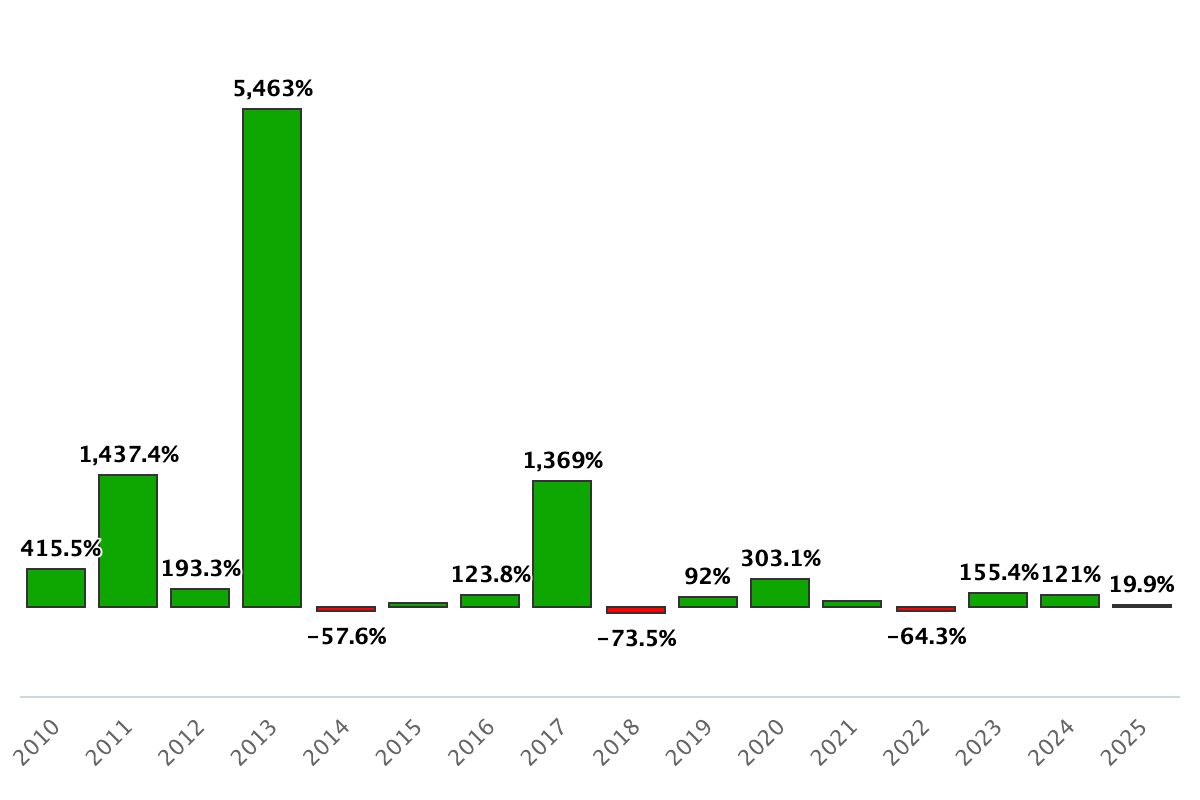
Now take a look at its track record since 2010:
❌ 3 years with negative returns
✅ 11 years with positive returns
The losses? Brutal: -57%, -73%, -64%.
The gains? Life-changing: +1,437%, +5,463%, +1,369%, +303%.
This is what asymmetric upside looks like.
In traditional wealth management, 7% per year is considered “solid.”
Bitcoin’s historical average? Over 100% per year since inception.
So what’s really “risky”?
→ Holding Bitcoin, which is volatile but has compounded at triple digits for 15 years…
→ Or holding fiat and bonds, which guarantee a steady erosion of your purchasing power every single year?
Bitcoin doesn’t eliminate risk.
It reframes it.
Because in today’s world, the riskiest move is pretending the old system will protect you.
The real point of money isn’t more stuff. It’s more time.
Most people trade decades for a salary…
then use that salary to finance a lifestyle that traps them into trading even more decades.
I've come to think that it is the nature of the money that has that effect.
That if you change your money, your could change your behavior.
This is why Bitcoin flips that script,
and how it buys back your time:
1. It stops the silent leak.
Fiat melts. Your effort from last year buys less this year. With a fixed supply, Bitcoin lets a portion of your work hold its value across time.
2. It lowers your time preference.
When your savings strengthen instead of weaken, you naturally delay gratification.
Fewer impulse purchases → more intentional living → compounding peace of mind.
3. It automates good decisions.
DCA (weekly/monthly) turns discipline into a system. One decision, repeated.
Less screen-watching, less stress, more life.
4. It removes middlemen from your schedule.
Self-custody (Taking custody of your own Bitcoin) means no approvals, no banking hours, no “please wait.”
Fewer frictions = fewer hours lost to bureaucracy.
5. It gives you portability & optionality.
Your savings become weightless. You can live where you’re treated best, renegotiate how much you work, and design days around family, health, and purpose...NOT around INVOICES.
A different wealth equation 👇
• Fiat mindset: earn → spend → chase more → feel behind
• Bitcoin mindset: earn → keep → plan → buy back time
Over a few quiet years, that shift rewires everything:
• You say no more often - to projects, purchases, and people that don’t align.
• You say yes to the hours that matter - dinners you don’t rush, workouts you don’t skip, reading you don’t postpone.
• You stop playing the “rich rat race” - big salary, bigger mortgage, no margin for life.
Money is stored time.
If your money decays, your time decays with it.
If your money strengthens, your time expands.
I’m not promising magic. I’m inviting realism:
1. Start small. Automate. Self-custody.
2. Let patience do what hustle alone can’t.
3. Use Bitcoin to protect the hours you’ll wish you had back.
The biggest lie in traditional finance is the illusion of safety they're selling you.
Mainly these “safe” products to "keep your money safe".
Bonds. Life insurance. “Conservative” pension funds.
They sell you on words like guaranteed, secure, low-risk.
But here’s what’s really happening:
→ Your bonds yield 2–3%.
→ Real inflation eats 10–20% a year.
→ Your “safe” return is actually a guaranteed loss.
It’s financial theater.
The illusion of safety.
Meanwhile, the wealthy - the ones designing these products - are not buying them.
They’re focused on scarce assets.
They’re buying Gold.
They’re buying Silver.
They’re buying Bitcoin.
Because unlike fiat products:
→ Bitcoin doesn’t rely on promises.
→ Bitcoin can’t be printed away.
→ Bitcoin can’t be devalued by politicians or central banks.
It’s not just about chasing upside.
It’s about escaping the certainty of loss built into the fiat system.
So ask yourself:
👉 Do you want “safe” products that guarantee you’ll get poorer?
Or do you want an asset that protects your purchasing power long-term?
This is the hardest lesson I had to learn as an entrepreneur:
(I'm so glad I did.)
🧡 You’ll often feel completely alone in your journey.
And that's ok. Not just ok, It's great.
Not everyone will understand why you’re building a business.
Why you’re taking risks.
Why you’ve chosen a path that doesn’t seem “safe.”
And if it’s around Bitcoin? Even harder.
Your family might think you’ve gone crazy.
Your friends may never show up to your events.
Even other Bitcoiners will criticize you
👉 “This sounds too simple”
👉 “You sound too salesy”
👉 “You're too early”
I expected support.
Especially from some people close to me.
But it didn’t come.
And it hurt.
That’s when I realized something important:
You can’t build for validation.
You can’t build for applause.
You build because the mission matters.
Because the work itself is worth it.
And when you keep showing up,
when you stay consistent long enough
the right people do find you.
The ones who actually want to learn, grow, and change.
That’s who I show up for today.
Every post.
Every event.
Every session.
Because if you’re waiting for everyone to cheer you on before you start?
You’ll never start.
So, this is what I'll leave you with:
Keep your focus, Keep Building, Keep growing,
Believe in yourself, in your vision,
Hold on to it and never let go.
You can do it, champ.
Your Bitcoin coach,
Abel Rabérin.
🧡
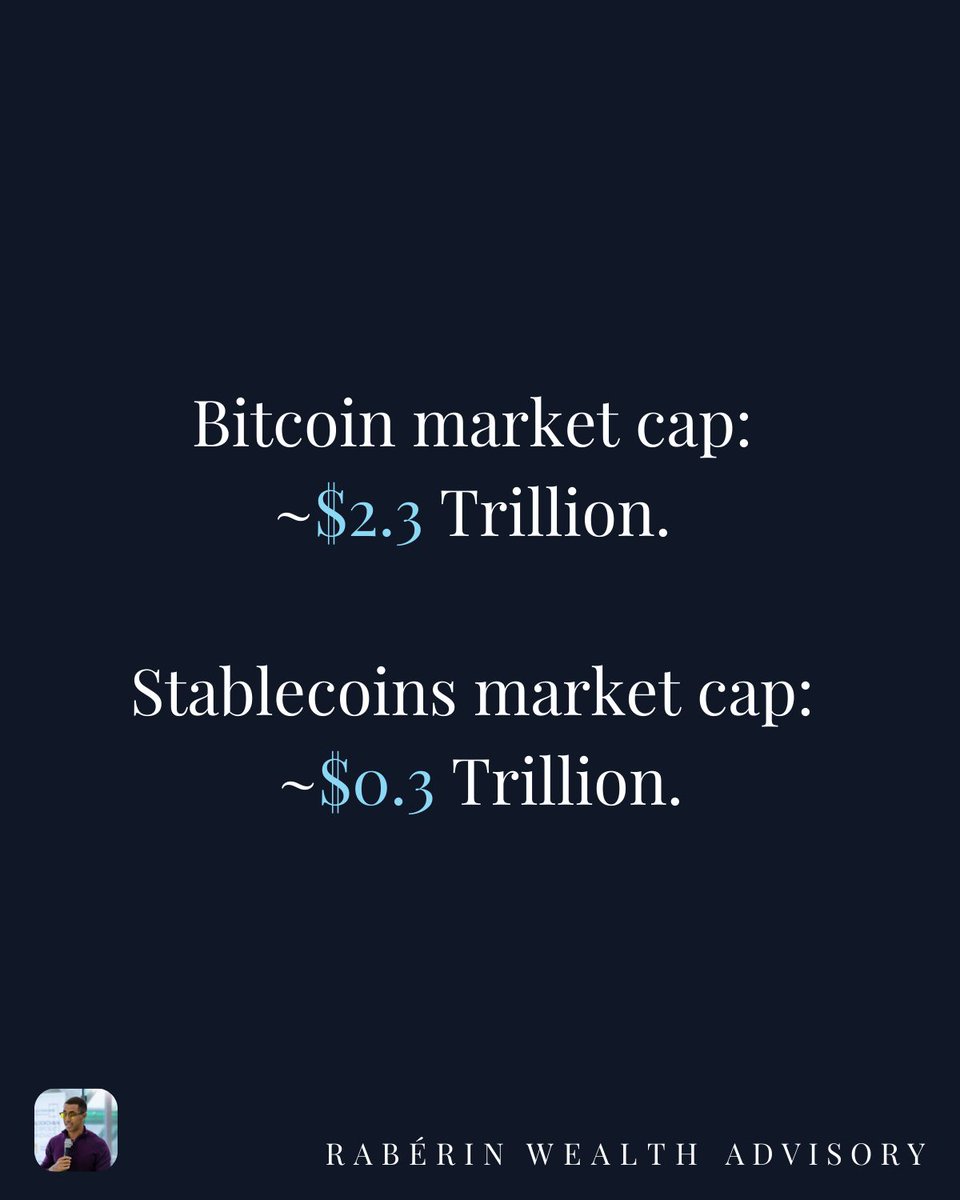
Look, stablecoins are not “stable.”
→ They’re ticking time bombs. There, I said it.
I still remember the Terra/Luna collapse.
Billions wiped out overnight.
Ordinary people ruined.
And yet… the same risky behavior continues today.
This is the way I see things:
👉 Stablecoins like USDT or USDC are just fiat extensions.
Every “digital dollar” minted contributes to the same debt-slavery system that funds war, inflation, and political favoritism.
👉 They’re unaudited, opaque, and printable.
You trust someone’s promise... not math, not code, not certainty.
👉 People gamble with them in DeFi or exchanges, chasing 20% “yields” built on circular loans and leverage…
When they could simply hold Bitcoin in self-custody and average +70% a year over the last decade.
The difference?
Stablecoins = dependency, hidden risks, and fragility.
Bitcoin = independence, transparency, and resilience.
If you’re serious about wealth preservation, you don’t build on sand.
You build on bedrock.
That bedrock is Bitcoin.
💬 What’s your take: stablecoins = bridge to Bitcoin, or a dangerous trap?
1. You trade your time for money.
2. Then spend that money,
3. Save some.
4. Invest a bit.
5. Just to keep running in circles... for decades.
Salary.
Family.
Expenses.
Rent.
Stress.
→ But little to no freedom.
I think I'm extremely lucky to have found a loophole in the system that flips that script.
It's actually to get out of the system.
With #Bitcoin.
Because it isn’t just about wealth.
It’s about buying back your most precious asset: time.
⚡ A way to step off the inflation treadmill.
⚡ A system where patience is rewarded, not punished.
⚡ A savings vehicle that actually compounds your purchasing power.
When your money gets stronger instead of weaker, the grind loses its grip.
You can work less.
You can focus on your family.
You can pursue growth, meaning, even spirituality.
Bitcoin doesn’t just give you financial security.
IT GIVES YOU THE CHOICE TO LIVE LIFE ON YOUR TERMS.
👉 That’s why I call it the ultimate tool for freedom.
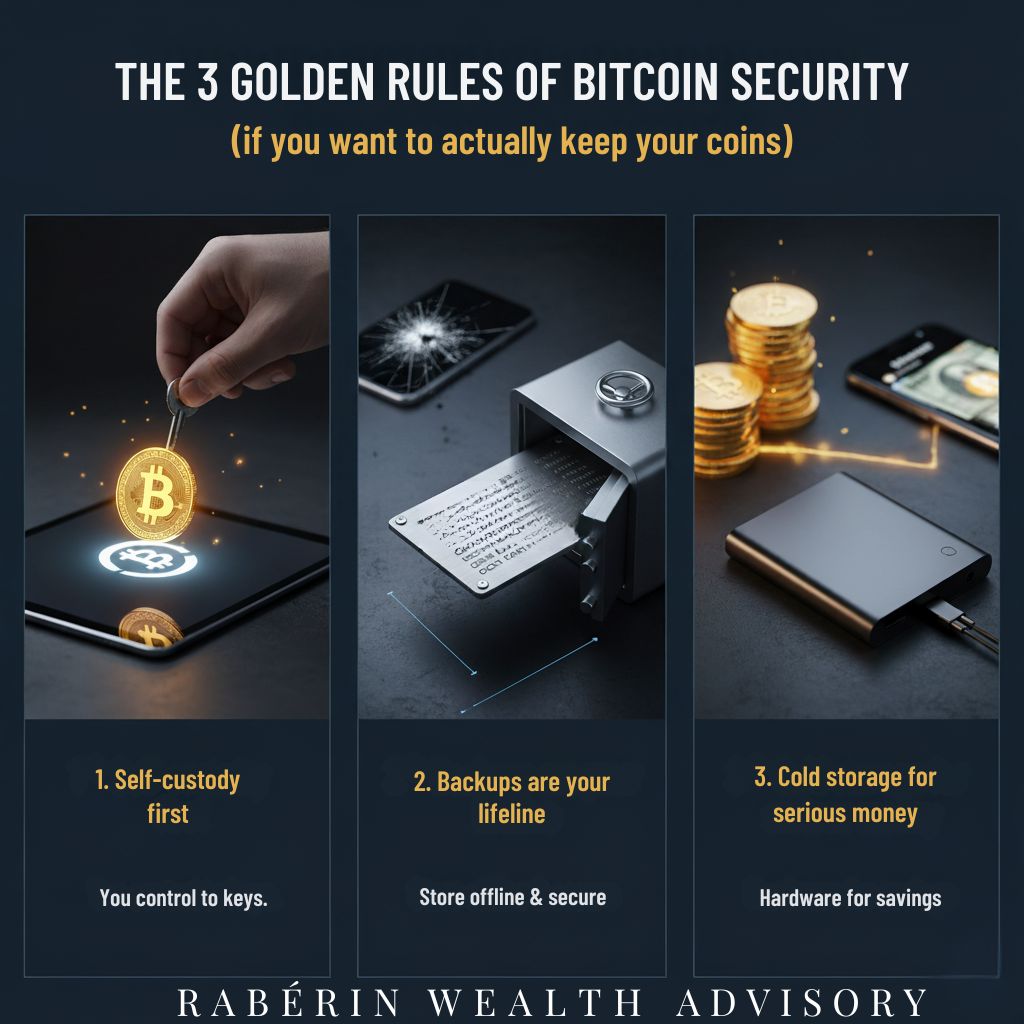
The 3 Golden Rules of Bitcoin Security
(if you want to actually keep your coins).
Bitcoin security is not about using the “right wallet.”
Security is a mindset before it’s a tool.
Here are 3 basic ideas that would eliminate 95% of the risks a bitcoin holder could encounter:
1️⃣ Self-custody first
If you don’t control the keys, you don’t control the coins.
→ Use exchanges only as entry/exit ramps, never as storage.
→ Transfer to a wallet where you own the private keys.
2️⃣ Backups are your lifeline
Your recovery phrase is your Bitcoin.
→ Store it offline, ideally on metal, in at least two separate, secure locations.
→ Never share it. Never take a photo. Never put it in the cloud.
→ Test a recovery once, so you know your backup actually works.
3️⃣ Cold storage for serious money
Think of it like cash: you don’t keep life savings in your pocket.
→ Daily spending? Use a mobile wallet.
→ Long-term savings? Use a hardware wallet, set up offline, disconnected from the internet.
Follow these 3 steps, and you eliminate 95% of the risks I see beginners fall into.
Break them, and you’re gambling with your future.
👉 If you want the deeper playbook (and how to avoid 3 common mistakes), I’ve broken it all down in a free training - link in the comments.
Nothing represents true wealth management better than Bitcoin.
Let me explain:
👉 The essence of wealth management is simple:
1. Protect a family’s fortune
2. Pass it on to the next generation
And Bitcoin has those qualities built into its DNA.
For 16 years, no asset has outperformed it.
Bitcoin has averaged +70% per year.
Compare that to traditional wealth products:
→ 5–10% per year is considered “great” and even that comes with risk.
But beyond performance, Bitcoin allows you to protect AND transmit wealth outside the traditional system.
That means you can pass it on to your children, your heirs, even across multiple generations - without excessive losses, middlemen, or political interference.
And in today’s world of rising geopolitical tension, having an asset that sits outside the system is not just a nice-to-have.
It’s essential.
It's survival.
It's the best Plan B you can ever design.
That’s why, in my eyes, Bitcoin isn’t just another investment.
It’s the cornerstone of modern wealth management.
💬 I go in detail over this and more topics around Bitcoin, wealth management and my story in this interview I recently did. Check the links in the comments!
The money you use every day isn’t neutral → It’s a tool programming your behavior without you noticing.
That's the most important lesson Austrian Economics thought me about money:
👉 The kind of money you use shapes the kind of world you live in.
Fiat money - with infinite supply and central control - creates short-term thinking.
It rewards debt, speculation, and political favoritism.
It punishes saving, patience, and responsibility.
That’s why we see:
→ Governments drowning in debt
→ Asset bubbles fueled by printed money
→ Ordinary people working harder, yet feeling poorer
Now contrast that with Bitcoin:
↳ Fixed supply: no hidden tax through inflation
↳ Decentralized: no ruler deciding who gets bailed out
↳ Hard to seize: finally, true property rights in digital form
Sound abstract? Let me make it simple:
With fiat, your time and effort leak away quietly every year.
With Bitcoin, you preserve it.
Prior to Bitcoin, you didn't have a choice.
Now you do.
Upgrade the money you use.
💬 Be honest: do you still see Bitcoin as “just an investment,” or are you starting to realize it’s a monetary revolution?
Image from "White Board Crypto"
As I meet more and more entrepreneurs and wealthy individuals in my line of work, there’s one realization that hit me hard:
They’re normal.
Not superhuman.
Not magically more intelligent.
Not born with endless opportunities.
The only difference?
They made a choice.
A choice to raise their standards.
A choice to stop settling for mediocrity.
A choice to keep moving forward, even without having all the answers.
The more I saw this, the more a weight lifted off my shoulders.
Because success in business (and life) isn’t about being chosen, or having rare gifts.
It’s about mindset:
→ Refusing to play small.
→ Turning obstacles into lessons.
→ Building yourself constantly (your skills, health, relationships, and vision.)
Their edge isn’t that they have more.
It’s that they’ve committed to becoming more.
💬 Have you committed to a life of progress? If yes, how? If not, give me your honest and best reason.
La réussite financière et entrepreneuriale ne repose pas sur un don réservé à quelques élus.
Ceux qui bâtissent de grandes fortunes ou des entreprises solides n’ont pas de facultés surnaturelles : ils cultivent simplement un état d’esprit différent. Ils refusent la médiocrité, transforment chaque obstacle en apprentissage et nourrissent une soif constante de progression — dans les affaires, mais aussi dans leur santé, leurs relations et leur vision du monde.
Leur avantage, ce n’est pas d’avoir plus, mais de vouloir devenir plus.