This is the first time in the history of India that so many mainstream actors and celebrities are talking about caste-based reservation and its demerits.
What changed?
Just some time back, nobody even dared to talk about it.
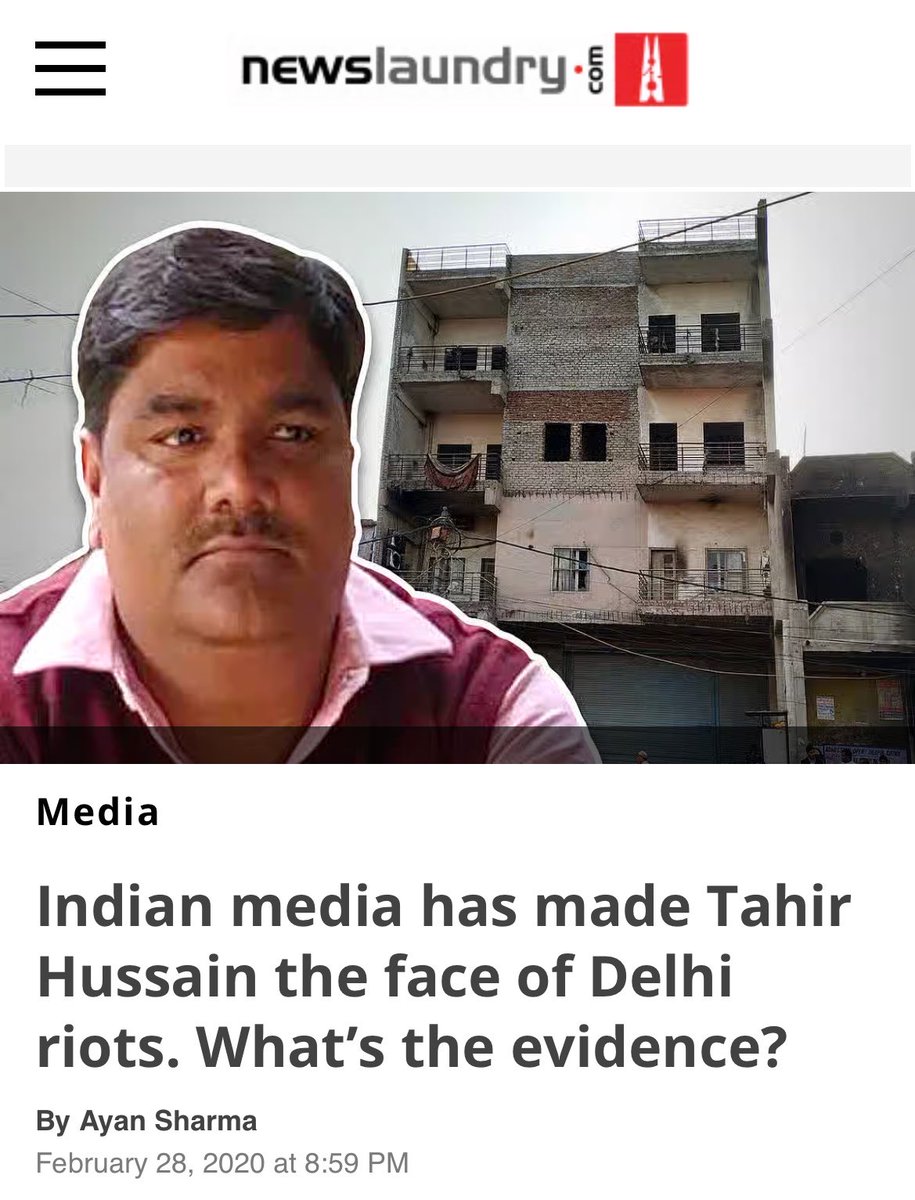
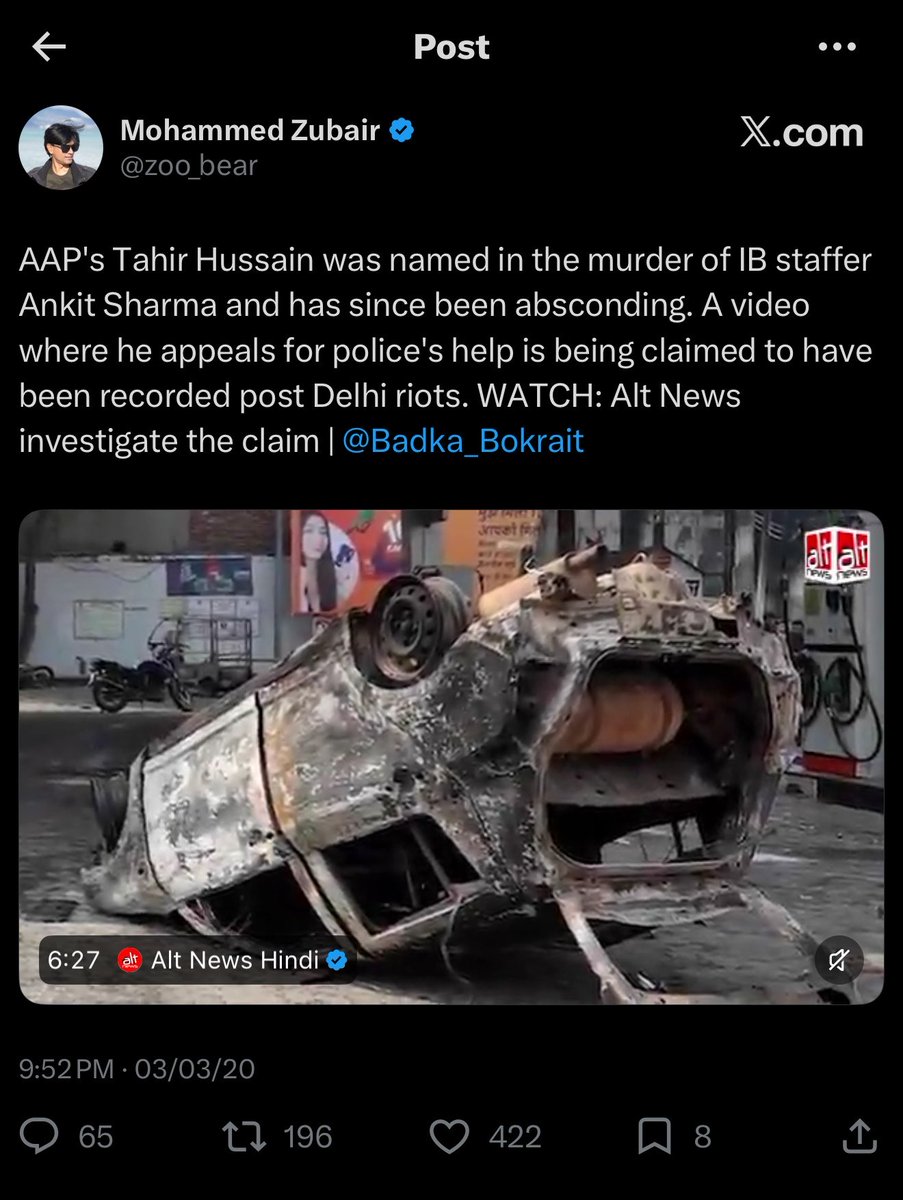
Mohammed Tahir Hussain has been convicted for communal lynching of neighbour Ankit Sharma - on the first day of three-day communal Riots in Delhi in 2020
This is how the likes of @thewire_in and @newslaundry defended him when local Hindus were taking his name
Meet Tahir Hussein’s cheerleaders.
Today Court convicted AAP councilor Tahir Hussein and others in the murder of IB staffer Ankit Sharma.
Time to call out these paid cheerleaders who tried to whitewash his heinous crime
Funny how these YRF stars know nothing about YRF 🙏
Question - Did you watch Alpha?
Kareena - Yeah, It was a great watch
Interviewer - Which one did you find better, Dhurandhar or Alpha?
Kareena - For me, it's Alpha. Dhurandhar had too much fiction. I prefer Alpha because of its action sequences
Interviewer - No way mam. As if Alpha isn't fiction. Dhurandar's fiction is at least somewhat close to reality. Secret missions like that could be happening somewhere and it has real people and real stories behind it
Kareena - You obviously don't know how to make movies more than Yash Raj films na !!
Interviewer - Obviously. I couldn't write a script where spies fly with wings without a wrinkle on their face, Pakistani spies help India, Indian spies betray their own country for Pakistani girls and Pakistani spies live in India for years unnoticed
Kareena had no reply for this. I hope that guy won't lose his job 🙏
@RailwaySeva can railways atleast post the exact delay time and cause on some platform. Even vande Bharat trains are getting late by an hour....this is pathetic.
He is Maulana Abdullah Salim “Chaturvedi.”
The ancestral surname is carefully retained to signal shared ancestry to gullible Hindus. He makes references to the Geeta and Ramayan in his speeches, not out of reverence, but as a calculated way to build familiarity before nudging them toward conversion.
And now he has the audacity to drag Yogi’s biological mother into a crude, sarcastic remark about a cow. That tells you the level of discourse these people will stoop to, go after someone's mother in such crass manner that too a sitting CM is no less than audacious attempt to flame communal tensions.
As elections approach, expect such theatrics and provocations to multiply. When political relevance depends on outrage and attention, the volume of this nonsense inevitably goes up.
Kids were playing Holi in Delhi’s Uttam Nagar. An 11 yo girl threw a water balloon from her roof toward her father standing on the road below. The balloon burst on the street; a few stray droplets splashed a nearby woman from the Muslim community.
Woman got angry. An argument followed. The girl’s family apologised. By all accounts, the matter seemed over. But apparently, it wasn’t.
About half an hour later, a mob, armed with bricks, stones and iron rods, arrived and attacked the girl's family. In the assault, Tarun (pictured), a young man, was killed and four others were injured.
Killing someone over an accidental splash of water, one that had already been apologised for, cannot plausibly be explained by that moment alone. When violence erupts with such speed and ferocity, it suggests that something far deeper than the stated trigger was waiting just beneath the surface.
A Bangladeshi family living in Bengaluru.
Karnataka govt’s sticker proudly pasted outside their house.
Aadhaar card arranged for ₹1500.
PAN card issued.
Bank account opened.
And the most shocking part, they're getting a ₹4.5 lakh loan by Bajaj Finance.
They’ve been in India for just one year, yet managed to get everything at lightning speed.
Meanwhile, original Indian citizens are forced to struggle for the same documents, bank accounts, and loans.
Great work by these youths.
Last one on this topic, and I have been holding this in myself for a while.
For centuries, class divides kept the labor of the poor invisible to the rich. Factory workers toiled behind walls, farmers in distant fields, domestic help in backrooms. The wealthy consumed the fruits of that labor without ever seeing the faces or the fatigue behind it. No direct encounter, no personal guilt.
The gig economy shattered that invisibility, at unprecedented scale.
Suddenly, the poor aren't hidden away. They're at your doorstep: the delivery partner handing over your ₹1000+ biryani, late-night groceries, or quick-commerce essentials. You see them in the rain, heat, traffic, often on borrowed bikes, working 8–10 hours for earnings that give them sustenance. You see their exhaustion, their polite smile masking frustration with life in general.
This is the first time in history at this scale that the working class and consuming class interact face-to-face, transaction after transaction. And that discomfort with our own selves is why we are uncomfortable about the gig economy. We want these people to look our part, so that the guilt we feel while taking orders from them feels less.
We aren't just debating economics. We are confronting guilt. That ₹800 order might equal their entire day's earnings after fuel, bike rent, and app cuts. We tip awkwardly, or avoid eye contact, because the inequality is no longer abstract. It's personal.
Pre-gig era, the rich could enjoy luxury without moral discomfort. Labor was out of sight. Now, every doorbell ring is a reminder of systemic inequality. That's why debates explode. It's not just policy. It's emotional reckoning. Some defend the system (“they choose it”), others demand change (“this isn't progress, its exploitation”).
And here’s the uncomfortable twist: the unsaid ask of clumsy ‘solutions’ isn’t dignity. It is about returning to invisibility.
Ban gig work and you don’t solve inequality. You remove livelihoods. These jobs don’t magically reappear as formal, protected employment the next day. They disappear, or they get pushed back into the informal economy where there are even fewer protections and even less accountability. Over-regulate it until the model breaks, and you achieve the same outcome through paperwork instead of slogans: the work evaporates, prices rise, demand collapses, and the people we claim to protect are the first to lose income.
And then what happens?
The rich get their old comfort back. Convenience returns without faces. Guilt dissolves. We go back to clean abstractions and moral posturing from a distance. The poor don’t become safer, they become invisible again: back in cash economies, back in backrooms, back in shadows where regulation rarely reaches and dignity isn’t even debated.
The gig economy just exposed the reality of inequality to the people who previously had the luxury of not seeing it. The doorbell is not the problem. The question is what we do after opening the door.
Visibility is the price of progress. We can either use this discomfort to build something better (which we keep doing continuously as delivery partners are our backbone), or we can ban and over-regulate our way back into ignorance. One of those choices improves lives. The other simply helps the consuming class feel virtuous in the dark.
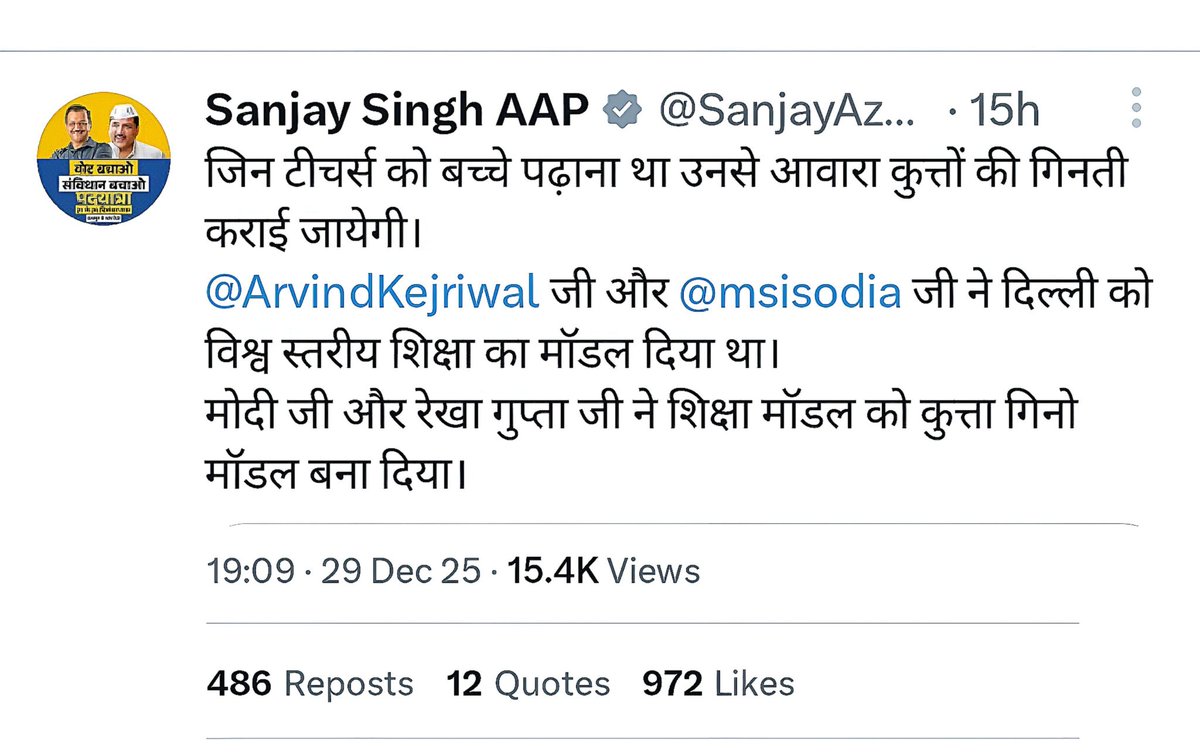
This is fake news built on either wilful illiteracy or deliberate dishonesty.
No, teachers are not being told to “count street dogs.” What the circular actually says is simple and sensible: schools are asked to designate nodal officers to report on existing stray dog risks, boundary fencing, and safety gaps within the school campus, and to send practical suggestions to the Delhi govt so that these issues can be addressed and children can be protected from stray dog attacks on school premises.
That’s not “making teachers dog-catchers.” That’s basic ground-level feedback,vthe same kind schools already give on sanitation, traffic hazards, fire safety, or broken infrastructure.