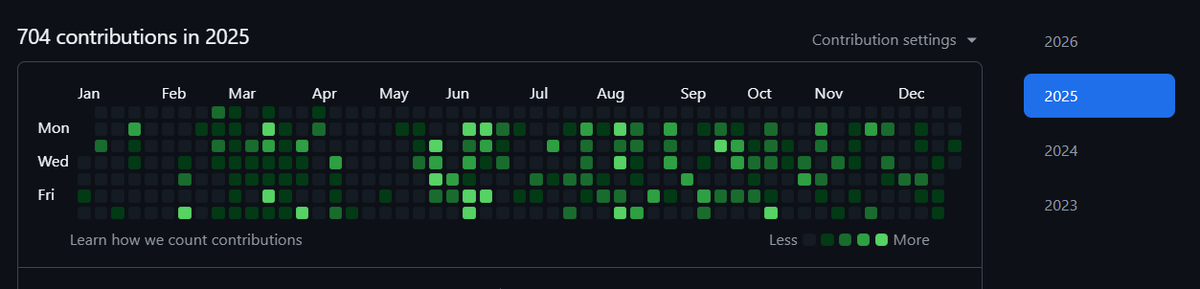
🚀 Dive into my GitHub repo for top-notch JavaScript problem-solving! 💻 Elevate your skills with real-world examples. Join the journey: 🔗https://t.co/9BWyrIgxZd #JavaScript#Coding#GitHub 🌟 #100DaysOfCode#DSA#javascript
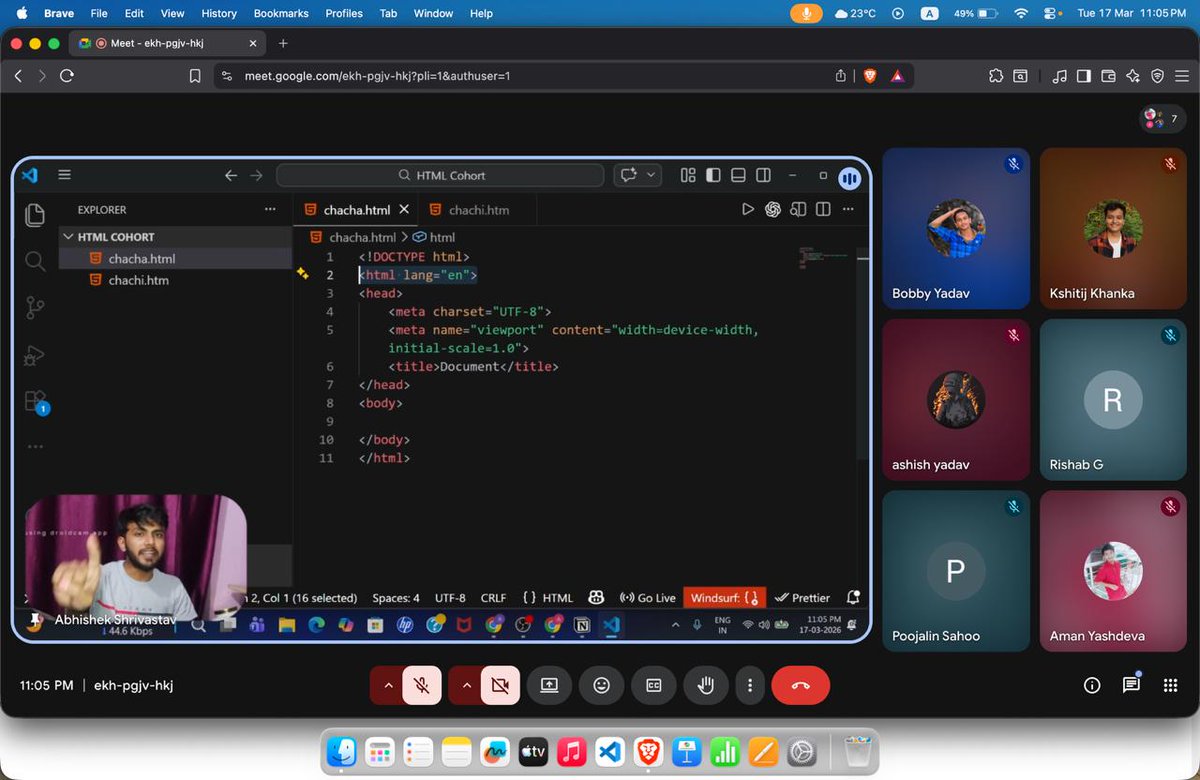
Started a small coding cohort a while back.
Now preparing for Cohort 2
Most students don’t struggle because coding is hard.
They struggle because of confusion, inconsistency, and no proper guidance.
This time the focus is simple:
Real projects, live guidance, and consistent
🚀 Cohort Day 7 Done!
Today in the Full Stack Development Cohort, we went deeper into CSS — understanding the Box Model, Display properties, Flexbox for layouts.
This is where things start getting really interesting, as we move from basic styling to actually controlling layouts
🚀 Cohort Day 6 Done!
Today we officially started with CSS in the Full Stack Development Cohort.
We learned how to link CSS in different ways and explored font & text properties to style our webpages.
It was great to see everyone moving from structure to styling 🔥
🚀 Cohort Day 4 Done!
Today we officially started with HTML in the Full Stack Development Cohort building the foundation of every website.
We covered the basics and began understanding how the structure of a webpage is created from scratch.
Really enjoyed teaching this session
🚀 Cohort Day 2 Done!
Yesterday in the Full Stack Development Cohort, we discussed the Client–Server Model, Static vs Dynamic Websites, and what the MERN Stack is along with why it’s used.
Had a great time teaching these concepts. Loving the energy in the cohort so far. 💻🔥
🚀 Cohort Day 1 Done!
Had our first live session of the Full Stack Development Cohort. We discussed what a website is and how websites actually work.
Great energy from everyone in the class. This is just the beginning — excited to build real full stack projects together.
🚀 Full Stack Developer Live Cohort –
Become Job-Ready with Real Projects & Mentor Guidance
✔ Full Stack Dev
��� Live Doubt Support
✔ 12+ Projects
✔ Resume & Interview Prep
⏳ Only 20 Seats Left
Launch Price: ₹1499
Secure Your Seat Now
Visit - https://t.co/1NqzuMN3px
Confused where to start in MERN?
Stop saving playlists.
Start following a system.
Launching a structured Live MERN Cohort:
– Weekly tests
– Real projects
– Accountability
Pre-registration open 👇
https://t.co/QiiHC98TvQ
Still debugging APIs using console.log?
That’s why bugs take hours.
I debug APIs in the Network tab:
→ request payload
→ response body
→ status codes
One habit.
Saved me countless hours.
If you’re learning web dev,
this is a non-negotiable skill.
How do you usually debug APIs?
A common misconception I had earlier:
- Beautiful UI = good frontend.
In reality, frontend quality comes from:
- Fast load times
- Minimal re-renders
- Efficient API usage
Optimizing these early has saved me from painful rewrites later.
What’s one issue you’ve faced recently?
APIs don’t fail because of code.
They fail because of assumptions.
That’s why I started documenting my backend using Swagger — so frontend, backend, and future devs speak the same language.
Documentation is part of the product.
Do you document your APIs?
I stopped validating requests inside controllers.
Instead, I moved validation into a reusable layer using Joi.
Result?
Cleaner controllers, predictable errors, fewer production bugs.
Validation belongs to the system, not the endpoint.
What’s your approach?
#joi#WebDev#coding
@Faithinato38775@dribbble That’s cool! 🙌
I cloned it mainly to practice frontend execution & micro-interactions.
Always interesting to see different takes on the same design.
🚀 Exciting News! 🎨 Just wrapped up my latest project - a Dribbble website clone using HTML and CSS! 💻
@dribbble
���� Faithfully recreated Dribbble's UI/UX 📱 Responsive design for seamless user experience ⚙️ Next steps: 🔗 https://t.co/ykiTo0MlKC
#WebDev #DribbbleClone
Recently integrated Redis into an existing backend system.
- Reduced unnecessary DB calls and improved response consistency.
- Performance work is more about decisions than tools.
Where have you used Redis — caching, sessions, or queues?
#expressjs#nodejs#redis#Frontend
As a dev, I’ve realized one thing:
Clients don’t just pay for features — they pay for maintainability.
This folder structure helps me ship scalable and debuggable backends consistently.
Architecture matters.
What’s your go-to structure? Modular or feature-based?