Proud of our learners who put in the work and are now applying their skills in real business environments.
Big congratulations to our 10 brilliant alumni selected for the @onepipe_inc Talent Accelerator Program.
This is what growth looks like and we are building more talent like this every day.
Want to hire from AltSchool Africa? Please fill out this quick form: https://t.co/ECZNfKJdh3
I'll be speaking by 3:15 pm WAT at ReInvent@Home. Come listen to me talk about how event-driven architectures can become intelligent, adaptive systems, using MCP
Check the schedule for the GCal invite, which contains the Zoom link here: https://t.co/ATVuVWErYA
The biggest lesson here is, technical leadership isn’t “managing developers.” It’s building processes that make collaboration predictable, communication clear, and shipping a continuous rhythm.
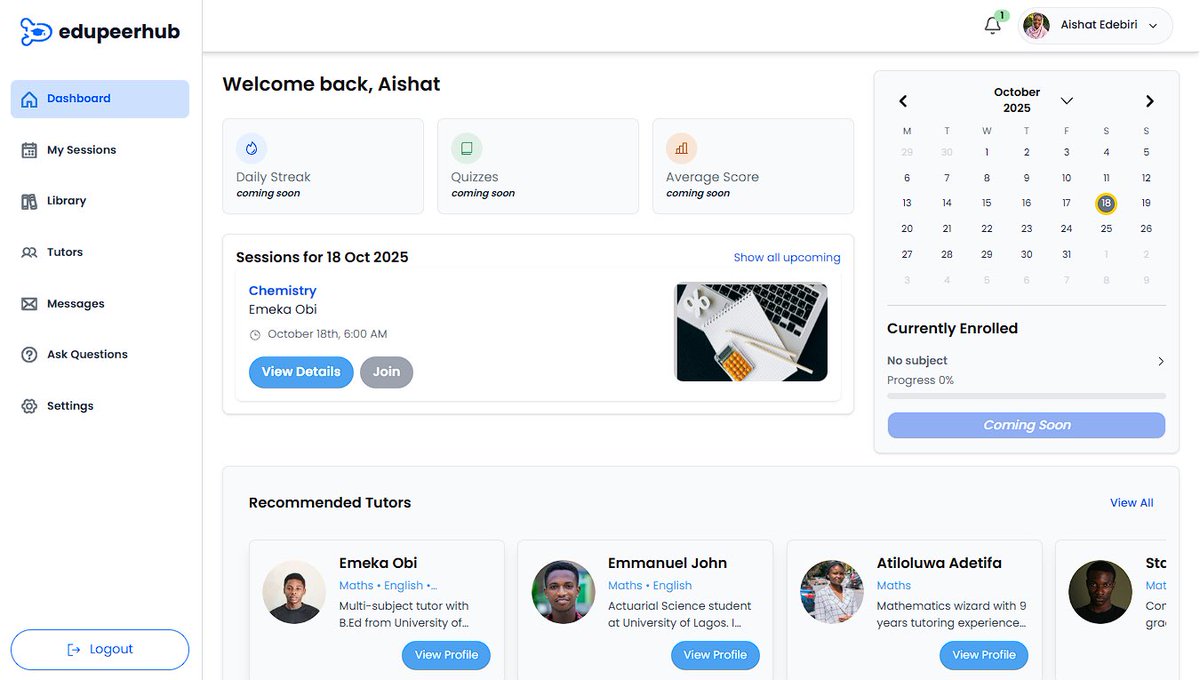
Turning EdupeerHub into a working EdTech platform pushed me to understand that leading an engineering effort is less about titles, and more about designing systems that help people do their best work.
For our tutoring platform, I coordinated both the backend architecture and the broader engineering direction. That meant defining GitHub Actions for staging/production migrations, structuring CI/CD pipelines on AWS, and creating workflows that kept 20+ contributors aligned.
1/
Getting started with confidential computing on Arcium 🧵
Build apps that compute over encrypted data, without exposing it to anyone, not even the nodes running it. Here's how to set up your environment and deploy your first instruction. 👇
Excited to share that I’ve been accepted into Cortex 3.0 by @onepipe_inc, a 12-week accelerator training Africa’s next generation of fintech builders.
Looking forward to learning, collaborating, and building meaningful solutions.
#CortexByOnePipe#Cortex3#FintechBuilders
Spent the weekend deep in @mastra, building a Strategic Advisor Agent for the @hnginternship Stage 3 task, integrated with @teleximapp.
It helps with competitor analysis, decision support, and idea feasibility.
Full breakdown:
https://t.co/VXnQWm2mjx
“How can my app handle 1000+ concurrent requests without crashing?”
While building a REST API with the Gin framework on a small EC2 instance, I had this question in mind.
At first I thought the answer was in infrastructure… turns out it starts with the Go runtime itself 🤯
Kindly check out my new article below:
"Provisioning AWS Infrastructure using Terraform and GitHub Actions" by @cloudsege#DEVCommunity https://t.co/LOzb3Xrj3s
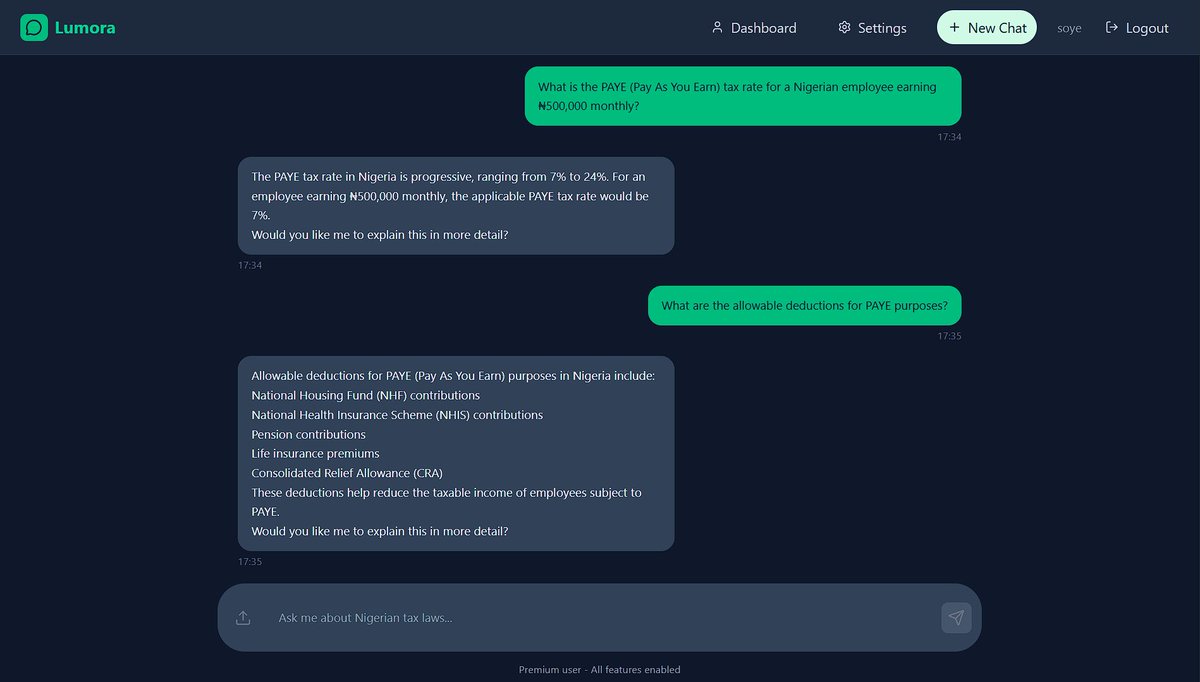
A few weeks ago, my partner @godwin_dht and I built Lumora during the @AltSchoolAfrica Hackathon.
Lumora is a platform designed to educate Nigerian business owners and individuals on tax laws and business regulations. Our goal is to make accurate, accessible information available to everyone—reducing ignorance, ensuring compliance, and helping users avoid penalties.
I led the frontend development, creating a clean, simple, and highly usable chatbot interface that makes navigating tax information intuitive.
Under the hood:
Backend: Python + FastAPI
AI workflows: LangChain managing LLM pipelines
Semantic search: Pinecone vector database across official resources
Model: OpenAI powering our RAG (Retrieval-Augmented Generation) setup
Frontend: React + Vite
How it works: The system intelligently decides whether to answer from its trained knowledge or pull supporting information from official tax documents—ensuring users get accurate, up-to-date guidance for their specific situations.
We’re still awaiting hackathon results, but we’re excited about the potential impact for Nigerian entrepreneurs.
Check it out here: https://t.co/ovor3AP0vV
I started software engineering thinking it was mostly about wiring APIs to a database and displaying results on a web page.
But over time, I’ve realized it’s much bigger: it’s about building systems that are reliable, scalable, and maintainable.
One of my biggest growth points has been mindset. I used to overthink ideas and hold back. Now, whenever curiosity strikes, I dive into how to build it — and that small shift has opened up so many learning opportunities.
Leading my capstone team also pushed me outside my comfort zone. Beyond backend work, I had to dabble in product management, data analysis, cloud, even security concepts. Acting as the “link” between different parts of the team stretched me beyond pure coding.
Tools I’ve worked with so far:
•Node.js & Express → APIs and middleware
•C# & https://t.co/HwM1jTPXCk Core → structured APIs, MVC apps, WebSockets
•CI/CD → GitHub Actions, AWS
•PostgreSQL + Sequelize ORM → relational schemas, migrations & models
•MongoDB + Mongoose → documents & CRUD
•Microsoft SQL + EF Core
•RabbitMQ → message queue basics
•Redis → caching
•Paystack (test env) → payments
Each tool has taught me to think less about “lines of code” and more about system design: how parts communicate, scale under load, and stay stable.
I’ll keep documenting what I build (and break) as I grow on this journey
Ever wanted to practice Spanish with someone learning English?
That’s the idea behind PearLingo, a project I built after following @codesistency’s awesome tutorial on real-time apps. His walkthrough gave me the foundation, then I added my own layers:
→ Google login (Passport)
→ Admin tools
→ User profile management
It uses Google Auth (Passport) sign-in, React + TanStack Query for the interface, Node.js + Express + MongoDB for backend, and GetStream SDK for real-time video & chat.
Proof that the dev community is powerful, one tutorial can inspire someone else to explore, build, and grow.