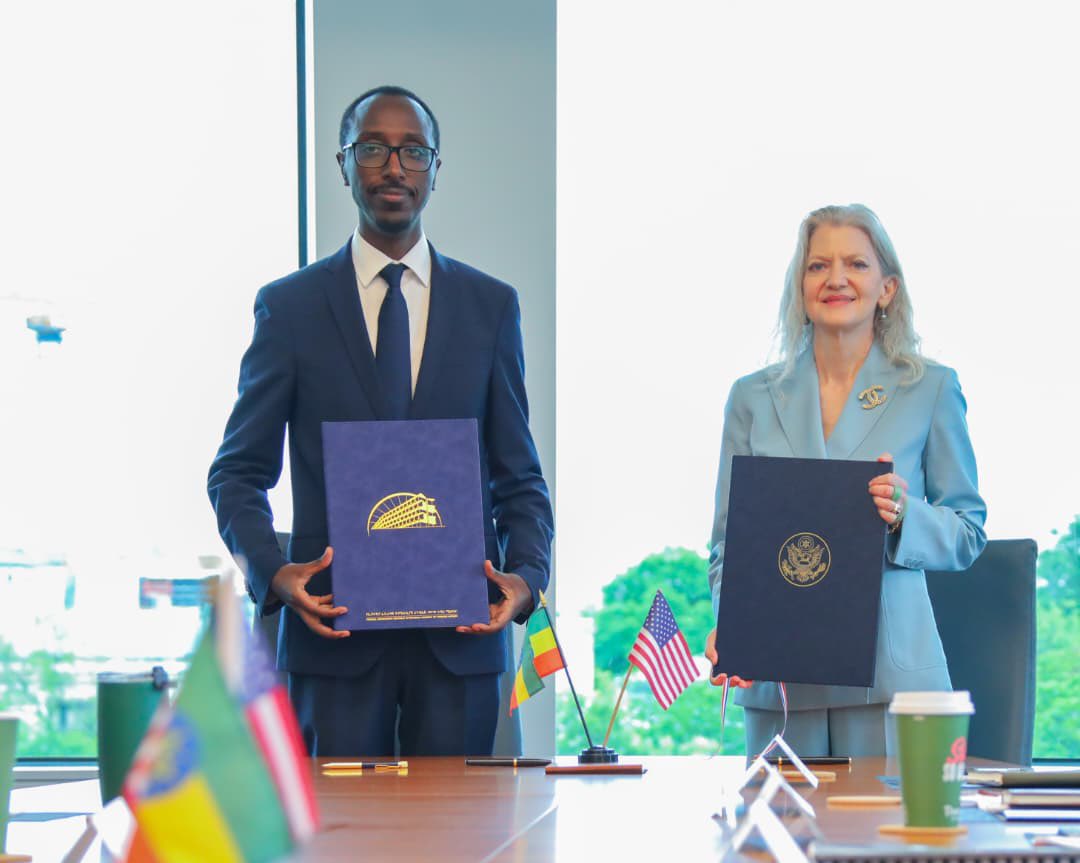
Ethiopia and United States of America today signed a Bilateral Structured Dialogue (BSD) Framework in Washington, D.C. aimed at strengthening relations between the two countries, while expanding opportunities for cooperation on bilateral, regional, and other issues of mutual interest.
The Framework was signed by Gedion Timothewos, Minister of Foreign Affairs, on behalf of the Federal Democratic Republic of Ethiopia and T.H. Allison Hooker, Under Secretary for Political Affairs, on behalf of the United States.
The Bilateral Structured Dialogue Framework covers three key areas of cooperation: economic prosperity, trade and investment; defense and security cooperation; and regional peace and stability. It seeks to enhance economic and commercial ties through expanded trade and investment, strengthen security cooperation in support of mutual interests, and advance coordination on regional peace and security issues.
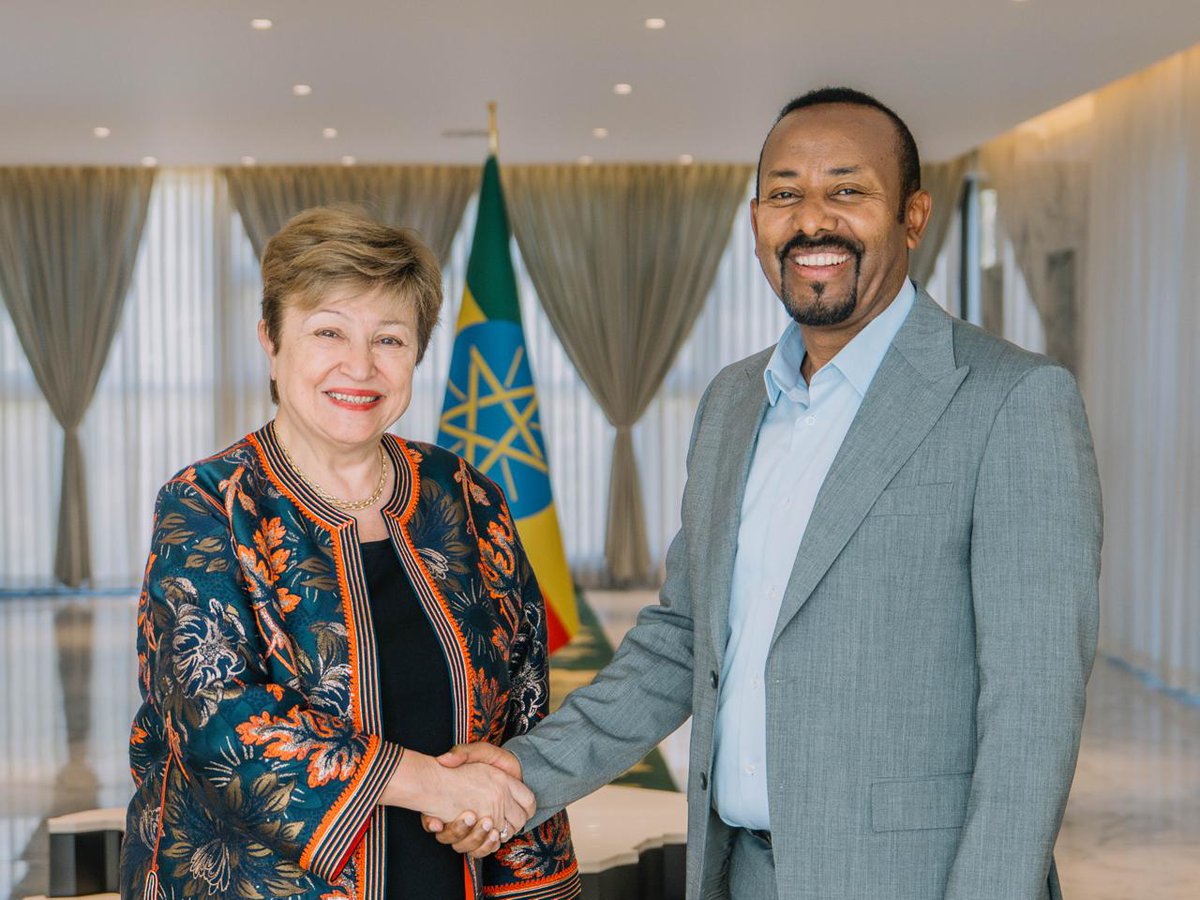
Great meeting with Prime Minister @AbiyAhmedAli in Addis Ababa. At a difficult time, Ethiopia is making impressive progress on an ambitious economic reform program. I reaffirmed the Fund’s strong support for that effort - and overall commitment to Ethiopia and the region.
Met with Ethiopian Foreign Minister @GHessebon today to discuss expanding our security partnership and increasing commercial opportunities between our two nations.
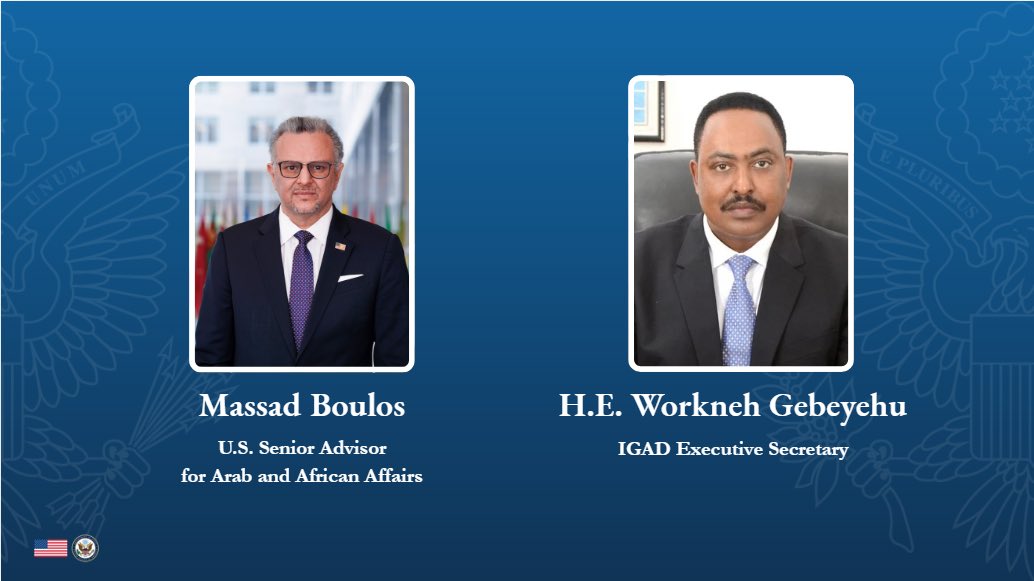
Had a productive call with IGAD Executive Secretary @DrWorkneh Gebeyehu yesterday. We discussed our common efforts to support conflict resolution in the Horn of Africa and the wider region. The United States, IGAD, and our international partners are committed to efforts to promote peace, security, and prosperity.
Congratulations, brother @Jawar_Mohammed Your persistent conflation of personal opposition to the Prime Minister with a coherent critique of Ethiopia’s long-term strategic interests is remarkable. Disliking the ruling party does not free you from having to distinguish between regime politics and state/national interests.
Over the past few days, you — once an ally of the Prime Minister but now a vocal critic — have repeatedly attacked Ethiopia for seeking to protect its strategic interests in the context of the Sudanese conflict. Some of the reports you circulate or the ideas you share may be factually accurate in isolation. Yet, you present them without reference to the broader strategic context shaping Ethiopia’s calculations. Facts, detached from structure and strategy, can easily be marshaled into a misleading narrative.
Do you genuinely believe Ethiopia should behave as a passive bystander in a region defined by intense geopolitical competition? The tragedy unfolding in Sudan is indeed exacerbated by foreign intervention. But Ethiopia is hardly unique in pursuing its interests. In fact, Ethiopia, more than any other country in the region and beyond, stands to lose more as a result of Sudan’s instability. It has a real skin in the game, as it were. Egypt and other regional actors are not neutral mediators; they are actively shaping the trajectory of the conflict to favor their preferred belligerents.
You position yourself as a politician–activist, but your posture suggests an aversion to the very language of national security and strategic interest. In a region marked by proxy competition, transboundary security threats, and zero-sum maneuvering among rival states, such discomfort is not a virtue. It is a liability. States do not have the luxury of moral abstraction when core national interests are at stake.
Moral posturing in such an environment may be emotionally satisfying, but it is not strategy. Critiquing policy is legitimate. However, presenting every move as evidence of strategic folly simply because it originates from Prime Minister Abiy’s government risks substituting partisan grievance for analysis.
More importantly, anyone with aspirations for higher office should be cautious about adopting a scorched-earth posture toward the state itself. While governments change, strategic geography is stubborn. Ethiopia’s long-term national interests are distinct from — and larger than — the party temporarily in power. A credible alternative must demonstrate an ability to separate those two. Thus far, however, you have shown a near-pathological inability to make that distinction.
I just donated to Heart Attack Ethiopia, Inc.. It’s a cause I really care about.
If you feel like supporting too, here’s the link: https://t.co/FEQxV2Iflj
@GumaaSaq To whom it may concern ...
The diaspira can contribute directly to the Commercial Bank of Ethiopia bank account using this app ...
https://t.co/bHQous7m3V
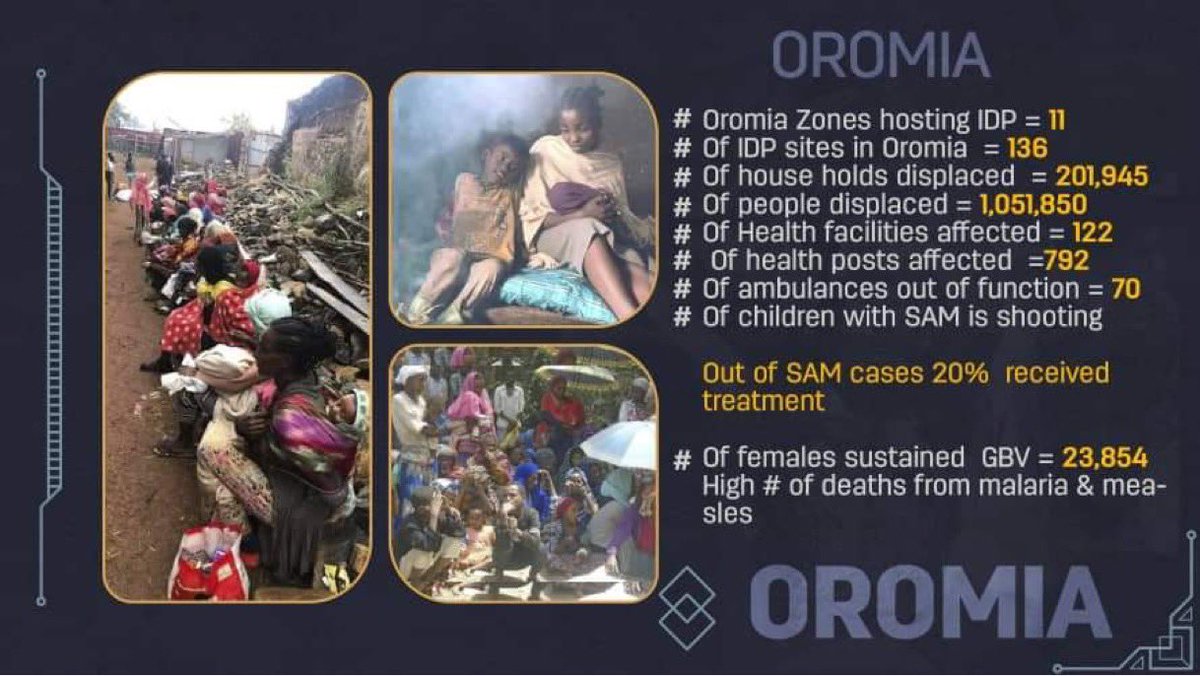
Oromia: Cost of the brutal civil war in numbers ! This is the official report for last month. Imagine what the actual number could now be given the conflict has been intensified in recent weeks. These victims are receiving little to no assistance.
The way out of the deepening crisis in Oromia
- Start negotiations with OLA towards truce
- Remove Fano militia out of Oromia and facilitate the return of IDPs
- Accept comprehensive national peace process is the only solution and plan accordingly
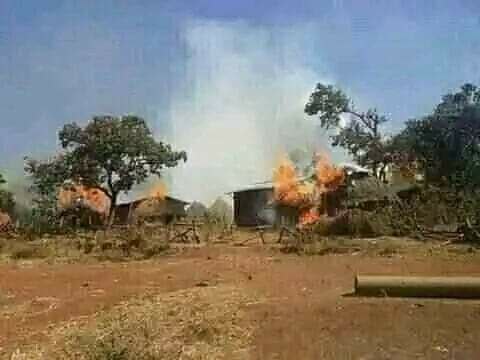
Oromia in total turmoil. Hundreds are killed on weekly bases and millions have been displaced with their homes and farms destroyed. Armed militia pillage villages at will while drones, jets and helicopters indiscriminately rain bombs on civilians.
We continue to hear the sickening death and destruction in Oromia. At least 350 people killed and over 400,000 displaced just in the last 48 hours in Kiramu ( East Walaga), Kombolcha & Gabate ( Horo Guduru) , and Kuyu & Wara Jarso ( Salale/ North Shawa).
ALERT: Conflict is spreading on Oromia-Amhara border districts. Fighting has been raging in Gida Ayana, Kiramu and Guten in East Walaga, Amuru, Kombulcha etc in Horo Guduru, Bosat in East Shawa, Dara in North Shawa