The rush to own a house in Nigeria has never been driven strictly by investment logic. Historically, it has been driven by uncertainty, by the fear that once the breadwinner’s income dips, or once he dies, his dependants may be left exposed. That is the context in which Nigerians rush to own property. Those who can afford more even go as far as building houses for rent, because even when it is not the most profitable economic venture, it is the only form of hedging most Nigerians know or trust.
At the heart of this mindset is also the awareness that there is no welfare system strong enough to protect one’s dependants. So breadwinners do what they feel they must do.
This same instinct plays out across the country, even in public service. Officeholders rush to divert public resources entrusted to them in order to acquire property for themselves, aware that the “opportunity” may not return, and that there is no reliable welfare system to cushion them when the income stops. In fact, their families and friends are often the first to remind them of this. In the end, personal financial security is prioritised over public welfare, and this is partly why we are where we are: a country with one of the widest inequality gaps on the planet.
Those who argue against the wisdom of spending one’s savings to build a house are often speaking from a different reality. Some have lived abroad, where the desperation of the struggling class to own property is not always considered a smart move. Others are financially informed enough to know there are better investment options than dumping all one’s money into property while denying oneself a decent life. But Nigeria is a breadwinner’s nightmare. Every day, you live with the fear that your dependants may not be able to afford the next rent if your income, or your existence, stops.
Where I draw the line is in building a mansion that nobody in your family can maintain after you are gone. I have seen this happen in Abuja, where families had to sell a large family house just to buy a smaller, more manageable one to live in.
So, perhaps both sides of the argument can agree on where to draw the line. Owning a house in Nigeria is not a black-and-white matter. It is not always the smartest investment, but it is often the most emotionally and socially understandable one.
Let me share one parenting tip with you. This one is about how you can build your child's social intelligence. The ability to read what is not being said out loud.
In the psychology of Ibn Sina, this is called Al-Wahm. It is the power of Estimation. It is the faculty that picks up on meanings that do not have a physical shape.
Think about it like this. We all know a sheep right? And we all know a wolf? Now, let’s think about a sheep looking at a wolf. The eyes see a gray shape with four legs and fur. That is just physical data. But the mind of the sheep knows the wolf is hateful and dangerous right away. That sense of danger is not something the eyes can see. It is a meaning picked up by the Wahm.
When you reflect on our discussion of the 7-7-7 rule, scholars say the best time to practice it is during the second stage of development, around ages 7 to 12. However, it could come earlier because some children have naturally wide mental vessels. This is the sweet spot where the brain starts to handle ideas that are not right in front of them.
Here is how you can help your child build their Wahm.
1. Engage them in mental estimation. What do I mean? For example, when you are out at a mall, a park, or anywhere, pick a stranger standing far away. Do not let your child talk about their clothes or what they are carrying.
Ask them to look at the person and tell you if they think that person is waiting for someone they love or if they are just bored and want to go home. This forces the child to stop leaning on the physical data of the eyes and start using their internal senses to hunt for intentions.
2. Learn always to remove the label. What do I mean here? Let’s say you see someone who is clearly upset, do not just say that person is angry. Ask your child what they think the weight on that person’s heart is at that moment.
You could also ask what they thought about the person’s reaction or behavior. By calling it a weight or a meaning, you are giving the Wahm a job to do.
One of your goals as a parent is to build a child who can read a room before they even speak. This is the root of real leadership. It is about not being fooled by the outward form because the internal sense is already looking for the truth.
How often do you find yourself explaining the why behind people's actions instead of allowing your child to search for the motive? Less Discuss in the comments👏🏿👏🏿
Allah knows best.
Dear Parents,
Let me share a secret with you. I pray it benefits you.
After my post on the anatomical psychology of a child yesterday, I received some questions about how to help children who struggle to focus on their studies and what parents can do to help them. If your child or your children is struggling academically, or lose focus easily, then this post is for you.
What you are likely seeing is a child who starts a task but wanders off. You might see them staring at a book for an hour without remembering a single line. It is easy to think they are being lazy, but what you ought to see is a mind where the internal powers are not connected.
The Almighty God in the Quran mentions the Nasiyah in Surah Al-Alaq (96:15) as the place of decision and control. Science has shown this to be the prefrontal cortex, the part behind the forehead.
In Kitab al-Shifa, Ibn Sina identified a power box called Al-Quwwah al-Mutakhayyilah (the Composative Imagination). This power is the pilot of the brain. Its job is to take information and turn it into focused thought. When focus is gone, the bridge is broken.
To help them overcome this problem, you can use a mental drill called Reverse Narrating (RN). Reverse Narrating is a modern concept, but, it has root in our religion too.
The principle behind RN is deeply anchored in the works of Abu Zayd al-Balkhi. He is considered the father of Islamic psychology. In his book Masalih al-Abdan wa al-Anfus (Sustenance of the Soul), he talked about Riyadat al-Nafs (disciplining the mind). He taught that the mind needs specific "mental rehearsals" to regain control over wandering thoughts.
This mental rehearsals through reverse narrating is what you should adopt going forward because it forces the brain to reorganize information in a way that is not natural.
Here is how you can do it:
1.Ask your child what they are doing right this moment (when you call them).
2.Ask them what they did ten minutes before that.
3.Keep asking what happened before each step, moving backward through the day.
4.Continue until they reach the moment they woke up in the morning.
Do you know what you have done? You have just forced the Mutakhayyilah of your child to work in overdrive to pull data from the memory and flip it.
What this does is that It strengthens the pilot seat in their forehead. If you do this for a few minutes every evening, you would be building the mental glue your child needs to stay on a task. This is how struggling children improve their mental power and succeed in their studies. GIVE IT A TRY.
Allah knows best.
Let’s talk about the 7-7-7 rule of parenting. I know that some of you might have heard of it before. But what I want to share with you are rare tips that you cannot find in your regular blogs.
Why the 7-7-7 Rule in the first place?
We are all exhausted. I see it in my DMs every day. We are fighting battles in our homes that we should not even be in because we try to use the same heavy hand for every age.
The truth is, you cannot use the same logic for a toddler that you use for a teenager. When you use the wrong tool at the wrong time, you do not just fail to teach the child. You break the relationship between you and the child.
The 7-7-7 rule is the solution to this constant friction. This rule was first echoed by Ali ibn Abi Talib (May The Almighty be pleased with him).
He said: Play with them for seven years, Discipline them for seven years, and then Befriend them for seven years. It sounds easy, but most of us do it in the wrong order. We are too serious with the toddlers and then we try to be the boss when they are already teenagers.
(1) The 0 to 7 Years Stage. This is the stage to build the love tank. Imam Al-Ghazali said in Ihya, that a child's heart is a precious jewel that is blank and ready for any carving. In these years, you should play more than you lecture.
One rare tip that you can adopt going forward is Overhead Praise. Direct praise is good, but overhead praise is gold. Instead of telling them they are good, tell your spouse or a friend about their good deed while the child is in the room. When they hear you brag about their kindness when they think you aren't looking, it builds a deep confidence.
Action Tip: Find one small thing they did well today and mention it to someone else while they are nearby. Make sure they can hear you. Be intentional and consistent about it.
(2) The 7 to 14 Years Stage. This is the time for character and boundaries. The scholar Ibn al-Jawzi in Sayd al-Khatir, warned us about forcing a narrow vessel to hold too much.
Remember I talked about Taghaful (Strategic Ignorance) yesterday. This is the right age to use it. It means you see the mistake, but you choose to look away. If you correct every single thing they do wrong, they will develop a hearing block against your voice by age ten. You have to save your corrections for the things that matter.
Action Tip: Start today by adopting the 70/30 rule. Ignore 70% of the small irritations, maybe it is a messy desk or a slow response. Save your energy for the 30% that actually involves character or safety.
Only speak up for the big boundaries. You are building authority by not wasting it on small irritations. Pay attention to their demeanor and be consistent.
(3) The 14 to 21 Years Stage. In this stage, the "boss" version of you must die so the "consultant" version can be born. The scholar Ibn Miskawayh in Tahdhib al-Akhlaq, wrote about the refinement of the soul as a process that requires respect. If you keep using force, they will just learn to hide their life from you.
Action Tip: Your job now is to protect their Sirr (Sacred Secrecy). If they tell you something heavy, misdeed or embarrassing, keep it between you. Do not share it with the extended family. To keep them close, you must be a safe vault.
This week, try to listen to them for twenty minutes without giving a single piece of advice. Just listen so they know you are a friend they can trust with their future.
In all, the 7-7-7 rule is about realizing that you are a gardener. You don't make the plant grow. You just provide the right environment for it to reach its own opening (Fath).
As a parent, which stage are you currently navigating? Let’s discuss in the comments👏🏿👏🏿
The saddest thing about yesterday’s protest by Nigerian elites, especially from the North, is that none of them ever deem it fit to protest the killings of hundreds of people across the country, particularly in Northern Nigeria. But now, they are protesting becaus they want power
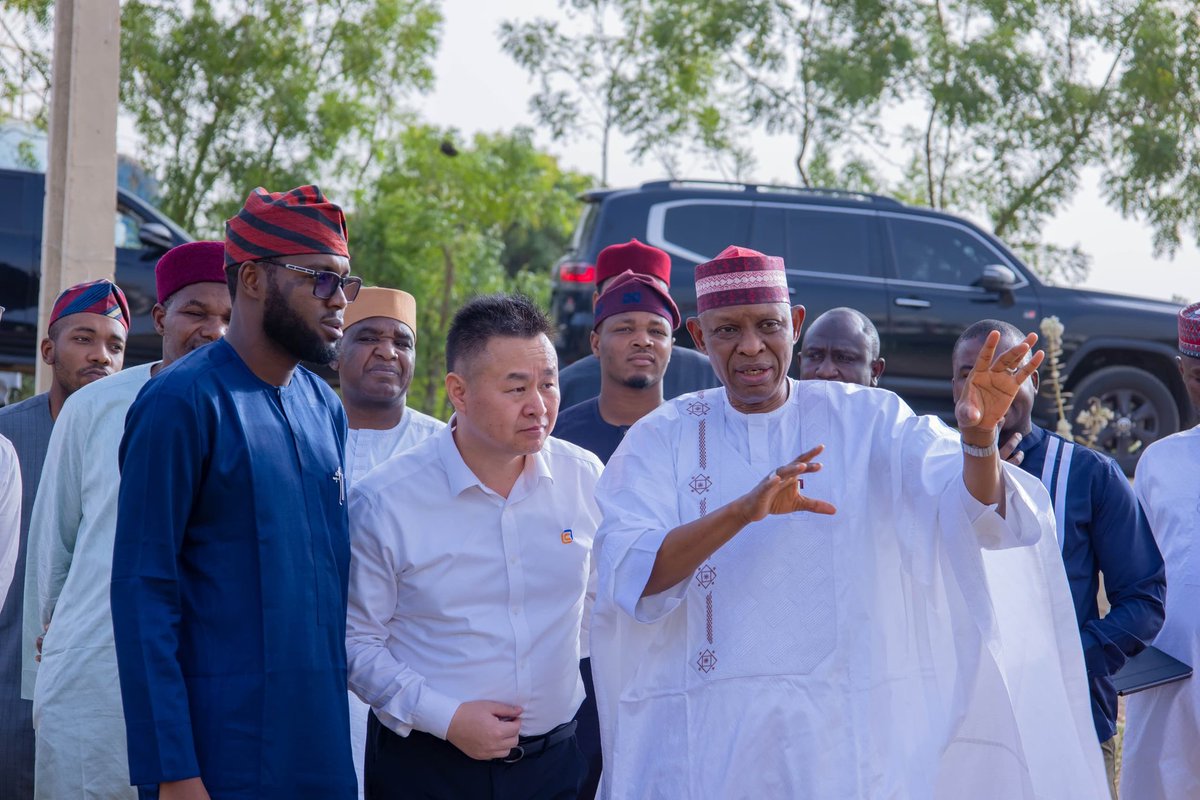
Today, I had the honour of accompanying His Excellency, Governor Abba Kabir Yusuf, on an on-the-spot assessment of the Tamburawa Water Treatment Plant alongside technical experts. The plant, with an installed capacity of 150 million litres per day, is currently producing about 40 million litres, representing a deficit of over 70%.
The assessment identified key challenges, including flood-related damage that disrupted the raw water intake, as well as persistent energy constraints affecting operations.
Following the visit, His Excellency directed that immediate steps be taken to address these issues and reaffirmed the State Government’s commitment to improving water supply along the affected corridor.
Dr. Dahir M. Hashim
Acting Commissioner
Kano State Ministry of Water Resources
“If you look at the people we call leaders—go to the Senate, go to the House of Representatives—why should a senator or a member of the House be a praise singer for anyone? Why are those in government not able to face their boss and say, “Oga, this is the truth”? You have people who are supposed to represent the values of society behaving like illiterates. By the time you become a governor, you should be beyond looking for money. Most of Nigeria’s ruling class lack values—they are too cheap. If we truly want to fix this country, we need a principled ruling class. The ruling class needs to have values—values beyond stomach infrastructure.”
—HRM Sanusi Lamido Sanusi.✅
Alhamdulliah we have hit a PLEDGE OF 100 million for the pilot program. We would like to stop here for now, so we can run a pilot and see how it goes before we further expand it.
Remember the goal is for this to be sustained beyond a one time thing. Businesses and jobs should be born out of this initiative. Yes this won’t end poverty amongst the youths but it will give birth to an idea eveyone can copy and replicate. One person can’t do it alone we need more people to do this 🙏🏾
UPDATE: Amount PLEDGED so far: N100 million ☺️
1. Mohammed Jamal - 10 million
2. Capt. Jamil - 10 million
3. Hon. Bello - 11 million
4. Anonymous - 5 million
5. Anonymous - 5 million
6. Anonymous- 2 million
7. Anonymous - 10 million
8. Sentinels - 10 million
9. Bashir Ahmad - 5 million
10. LeadNext Initiative- 2 million
11. Istrom - 10 million
12. Anonymous- 20 million
Nobody told us to do this. Those that follow know how this all started. We are not seeing glory but contributing our little quota to society. May Allah bless all that partook and if you didn’t have opportunity don’t worry this project is “Us all” so you are covered too. May Allah bless this and may it outlive us all 🙏🏾
No, this surge in killings across the North is not because American soldiers have come here to partner with Nigeria in the fight against terrorism. We should not cheapen a grave national tragedy with a lazy conspiracy theory. My heart is with the victims of the bomb attacks and killings across the country, and with the families and communities now carrying the weight of this loss.
Government has a duty to keep pushing, and is pushing, to confront insecurity with resolve. But the roots of this trouble run deeper than the latest rumour. We have a history of barking up the wrong tree, but terrorism should not be one of them. What has erupted into this tragedy is not only the doctrinal fanaticism with which every Nigerian is familiar, but also, at its origin, the collapse of the most humanising formation known to any society: education. Sound education. It is the government’s role to provide it, and that should be the subject of your criticism. On this, we have so much to do. Our insecurity itself feeds on the inadequacy of education. Lack of education is an inexhaustible raw material for these security lapses, because where ignorance is left to fester, violence is never far behind.
Consider the trending video of the captured bandit, Sule Yello, or whatever his name is, who became famous on TikTok for defying authority. It brings to mind a reality that shakes my faith in quick redemption. He, like many of his co-travellers, lacks the most humanising of human processes, and that is education.
The civilising power of education is undersung in our policy-making business, yet there is no intervention, however profound, that can redeem a state or society without fixing foundational education. What education does is not only humanise you, but sharpen your sensitivity to self and others, awaken your sense of worth, and deepen your grasp of shame. Without this, there is hardly any way to form a responsible citizen.
Beyond the curricular experience, the process of acquiring education imposes a community on you, a community of classmates, teachers and social networks, the awareness of whose judgement cages your moral transgression and heightens your consciousness. From street begging to defecating on the road or in public places, and to every behaviour that amplifies our lack of shame, there is no escaping the place of education. Northern Nigeria has been paying the price.
There is no policy, whether security or economic, whether political or agricultural, that can blur the danger posed by this battalion of uneducated citizens, especially school-age children roaming our streets. And it is even scarier because elementary or primary education, being the most important tier of education, is under the control of the least institutionally enabled tier of government. The poultry houses that qualify for schools in our remote rural communities do not help matters.
In a government initiative of which I am a part, we developed a data and intervention framework for a government agency, and the database of school-age children we collated gives off a foreboding that should alarm anyone. It raises an important question: should there be a centrally coordinated ministry for primary education, taken away from local governments, or should primary education be simply outsourced to private administrators contracted by government in the style of HMOs managing health insurance, with renewals tied to performance against clearly set criteria? I am just here thinking aloud!
The buck stops at the government’s table, no doubt, but it does not help that we are mischaracterising those here to help without any credible proof, regardless of what we think of their antecedents. This is no time for conspiracy theory.
This is how the Holy Ka’abah is perfumed five times daily. I am deeply grateful for the invitation extended to me by the Chief Director of the Ka’abah to take part in this process. Alhamdulillah!
Even though you are unsuccessful in masking your Islamophobia and, I must say, your lack of even the most basic capacity for logical reasoning, I cannot resist responding to this:
1.Israel is, demographically speaking, closer to being described as a Muslim country than a Christian one. There are roughly 1.7 million Muslims there, while the Christian population is only about 180,000. There are probably more Christians in two districts of Abuja than in the whole of Israel. Yet the point here is not numbers alone but treatment. Even your imaginary co-travellers in the MAGA camp, such as Tucker Carlson, have reported on the harassment faced by Christians there, concluding that Christians in Israel are living in an “apartheid state”. So, the simplistic fantasy that Israel represents some kind of Christian civilisational front line collapses the moment it encounters reality.
2.The victims of Israeli military operations have not been Muslims alone. Palestinian Christians have also suffered the same bombardments, the same displacement, and the same loss. Indeed, one of the most prominent intellectual champions of the Palestinian cause was the late Edward Said, of blessed memory, a Palestinian-American Christian whose scholarship and activism helped shape global understanding of the conflict. So, the struggle you reduce to a crude religious caricature has, in fact, been articulated by people across faiths.
3.Your claim that Nigerian Shiites are somehow incubators of terrorism because of their perceived relationship with Iran betrays not only prejudice but astonishing ignorance. If the members of the Islamic Movement of Nigeria truly possessed terrorist proclivities, you and I would probably have been having this conversation from a refugee camp in Benin Republic or Niger. They have suffered repeated massacres and severe repression, including the events surrounding the Zaria Massacre, and yet there is no credible record of them responding with terrorism against the Nigerian state. In fact, groups such as Boko Haram and ISWAP regard them as heretics and typically dislike them with even greater ferocity than they dislike Christians. So, your theory that terrorists in Nigeria draw inspiration from a sect they themselves violently despise would be laughable if it were not so revealing of the intellectual poverty behind it.
4.The truly brainwashed party in this exchange is none other than you. You have convinced yourself that identifying with the perpetrators of genocide is an act of reason simply because you dislike the religion of their victims and corpses, and that is rather unfortunate.
5.Terrorism in Nigeria does not distinguish between Muslim and Christian victims. No terrorist camp in this country spares ordinary Muslims. Mosques have been bombed. Muslim villages have been razed. Muslim clerics have been assassinated. Muslim leaders and monarchs have been assassinated, all by Boko Haram. The ideology you pretend is directed only at Christians has killed tens of thousands of Muslims as well. We are victims of the same perverted creed, whether you are willing to acknowledge it or not.
https://t.co/TsMi2FZpVO, spare us the pretence that you are speaking as a voice of reason here. What you have written is not analysis, nor courage, nor moral clarity. It cannot even qualify as bigotry dressed up in the costume of logic. You are a thoroughbred Islamophobe, and luckily you do not pretend otherwise, and I pray you activate enough brain cells to connect these dots.
What Western society possesses, perhaps more than any other civilisation, is not moral purity, but a deeply rooted culture of reason, argument, and resistance. Even when a demagogue rises among them and captures the instruments of power, opposition is rarely slow in coming. And that is precisely why they remain at the forefront of modern civilisation when it comes to logical thinking and setting the pace. Even now, amid America’s alignment with Israel in the widening war with Iran, some of the fiercest criticism of the United States continues to come from within the West itself.
Some of the fiercest critics of the US are Americans themselves, so much so that many elite universities and centres of thought have found themselves in Donald Trump’s crosshairs for standing on the opposite side of his policies. The West is not where it is because of its bombers, warships, and missiles alone. It is where it is because of the depth of its ideas, the strength of its institutions, and the culture of dissent that forces power to answer for itself. That is something all of us have to learn from them.
They are just as flawed as the rest of us, but they do not always stand by and watch. I believe that if slavery had existed in some societies with the military capability the West possessed during the abolition era, it might still have remained in practice. Yet even as the engineer of that transatlantic misery, resistance arose from within. That capacity for self-critique is one of the few redeeming strengths of Western civilisation, even when its foreign policy remains drenched in hypocrisy.
In the last three years, I have had the privilege of travelling the world, and one of my favourite pastimes is having conversations with both the policy elite and everyday people in the countries I visit. That has shaped the way I see our continent. Africa has been far too comfortable in its dependency, and it is almost insulting that we still function as a glorified satellite of the Western metropolis at this stage of the century.
What is happening in the world is happening, in part, because the West initiates and we react. They set the terms; we consume the outcomes. We are drip-fed ideas, technology, finance, and even ambition. And this has sustained a power structure in which we spend our lives yearning to escape to societies whose achievements, in many cases, we could build for ourselves. We aspire to have elsewhere what we have refused to create at home.
My latest trips were to Ethiopia, the only African country that escaped formal colonial rule, notwithstanding the Italian attempt. And what has happened there in the last five years, by African standards, is nothing short of astonishing. The very Addis Ababa that used to look like Kaduna is now rising skyward, straining to become Dubai. I call it astonishing because they were the second-poorest country on the planet at the dawn of this century, and the only country worse off than them was a war-torn Somalia.
That, to me, is the message. The West may dominate the world with force, and the US may drag dependent nations in its wake as it prosecutes this war in support of Israel, but force alone has never been the deepest source of civilisational power. The real source is the ability to produce ideas, build institutions, encourage dissent, and act with ambition. Until Africa learns to do that for itself, rather than waiting to be spoon-fed by others, we will remain dependent, reactive, and forever tempted to run towards the very world we should be capable of building with our own hands.
Because, after all, how many African countries can produce an ordinary gun or have the patent to produce a weapon to protect their territory? That is precisely the reason we are still on the leash.
A Distant War, a Nearby Fire
Even as a country overwhelmed by a domestic security crisis, I think it is delusional to police those who see the connection between conflicts in the Middle East and what we experience here. They have every reason to be wary. It is not only because faith-based allegiances at home can be mobilised in sympathy with parties to those conflicts, with one bloc instinctively reading events through an Iranian lens and another through an Israeli one. It is also because every distant war arrives here as a local argument, repackaged for ideological recruitment and grievance.
The dominant framing of what is happening in the Middle East can be exploited by those nursing ambitions of religious war, and it can accelerate arms proliferation in an already volatile world. We have seen this film before. The collapse of Libya did not remain a Libyan tragedy; it became a regional armoury, with weapons and fighters dispersing across fragile borders, feeding insurgencies and organised violence in the Sahel, and strengthening the ecosystem in which groups like Boko Haram thrive. When great powers trade blows, as they are doing in the Middle East now, the shrapnel travels without visas.
This is even more so because Nigeria, too, is on the menu of great-power politics. Our size, strategic location, resources, and diplomatic weight make us attractive terrain for proxy games and influence operations. Nothing is easier to weaponise than identity. The cynical inflation of “Christian genocide” claims, circulated as political ammunition rather than as a call to justice, is one of the most combustible tools in that arsenal: it is designed to harden camps, delegitimise the state, and set communities against one another until the country feels ungovernable.
The point is that we do not live in isolation, and we are not immune to the ripple effects of a world sliding into confrontation. If sense does not take charge of those with thumbs on nuclear buttons, the warning shots will keep echoing in places like ours, where the ground is already dry for a fire we do not have the capacity to stop.
Dear @JaafarSJaafar,
Everyone knows that you are not the best person to decide for anyone, especially for someone who is clearly more educated than you on matters of the world and matters of God, what such a person should or should not do. At best, what you have offered is nothing more than the loud opinion of a serial cynic who enjoys throwing stones without building anything.
Your position sounds less like thoughtful analysis and more like the familiar grumbling of someone who prefers noise to nuance. If your argument truly holds water, then it should have applied consistently in the past. When Pantami was appointed a Minister, he was publicly addressed & recognized as Sheikh, Dr, Professor, and Honorable Minister all at the same time. Your immature logic did not surface then. That appointment did not prevent him from continuing his scholarship, his preaching, or his intellectual contributions. In fact, he excelled. History has already recorded him as the best minister that ministry ever had, not because he abandoned faith, but because he carried competence, discipline, and clarity into public service. You seem comfortable suggesting that Nigeria would be better served by drunkards, morally bankrupt characters, and known thieves, so long as they fit your crude stereotype of what a politician should look like. If this is not your position, then kindly explain how a preacher automatically becomes unfit for leadership, while proven failures and criminals are repeatedly recycled and celebrated.
Your attempt at wit, including your choice of metaphors and your so called “sadakar yalla” comparison, comes across not as sharp satire but as playground mockery, and display of folly. It reads like the frustration of someone who wants to sound clever but ends up sounding petty. Reducing politics to theft, lies, and indecency only exposes how low your own expectations have become. If politics is indeed grimy, then people with values should be encouraged to enter it and clean it, not chased away by armchair commentators who profit from permanent outrage.
The idea that moral clarity cannot coexist with political leadership is one of the most destructive lies ever sold to Nigerians. It is this thinking that has kept terrible people in power and pushed capable, principled individuals to the sidelines. You speak as though corruption is a job requirement, when in truth it is a symptom of poor leadership and weak character.
It is hard not to notice that people like you appear more comfortable watching the country be ruled by disastrous characters than supporting anyone who threatens the status quo. This posture is even more troubling given that you are speaking from exile, far from the daily consequences of the failures you seem eager to normalize. Nigerians deserve better than recycled incompetence and fashionable cynicism; they deserve leaders with intellect, conscience, and courage, whether those leaders preach on a pulpit or speak from a podium.
Change of name: Tinubu/ Barau organisation now Tinubu, Abba, Barau Organisation
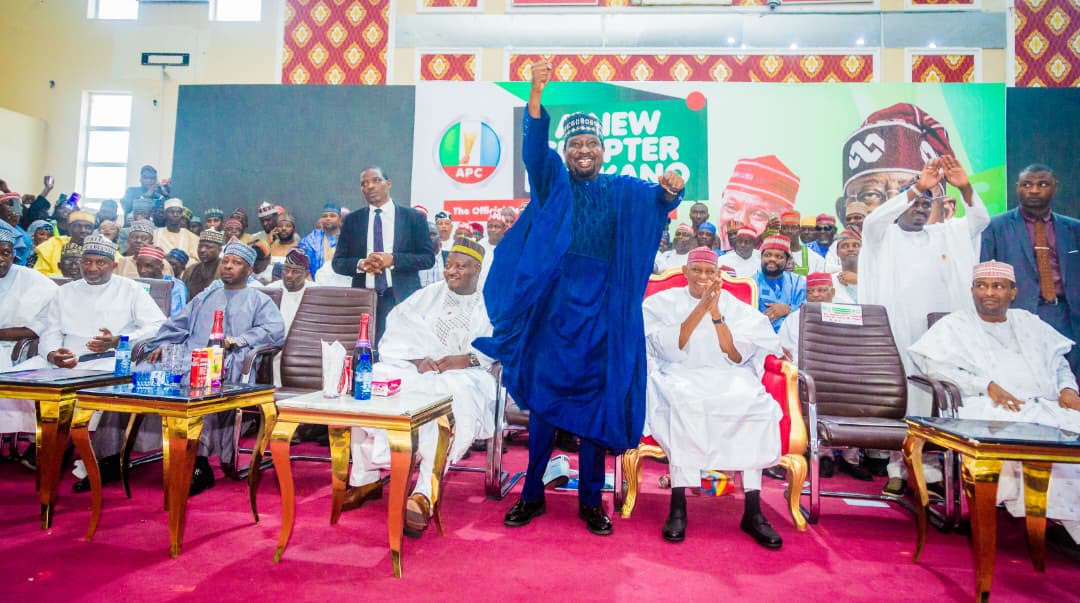
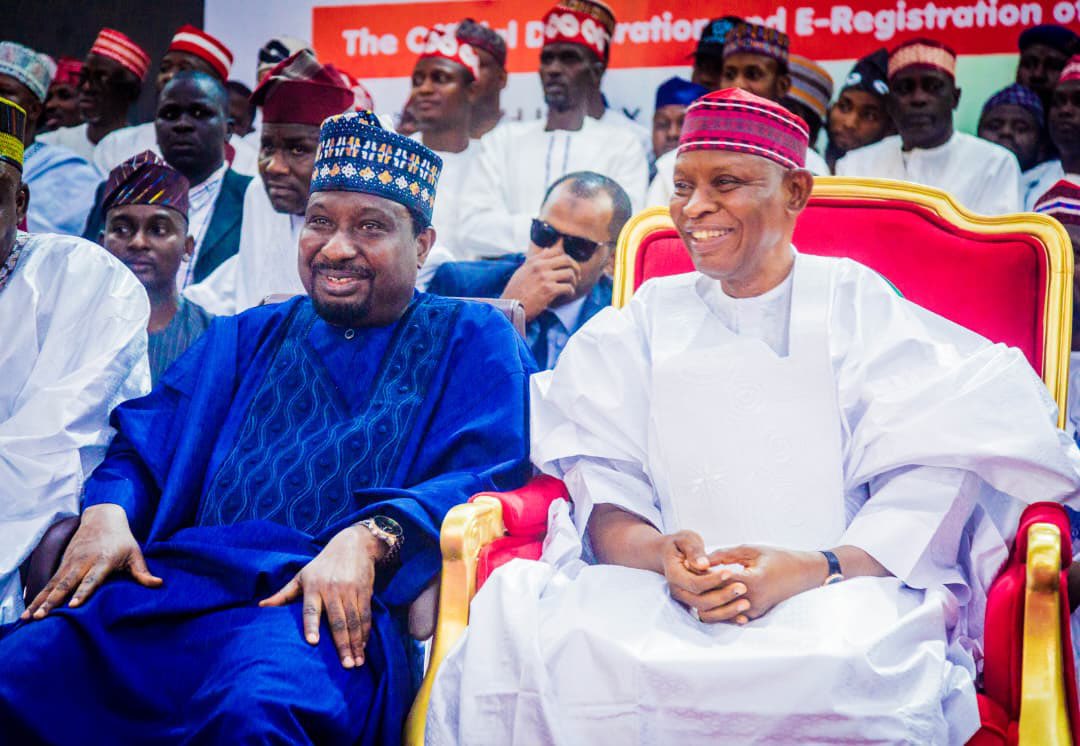
Today, we received the Kano State Governor, His Excellency Abba Kabiru Yusuf, into our great party, the All Progressives Congress (APC), at the Kano Government House.
While welcoming him to the APC during the event, I urged all my supporters and promoters to queue behind the governor for the development of our state, Kano.
When I chanted Nigeria, the mammoth crowd said 'Sai Tinubu' and when I said Kano, it was followed by 'Sai Abba Gida-Gida.'
To this effect, the various groups promoting my aspirations under the Tinubu/Barau organisation will now be known as the Tinubu, Abba, Barau Organisation.
My entry into politics over three decades ago was driven by my commitment to serve the people of our beloved state, Kano and the country at large. Nothing more.
By the grace of Allah (SWT), I have remained steadfast in that mission, and I will continue to work for the unity, progress and development of Kano State and the country.
I also want to reassure the President and Commander-in-Chief of the Armed Forces of the Federal Republic of Nigeria, His Excellency Bola Ahmed Tinubu, GCFR, of my unalloyed commitment to the ideals of the Renewed Hope Agenda, as we work together to take our country to the next level, where governance truly works for all.
Kano Governor Abba Kabir Yusuf to Rejoin APC on Monday
Kano State Governor Alhaji Abba Kabir Yusuf is set to formally rejoin the All Progressives Congress (APC) on Monday, January 26, 2026, after resigning from the New Nigeria Peoples Party (NNPP) last Friday.
The announcement was made in a press release issued on Sunday by the governor's spokesperson, Sunusi Bature Dawakin Tofa.
The statement highlighted Yusuf's political history, noting that he first joined the APC in 2014 when he won the party's primary for the Kano Central Senatorial seat, which he later conceded to Senator Rabiu Musa Kwankwaso.
After years in various political platforms, including his recent tenure with the NNPP, Yusuf cited "prevailing realities of governance, national cohesion and development" as reasons for returning to the APC, which he called a "familiar and structured platform for progressive governance."
The governor emphasized that the move will strengthen ties with the Federal Government, accelerate infrastructure projects, improve security coordination, and enhance service delivery across Kano State. It is also expected to foster greater political stability and unity within the state.
On Monday, Yusuf will officially register as an APC member in Kano, accompanied by 22 members of the State House of Assembly, eight federal House of Representatives members, and all 44 Local Government Chairmen. He is also scheduled to launch the APC's e-registration exercise in the state.
I have always admired Engr. Mohammed Rabi'u Musa Kwankwaso from a distance, but he appears to have boxed himself into one of the tightest corner in his political career simply because of his refusal/indecision to take the Olive Branch that was offered him by APC much earlier. Let’s break down his predicament:
1. FACT NO. 1 - Kwankwaso wants to be President, but none of the major political parties will pick him as a candidate in 2027. APC & PDP are going South & ADC’s ticket is Atiku’s to lose. Atiku is the owner of ADC (argue with your keypad, if you like). Only a major political Party can win a Presidential election in Nigeria. NNPP is still a one-State Party and with the recent wave of defections from NNPP (including the Governor himself), it is doubtful if it can maintain its grip on Kano in 2027. A leader is only as strong as his devoted lieutenants.
2. FACT NO. 2 - Kwankwaso WILL NOT support a Northern candidate because that ends his own Presidential ambition since he MAY have to wait for another 16 years after 2027 to get a shot at the Presidency - 8 likely years for the Northern Candidate and another 8 likely years when it rotates to the South again. That’s a gamble he WILL NOT TAKE. He will be 86 years old by then. So, this entirely rules out an ATIKU-Kwankwaso cooperation in 2027
3. FACT NO. 3 - Based on the above calculations, the only pathway for Kwankwaso is in 2031, but the alliance he builds in 2027 will be crucial to his ambitions in 2031. If his grip on Kano slips in 2027, it will water down his clout and influence in 2031 to be handed a Presidential ticket by any of the major Political parties. This is the time he can cash in on his presumed dominance of Kano politics and take a chance.
4. FACT 4: Kwankwaso’s only chance of a realistic alliance now with a major political Party is actually narrowed down to the PDP, the APC or the Labour Party (only if Peter Obi returns there and picks the 2027 Presidential ticket and he agrees to run as VP candidate to Obi). But all three options present their own challenges:
(a) with the PDP now gasping for breath, it may be easier for Kwankwaso to return to PDP on some terms (like taking over the entire structure in Kano and some North West States and returning Kano to PDP). And that will signal the death of NNPP. But with the zoning of the Presidential ticket to the South, that would mean a suspension of his 2027 Presidential ambition till 2031.
(b) If Kwankwaso decides to pitch tent with the APC, he is in no position to dictate so much terms to the Party. With the exodus of key figures from NNPP to APC in Kano, the APC’s structure in Kano is now in better stead to challenge the NNPP in 2027. The APC is therefore not so desperate for a Kwankwaso in Kano, but would be glad to welcome him into the Party. He still remains an asset. But one thing is sure: the APC cannot throw its entire structure in Kano under the bus for a Kwankwaso, especially with the Governor parting ways with him. However, the attraction of the APC for him is that the APC still has the national spread and structures to retain power in 2031. So, an APC option for Kwankwaso will also mean a suspension of his Presidential ambition till 2031.
(c) the 2027 Labour Party option for Kwankwaso is narrower because he simply cannot and will not run as Vice-Presidential candidate to Peter Obi. Take that to the bank. His own people will not even support him to give a likely fresh 8 years to the South (forget all the noise of ‘I will serve just one term).
FACT 5: From the scenarios above, Kwankwaso is in a very difficult political crossroads . The decision he makes now may retire him permanently from politics or revive his Presidential ambition. But one fact is clear: just like late Buhari and the CPC, without a handshake with another major Party, he will remain a local champion with his NNPP, but that too may soon vanish with the present predicament of the Party in Kano.
Transcript of Vice President Kashim Shettima’s address at the opening of Nigeria House in Davos, Switzerland, delivered on the margins of the World Economic Forum, where, representing President Bola Ahmed Tinubu, he made the case for Nigeria’s purposeful engagement with the global economy.
A House Without Walls
By
Vice President Kashim Shettima, GCON
Being the Opening Address of His Excellency, Senator Kashim Shettima, Vice President of the Federal Republic of Nigeria, at the Opening of Nigeria House, at the 2026 World Economic Forum, Davos, Switzerland, on January 19, 2026.
[Protocols]
We cannot meaningfully market the opportunities that abound in our nation without first building a structure for engaging the world. Nations do not prosper in isolation. We are where we are today because we opened our doors to the world, and because we have so much to offer a global economy still in search of balance, growth, and shared prosperity. Equally, we have much to gain from those who wish to invest in Nigeria. That exchange can only be realised through deliberate communication and sustained interaction. It is therefore an honour to stand before you today to share the promise that this day represents.
2. This day is extraordinary in the history of our engagements at this beautiful meeting point of global political leadership, policy thinkers, and corporate enterprise. For the first time in our nation’s history, Nigeria stands at Davos with a sovereign pavilion of its own. Nigeria House is a response to the lapses of the past. It reflects our intention. It reflects our seriousness. Above all, it advertises both our readiness and our resolve to take a front-line seat in the discourse of the global economy, not as observers, but as participants with a clear sense of purpose and place.
3. Nigeria House may have been conceived as a whole-of-government platform, led by the Honourable Minister of Industry, Trade and Investment, with senior leadership across investment, foreign affairs, energy, infrastructure, technology, climate, and culture gathered under one roof. But its true essence must come from the private sector. Government can open doors, create frameworks, and de-risk environments; only enterprise can animate growth, scale opportunity, and translate policy into productivity. This House will thrive to the extent that it draws life from private capital, private innovation, and private confidence.
4. Distinguished ladies and gentlemen, the message of this House is simple and deliberate. We are replicating on the global stage what His Excellency President Bola Ahmed Tinubu has delivered at home in repositioning Nigeria’s economy. We are here to engage the world from a position of strength, as one of the world’s largest emerging markets. Nigeria is a nation of over 236 million people today, with a median age of about 17 years. That demographic reality explains the revolutionary energy of our youth at the heart of Africa’s digital economy, and their dominance across technology, fintech, creative industries, and entrepreneurship. Our young people have proven, time and again, that they are not waiting for the future. They are building it.
5. As political leaders, we have taken difficult decisions to lay an enduring foundation for investors. Beyond exchange rate reform, fuel subsidy removal, fiscal restructuring, trade facilitation, investment law modernisation, and capital market strengthening, we have sent an unmistakable signal that Nigeria is serious about restoring credibility and improving market signals. These choices were not easy, but they were necessary. They were taken deliberately to rebuild confidence, stabilise the macroeconomic environment, and create stronger foundations for long-term capital.
1/2






![gimbakakanda's tweet photo. Transcript of Vice President Kashim Shettima’s address at the opening of Nigeria House in Davos, Switzerland, delivered on the margins of the World Economic Forum, where, representing President Bola Ahmed Tinubu, he made the case for Nigeria’s purposeful engagement with the global economy.
A House Without Walls
By
Vice President Kashim Shettima, GCON
Being the Opening Address of His Excellency, Senator Kashim Shettima, Vice President of the Federal Republic of Nigeria, at the Opening of Nigeria House, at the 2026 World Economic Forum, Davos, Switzerland, on January 19, 2026.
[Protocols]
We cannot meaningfully market the opportunities that abound in our nation without first building a structure for engaging the world. Nations do not prosper in isolation. We are where we are today because we opened our doors to the world, and because we have so much to offer a global economy still in search of balance, growth, and shared prosperity. Equally, we have much to gain from those who wish to invest in Nigeria. That exchange can only be realised through deliberate communication and sustained interaction. It is therefore an honour to stand before you today to share the promise that this day represents.
2. This day is extraordinary in the history of our engagements at this beautiful meeting point of global political leadership, policy thinkers, and corporate enterprise. For the first time in our nation’s history, Nigeria stands at Davos with a sovereign pavilion of its own. Nigeria House is a response to the lapses of the past. It reflects our intention. It reflects our seriousness. Above all, it advertises both our readiness and our resolve to take a front-line seat in the discourse of the global economy, not as observers, but as participants with a clear sense of purpose and place.
3. Nigeria House may have been conceived as a whole-of-government platform, led by the Honourable Minister of Industry, Trade and Investment, with senior leadership across investment, foreign affairs, energy, infrastructure, technology, climate, and culture gathered under one roof. But its true essence must come from the private sector. Government can open doors, create frameworks, and de-risk environments; only enterprise can animate growth, scale opportunity, and translate policy into productivity. This House will thrive to the extent that it draws life from private capital, private innovation, and private confidence.
4. Distinguished ladies and gentlemen, the message of this House is simple and deliberate. We are replicating on the global stage what His Excellency President Bola Ahmed Tinubu has delivered at home in repositioning Nigeria’s economy. We are here to engage the world from a position of strength, as one of the world’s largest emerging markets. Nigeria is a nation of over 236 million people today, with a median age of about 17 years. That demographic reality explains the revolutionary energy of our youth at the heart of Africa’s digital economy, and their dominance across technology, fintech, creative industries, and entrepreneurship. Our young people have proven, time and again, that they are not waiting for the future. They are building it.
5. As political leaders, we have taken difficult decisions to lay an enduring foundation for investors. Beyond exchange rate reform, fuel subsidy removal, fiscal restructuring, trade facilitation, investment law modernisation, and capital market strengthening, we have sent an unmistakable signal that Nigeria is serious about restoring credibility and improving market signals. These choices were not easy, but they were necessary. They were taken deliberately to rebuild confidence, stabilise the macroeconomic environment, and create stronger foundations for long-term capital.
1/2](https://pbs.twimg.com/media/G_RTbXUW0AAJRui.jpg)
![gimbakakanda's tweet photo. Transcript of Vice President Kashim Shettima’s address at the opening of Nigeria House in Davos, Switzerland, delivered on the margins of the World Economic Forum, where, representing President Bola Ahmed Tinubu, he made the case for Nigeria’s purposeful engagement with the global economy.
A House Without Walls
By
Vice President Kashim Shettima, GCON
Being the Opening Address of His Excellency, Senator Kashim Shettima, Vice President of the Federal Republic of Nigeria, at the Opening of Nigeria House, at the 2026 World Economic Forum, Davos, Switzerland, on January 19, 2026.
[Protocols]
We cannot meaningfully market the opportunities that abound in our nation without first building a structure for engaging the world. Nations do not prosper in isolation. We are where we are today because we opened our doors to the world, and because we have so much to offer a global economy still in search of balance, growth, and shared prosperity. Equally, we have much to gain from those who wish to invest in Nigeria. That exchange can only be realised through deliberate communication and sustained interaction. It is therefore an honour to stand before you today to share the promise that this day represents.
2. This day is extraordinary in the history of our engagements at this beautiful meeting point of global political leadership, policy thinkers, and corporate enterprise. For the first time in our nation’s history, Nigeria stands at Davos with a sovereign pavilion of its own. Nigeria House is a response to the lapses of the past. It reflects our intention. It reflects our seriousness. Above all, it advertises both our readiness and our resolve to take a front-line seat in the discourse of the global economy, not as observers, but as participants with a clear sense of purpose and place.
3. Nigeria House may have been conceived as a whole-of-government platform, led by the Honourable Minister of Industry, Trade and Investment, with senior leadership across investment, foreign affairs, energy, infrastructure, technology, climate, and culture gathered under one roof. But its true essence must come from the private sector. Government can open doors, create frameworks, and de-risk environments; only enterprise can animate growth, scale opportunity, and translate policy into productivity. This House will thrive to the extent that it draws life from private capital, private innovation, and private confidence.
4. Distinguished ladies and gentlemen, the message of this House is simple and deliberate. We are replicating on the global stage what His Excellency President Bola Ahmed Tinubu has delivered at home in repositioning Nigeria’s economy. We are here to engage the world from a position of strength, as one of the world’s largest emerging markets. Nigeria is a nation of over 236 million people today, with a median age of about 17 years. That demographic reality explains the revolutionary energy of our youth at the heart of Africa’s digital economy, and their dominance across technology, fintech, creative industries, and entrepreneurship. Our young people have proven, time and again, that they are not waiting for the future. They are building it.
5. As political leaders, we have taken difficult decisions to lay an enduring foundation for investors. Beyond exchange rate reform, fuel subsidy removal, fiscal restructuring, trade facilitation, investment law modernisation, and capital market strengthening, we have sent an unmistakable signal that Nigeria is serious about restoring credibility and improving market signals. These choices were not easy, but they were necessary. They were taken deliberately to rebuild confidence, stabilise the macroeconomic environment, and create stronger foundations for long-term capital.
1/2](https://pbs.twimg.com/media/G_RTbXQWcAE0b8u.jpg)



![gimbakakanda's tweet photo. Transcript of Vice President Kashim Shettima’s address at the opening of Nigeria House in Davos, Switzerland, delivered on the margins of the World Economic Forum, where, representing President Bola Ahmed Tinubu, he made the case for Nigeria’s purposeful engagement with the global economy.
A House Without Walls
By
Vice President Kashim Shettima, GCON
Being the Opening Address of His Excellency, Senator Kashim Shettima, Vice President of the Federal Republic of Nigeria, at the Opening of Nigeria House, at the 2026 World Economic Forum, Davos, Switzerland, on January 19, 2026.
[Protocols]
We cannot meaningfully market the opportunities that abound in our nation without first building a structure for engaging the world. Nations do not prosper in isolation. We are where we are today because we opened our doors to the world, and because we have so much to offer a global economy still in search of balance, growth, and shared prosperity. Equally, we have much to gain from those who wish to invest in Nigeria. That exchange can only be realised through deliberate communication and sustained interaction. It is therefore an honour to stand before you today to share the promise that this day represents.
2. This day is extraordinary in the history of our engagements at this beautiful meeting point of global political leadership, policy thinkers, and corporate enterprise. For the first time in our nation’s history, Nigeria stands at Davos with a sovereign pavilion of its own. Nigeria House is a response to the lapses of the past. It reflects our intention. It reflects our seriousness. Above all, it advertises both our readiness and our resolve to take a front-line seat in the discourse of the global economy, not as observers, but as participants with a clear sense of purpose and place.
3. Nigeria House may have been conceived as a whole-of-government platform, led by the Honourable Minister of Industry, Trade and Investment, with senior leadership across investment, foreign affairs, energy, infrastructure, technology, climate, and culture gathered under one roof. But its true essence must come from the private sector. Government can open doors, create frameworks, and de-risk environments; only enterprise can animate growth, scale opportunity, and translate policy into productivity. This House will thrive to the extent that it draws life from private capital, private innovation, and private confidence.
4. Distinguished ladies and gentlemen, the message of this House is simple and deliberate. We are replicating on the global stage what His Excellency President Bola Ahmed Tinubu has delivered at home in repositioning Nigeria’s economy. We are here to engage the world from a position of strength, as one of the world’s largest emerging markets. Nigeria is a nation of over 236 million people today, with a median age of about 17 years. That demographic reality explains the revolutionary energy of our youth at the heart of Africa’s digital economy, and their dominance across technology, fintech, creative industries, and entrepreneurship. Our young people have proven, time and again, that they are not waiting for the future. They are building it.
5. As political leaders, we have taken difficult decisions to lay an enduring foundation for investors. Beyond exchange rate reform, fuel subsidy removal, fiscal restructuring, trade facilitation, investment law modernisation, and capital market strengthening, we have sent an unmistakable signal that Nigeria is serious about restoring credibility and improving market signals. These choices were not easy, but they were necessary. They were taken deliberately to rebuild confidence, stabilise the macroeconomic environment, and create stronger foundations for long-term capital.
1/2](https://pbs.twimg.com/media/G_RTbXfXkAAQsE1.jpg)





