The year was 1941, and the Nigerian Army fighting under the banner of the Royal West African Frontier Force [RWAFF], specifically the Nigeria Regimentattached to the *23rd (Nigerian) Brigade, 11th African Division under Lt. Gen. Alan Cunningham, accomplished the impossible by covering an astonishing 1,050 miles (1,690 km) in just 30 days through the scorching desert sun and jagged mountains of East Africa.
This relentless blitz was launched to break Benito Mussolini’s grip on Italian Somaliland and Ethiopia during World War II’s East Africa Campaign, and it shattered the rules of military warfare. Spearheading the offensive from the Kenyan border, they opened with a *motorized coastal dash of about 235 miles in 3 days to capture the vital port of Mogadishu on 25 February 1941, entering largely unopposed as Italian morale and logistics collapsed.
Without significant pause, they instantly wheeled northwest through the Ogaden into the rugged peaks of Abyssinia to hunt down retreating Italian divisions, covering roughly 930 km to Degehabur in under 10 days at about 93 km per day. Overall, Cunningham’s force advanced over 1,700 miles from Kenya to Addis Ababa in around 53 days at low cost.
Without armored transport trucks or air-dropped supplies, weighed down by heavy combat gear and wearing lightweight tropical khakis and wide-brimmed slouch hats, they chased the enemy largely on foot in stealthy, tactical single-file lines, gripping standard-issue British rifles as they pushed through thorny wilderness where danger lurked behind every boulder. When the retreating Italians blew up bridges across roaring rivers, Nigerian engineers waded through treacherous currents and rebuilt the crossings with raw muscle, and when the enemy sowed roads with hidden landmines, they cleared them by hand under active sniper fire.
By averaging an impossible 35 miles (56 km) per day through active combat zones, their foot-mobile advance actually outpaced the daily speed of Germany’s mechanized Blitzkrieg tanks in Europe, aided by captured Italian vehicles and supplies and the enemy’s inability to regroup. The speed shattered Italian defenses, secured the Red Sea route, and freed Allied troops for other theatres.
Many of those same Nigeria Regiment soldiers later distinguished themselves in Burma as the core of the 81st and 82nd (West Africa) Divisions from 1943 to 1945, where they were again known for endurance and speed, using human porters instead of mules to stay mobile in jungle with no roads, with Myohaung 1945 as a key battle.
Rugged since the 90s✨⚡#NACDEL2026
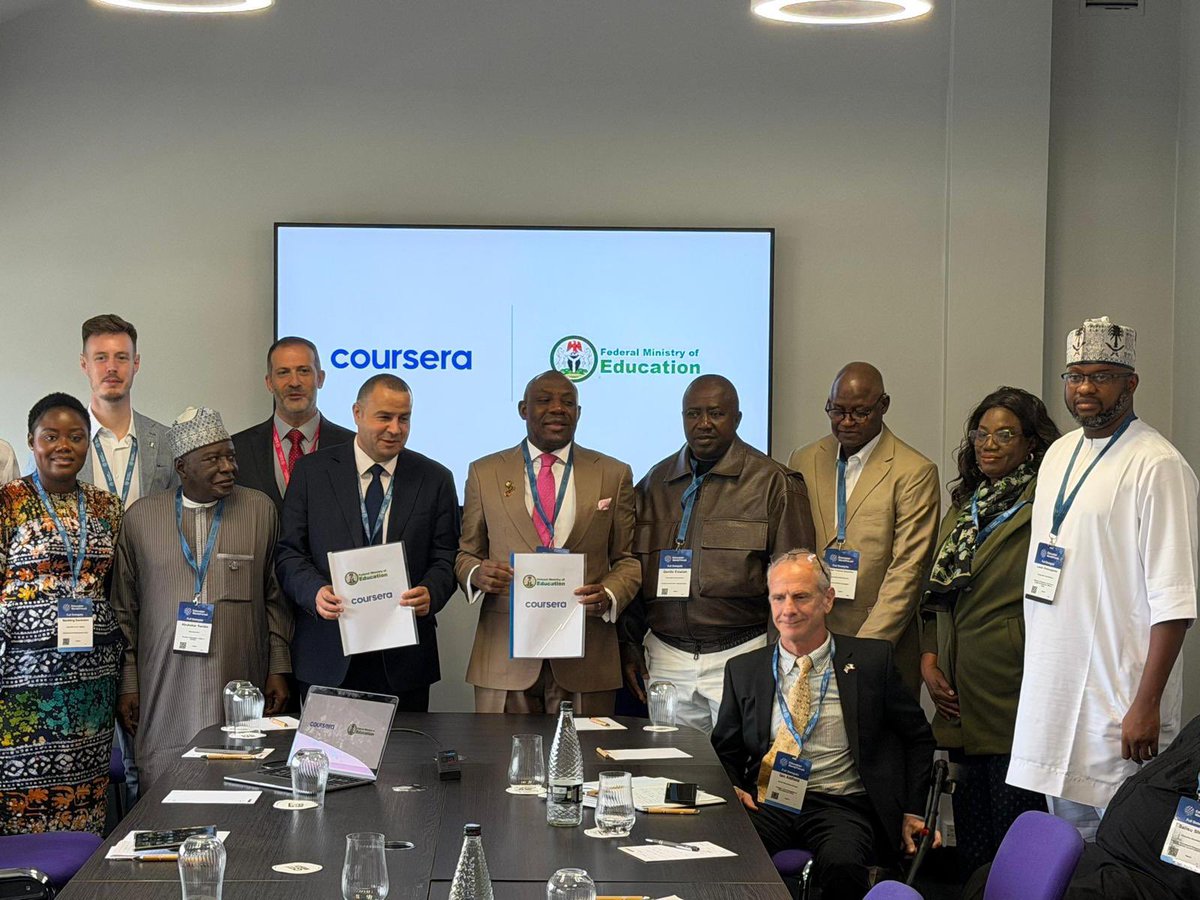
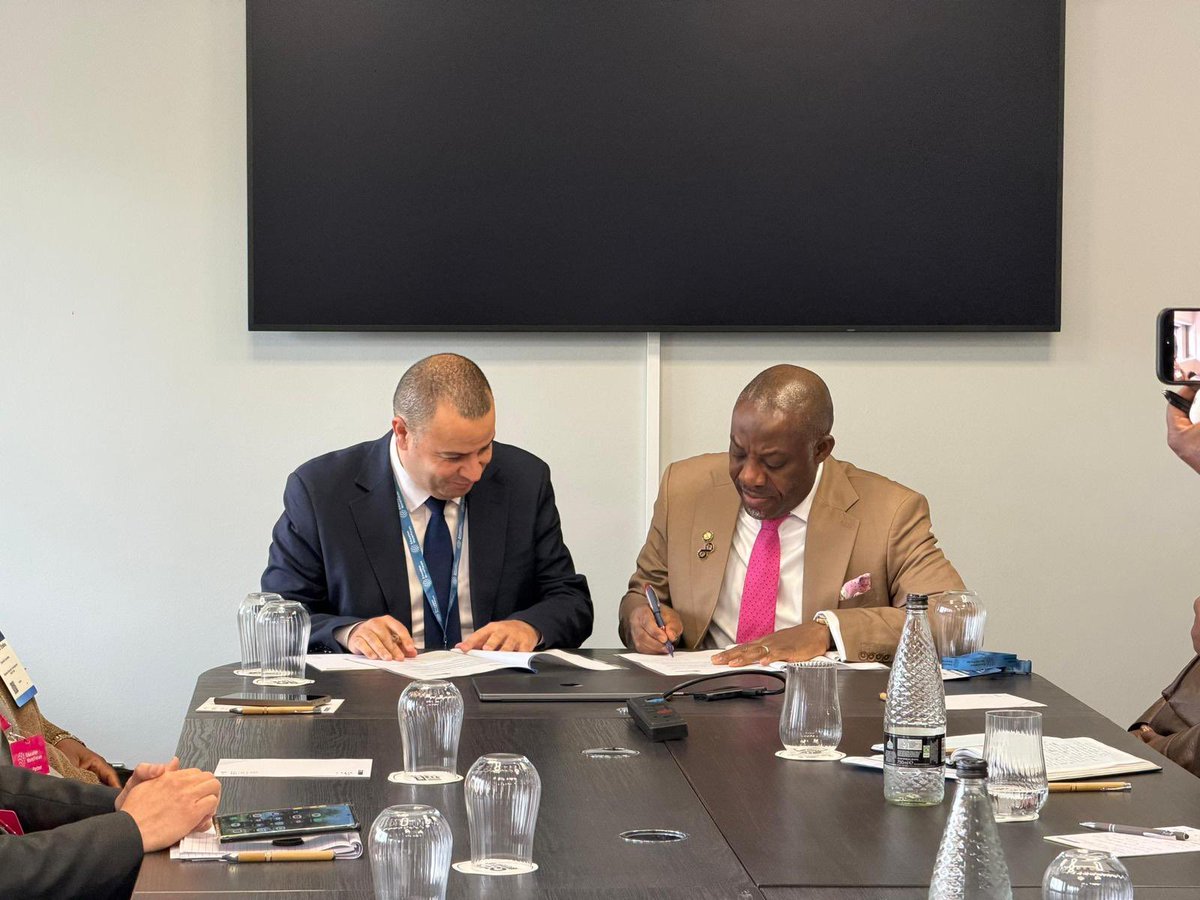
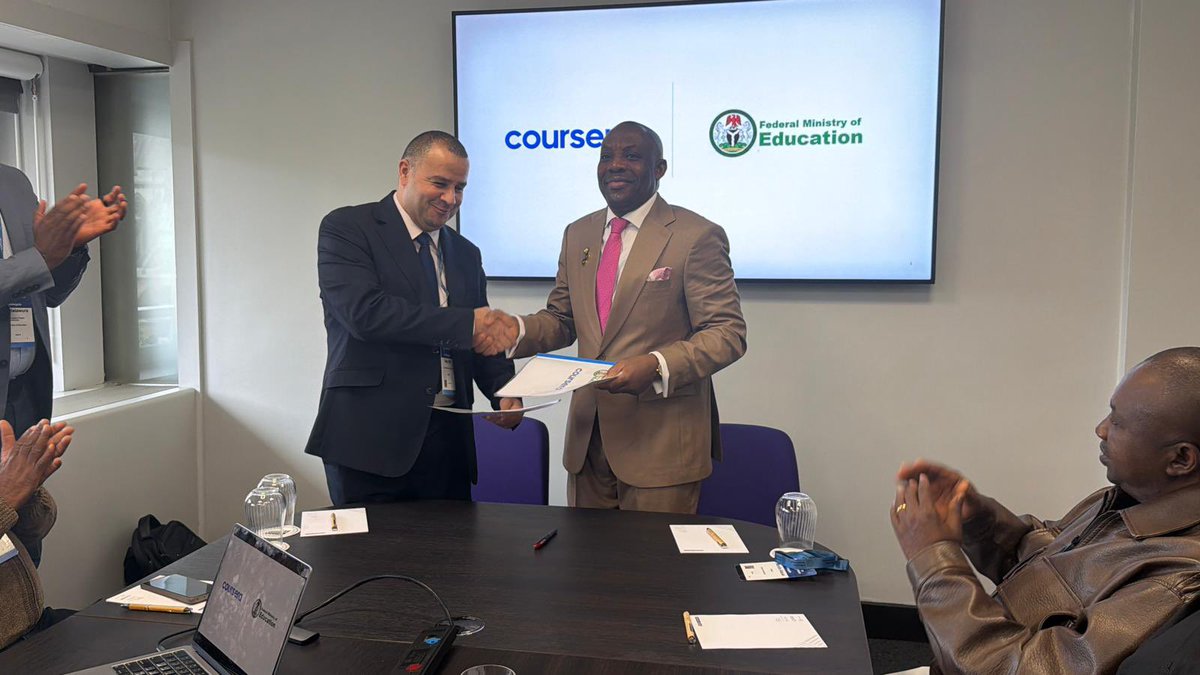
On the sidelines of the Education World Forum 2026 in London, I signed a landmark partnership with @coursera to launch the Digital Training Academy (DTA), a major initiative designed to equip Nigerian youths with globally competitive digital skills.
Through this programme, young Nigerians will receive world class training in Artificial Intelligence, Data Science, Cybersecurity, Cloud Computing, Software Engineering and other high demand digital fields, while earning globally recognised certifications valued by employers across the world.
In a landmark investment under the Renewed Hope Agenda of President @officialABAT, GCFR, the Federal Government has fully funded 36,000 licences across Coursera and @pluralsight in the first year alone ensuring that financial barriers do not prevent any Nigerian youth from accessing world class digital education.
This is one of the largest government funded digital skills investments in Nigeria’s history.
The programme will be implemented in partnership with the National Open University of Nigeria (NOUN) and Yaba College of Technology (YABATECH), combining nationwide access with industry focused mentorship and support.
Digital competency is no longer optional. It is foundational. We are building a generation of young Nigerians that can compete, lead and thrive in the global digital economy.
My sincere appreciation to Coursera, NOUN and YABATECH for partnering with us to make this vision a reality.
Speaking to Nicholas Nobrook on ‘Holding the Line: Nigeria’s reform bet in a fractured world’ this morning at the Africa CEO Forum https://t.co/PJLDoUEk2D
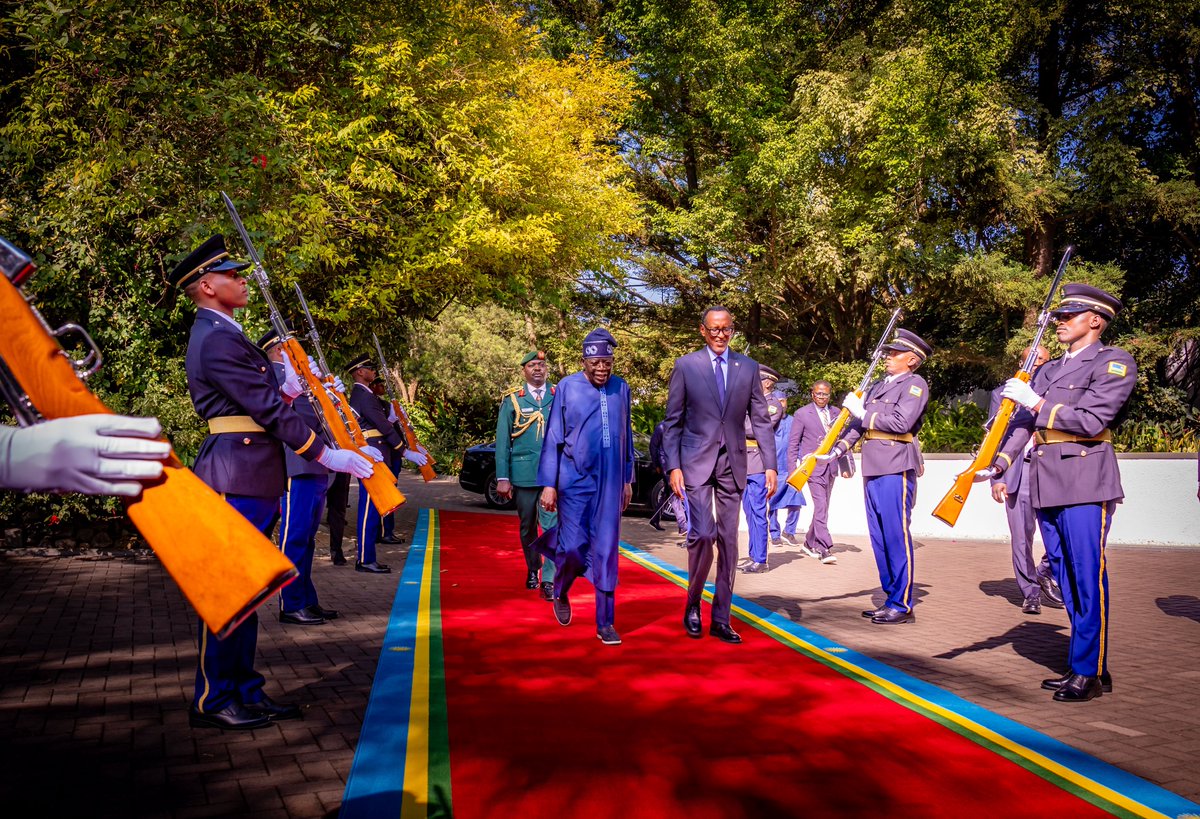
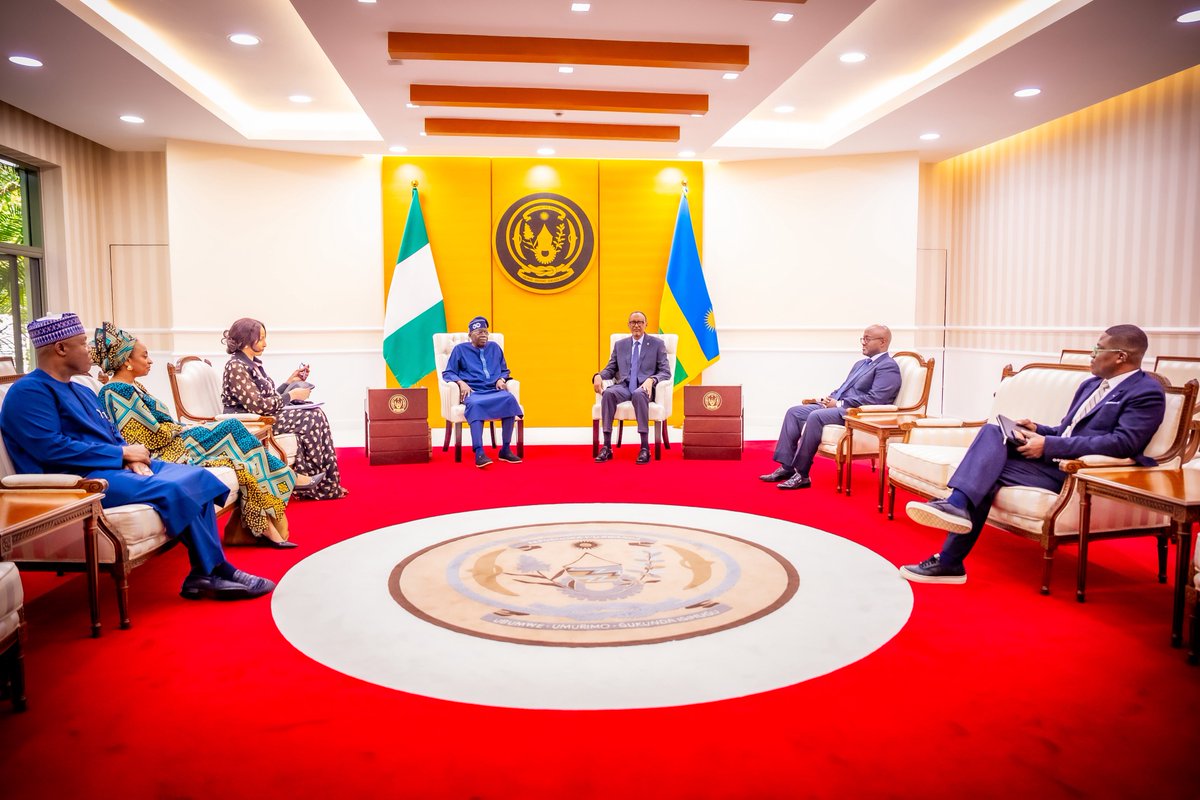
I arrived in Kigali this afternoon from Nairobi, where we joined other African leaders at the Africa Forward Summit co-hosted by President Ruto and President Macron to advance a new model of partnership built on trade, investment, innovation, infrastructure, and shared prosperity.
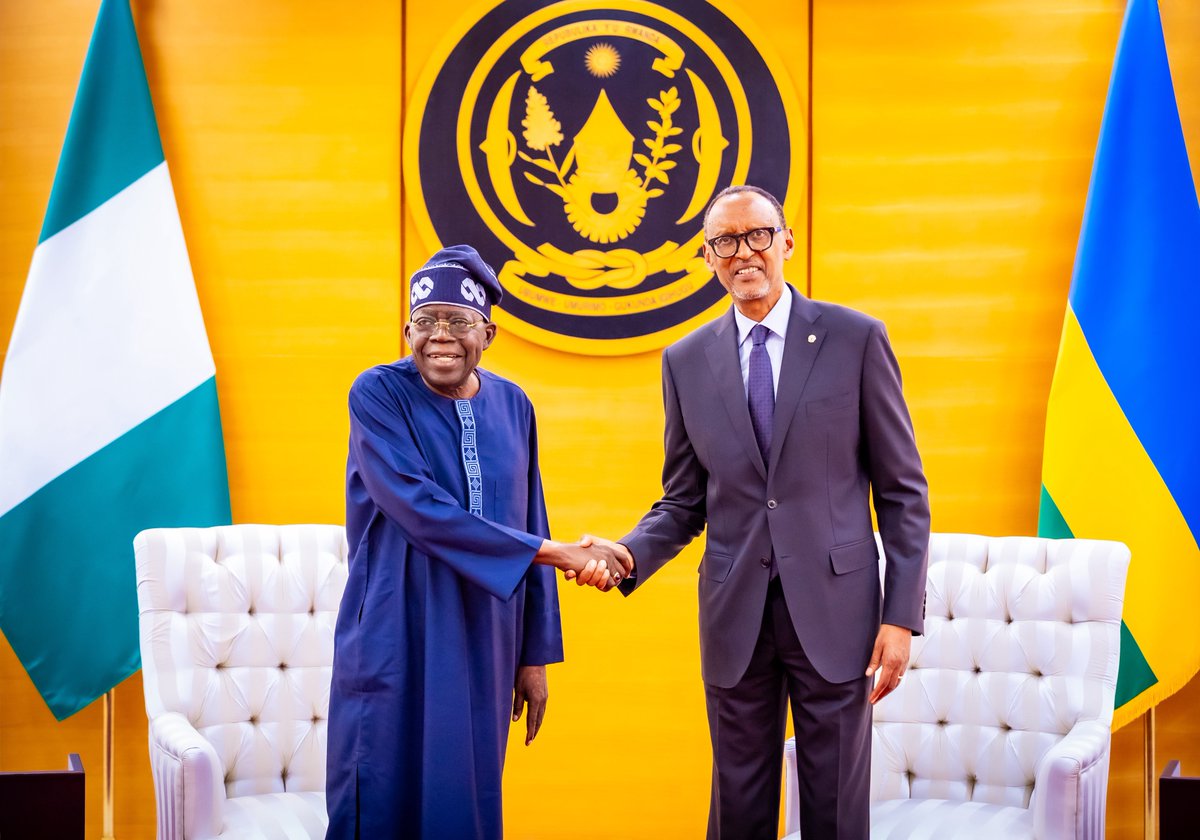
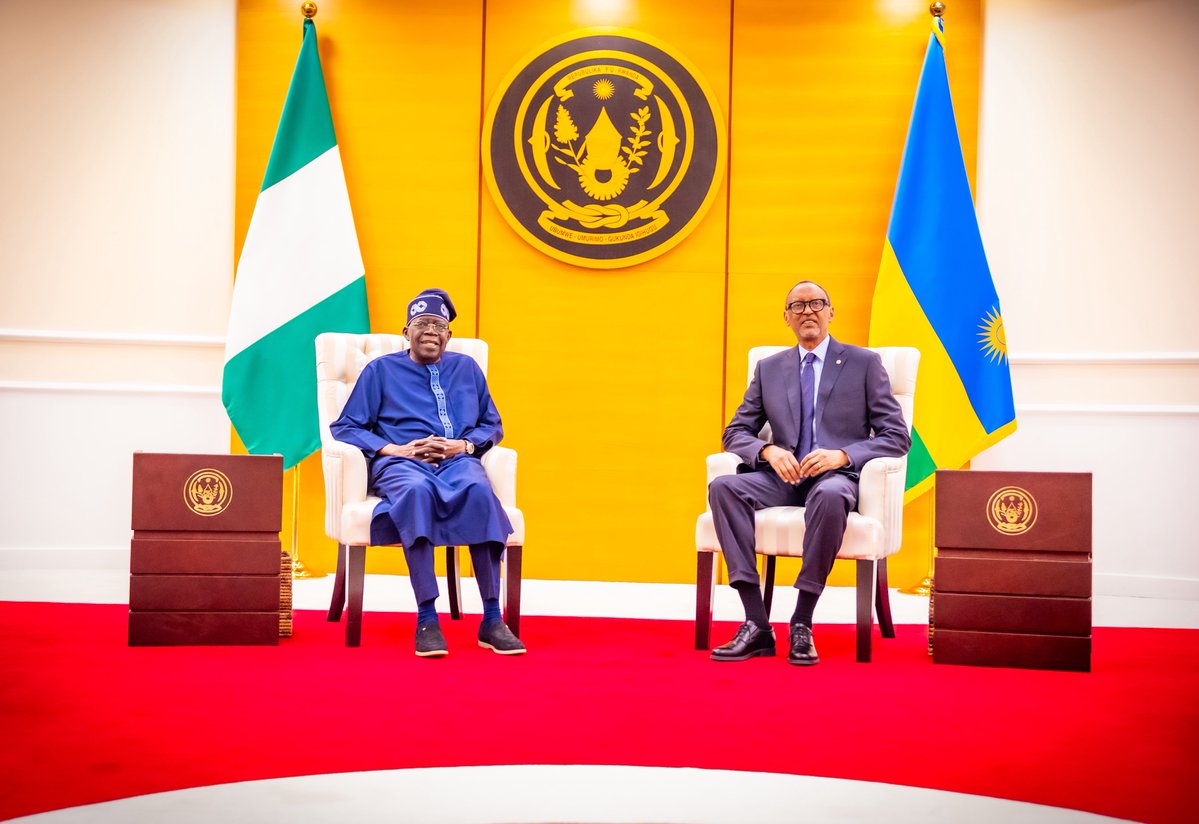
I thank my brother, President Paul Kagame @PaulKagame, for the warm reception upon my arrival in Kigali and for our productive bilateral engagement at the Urugwiro presidential village.
Nigeria and Rwanda understand what this moment requires. Africa must trade more with itself, move goods faster, connect its markets better, and give its entrepreneurs the continental scale they need to compete.
Our discussions focused on expanding bilateral trade between our two countries. We are also in the early stages of discussions with RwandAir on a practical flat rate arrangement that can help Nigerian businesses ship their goods more predictably across the continent.
As champions of the AfCFTA, Nigeria and Rwanda will continue to work together to deepen digital trade, strengthen market access, and remove the barriers that limit African enterprise.
Furthermore, Nigeria is proud to host the AfCFTA Council of Ministers and Digital Trade Forum in June. We also look forward to welcoming the continent and the world for IATF and CANEX from November 5 to 11, 2026, and again in November 2027.
From the Africa Forward Summit in Nairobi to the Africa CEO Forum @africaceoforum in Kigali, my message remains the same. Africa’s future will not be built by speeches alone. It will be built by trade, investment, innovation, and the courage to trust one another’s markets.
This is the path to shared and sustainable prosperity for our people and the continent.
Bola Ahmed Tinubu, GCFR