Kamusta!! It’s been awhile. So happy to announce that The Brown Psych Channel is now live on YouTube🎉🎉🎉Join me and my guests as we tackle different topics on Filipino Mental Health 🇵🇭❤️🇵🇭
3 - Gradual Steps. Introduce boundaries gradually to avoid shock or misunderstandings. Small steps, such as allocating personal time for self-care or gently declining certain requests, allow both you and your family members to adjust. (4/6)
2 - Build courage to communicate openly with your family. Engage in conversations with family members about your thoughts and feelings. Express your intentions clearly and kindly, letting them know that while you cherish the relationship, certain behaviors affect your well-being.
2 - Feeling unsure of the effectiveness of locally made products because we were taught that anything created in the west is always better. Or being told that our products should be cheaper than their international counterparts.
1 - Struggling to appreciate your skin color. Wearing long sleeves in the beach, covering up outdoors, and reaching out for whitening products because you're scared of getting darker.
My identity is the culmination of the wisdom passed down by my ancestors, the cultural currents that guide my thoughts, and the shared traditions that nurture my spirit. I embrace my role as both a product and a creator of a beautiful lineage's story.
As we heal, we realize it’s not about erasing and forgetting the past. Still, it’s about what we learned from those experiences, being compassionate with ourselves, & accepting where we are in our healing journey.
#filipinomentalhealth
Pretty much sums up my conversations with my clients this week, particularly, because of the holiday season and we are obligated to see some toxic Titos & Titas during this time of the year. #Filipinomentalhealth 🇵🇭🇵🇭
According to a study by Javier et al., 2014, colonial mentality is a factor in why Filipinos do not admit to having issues with raising kids in the U.S. due to wanting to "save face" in America.
Reference:
https://t.co/piVf4dzFNM
#Filipinomentalhealth
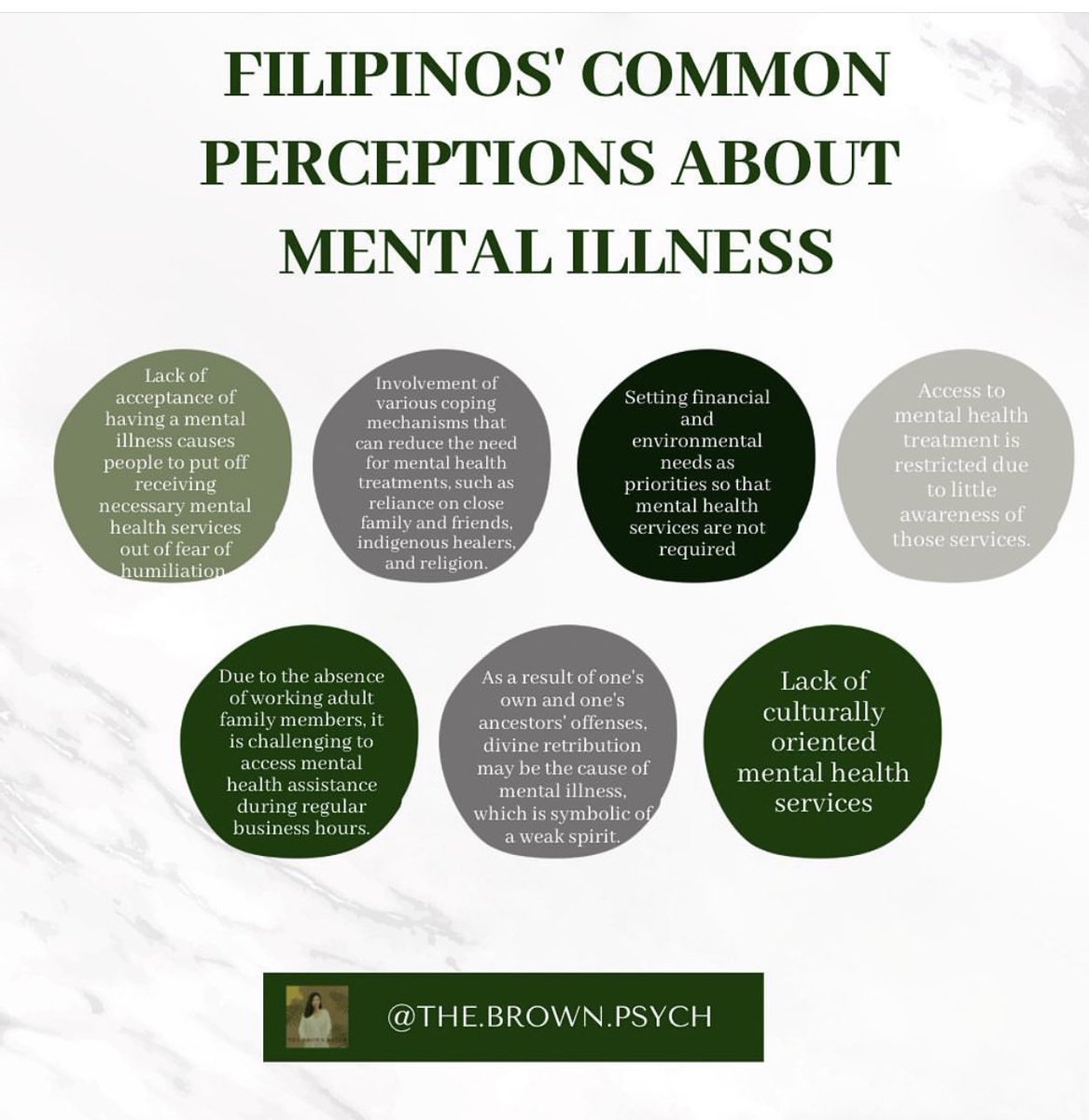
Although these perceptions, coping strategies, perspectives, and characteristics may initially help, they also create barriers and delay the implementation of necessary treatment interventions.
SOURCE: https://t.co/gR363W5DW6
As a result, mental illness has become the 3rd most prevalent disability in the Philippines, with 6 million Filipinos living with depression or anxiety. This brings the country's rate of mental disorders to the third highest among all Western Pacific Region.
There are many factors why we have a mental health crisis in the Philippines. Accdg. to WHO, this includes the fact that the Philippine Government does not provide economic support to organizations involved in formulating and implementing.