🔥Just published 🔥 @NEJM
SNAP RCT
In patients with MSSA bacteremia, cefazolin was noninferior to flucloxacillin or cloxacillin with respect to 90-day mortality and was associated with a lower incidence of acute kidney injury.
@DrToddLee@BradSpellberg
https://t.co/1B7YRtfcuM
A specific attention needs to be drawn on PCP in solid organ transplant, which can be prevented easily and efficiently with Bactrim, a cheap and efficient drug in SOT patients #idxposts
🆕💥🟢Prospective observational cohort study
Pneumocystis jirovecii pneumonia in solid organ transplant recipients
The median occurrence of PCP post-transplantation varies from the organ recipients with PCP occurring earlier in liver recipients and later in other organs reaching a median of 3.9 years in kidney recipients
https://t.co/yjvtHHB5Jy
Unfortunately, prophylaxis data associated to each case was not available. However, we know that well-taken prophylaxis is almost 100% efficient in preventing PCP in SOT patients.Most of the cases collected occurred in patients who stopped prophylaxis at 6 to 12 months post transplantation depending on the local policies or who discontinued prophylaxis from their own
🆕💥🟢Prospective observational cohort study
Pneumocystis jirovecii pneumonia in solid organ transplant recipients
The median occurrence of PCP post-transplantation varies from the organ recipients with PCP occurring earlier in liver recipients and later in other organs reaching a median of 3.9 years in kidney recipients
https://t.co/yjvtHHB5Jy
From a clinical perspective, these results challenge the assumption that serum-based TDM is sufficient for optimizing therapy in CNS infections. While targeting AUC/MIC ratios of 400–600 is supported by evidence in bloodstream and other systemic infections, its applicability to CNS infections remains uncertain
🆕💥🟢Population pharmacokinetics of vancomycin in serum and cerebrospinal fluid: variability in cerebrospinal fluid concentrations despite targeted serum exposure
Vancomycin CSF exposure exhibits substantial variability that is not reliably predicted by serum pharmacokinetics, even under standardized systemic exposure.
These findings highlight limitations of serum-guided dosing for CNS infections and support the need for compartment-specific dosing strategies and PK/PD targets #idxposts
https://t.co/YARa61a9oM
"Flu"cloxacillin is out, cefazolin is in.
SNAP RCT + CloCeBa RCT
Cefazolin is non-inferior to Anti Staphylococcal Penicillins (ASPs) for treatment of MSSA bactremia and causes less AKI and should be 1st line therapy #idxposts
🔥Just published 🔥 @NEJM
SNAP RCT
In patients with MSSA bacteremia, cefazolin was noninferior to flucloxacillin or cloxacillin with respect to 90-day mortality and was associated with a lower incidence of acute kidney injury.
@DrToddLee@BradSpellberg
https://t.co/1B7YRtfcuM
🆕🔥🟢Excellent review article
Carbapenemases: epidemiology, detection and management in a changing global landscape
🔺Carbapenemase classification.
🔺Characteristics of key carbapenemase families
🔺Geographic distribution
🔺Guideline-based treatment recommendations https://t.co/BeayHLiePW
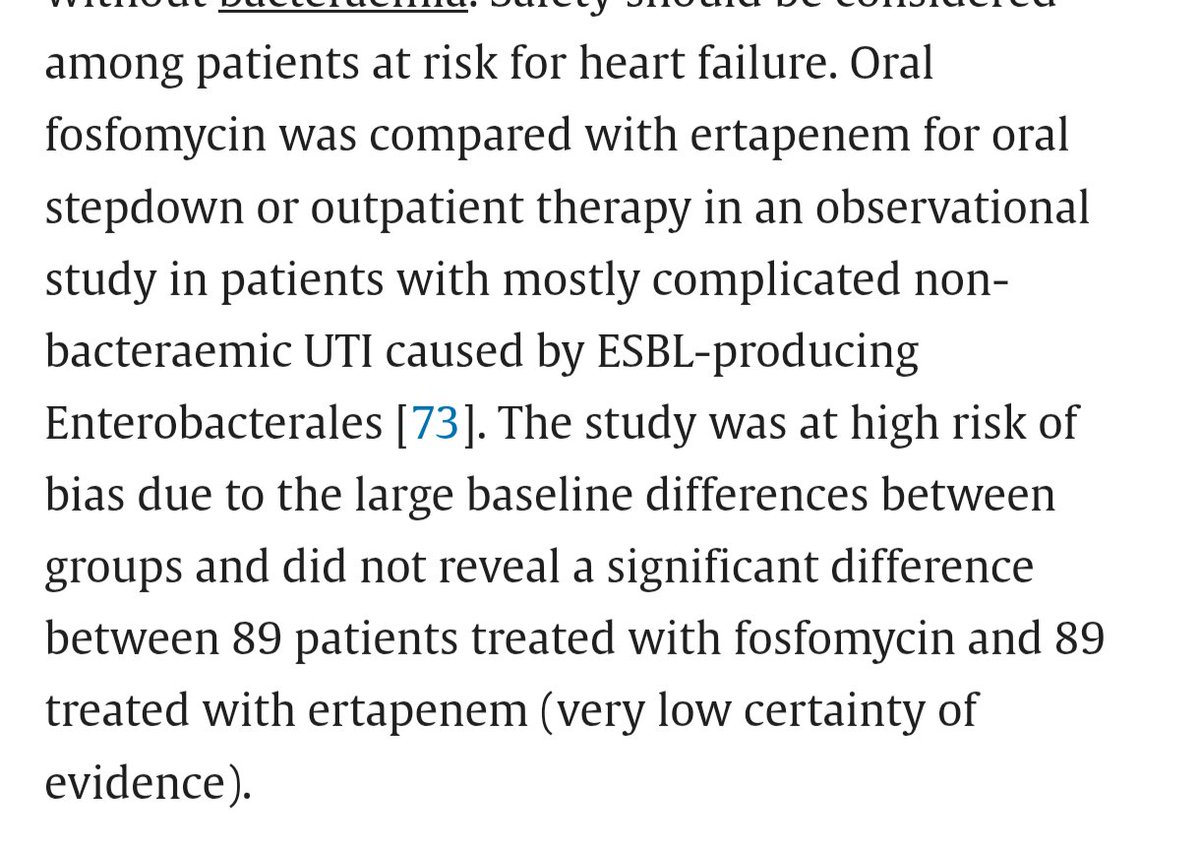
In the 2022 ESCMID guideline (Paul et al., Clin Microbiol Infect 2022), the discussion of cUTI focuses on intravenous fosfomycin (ZEUS and FOREST) and does not provide a recommendation regarding oral fosfomycin for cUTI or pyelonephritis
They didn't mention RCTs , likely published after the publication of the guidelines.
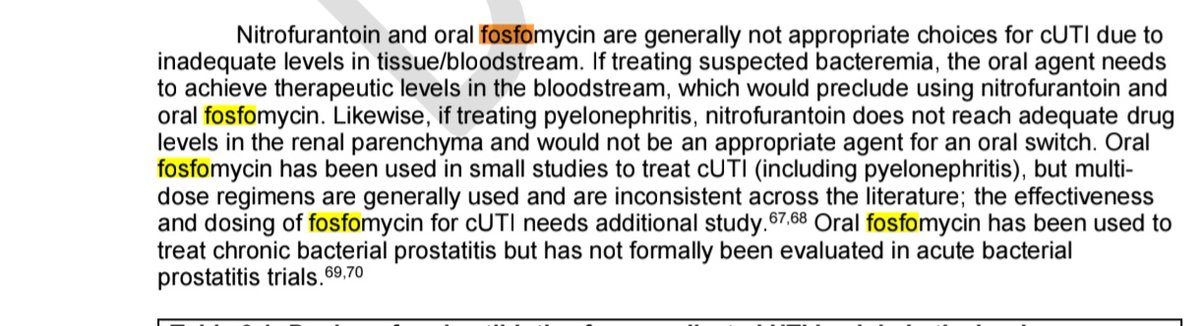
IDSA AMR guidance and IDSA cUTI guidelines didn't add citations
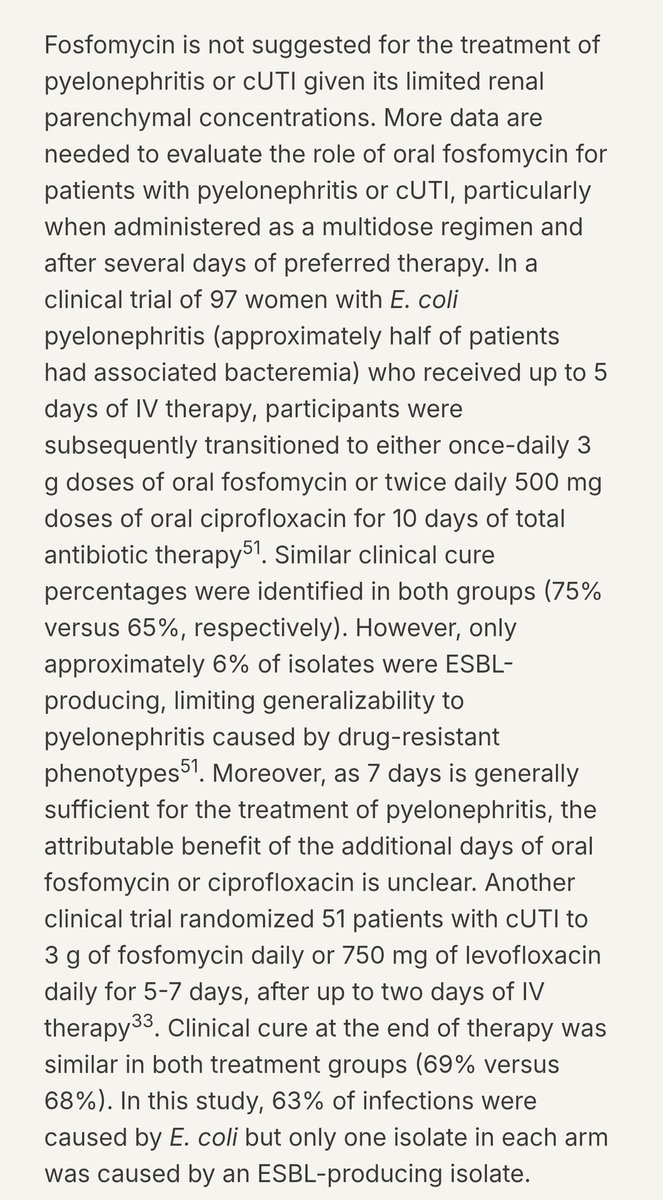
"Fosfomycin is not suggested for the treatment of pyelonephritis or cUTI given its limited renal parenchymal concentrations. More data are needed to evaluate the role of oral fosfomycin for patients with pyelonephritis or cUTI, particularly when administered as a multidose regimen and after several days of preferred therapy"
More data are needed? with 2 new RCTs a total of 6 now this might change!
Although current IDSA guidelines have historically discouraged oral fosfomycin for pyelonephritis because adequate renal parenchymal concentrations have not been established, this reflects a lack of pharmacokinetic data rather than evidence of inadequate penetration or treatment failure. Indeed, accumulating randomized trial data in cUTI suggest that oral fosfomycin achieves clinically meaningful renal tissue exposure, despite the absence of direct concentration measurements.
@Sir_Ousman@MoarSahitoPTI This is completely untrue. It is an urban legend that needs to be retired. Continuing therapy beyond symptom resolution does not promote resistance. Quite the opposite. Shorter Is Better.
@loofymectin@Sir_Ousman@_Blomp_@Roofyatzy@MoarSahitoPTI You can literally watch resistance emerge in real time in the lab by exposing bacteria to abx. The longer you continue the abx the more resistance you get. It’s natural selection in real time.
@loofymectin@Sir_Ousman@_Blomp_@Roofyatzy@MoarSahitoPTI That is correct. Dr Lou Rice debunked this myth in 2008, see here https://t.co/EqUNvyQqmG.
There is exactly zero evidence that stopping abx promotes resistance. Every RCT done in this space that has looked has found less resistance with shorter therapy.
🆕💥🔴Challenging Weight-Tiered Antibiotic Prophylaxis in Obese Patients Undergoing Colorectal Surgery Using CT-Derived Body Composition
Cefazolin exposure is better explained by local adiposity and kidney function than by the current ≥120 kg weight-based dosing threshold #idxposts https://t.co/LaaTZQdGJS
🆕💥🟢Antibiotic penetration in the male urinary tract: a critical review of pharmacokinetic and pharmacodynamic evidence #idxposts
https://t.co/oxDKP2q9QZ