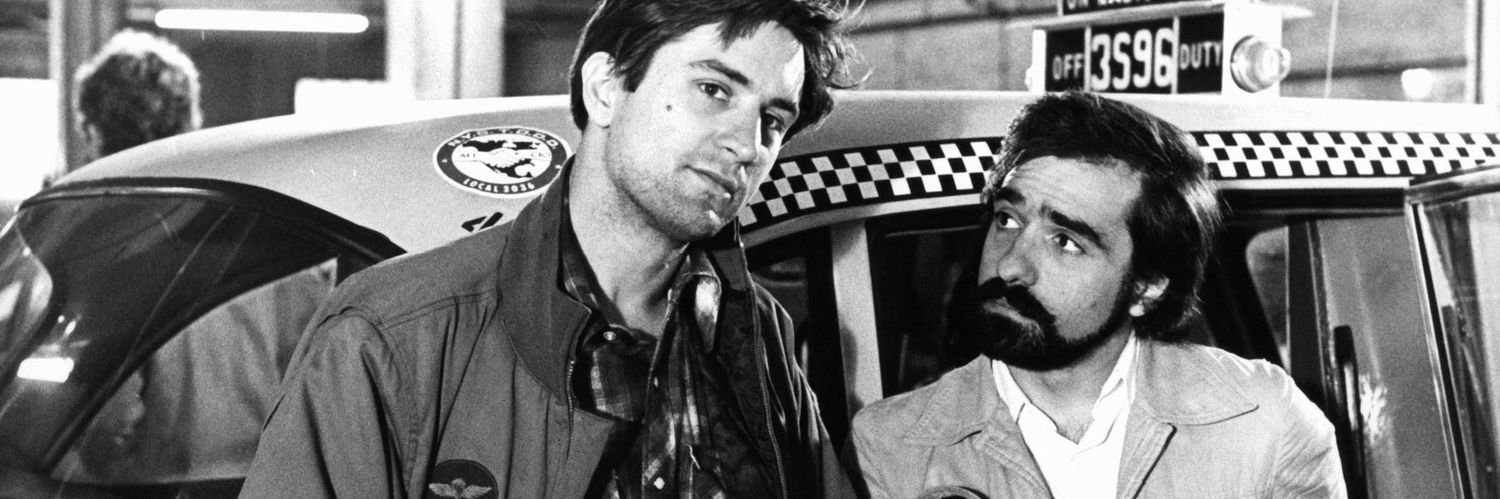
@hemanthrao11 cooking and how 🔥🔥
After a long, long time a teaser has made me sit up and clap 🤌🏽🤌🏽
Loved it @Dhananjayaka@NimmaShivanna 🔥
https://t.co/ExLHinWDI5
6.50am shows added for Imtiaz Ali's #MainVaapasAaunga restores faith in word of mouth as a force to reckon with.
For a non-action, non-starcast film, it feels really good!
Any film on Partition pulls really strong reactions out of anyone from north or east India, and a kind of “Meh, okay, but what’s so special about this particular tragedy, there were so many” from everyone else. I figured this out most acutely when I moved to Bangalore. Unlike Bombay or Delhi, the city has no ghosts of Partition in it. Delhi was practically rebuilt by refugees. Bombay was shaped and changed by them. Bangalore just sat outside the whole event, so it never really had to carry the grief or the weight I think.
For Sikhs, stories of Partition aren’t stories, you know? They’re our story. Every family has one of heroism and tragedy and sacrifice and compromise and horror and misery and redemption. Every family has a version of losing everything and starting again from nothing and still, decades on, mourning the loss of something you’re not theoretically supposed to feel grief about. People forget that a lot of our grandparents are still very alive and still living with the cost of a decision that landed them on one side of a line or the other.
And even inside the grief there’s a massive hierarchy. Punjab’s Partition was a compressed horror, a few months of near-total exchange, immediate and brutal. Bengal was a slow, constant bleed, 1947 and then the fifties and sixties and then 1971 again. Hindi cinema saw an influx of punjabi and sindhi families coming and building their own mythologies in a way that the Punjab partition became the ‘default’ Partition.
The other part, the one that makes our version specifically ‘ours’, is that Partition cut us off from our own geography and history. Nankana Sahib, where Guru Nanak was born, ended up on the wrong side of the border. So much of Sikh history is just inaccessible to us now.
I’m not saying you can’t appreciate or empathise with the story. But if you don’t come from a family like mine, you don’t really understand how present it still is. How alive. How watching an old man on a bed still living the horror and grief and meaning of partition looks like a day in our families.
So I guess what I’m saying is I understand someone not being able to comprehend the emotional and material compromises the survivors of partition made because they were not decisions made out of logic or consideration, but made from a desperate bid to rebuild a semblance of family and normalcy. I don’t think you can see these decisions through a moral lens of today or really, of any time.
Back when Rockstar released to mixed reviews, Anurag Kashyap said its a film that will click on 2nd watch, promising to buy tickets for everyone willing to give it a shot.
Later, they spent the night discussing film with fans on Infinity mall stairs.
That era was something else
Main Vaapas Aaunga is not perfect, but I fell in love with the film. A newer Imtiaz Ali, a vintage Naseer. Instant favourite.
Review:
https://t.co/MpHDm9OIVF
There is, in Imtiaz, a certain whimsy. A playfulness, an innocence that survives not because the world has been kind, but because he refuses to believe it is all there is.
What anchors that innocence is belief. A belief that things need not have happened as they did. That we are not living in the best of all possible worlds. That history, however brutal, was not inevitable.
His protagonist loses almost everything, yet he continues to yearn. He yearns for the life that might have been, for the event not to have occurred, for the possibility of another ending. Though he has lived an entire life since, time has passed, and still, as he leaves, he longs.
In that longing lies something larger than one man. It is, in some sense, the yearning of an entire generation.
I do not wish to overstate it, but the film feels almost Marquezian at times. And Imtiaz, I think, possesses a rare gift among us: the ability to find hope without denying sorrow.
Our cinema, too, might have been better had it trusted more deeply in the things he trusts.
@imtiazalifilms@BirlaStudios@sunil_chainani@ApplauseSocial@vedangrainaaaa@diljitdosanjh@SharvariWagh14@naseeruddnshah@Shibasishsarkar
Imtiaz, my friend, So so so happy to see Main Vapas Aaunga. In times when Film Directors, for various reasons, are getting ruthlessly stripped off the most vital virtue of their art form, every frame of your film is soaked in that very virtue. BELIEF!!!
It shatters every syntax of the feeble trade myth of what the audience likes and wants, and stands firm on its sheer soul. Soul so mighty so and yet so vulnerable and endearing.
Such a powerful love story between the story teller and his country.
Dear audience,
This is probably the film you have been waiting and wanting to see in the theaters with your family.
ZINDABAD Dost!!!
A new way of making films and distributing films is right around the corner. The old guard of distribution and exhibition is soon going to become stale.
Exciting times ahead. Especially for Kannada cinema.
Let me trace the timeline here because nobody's connecting it.
Step 1: Scrape the entire internet. Every book, every article, every conversation, every piece of art, every forum post. Do it without asking. Do it without paying.
Step 2: Train a model on all of it. Call it "artificial intelligence."
Step 3: Go to BlackRock's Infrastructure Summit and announce: "We see a future where intelligence is a utility, like electricity or water, and people buy it from us on a meter."
Step 3 is where you sell people's own knowledge back to them. On a meter.
They took the collective output of human thought, compressed it into a model, and now they want to charge you by the token to access a version of what you and everyone you know already created.
One Reddit user put it perfectly: "They stole all this data from us, the people, our life's work, creativity, art, by devouring the internet and blowing through all copyright laws. Now they want to sell it back to us in the form of a utility."
Imagine if someone photocopied every book in the public library, burned the library down, and then opened a subscription service for the copies.
That's the metered intelligence business model.
And they're pitching it to infrastructure investors as though they invented water.