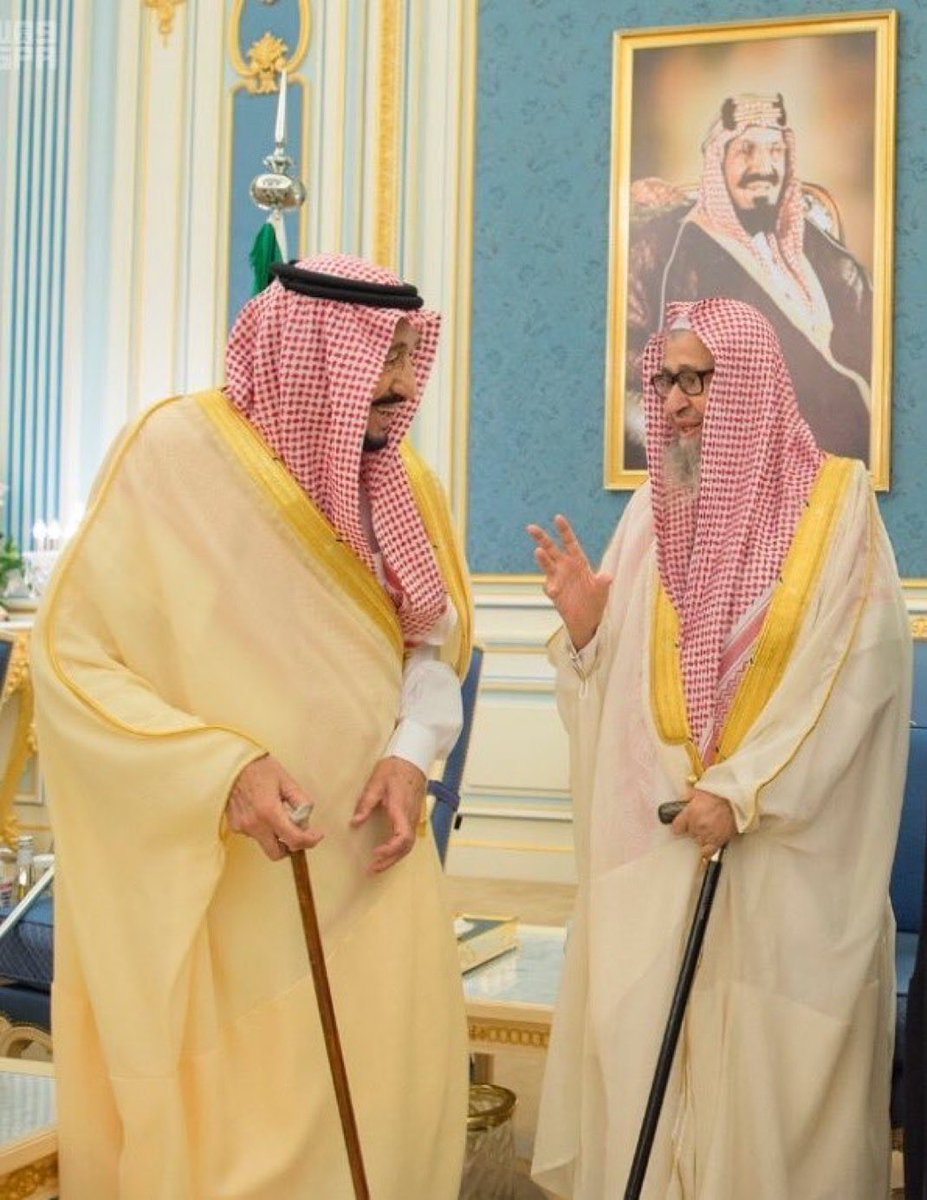
Sheikh Dr. Ṣāliḥ bin Fawzān Al-Fawzān (may Allah preserve him) has been appointed as the Grand Mufti of the Kingdom of Saudi Arabia, Chairman of the Council of Senior Scholars, and General President for Scholarly Research and Fatwa, with the rank of minister.
Born in Ash-Shamāsiyyah, a small town in the region of Al-Qassim, in 1354 AH (1935 CE), Sheikh Al-Fawzān grew up surrounded by the love of Qur’an and learning. His early education began in local schools before he continued to Imam Muhammad bin Saud Islamic University, where he completed his Bachelor’s, Master’s, and Doctorate degrees in Islamic Law (Fiqh).
His Master’s thesis focused on the laws of inheritance, while his Ph.D. dissertation explored the rulings of permissible and forbidden foods in Islamic law. Alongside his academic studies, he benefitted from great scholars such as Sheikh Abdullah bin Hamid and Sheikh Ibrahim bin Ubayd in Buraydah, and later from Sheikh Abdulaziz bin Baz in Riyadh.
After graduation, Sheikh Al-Fawzān began a lifelong journey in teaching. He served as a teacher at the Institute of Knowledge in Riyadh, then at the College of Sharia and College of Usul al-Deen, before becoming the Director of the Higher Institute of Judiciary. His years of service produced generations of judges, scholars, and students of knowledge across the Kingdom.
Alongside his academic work, Sheikh Al-Fawzān has served for decades as Imam and Khateeb of Prince Mutaib bin Abdulaziz Mosque in Riyadh, where he continues to teach lessons in creed, jurisprudence, inheritance, and Arabic studies. His voice became known throughout the Muslim world through the long-running Saudi radio program “Noor ala al-Darb”, where his calm explanations and firm adherence to evidence earned the respect and trust of millions of listeners.
Firmly grounded upon the methodology of Ahl al-Sunnah wal-Jama’ah, Sheikh Al-Fawzān follows the path of the early scholars combining knowledge, humility, and balance. His writings, including “Al-Irshad ila Saheeh al-I’tiqad,” “Al-Bayan li-Akhṭa’ Ba’ḍ al-Kuttab,” and the four-volume “Al-Khuṭab al-Minbariyyah,” have become trusted references for students and imams alike.
He has also contributed to developing official curricula in Islamic studies, ensuring that future generations learn from sound, evidence-based sources.
Today, with his appointment as Grand Mufti, Sheikh Al-Fawzān assumes the highest position of religious authority in the Kingdom guiding the nation’s scholarly research, overseeing the issuing of fatwas, and chairing the Council of Senior Scholars.
A life devoted to teaching, clarity, and service has now culminated in one of the greatest honors a scholar can hold a trust he carries with humility and dedication.
May Allah preserve Sheikh Dr. Ṣāliḥ Al-Fawzān, bless his efforts, and continue to make his knowledge a source of light for the Ummah.
Statement from the Royal Court
“A royal decree was issued today, the text of which is as follows:
Number: A / 111
Date: 30 / 4 / 1447 AH
With the help of Allah Almighty,
We, Salman bin Abdulaziz Al Saud,
King of the Kingdom of Saudi Arabia,
After reviewing the Basic Law of Governance, issued by Royal Decree No. (A / 90) dated 27 / 8 / 1412 AH,
And after reviewing the System of Ministers, Deputy Ministers, and Employees of the Distinguished Rank, issued by Royal Decree No. (M / 10) dated 18 / 3 / 1391 AH,
And after reviewing the Royal Decrees No. (A / 4) dated 20 / 1 / 1414 AH, No. (A / 14) dated 3 / 3 / 1414 AH, No. (A / 82), and No. (A / 83) dated 29 / 2 / 1446 AH,
And based on what was presented to us by His Royal Highness the Crown Prince,
We have ordered the following:
First:
His Eminence Sheikh Dr. Saleh bin Fawzan bin Abdullah Al-Fawzan is appointed as the Grand Mufti of the Kingdom of Saudi Arabia, Chairman of the Council of Senior Scholars, and General President of the General Presidency for Scholarly Research and Fatwa, with the rank of Minister.
Second:
This decree shall be communicated to the competent authorities for its adoption and implementation.
Salman bin Abdulaziz Al Saud”
Imam Ibn Qayyim (رَحِمَهُ اللّٰهُ) heeft gezegd:
“Allah de Almachtige verspilt nooit iets dat Zijn dienaar ter wille van Hem verdraagt.”
Ravdatu’l-Muhibbin (p. 460)
Helaas is de groot moeftie van Saoedi Arabië overleden. Sheikh abdelaziz ale sheikh.
Inna lillah wa inna ilihi radjoen.
Moge Allah hem barmhartig zijn en hem de hoogste paradijs geven.
Ibn al-Qayyim - رحمه الله- zei:
De belangen van deze wereld en het hiernamaals zijn afhankelijk van inspanning.
Er is geen rust voor iemand die niet hard werkt.
Rust is juist evenredig aan de mate van inspanning.
Ibn 'Uthaymeen -رحمه الله- zei:
Wees voorzichtig en spreek alleen als het goed is, want dat versterkt je geloof, beschermt je tong en levert meer respect op bij je broeders.
قال ابن_عثيمين رحمه الله تعالى:
احرص على أن لا تتكلم إلَّا حيث كان الكلام خيرًا ، فإن ذلك أقوى لإيمانك وأحفظ للسانك وأهيب عند إخوانك .
[«شرح الأربعين النّوويّة»(٢٠٣)]
📢 Opleidingstraject Koran docente afgerond!
✨الحمد لله الذي بنعمته تتم الصالحات✨
🎉 Alhamdulillaah, de zusters hebben hun opleiding tot Koran docente afgerond!
Met veel inzet en toewijding hebben zij hun certificaat behaald bij Masjid Al-Mukaram.
Zij zijn nu klaar om kinderen in de moskee te helpen met het lezen, schrijven en reciteren van de Koran, uit het boek al-Qā’idah an-Nūrāniyyah
Moge Allaah hun kennis zegenen en het nuttig maken voor henzelf en onze jeugd. Moge Allaah iedereen die hieraan bijgedragen heeft rijkelijk belonen.
اللهم بارك في علمهن واجعله نافعًا لهن ولغيرهن✨
Aan Imam Ahmad ibn Hanbal -رحمه الله- werd gevraagd:
Wie sterft als moslim en de soennah volgt, sterft in een staat van goedheid?
Hij antwoordde: "Hou je mond. Hij stierf in een staat van volledige goedheid."
Inna lillah wa inna ilihi radjoen.
Helaas is onze groot geleerde sheikh Rabi' ibn haadi overleden.
Moge Allah hem de hoogste paradijs schenken.
De sheikh stond bekend om zijn zuivere intentie en ijverigheid om de sunnah te verduidelijken.
Ibn al-Qayyim -رحمه الله- zei:
Alcohol en zingen zijn broeders en zusters in moedermelk.
Alcohol neemt je verstand weg, terwijl zingen het hart wegneemt.