APPLE BANKS ON YOU PAYING $2.99/MONTH FOR ICLOUD FOREVER.
You don't need it.
I freed 47GB in 10 minutes without spending a cent.
Here are the 5 steps to copy:
1 ▸ Kill the Photo Storage Trap
Go to Settings → Photos → turn OFF “iCloud Photos” if you don’t use it. Then open the Photos app → Albums → Recently Deleted → Delete All. iOS secretly holds deleted photos for 30 days. That alone usually frees 3-8GB instantly.
2 ▸ Offload Apps You Don’t Actually Use
Settings → General → iPhone Storage. Scroll through the list. Tap every app you haven’t opened in 30+ days and hit “Offload App.” It deletes the app but keeps your data — so you can reinstall anytime without losing a thing. Easy 5-10GB back.
3 ▸ Clear the Hidden Cache in Safari and Messages
Settings → Safari → Clear History and Website Data.
Then Settings → Messages → Keep Messages → change to “1 Year” (or 30 days if you’re ruthless). Old attachments, GIFs, and message threads take up more space than most apps. This usually recovers 4-12GB.
4 ▸ Delete Large Attachments Without Scrolling Forever
Settings → General → iPhone Storage → tap Messages → “Review Large Attachments.” iOS shows you every large photo, video, and file ever sent to you, sorted by size. Delete the junk in 2 minutes. I pulled 11GB out of this one step alone.
5 ▸ Force Reboot to Clear System Cache
Once everything’s deleted, force restart your iPhone (volume up → volume down → hold side button until the Apple logo). iOS rebuilds its system cache on restart and releases storage it was holding in the background. Final 2-4GB usually shows up here.
No iCloud upgrade. No new phone. No paid app.
JOB INTERVIEW:
"Why are you looking to leave your current company?"
Most candidates say:
"I'm just looking for a new challenge, and I feel like I've outgrown my current role and there's no room for growth..."
THE WINNING ANSWER:
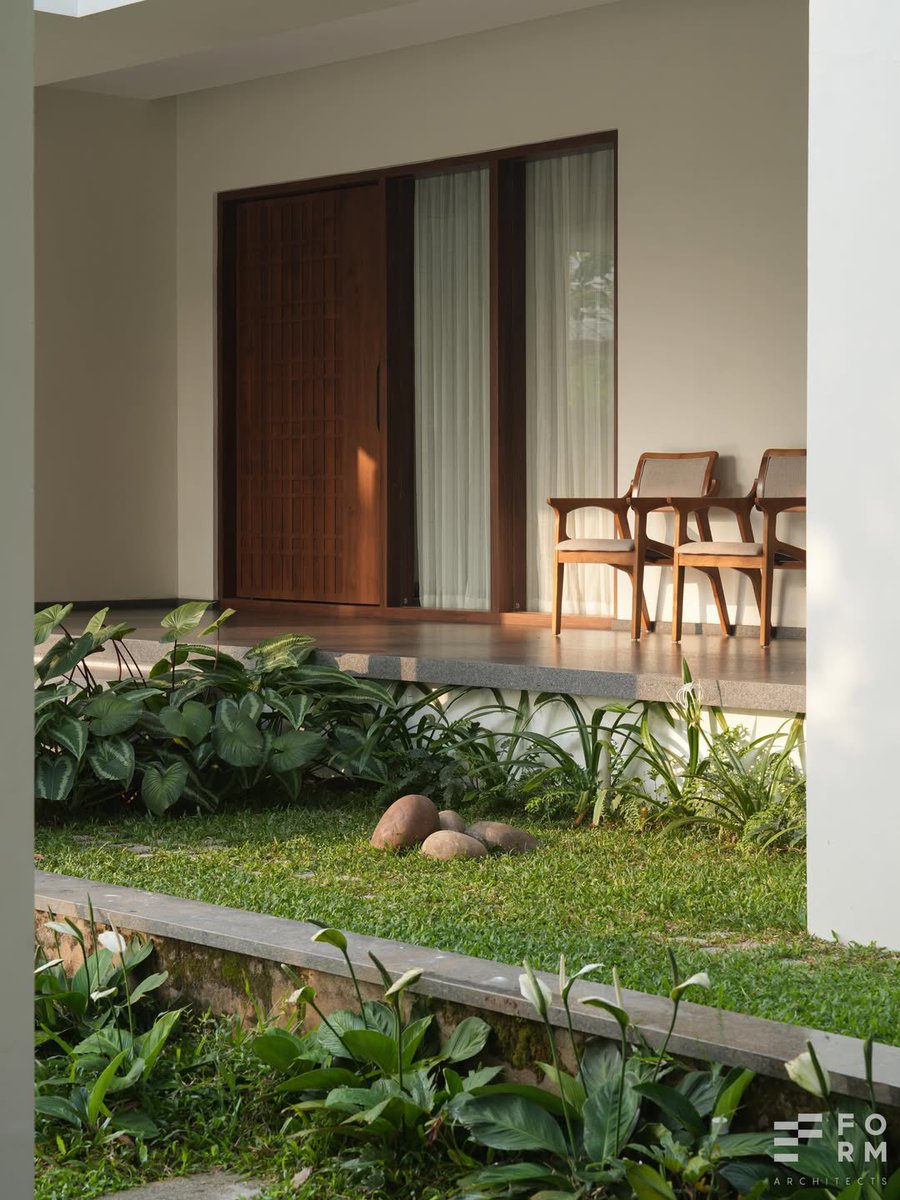
This is what climate-responsive residential design should look like in tropical regions.
- Deep roof overhangs reduce direct heat penetration.
- Vegetation around the building helps cool the surrounding microclimate.
- Large shaded openings improve natural ventilation.
- And the recessed spaces create softer transitions between indoors and outdoors instead of exposing walls directly to harsh sunlight.
In places like Nigeria where heat and unstable electricity are everyday realities, sustainable architecture does not always need expensive technology.
Sometimes, better design decisions alone can make buildings significantly more comfortable to live in.
The Iranian navy, which has been destroyed eight times, has apparently closed the Strait of Hormuz again, because the United States, for the seventh time, won the war that wasn’t a war, so now the United States has to open the Strait of Hormuz that was already open before the not-war began.
The not-war began because Iran had uranium that was totally, completely, beautifully obliterated, so they can’t build the nuclear bomb they weren’t building, which is why the United States had to start the not-war it definitely didn’t start.
Now the United States, which has nuclear weapons, is threatening to use nuclear weapons to stop Iran from getting nuclear weapons, because nuclear weapons are far too dangerous for countries with nuclear weapons to allow other countries to have.
If the United States saw the United States doing what the United States does in other countries, the United States would invade the United States to liberate the United States from the tyranny of the United States.
This is architecture based on endurance principles. No dramatic ideas this is conceived to stand the test of time.
Built for generations is the caption.
Built to last and stand out.
If you see a well constructed rammed earth building anywhere in Africa, there is a strong chance a Ghanaian architect or engineer had something to do with it. Ghana has long proven how serious she is with this material.
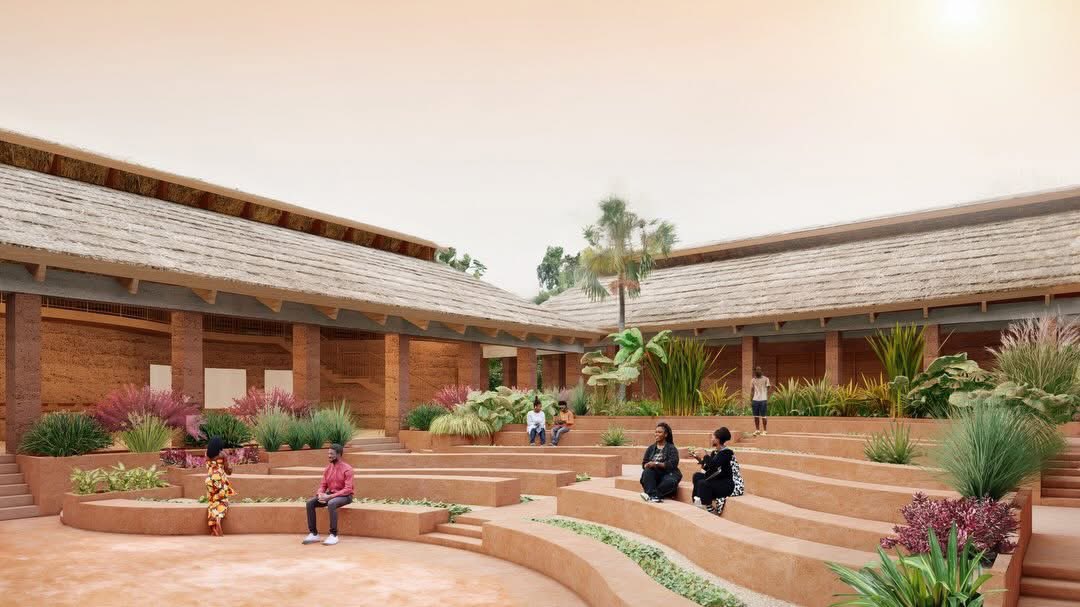
The Falcon Cinema is the latest proof. Berekuso, Ghana. Studio NEiDA. Commissioned by film curator Jacqueline Nsiah. Expected completion 2027.
A purpose built cinema and cultural archive dedicated entirely to African film. Four buildings arranged around a courtyard drawn from Asante compound architecture. Earth materials throughout. Thatched palm leaf roof. A roof assembly that channels rainwater into the central courtyard and allows hot air to escape without mechanical cooling. The main cinema is an outdoor planted amphitheatre. Construction waste will be repurposed into the courtyard seating landscape.
250 and 150 seat screening rooms. A restaurant. An archive. An education hub. An outdoor cinema. Future filmmaker residencies planned.
A cinema of this scale generates consistent employment, attracts filmmakers, scholars, and tourists, and creates a market for local businesses around it. African film reels are currently scattered across institutions around the world, many never seen on the continent they came from. This building brings them home and builds the industry pipeline to train the next generation of African filmmakers on African soil.
Studio NEiDA | The Falcon Cinema | Berekuso, Ghana | Expected 2027
Commissioned by Jacqueline Nsiah
Una lección de diseño bioclimático urbano.
S House, de Mm++ Architects en Tan Thuận Tây, integra jardines, ventilación natural y huertos productivos para crear confort sin depender de sistemas mecánicos.