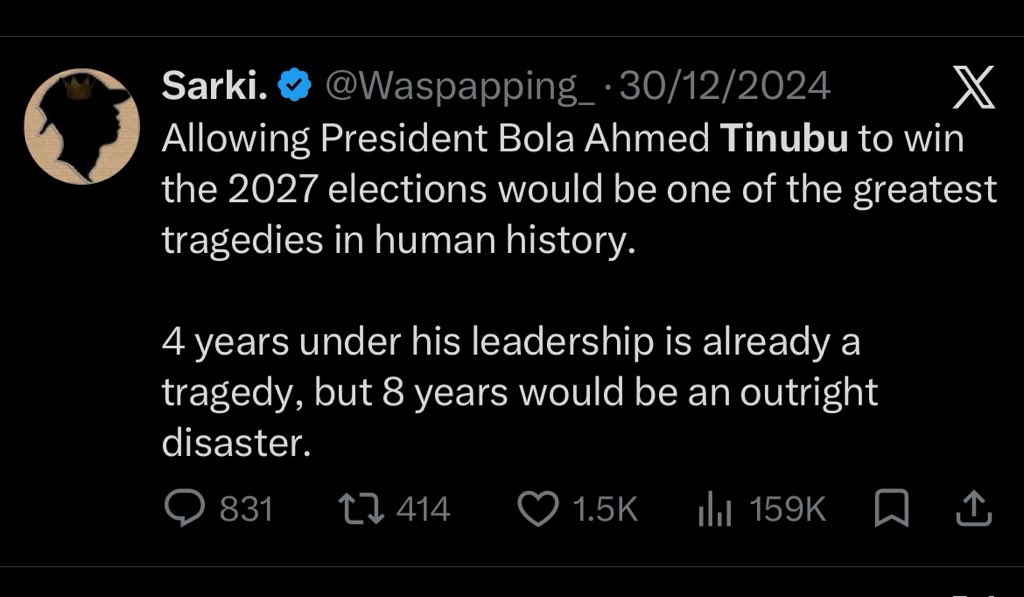
Kwankwaso had more than three meetings with President Bola Tinubu before decamping to the ADC to pull Peter Obi out. The aim was to ensure that the Atiku/Obi ticket never materialised.
And today, the NDC governorship candidate is missing from INEC’s list.
Game well played!
You have applied for 30 fully funded PhDs and received 30 rejections.
Before you submit application number 31, do this.
Step 1: Open a spreadsheet and create these 5 columns:
1. University and programme
2. Your research fit
3. Funding and nationality requirements
4. Application documents submitted
5. Rejection stage
Step 2: Look for the patterns.
• Were you rejected before the interview?
• Did you apply for projects outside your research experience?
• Did your proposal address the supervisor's actual research?
• Did you meet the funding conditions for international applicants?
• Did you use the exact same CV and research statement for every application?
The answers may reveal a structural problem that another 50 applications will not solve.
Step 3: The Diagnostic Exercise
Choose three unsuccessful applications. Compare their requirements with what you actually submitted, and identify ONE weakness you can correct before your next application.
• If you consistently reach interviews, examine your interview preparation.
• If you never reach the shortlist, review your eligibility, research fit, and written application.
A rejection does not always tell you why you were unsuccessful. Where possible, request feedback rather than guessing. The aim is not to apply to fewer universities; it is to learn something from every application.
How many funded MSc/PhD applications have you submitted without receiving an interview?
#FullyFundedPhD #PhDApplications #PhDFunding #AcademicCareers #ResearchOpportunities
(Need an expert to audit your PhD proposals, CV, and outreach strategy? Subscribe to my premium X circle via the subscription button in my bio!) 🎓🚀