Change starts where you are.
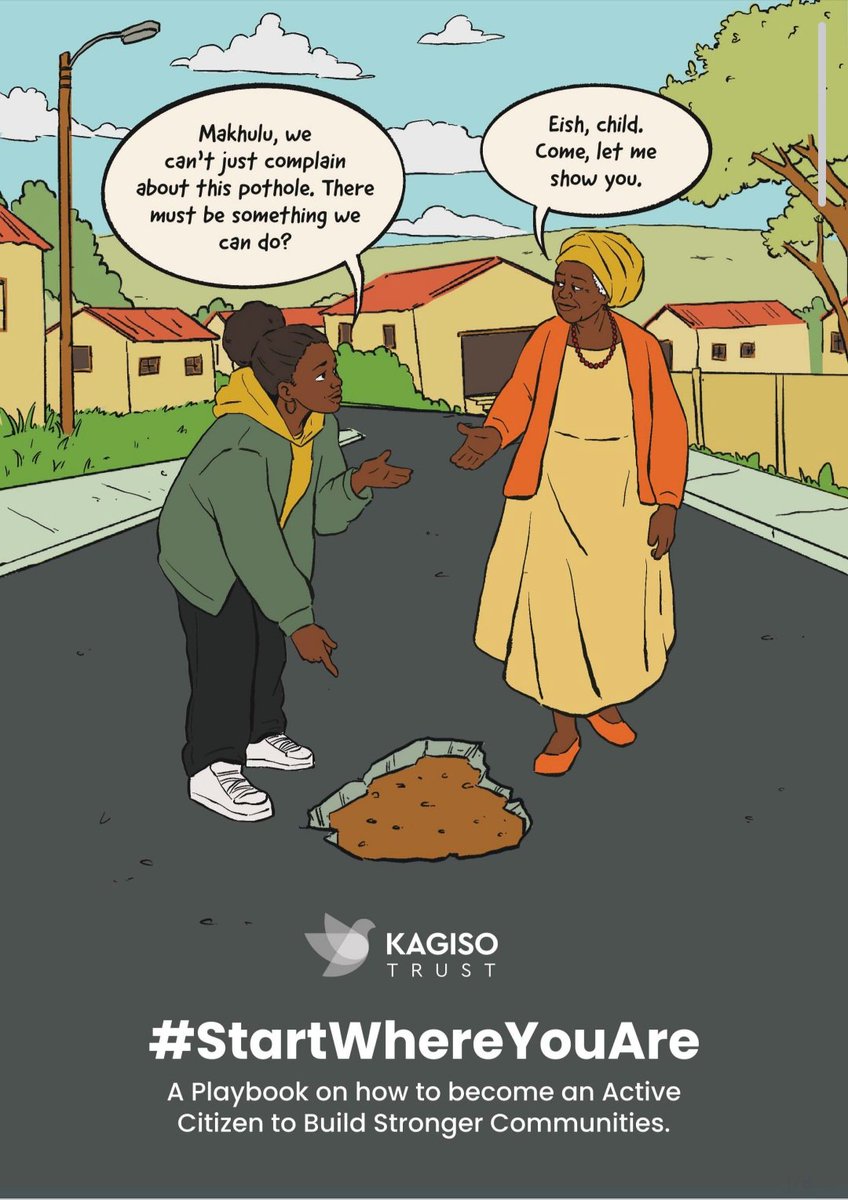
Kagiso Trust has launched the #StartWhereYouAre Active Citizenship Playbook. It is a practical guide to speaking up, getting involved, making informed choices and staying engaged in your community before and beyond Election Day.
Notice. Understand. Report. Organise. Follow up.
Download it here: https://t.co/w6gciOnvki
#KagisoTrust #ActiveCitizenship
Annelize Morgan challenged schools to think carefully about the environments they create for teachers. If we want educators to become innovative, reflective and courageous leaders, we must also give them the professional space to exercise judgement.
Teachers work in complex classrooms where there is rarely a perfect script. They make decisions every day in response to learners, communities and changing circumstances. That ability to assess, adapt and act is part of leadership.
Developing teacher leaders therefore requires trust, meaningful responsibility and the freedom to contribute solutions.
#LeadershipConference #EducationConversations
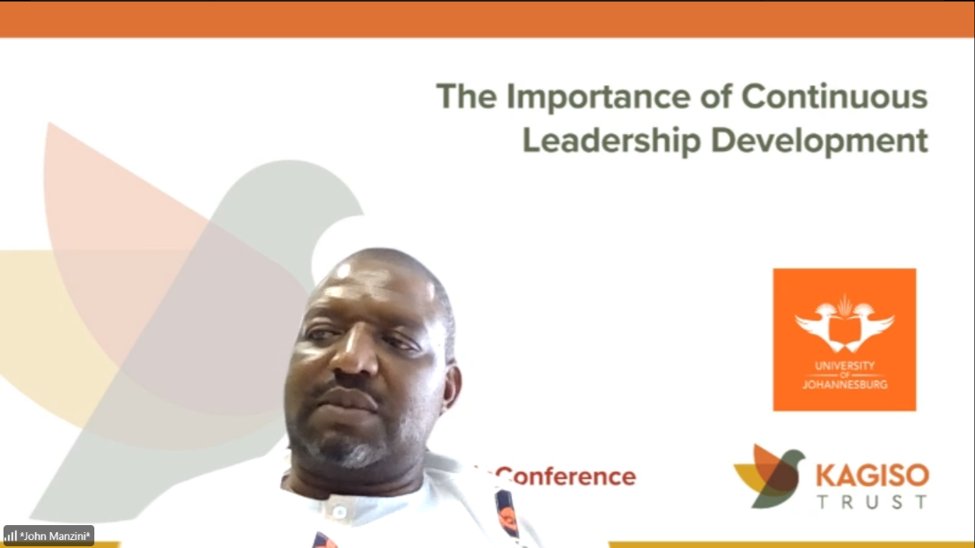
John Manzini reminded us that retention is also about creating a sense of belonging, purpose and possibility.
Teachers need to be able to say “I’m valued here. "I know why I teach.” “I see a future here.”
School leaders can help create this environment by celebrating impact, recognising effort, providing mentorship, strengthening Professional Learning Communities and giving educators opportunities to lead their own professional development.
Sometimes the small wins matter most. When teachers can see that their work has meaning and that their contribution is recognised, we strengthen both the educator and the school.
#LeadershipConference #EducationConversations @go2uj@EduFacultyUJ
“We’ve tried and we’re exhausted.”
A teacher’s words shared during Dr Heleen Hofmeyr’s presentation capture the human impact of the pressures educators are navigating.
When learners need remediation, that support is often pushed beyond the formal school day into mornings, breaks, afternoons, Saturdays and even holidays.
Teachers want learners to succeed, but when closing learning gaps repeatedly depends on educators giving more of their own time and energy, how sustainable is this?
Teacher well-being cannot be separated from the conditions in which teachers are expected to work. Supporting teachers means understanding those conditions and building systems that make their professional responsibilities more manageable and sustainable.
#LeadershipConference #EducationConversations
Closing Day 1 of the #LeadershipConference, Deon Van Der Merwe challenged participants to see leadership development not as a once-off workshop or something that begins when a promotion becomes available, but as something embedded in the everyday life of a school.
It happens when teachers are trusted to lead projects, when experienced educators mentor colleagues, when people are given space to test new ideas, and when schools intentionally recognise the different strengths that already exist within their teams.
His closing challenge was simple but important: Don’t only look for problems. Look for potential.
Who needs encouragement? Who needs an opportunity? Who could mentor someone else? Who has a strength that has not yet been fully recognised? Who are we developing?
The true test of leadership is not only what happens when the leader is in the room, but what continues to happen when they are not.
#LeadershipConference #EducationConversations
@Kagiso_Trust@EduFacultyUJ Listening to Mr Manzini, support for educators has three pillars well-being, growth and retention and this needs to be facilitated by leadership.
Teachers who are well supported, nurture a healthy environment for learners to thrive.
#LeadershipConference@go2uj
@Kagiso_Trust her insight on the research feedback from teachers stating that their reality is that their studies equipped them for learners who are on par with the curriculum not for those who a struggling and lagging behind.
#LeadershipConference@EduFacultyUJ@go2uj
We’re continuing the Leadership Conference 2026 with today’s focus on teacher well-being, growth and professional purpose.
Day 1 challenged us to recognise leadership potential and intentionally grow the people within our schools. Today, we take the conversation further by asking what it takes to support the people who lead learning every day.
We’ll hear from Dr Heleen Hofmeyr, Mr John Manzini and Ms Annelize Morgan, bringing research, school leadership and classroom perspectives into the conversation. @go2uj@EduFacultyUJ
#EducationConversations #LeadershipConference
Professional growth does not always mean moving up the organisational ladder. Dr Athena Clayton encouraged schools to broaden how they think about leadership development.
Growth can mean moving into a formal leadership position, but it can also mean deepening expertise, mentoring colleagues, building partnerships, specialising, innovating, supporting others or leading a project.
Leadership development should therefore create multiple pathways for educators to grow in ways that align with their individual strengths, interests and aspirations. Sometimes growth moves upward. Sometimes it becomes broader. Sometimes it goes deeper.
#LeadershipConference #EducationConversations
Dr Athena Clayton challenged traditional ideas of leadership, reminding us that leadership does not always have to be loud, outspoken or attached to a formal title. Within our schools, leadership can also look like the mentor, innovator, problem-solver, advocate, specialist, connector, organiser or listener.
The challenge for schools is to look beyond the obvious, recognise the strengths that may be quieter or less visible, and create meaningful opportunities for educators to use those strengths to influence, support and develop others.
#LeadershipConference #EducationConversations
Over the next two days, the conference will explore how we develop the next generation of school leaders, strengthen leadership at every level of the school system and build sustainable schools that continue to thrive beyond any one individual.
Today’s programme features keynote speaker Dr Motsekiso Letuma, Senior Lecturer in the Faculty of Education at the University of Johannesburg, alongside Ms Nakedi Chaba, Principal of Mogale wa Bagale Technical High School, and Dr Athena Clayton, Lecturer in Educational Psychology at the University of Johannesburg.
Follow the conversation as we share insights from Day 1. @go2uj@EduFacultyUJ
“Leadership is not simply a position that one is appointed to; it is a responsibility that one chooses to embrace.”
From classrooms and staff rooms to sports fields and everyday interactions with learners and colleagues, leadership is demonstrated through accountability, initiative, problem-solving and the willingness to help others grow.
The conversation challenges schools to ask whether they are intentionally identifying emerging leaders, developing them and creating meaningful opportunities for them to lead.
#EducationConversations #LeadershipConference @go2uj@EduFacultyUJ
What does leadership look like in the classroom, and how can schools encourage it?
It is an important question because leadership does not only reside within the School Management Team. It can be seen in educators who take initiative, support colleagues, respond meaningfully to learner needs and step forward to solve challenges.
What does leadership in the classroom look like to you?
Share your thoughts below. @go2uj@EduFacultyUJ
#EducationConversations #LeadershipConference
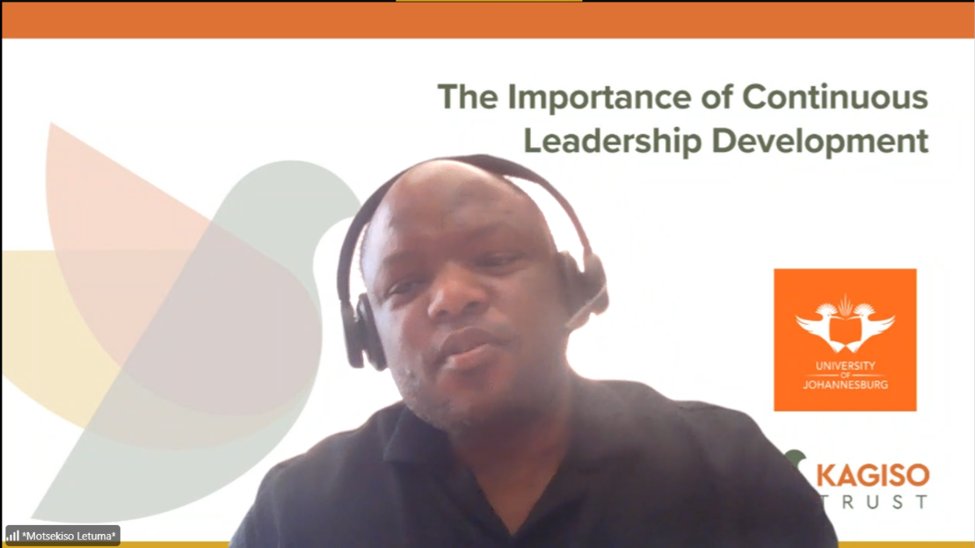
“We must develop leadership before we need leaders.” - Dr Motsekiso Letuma
Leadership development should not start when an educator becomes an HOD, deputy principal or principal. Teachers are already leading in classrooms every day. The opportunity is to identify that potential, develop it and create meaningful pathways to lead.
#LeadershipConference #EducationConversations
Our keynote speaker, Dr Motsekiso Letuma, is a Senior Lecturer in the Faculty of Education at the University of Johannesburg.
His keynote, “Developing the Next Generation of School Leaders: Building Sustainable Schools for South Africa,” takes the conversation straight to one of today’s central questions: how do we build leadership capacity before vacancies arise?
#LeadershipConference #EducationConversations @go2uj@EduFacultyUJ
“Let us develop our own leaders. Let us nurture our own leaders for our schools to be sustainable.” — Nakedi Chaba #LeadershipConference
Nakedi Chaba highlighted the importance of intentional succession planning and clear leadership pathways within schools.
Schools should look for educators who demonstrate influence, initiative and integrity, and then create opportunities for them to grow through mentoring, shadowing, leading projects and taking on meaningful responsibilities.
Sustainable schools do not wait for a leadership crisis before looking for the next leader. They build leadership capacity continuously.
#EducationConversations
What does it take to bridge the gap between a rural classroom and the opportunities available in world-class institutions?
Nakedi Chaba's message at the #LeadershipConference is that a school functions as an interconnected ecosystem where every educator, middle leader and senior leader has a role to play in strengthening teaching and learning.
When one part of that leadership ecosystem is underdeveloped, the whole school feels the impact. Continuous leadership development therefore connects people around a shared vision and ensures that leadership capacity exists throughout the school.
#EducationConversations