Built a dynasty fantasy football tool this offseason. Rankings calibrated to your league settings (NFL + devy on one scale). Devy WAR you control with your own pick projections.
Looking for a few testers. MFL + Sleeper. FREE30 = 30 days free.
https://t.co/n7CJ2pt5a9 #devy
Victor Wembanyama got caught reaching and restricting Karl-Anthony Towns on the drive. That arm was in jail. It’s called a defensive foul 99% of the time.
But not tonight, and not on Wemby. Because of course not. 🤨
I once dated a girl who told me she’d agree with someone that 2+2=5 if they really believed it.
In her mind, sharing a delusion was better than speaking the truth and risking conflict.
In female-led groups, nonconformity is punished, consensus is rewarded, and dissent is treated as harm.
This is the operating logic of every major institution that now governs us.
"The creation of the double income household... went from being an option to an obligation."
"The principal beneficiaries were government, who had twice as many people to tax."
"The unit of the household, the family, lost 35 hours of discretionary leisure every week, with no commensurate increase in living standards, because the money got soaked up by property prices and by taxation."
AC Repair Investigation in New Jersey
Inside Edition tested local AC technicians.
They set up a working unit with one simple fault — disconnected low-voltage wires.
Hidden cameras captured four companies.Three techs quickly found and fixed the loose wire for fair fees (as low as $150). They were honest.
One from Gold Medal Service ignored it, invented a nonexistent “microscopic leak,” and quoted $1,736 for unnecessary repairs. Confronted on camera, he denied it and left his tools behind.Most were sincere, but one pushed a costly scam.
Gold Medal Service had no comment.
Built a dynasty fantasy football tool this offseason. Rankings calibrated to your league settings (NFL + devy on one scale). Devy WAR you control with your own pick projections.
Looking for a few testers. MFL + Sleeper. FREE30 = 30 days free.
https://t.co/n7CJ2pt5a9 #devy
Imagine you're a boomer.
You had the best economy in the history of the world.
You got into a great college with shit grades (if you went at all).
You had a full time job, full pension, affordable house, 4 kids, all on one income.
Then you wanted your home prices to go up, so you voted for other boomers who would manipulate interest rates lower.
Poof, now your home is worth 10x what you paid.
Then you wanted your stocks to go higher so you got rid of pensions for everyone after you, voted for mass immigration and outsourcing.
Poof, now the stock market is up 70% higher than it would have been without manipulation.
Now you're a millionaire for performing at a very average level.
Now that you absolutely destroyed the United States for everyone after you, its time to complain about paying taxes on the millions you were gifted through manipulation.
Yeah—raw per American hits harder and makes the theft crystal clear.
$5T in COVID-era spending ÷ $62k median full-time wage = ~80.6 million average American salaries printed into existence from nothing.
US population ~332 million in 2020-21 (US workforce is ~170M). That’s one full year’s median earnings for roughly every 2 working people in the entire country—created out of thin air.
This wasn’t just “stimulus.” It was pure monetary dilution: every existing dollar’s claim on real goods, services, and future labor got weaker overnight. New money flowed first to governments, banks, and connected insiders (classic Cantillon effect), bidding up asset prices for owners while the broader wave of inflation crushed savers, wage earners, and especially the young.
Spread across working lifetimes (40-45 years), that’s decades of compounded value quietly transferred from future taxpayers and workers to today’s spenders and asset holders. Boomers and seniors got checks + asset boosts + entitlements; millennials and Gen Z face sky-high entry costs for homes, families, and retirement.
We printed away the equivalent of ~80+ million work-years. The generational discrepancy is real—and we’re still paying the bill every day through eroded purchasing power compounded further and further as we go.
I remember the day my dad got laid off.
He came home early. Sat at the kitchen table.
Didn’t say anything for a long time.
28 years at the same company.
$52,000 a year.
Same desk. Same commute.
Same handshake every Christmas party.
They called him into HR on a Tuesday morning and handed him a folder.
2 weeks severance. $2,000.
A COBRA packet at $1,400 a month he couldn’t afford and a thank you for your service.
He was 54.
Too young for Medicare.
Too old to start over.
Too proud to tell us how scared he was.
He spent the next 4 years working part time jobs at $14 an hour.
Not to retire comfortably.
Not to build anything.
Just to keep health insurance so a hospital bill wouldn’t finish what the layoff started.
28 years.
$1.4 million in value given to that company.
And they never called to check on him once.
I will never forget that kitchen table moment.
That’s when I learned that no company will ever love you back.
CA Judge just banned Kars4Kids ads for false advertising
Pushed "help underprivileged kids" commercials while funneling most money to Orthodox Jewish programs, camps & Israel trips
Now forced to disclose the religious ties & where the cash goes
I am convinced most of the $40 trillion of National Debt is due to fraud.
From money laundering on for foreign aid, fraudulent wars, fake climate schemes, illegal aliens getting benefits, Somalis faking their kids have autism ... it never stops.
Our country has been looted.
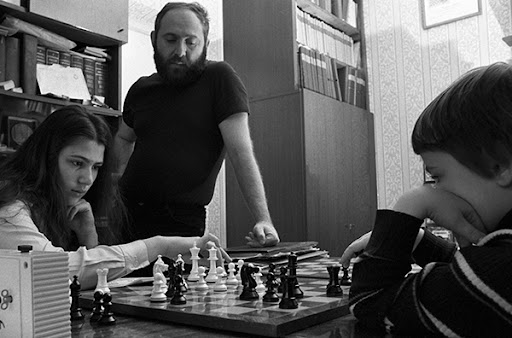
A Hungarian psychologist raised three daughters to prove that any child could become a chess grandmaster through early specialization. He succeeded. Two of them became grandmasters. One became the greatest female chess player who ever lived.
Then a sports scientist looked at the data and found something nobody wanted to hear.
His name is David Epstein. The book is called "Range."
The Polgar experiment is one of the most famous case studies in the history of deliberate practice. Laszlo Polgar wrote a book before his daughters were even born arguing that geniuses are made, not born. He homeschooled all three girls in chess from age four. By their teens, Susan, Sofia, and Judit were dominating tournaments against grown men. Judit became the youngest grandmaster in history at the time, breaking Bobby Fischer's record. The story became the gospel of early specialization. Pick a domain young, drill it hard, and you can manufacture excellence.
Epstein opens his book by telling that story honestly and then quietly demolishing the conclusion most people drew from it.
Chess works that way. Most things do not.
Here is the distinction that took him four years of research to articulate, and that almost nobody who quotes the 10,000 hour rule has ever read.
There are two kinds of environments in which humans develop expertise. Psychologists call them kind and wicked. A kind environment has clear rules, immediate feedback, and patterns that repeat reliably. Chess is the cleanest example. Every game ends with a winner and a loser. Every move is recorded. The board never changes shape. The pieces never invent new ways to move. A child who plays ten thousand games will see most of the patterns that exist in the game, and pattern recognition is exactly what chess mastery is built on.
A wicked environment is the opposite. Feedback is delayed or misleading. Rules shift. The patterns that worked yesterday may be exactly the wrong patterns to apply tomorrow. Most of the real world looks like this. Medicine is wicked. Investing is wicked. Building a company is wicked. Scientific research is wicked. Almost every job that involves a complex changing system with humans in it is wicked.
The Polgar sisters trained in the kindest environment any human can train in. Their success was real and the method was correct. The mistake was generalizing the method to fields where the underlying structure of the environment is completely different.
Epstein's research is what made the implication impossible to ignore.
He looked at the careers of elite athletes outside of chess and golf and found that the pattern was almost the inverse of what people assumed. The athletes who reached the very top of their sports were overwhelmingly people who had played multiple sports as children, specialized late, and often switched disciplines well into their teens. Roger Federer played squash, badminton, basketball, handball, tennis, table tennis, and soccer before tennis became his focus. The kids who specialized in tennis at age six and trained year-round for a decade mostly burned out, got injured, or topped out at lower levels of the sport.
The same pattern showed up everywhere he looked outside of kind environments. Inventors with the most patents had worked in multiple unrelated fields before their breakthrough work. Comic book creators with the longest careers had drawn for the most different genres before settling. Scientists who won Nobel Prizes were dramatically more likely than their peers to be serious amateur musicians, painters, sculptors, or writers.
The skill that mattered in wicked environments was not depth in one pattern. It was the ability to recognize when a pattern from one domain applied unexpectedly in another. That kind of thinking cannot be built by drilling a single subject. It can only be built by accumulating mental models from many subjects and learning to move between them.
The deeper finding is the one that should change how you think about your own career.
Specialists in wicked environments often get worse with experience, not better. Epstein cites studies of doctors, financial analysts, intelligence officers, and forecasters showing that years of experience in a narrow domain frequently produce more confident judgments without producing more accurate ones. The expert builds elaborate mental models that feel comprehensive and turn out to be increasingly disconnected from the actual structure of the problem. They stop noticing what does not fit their framework. They mistake fluency for understanding.
Generalists do better in wicked domains for a reason that sounds almost mystical until you understand the mechanism. They have less invested in any single mental model, so they abandon broken models faster. They are used to being a beginner, so they are not threatened by the discomfort of not knowing. They have seen enough different domains that they can usually find an analogy from one field that unlocks a problem in another. The technical name for this is analogical thinking, and the research on it is one of the most underrated bodies of work in cognitive science.
The single most useful sentence in the entire book is the one Epstein puts almost as a throwaway.
Match quality matters more than head start.
A person who tries six different fields in their twenties and finds the one that genuinely fits them will outperform a person who picked one field at fourteen and stuck to it on willpower alone. The lost years were not lost. They were the search process that produced the match. Every field they walked away from taught them something they later imported into the field they finally chose.
The reason this is so hard to accept is cultural, not empirical. We tell children to pick a path early. We reward the prodigy who knew at six. We treat the late bloomer as someone who failed to launch on time, when the data suggests they were running an entirely different and often more effective optimization process underneath.
The Polgar sisters were not wrong. The conclusion the world drew from them was.
If your environment is genuinely kind, specialize early and drill hard. If it is wicked, and almost every interesting human problem is, then the people who win are the ones who refused to specialize until they had seen enough to know what was actually worth specializing in.
You are not behind. You were running the right experiment all along.
This is powerful
“I live in a small suburb in West Chicago. If I drive 15 minutes east down Ogden Avenue, I'm in Little Village. I'm in Pilsen. And every sign is in Spanish, and everyone speaks Spanish, and it's a small enclave, essentially of Mexico. Where there's drug cartels, there's violence, and I don't care what the GDP is. I don't care what the unemployment rate is. I don't care about any of the rest of that, if America isn't like America”
This is the truth, it doesn’t matter what the GDP is if America doesn’t look like America anymore
The immigrants coming to America are not assimilating, that much is clear everywhere. They are doing nothing but gathering together and creating towns exactly like where they came from
Immigration without assimilation is an invasion