How does a computer calculate 1 + 1?
The answer starts with two simple logic gates:
XOR Gate → Sum
AND Gate → Carry
For the inputs:
1 + 1
A half adder produces:
Sum = 0
Carry = 1
So the binary result is:
10
This tiny circuit is one of the foundations of arithmetic inside every CPU.
#HalfAdder #LogicGates #Binary #CPU #DigitalLogic #ComputerArchitecture
About logic gates, it is easier to remember like:
The Ultimate Cheat Sheet:
• AND ➡️ All 1s = 1
• OR ➡️ Any 1s = 1
• NOT ➡️ Flip it
• NAND ➡️ All 1s = 0
• NOR ➡️ All 0s = 1
• XOR ➡️ Different = 1
• XNOR ➡️ Same = 1
Everything inside your computer begins with one simple idea.
NOT.
AND.
OR.
XOR.
These tiny logic gates make every CPU, every GPU, every AI accelerator, and every operating system possible.
Billions of them switch billions of times every second.
That’s how modern computing works.
#LogicGates #CPU #Electronics #ComputerScience #Engineering #InsideComputing
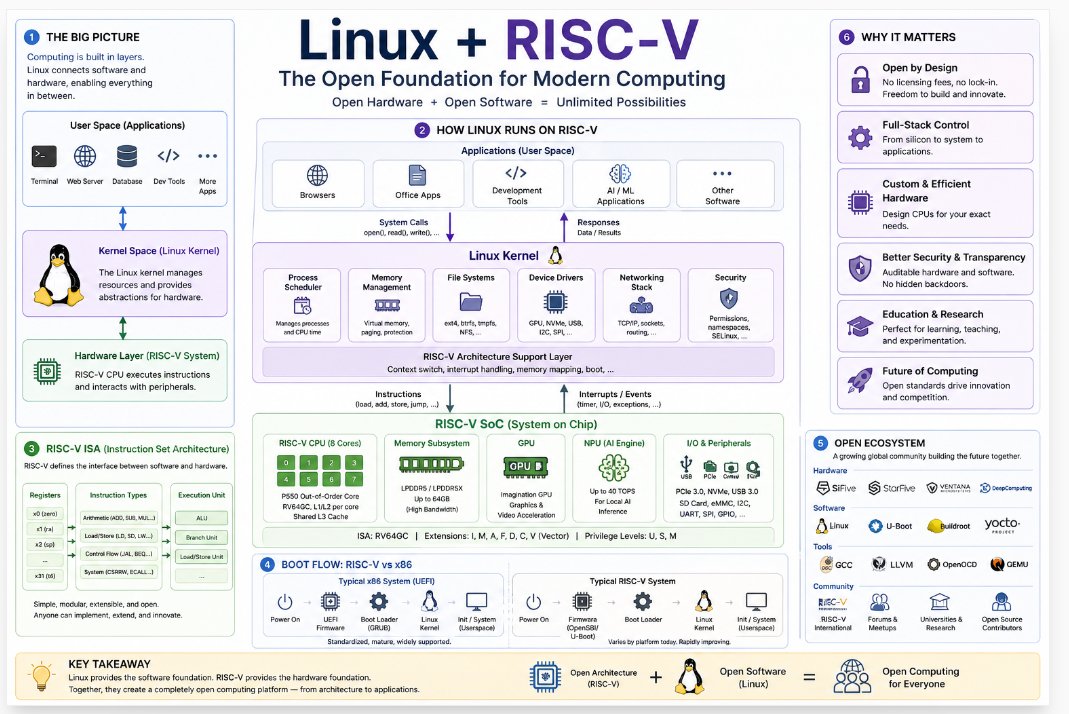
How Linux Works
https://t.co/6KPQMXRqgx
A simple ls command travels through:
User
↓
Shell
↓
fork()
↓
execve()
↓
Kernel
↓
VFS
↓
Page Cache
↓
Filesystem
↓
Terminal
before you see the result.
Most users never realize how much happens behind a single command.
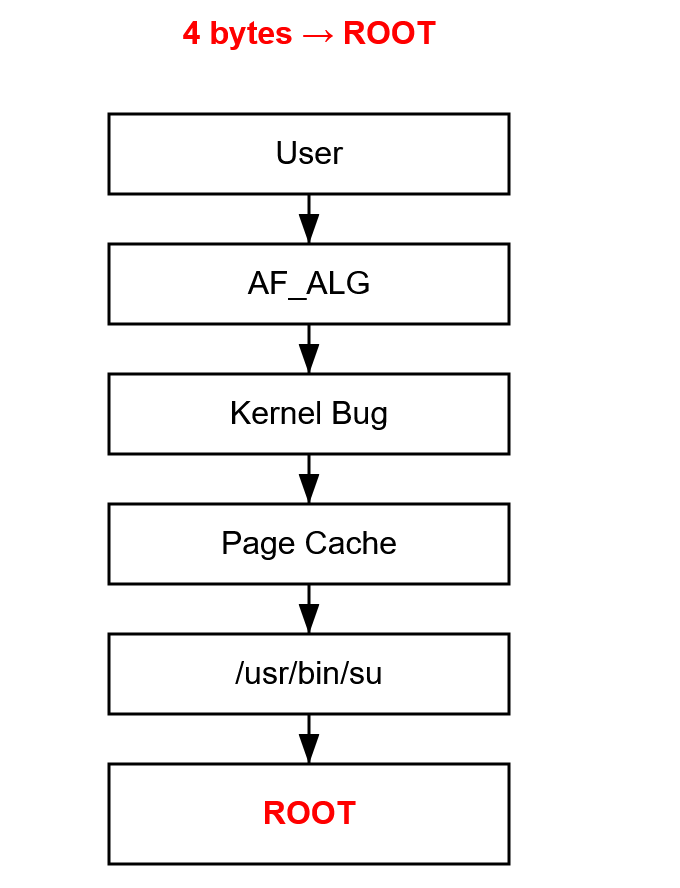
A new Linux vulnerability lets a normal user become root… in seconds.
No exploit chain.
No race condition.
No memory leak.
Just a few syscalls.
CVE-2026-31431 — aka “Copy Fail” — is one of the cleanest privilege escalation bugs in years.
It abuses AF_ALG (Linux’s crypto interface) to corrupt the page cache — the in-memory representation of files.
Instead of modifying a file on disk, the attacker modifies its shadow in memory.
That means you can “patch” binaries like /usr/bin/su without touching the filesystem.
No file change.
No checksum alert.
No logs.
The kernel thinks it’s doing an in-place operation.
It’s not.
A logic bug in scatterlist handling lets user data overwrite unintended memory pages.
With controlled writes (~4 bytes at a time), attackers can inject payloads into cached executables…
then simply run them.
Boom: root.
A 2017 optimization turned into a 2026 nightmare.
#Linux #CyberSecurity #InfoSec #Kernel #Exploit #CVE #Hacking #DevOps #Cloud #Containers
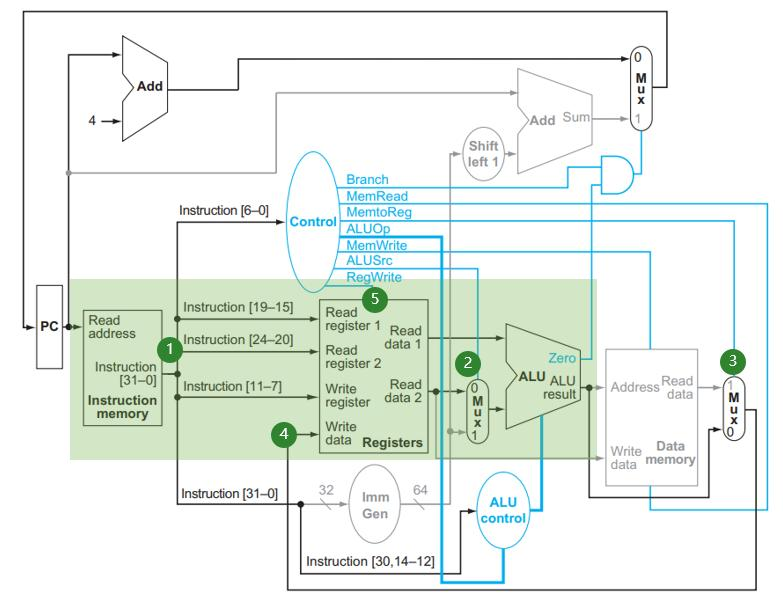
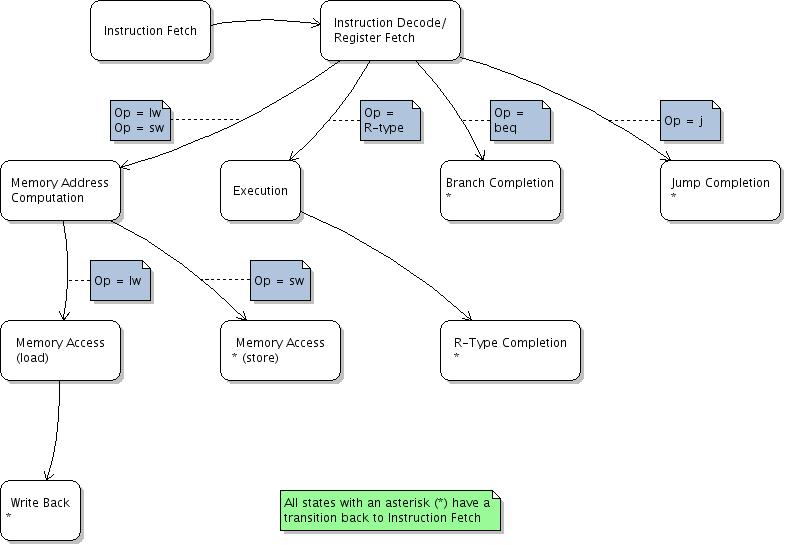
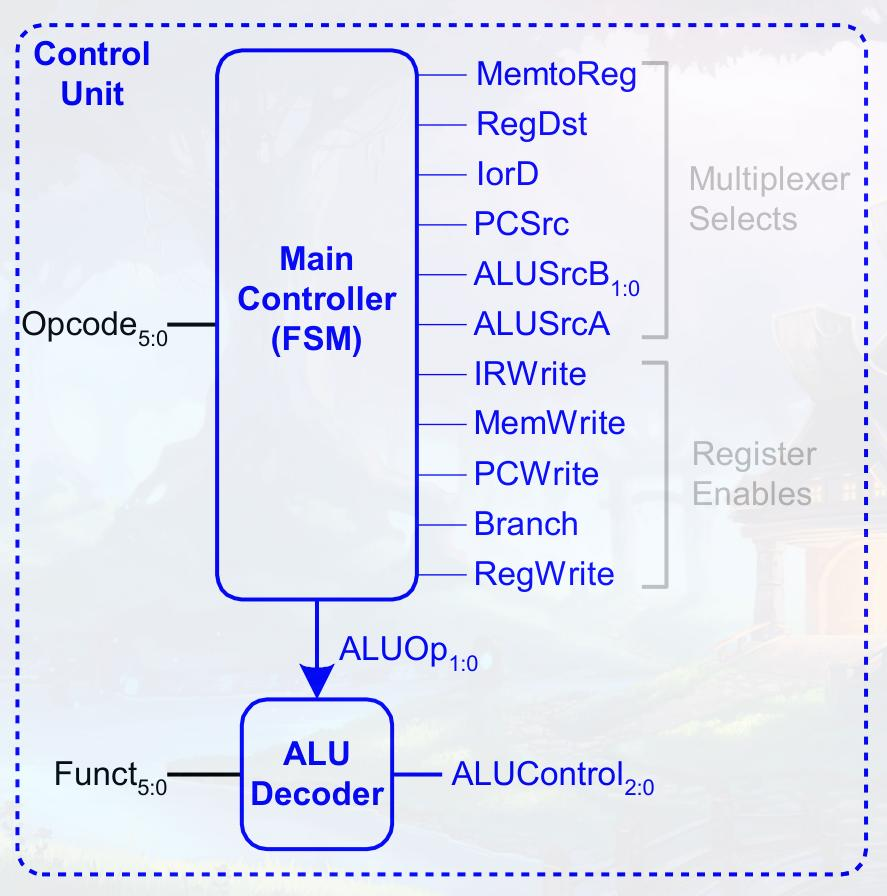
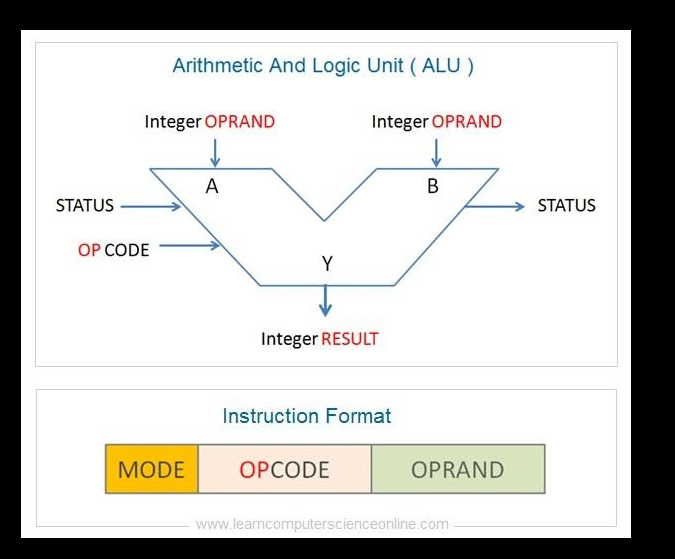
This single diagram explains how EVERY CPU works.
Most people memorize instructions.
Very few understand execution.
If you get this, you understand:
• RISC-V
• Pipelines
• Performance
Let’s break it down 🧵👇
Inside every CPU is a tiny, insanely fast storage system:
The Register File.
.32 registers.
.Instant access.
.Everything depends on it.
If you don’t understand registers, you don’t understand execution.
A register is just a small storage slot inside the CPU.
In RISC-V:
x0 → x31 (32 total)
Each one stores a value the CPU is actively using.
#RISCv #ComputerArchitecture #CPU #Assembly #LowLevelProgramming
Your computer doesn’t “think” — it calculates.
Inside every CPU is something called an ALU (Arithmetic Logic Unit).
That’s where the real work happens.
Every tap, every scroll, every game—
breaks down into tiny math and logic operations.
Addition. Comparison. Decisions.
Millions of them. Every second.
The CPU doesn’t “think.”
👉 The ALU calculates.
And without it?
Your computer couldn’t even do 1 + 1.
#ALU #CPU #ComputerScience #TechTok #LearnTech #HowComputersWork #STEM #Programming #Geek #Engineering
PicoRV32 is what happens when CPU design stops trying to look pretty and starts trying to win.
It’s a tiny open-source RISC-V core, written in Verilog, built for one thing: doing more with less.
No flashy giant pipeline.
No bloated architecture diagrams.
Just a brutally efficient design that fits where bigger cores can’t.
That’s why PicoRV32 is so loved in FPGA and embedded projects:
small area
high clock potential
easy to integrate
real hardware mindset
Textbook CPUs teach you how processors work.
PicoRV32 teaches you how engineers actually build them.
If you want to understand the gap between “computer architecture class” and “real CPU implementation,” start here.
Tiny core.
Big lesson.
#PicoRV32 #RISCV #Verilog #FPGA #CPUDesign #ComputerArchitecture #DigitalDesign #OpenSourceHardware #EmbeddedSystems #RTL
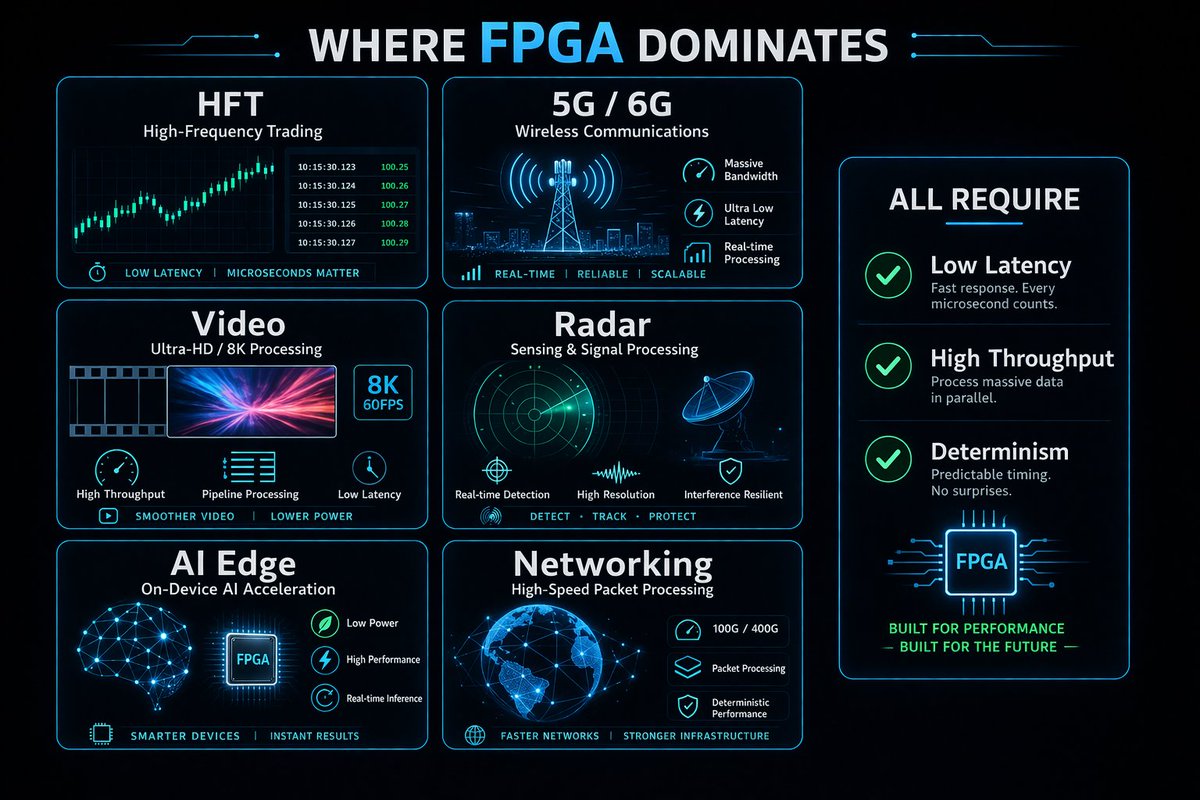
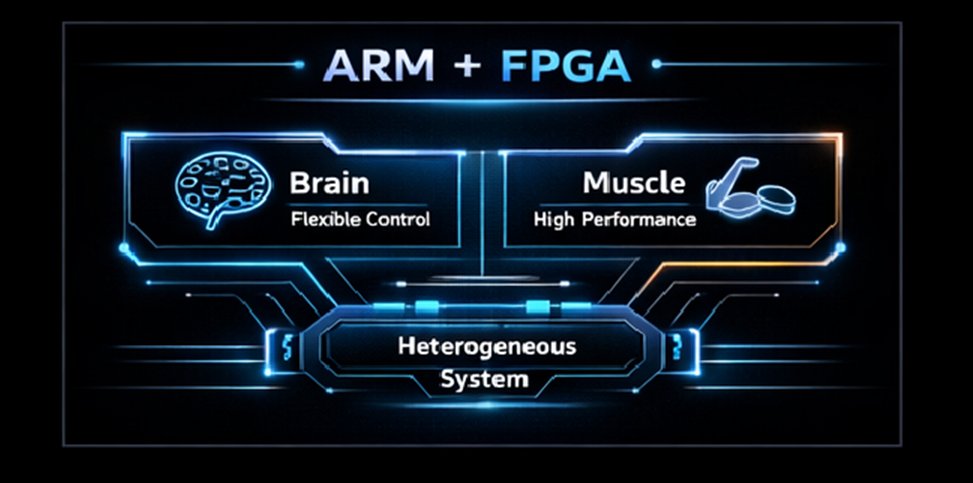
What is FPGA ?
You don’t program an FPGA.
You build hardware.
Most engineers never truly understand this.
CPU: runs instructions
FPGA: creates circuits
Same problem.
Completely different approach.
What is ARM?
ARM is a processor architecture.
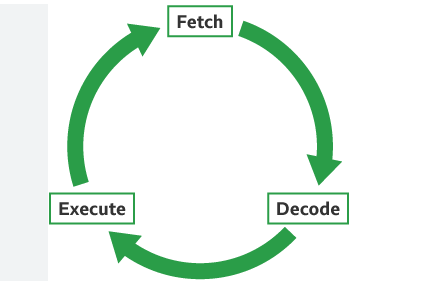
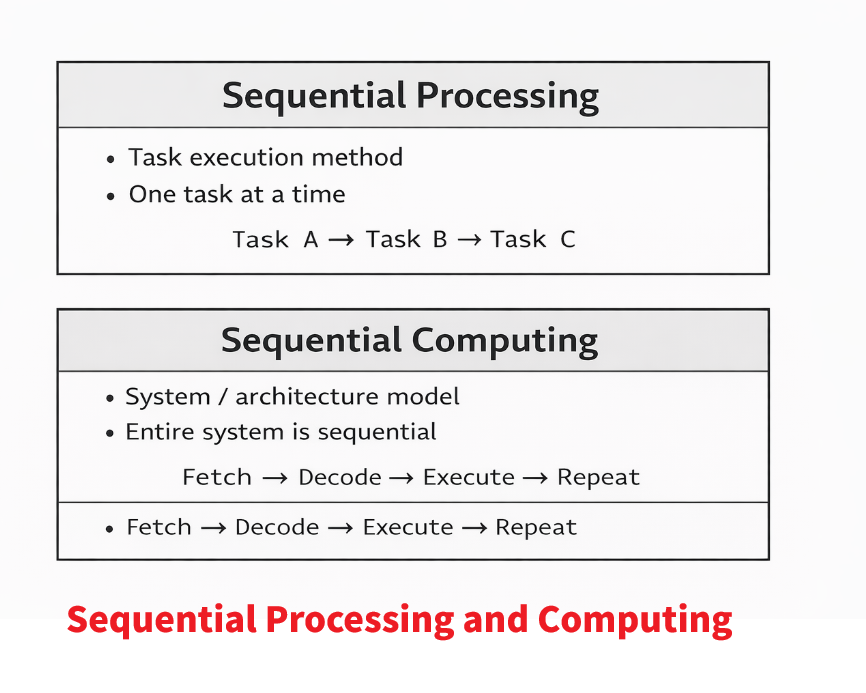
It executes instructions one by one:
Fetch
Decode
Execute
This is called sequential computing.
It’s flexible, efficient, and powers:
Smartphones
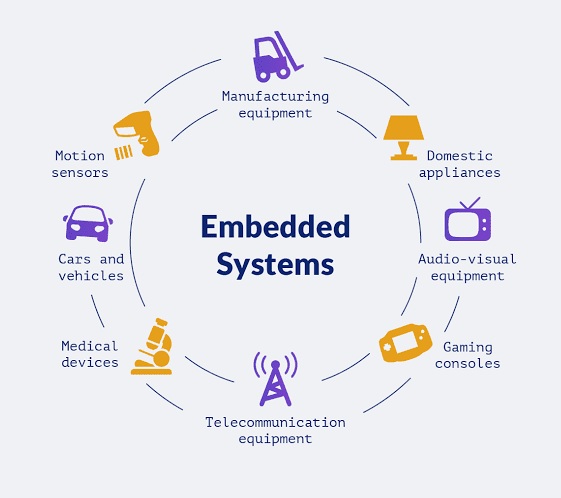
Embedded systems
IoT devices
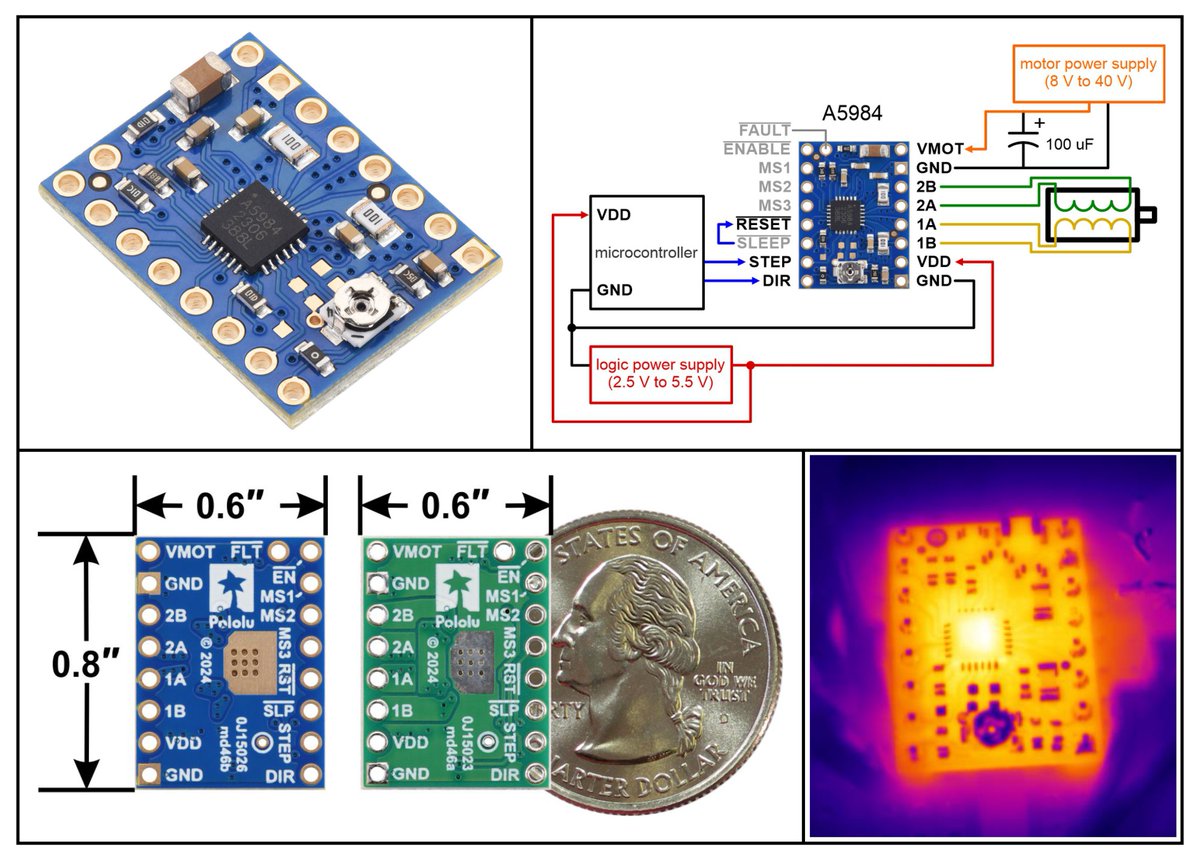
Product of the day: our @allegromicro A5984 stepper motor driver carriers are drop-in replacements for our original A4983/A4988 stepper motor driver carriers that introduced the now-ubiquitous 16-pin form factor for stepper motor drivers. The newer A5984 operates from 8-40V and can deliver up to 1.2A continuous (2A peak) per channel on our Blue Edition 4-layer boards (lower-cost versions with 2-layer PCBs and fixed current limits are also available). Grab one today for just $4.95!
https://t.co/ccAlmrfJ9X