🚨🇮🇱 NEW: IDF soldiers tortured a one-year old child in Gaza, including burning his leg with a cigarette and sticking a nail into his leg, in front of his father
The child was eventually released after 10 hours
[@trtworld]
Today, Bennicks’ sister said something important to @Ahmedshabbir20
Her father and brother were brutally killed by a bunch of policemen who have been convicted for murder now.
Persis pointed out, “My father and brother did no wrong. So we had a lot of public support. Had they been at any fault, we may not have had the same support. But police have no right to carry out custodial torture, regardless of innocence. Whether an individual does something wrong is secondary. The sentencing should prevent this from happening again.”
This is so true. We see custodial deaths so often but people have no sympathy even if the dead person had stolen just a mobile. It then seems okay that they were killed. So many people rejoicing at the verdict today, how many custodial deaths have you condemned irrespective of who was killed?
I turn 36 this year 🙋🏼♂️
The advice I would give my 26 year old self?
1. Avoid car loans
2. Put in extra work (50+ hours a week)
3. Drink more water
4. Network with people 2–3 steps ahead of you
5. Be okay with letting go of old friendships
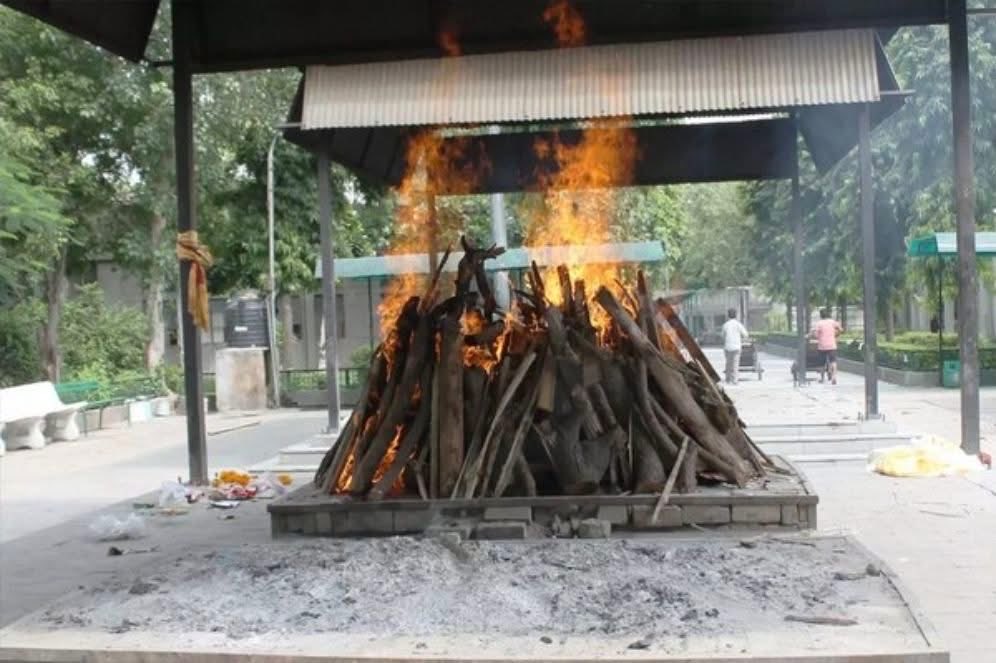
It was 3 pm at Swargadwar cremation ground in Puri.
Sabyasachi, 35 years old, who was a Vice President in a big software company in America, came straight from the airport to the cremation ground. His father, Pradipta Mishra, 75 years old, had passed away the previous night.
Sabyasachi was holding an expensive laptop bag and wearing Ray Ban glasses. He looked very busy and kept checking his watch again and again.
Tarun from Moksha Event Management, a funeral service company, was standing there. He had arranged everything. The wood was ready, the priest had been called, and Pradipta Mishra’s body was bathed and prepared.
Sabyasachi arrived. He looked at his father’s face. Two drops of tears fell from his eyes.
He asked Tarun, “Mr Tarun, is everything ready? I have to catch a return flight at 6 pm. I have an important meeting tomorrow. Please finish this quickly.”
Tarun was shocked but quietly nodded.
The rituals were completed. Sabyasachi lit the funeral fire. Smoke rose into the sky.
Then he took Tarun aside and took out his checkbook. He said, “Tarun, thank you. You arranged everything well. What is your bill? Fifty thousand or one lakh? Tell me the amount, I will write the cheque now. I cannot come again. Please also take care of the ashes.”
Tarun smiled strangely and said, “Sir, there is no need to pay. Your bill has already been paid.”
Sabyasachi was confused. “Already paid? Who paid? Did my uncle pay?”
Tarun replied, “No sir. Five years ago, your father came to our office. He was very sick and could hardly walk. He asked us, what is your package? Will you manage everything so that my son does not face any problem?”
“We explained everything to him. That same day he deposited fifty thousand rupees in advance. He also gave me this letter. He told me, when my son comes, give him this letter. And if he does not come, you perform my last rites.”
Tarun gave the letter to Sabyasachi.
With shaking hands, Sabyasachi opened it. In his father’s weak handwriting, it was written:
“Dear Sabyasachi,
My son, I know you are very busy. In America you may not even get time to breathe. I know when you hear about my death, you will be worried. Will I get leave? Will I get a ticket? What about my meeting? These questions will trouble you.
Son, your time and career are very important. I raised you so that you can win the world. Do not suffer loss for the body of an old man.
That is why I have arranged everything for my death in advance. I have already paid this organization. They will manage everything. If you come, good. If you do not come, I will not be angry.
I have only one request.
When you were small and I dropped you at school, I never left your hand.
Today when you light my funeral fire, may your hand not shake. Return soon. Your wife will be waiting.
Yours,
Baba”
After reading the letter, the checkbook fell from Sabyasachi’s hand into the mud.
In that cremation ground, where the sound of burning wood was heard, Sabyasachi’s pride and career also turned into ashes.
He fell on his knees.
“Baba, forgive me, Baba.”
He held Tarun’s feet and cried, “Tarun, I do not want to go back to America. I want to stay with my father. I earned crores of rupees, but in the end I became a beggar. My father was thinking about my meeting even at the time of his death, and I was paying for his last rites?”
That day Sabyasachi did not catch his flight. He sat the whole night in front of the burning pyre.
Because in the end he understood:
Prepaid can be for a SIM card. But a father’s love is never prepaid. A father’s love is endless, and no money in the world can repay it.
Lesson: No matter how big you become in the world, no matter how much money you earn, when the parents who once changed your clothes need you at the end of their life, do not turn your face away.
Any company can perform the funeral. But tears cannot be bought from outside.
Those tears should come only from blood relations.
THIS IS BS! Trust me I KNOW.
Large enterprises don’t run on “apps.” They run on decades of layered systems: ERP, mainframes, custom services, data warehouses, compliance controls, and fragile integrations nobody dares touch without a 12-month change plan.
AI agents don’t just “plug in” and replace that.
They’d need:
Deterministic outputs for finance, payroll, regulatory reporting
Full audit trails, data lineage, and SOX/SOC compliance
Secure API access across dozens of systems with rollback logic
Stable model behavior (not probabilistic drift)
Governance, vendor risk approval, and change management sign-off
That’s not a product install. That’s a multi-year re-platforming effort.
Near term MAYBE a copilot, drafting, search, triage, and tightly scoped automations with humans in the loop.
Not autonomous agents running Fortune 500 workflows.
Stocks can move on expectations. Enterprise architecture moves on risk tolerance.
Those timelines are very different.
Years ago, during a layover in Delhi, I promised a baggage handler employed by my (then) airline that I could meet him that evening to meet his family—including his six-year-old son—and give the boy a storybook I was bringing from New York. The loader warmly invited me home and asked me to stay for dinner, and I accepted.
Later that same day, the CMD of our airline—a senior bureaucrat—asked me to join him for dinner to discuss an important matter. I politely declined, explaining that I had already made a commitment to the other family.
Months afterward, the CMD referred back to that incident in a large gathering and shared some words I have never forgotten:
True character is revealed when you honor commitments made to those who are powerless and have nothing to offer you.
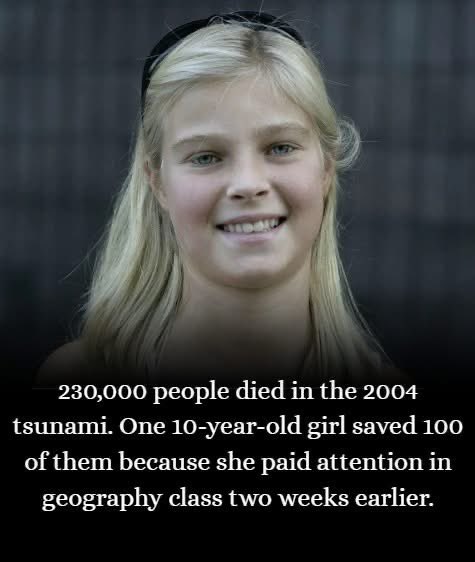
Her name was Tilly Smith. And she was about to prove that a single school lesson could mean the difference between life and death.
On the morning of December 26, 2004, Tilly was walking along Mai Khao Beach in Phuket, Thailand, with her family. They were on their first overseas holiday together—a Christmas treat.
The beach was beautiful. The weather was perfect. But something was wrong.
Tilly noticed the water wasn't behaving normally.
"It wasn't calm and it wasn't going in and then out," she later recalled. "It was just coming in and in and in."
The sea had turned frothy—"like you get on a beer," she said. "It was sort of sizzling."
Any other 10-year-old might have thought it was strange. Tilly knew exactly what it meant.
Just two weeks earlier, in her geography class at Danes Hill School in Surrey, her teacher Andrew Kearney had shown the class black-and-white footage of the 1946 tsunami that devastated Hawaii. He taught them the warning signs: the sea receding unusually far, frothy bubbling water, the ocean behaving in ways it shouldn't.
Tilly was watching those exact warning signs unfold in front of her.
She started screaming at her parents. "There's going to be a tsunami!"
They didn't believe her. They couldn't see any wave. The sky was clear. The beach was calm.
But Tilly wouldn't stop. She became more insistent, more frantic.
"I'm going," she finally said. "I'm definitely going. There is definitely going to be a tsunami."
Her father Colin heard the urgency in her voice. He decided to trust his daughter.
By coincidence, an English-speaking Japanese man nearby overheard Tilly use the word "tsunami." He'd just heard news of an earthquake in Sumatra. "I think your daughter's right," he said.
Colin alerted the hotel staff. They began evacuating the beach immediately.
Tilly's mother Penny was one of the last to leave. She had to sprint as the water began rushing in behind her.
"I ran," Penny recalled, "and then I thought I was going to die."
They made it to the second floor of the hotel with seconds to spare.
Then the wave hit.
It was 30 feet tall.
Everything on the beach—beds, palm trees, debris—was swept into the swimming pool and beyond. "Even if you hadn't drowned," Penny later said, "you would have been hit by something."
The 2004 Indian Ocean tsunami killed over 230,000 people across 14 countries. Entire beaches in Phuket were wiped out. Thousands died.
But at Mai Khao Beach, not a single person was killed.
Because a 10-year-old girl paid attention in geography class.
Tilly was hailed as the "Angel of the Beach." She received the Thomas Gray Special Award from the Marine Society. She was named "Child of the Year" by a French magazine. She appeared at the United Nations and met Bill Clinton.
Her story is now taught in schools around the world as an example of why disaster education matters.
Her father Colin still thinks about what could have happened.
"If she hadn't told us, we would have just kept on walking," he said. "I'm convinced we would have died."
Tilly is now 30 years old. She lives in London and works in yacht chartering.
She still credits her geography teacher, Andrew Kearney.
"If it wasn't for Mr. Kearney," she told the United Nations, "I'd probably be dead and so would my family."
Two weeks. One lesson. One hundred lives.
That's the power of education.
"Tilly Smith’s quick thinking saved her family during the 2004 tsunami. Click to read how one geography lesson made all the difference!"
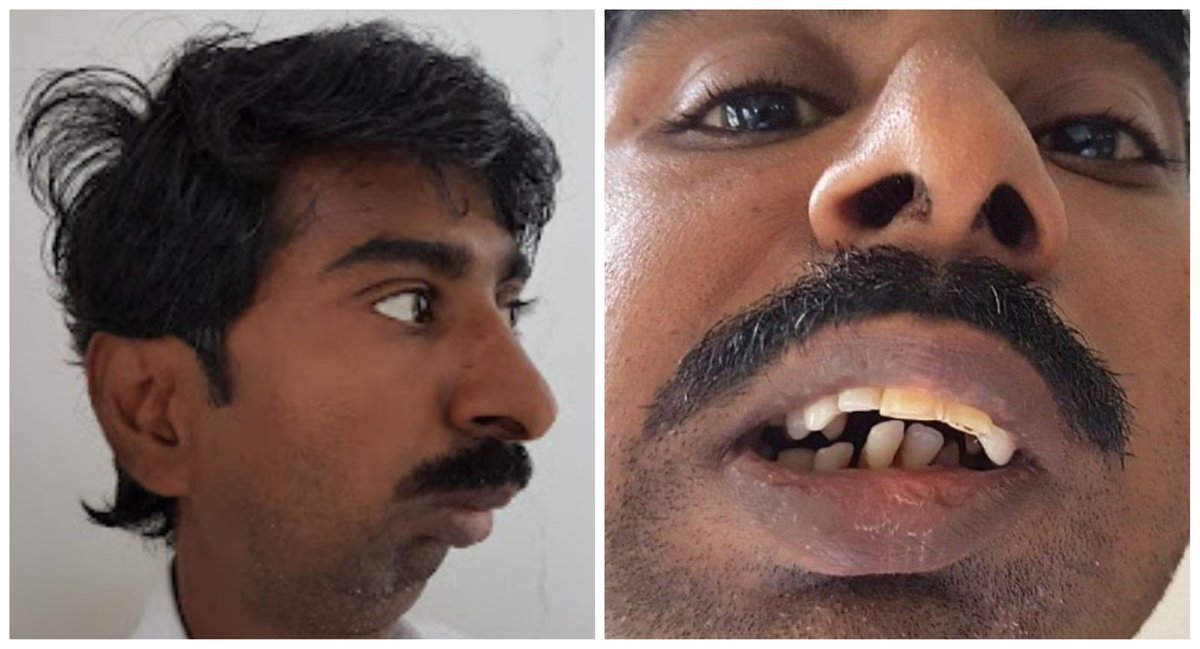
Several American X accounts have used these images recently to openly put out racist posts targeting Indians.
The person shown in the photo is Mr. Rajendra Panchal, who works as a helper in Maharashtra.
At the age of one, he fell on his face and broke his jaw, which remained fused shut.
Due to financial constraints, his parents could not get him treated.
Growing up with the deformity, he faced taunts about his appearance, which made him withdrawn and introverted.
For 38 years, he survived only on a liquid diet.
In 2017, after 39 years, Dr. Garde performed corrective surgery free of cost.
The surgery was successful, enabling Rajendra to eat solid food and speak clearly for the first time.
For the first time in 2017 after nearly four decades he ate solid food.
டேய் இன்று மீட்டிங் இல்லடா எங்கடா போறீங்க...?
எங்களுக்கு வைப் வேணும் சும்மா இருக்க முடியாது... நாங்களே அங்க போய் கொஞ்ச நேரம் டிரான்ஸ்பார்மர் மேல ஏறி நின்னுட்டு வருவோம்...
It’s been 2 years since I brought my first car, Tigor EV. When I bought the car, I got it on 98% funding, and the EMI was around 25% of my salary.
This would have been called the most foolish mistake by the Finfluencer. But here’s what happened in the 2 years & after 25,000 kms, chronologically:
- Brought my new born son home from the hospital in the car.
- Salary went up, suddenly car EMI was 12.5% of my salary.
- Took out my wife and infant child multiple times around the city.
- Enabled wife to go around as she wishes, thereby escaping from the Ola/Uber rouges.
- Travelled across multiple times to temple cities with family, creating memories.
- There was an emergency at home, reached hospital in 7 mins flat.
- Used to go around the city during the night for long drives to make my son sleep.
- Traveled to Tirupati, Kalahasti, Kumbakonam, Vaitheeswaran Kovil.
- Every fortnight visit to Ramanasramam became a reality.
- We were expecting again! Car became very handy and helpful for the regular doctor visits.
- This time, took my wife to the hospital when the labor pain set in.
- Brought my new born daughter home from the hospital.
- Did our first very long distance drive (~500kms in a day) trip.
-Suddenly, car EMI became 6% of monthly salary.
I was very finicky, like everyone else, with respect to car being a depreciating asset. But the truth is, you only get to experience these things once in your life. Your kids will only be young, once in your life. You and your wife will only be young once in your life.
Ensure your daily activities and goals are accomplished in a very smooth non friction manner. In today’s time, being without a car is being subjected to foul mouth on a daily basis. The worst thing is- being dependent on a two wheeler for going around.
A wise man once said: “Eat one meal less, but own a car”- @volklub.
I would add one thing more, “you’ll make more money, and even more than you can even imagine, ensure you give the right experience to all those people who came into this world trusting you, and the one you came into your life trusting you. Do not let them be subjected to the Ola/Uber rouges.”