Visit @ICA_CSIC to discover "back to the soil" concept. Researching with @SAB_laboratory
on #SOC's dual role: improving crop yield and capturing #CO2. Explore the vital role of soils in our food.
Like and share! 🌱🌍 #BeCSIC
https://t.co/NkmMCj0iwA
This paper shows that X (formerly Twitter) is a toxic platform managed to polarize views and promote toxic interactions.
Time to leave X! My next post will be to say goodbye and provide my new social media address in a non toxic, decentralized platform https://t.co/Uft3mzA98C
We hope our results shape sustainable agricultural policies! This article in @CropGlobal is a tribute to @DianaWallSoil, a pioneer in soil biodiversity. A big thank you to all our collaborators, especially the incredible support from @PabloGarciaPal, @SAB_laboratory, @ICA_CSIC.
4/ Key drivers of the SOC-yield relationship? Microbial diversity and nutrient availability 🦠. Soil biodiversity powers biogeochemical cycles, with carbon feeding microbes. It’s crucial to support this.
🧵1/ News on sustainable agriculture! 🌾 Our study reveals that soil organic carbon (SOC) is key to improving cereal yields in Europe. 🌍
https://t.co/5EfOFjtdEH
3/ The SOC-yield relationship changes with soil depth and carbon fractions. In European croplands, MAOC dominates the SOC pool 🌾 and is crucial for long-term carbon storage, aiding climate change mitigation
Jets privados:
➡️Lo utilizan el 0,003% de la población mundial.
➡️2019-2023: +28% de aviones y +50% de emisiones.
➡️ Emiten el mismo C02 que los 60 millones de habitantes de Tanzania.
"Se usan como taxis", describe un investigación publicada hoy en @Nature.
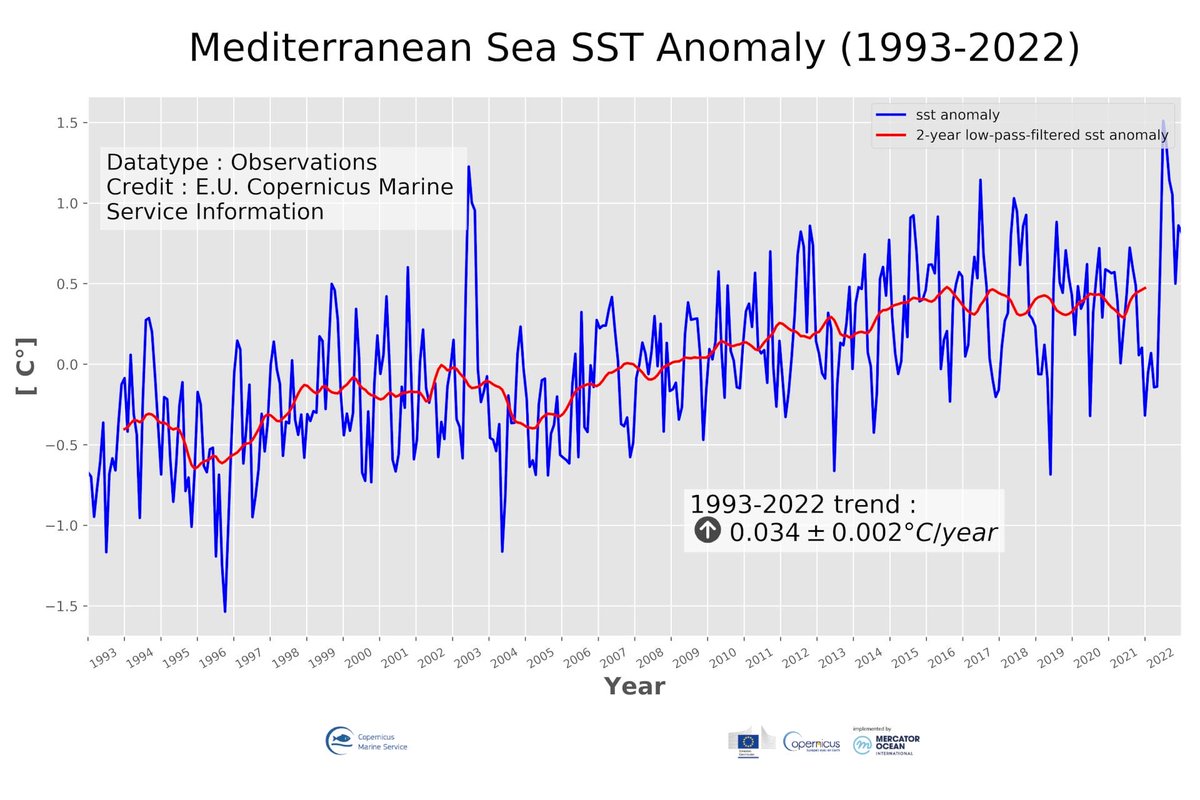
El 6º Informe del IPCC describe la cuenca del Mediterráneo como “punto caliente” del cambio climático a nivel global y según los modelos climáticos, se espera que las temperaturas del Mediterráneo sigan aumentando en las próximas décadas, lo que podría potenciar la frecuencia y severidad de estos fenómenos.
Un Mediterráneo más cálido actúa como un "combustible" para las tormentas. A medida que el aire sobre el Mediterráneo absorbe esta humedad adicional y luego se encuentra con masas de aire frío en altura, se generan condiciones perfectas para la formación de lluvias intensas y tormentas torrenciales.
¿Esta nuestro planeta enfrentándose a peores eventos meteorológicos? ¿Son más catastróficos, frecuentes y extremos? ¿qué podemos esperar de cara al futuro?
El reciente desastre de la #DANA nos hace plantearnos estas preguntas.
Lo intento explicar de forma sencilla en este hilo 👇
Imprescindible escuchar a Antonio Turiel .@amturiel, investigador del .@CSIC y una autoridad en #CambioClimático, sobre la #DANA que ha arrasado amplias zonas del Levante. Para enmarcar.
En el programa @ElTablero_TV 👇🏻
Supporting projects like these from @Climatica gives hope that evidence-based actions will be taken. Society need to wake up – and we do NOT have a Planet B.
✊🌍
https://t.co/XU2dswqOUg
Our leaders have demonstrated for months that they are unmoved by the slaughter of innocents. Indeed, they fund & cheer it on. This is not about them.
This is about us: how we organise & become powerful enough to stop them.
Stop appealing to power.
Start organising to counter it.