Managing data across multiple NMR systems can slow research down.
See how chemists at the University of North Carolina improved data handling, reporting, and archiving with Spectrus Processor JS: https://t.co/7gszlLgJzr
#NMR#DigitalTransformation
Manual data interpretation can slow even the most advanced NMR workflows.
See how Syngenta and Amgen used Automated Structure Verification to reduce analysis time, improve confidence, and accelerate decision-making: https://t.co/nidHvY0S1o
#ASV#DigitalTransformation
We’re heading to #ASMS in San Diego.
Don't miss our poster presentation exploring how in-silico fragmentation is transforming mass spectrometry workflows at scale. Visit Booth 702 to meet our experts, see you there! https://t.co/odeQn2LH0L
#ASMS2026
Join this panel discussion with experts from leading pharma organizations to hear how teams are improving data accessibility, integrating workflows, and enabling more efficient, data-driven R&D. Register here: https://t.co/ONqIEQbGjf
We’re heading to #HPLC in Indianapolis!
Don't miss our poster presentation on June 10, 10:00-11:00 a.m. Find the ACD/Labs team at Booth T11 to meet our experts and see live demos of our latest solutions. Let’s connect! https://t.co/TQtrgykDEq
#HPLC2026
We’re excited to sponsor the Magnetic Resonance in Action sessions at #x2026 on May 26.
Attending? Connect with Curtis Topp to see how ACD/Labs software helps scientists get more from their NMR data. https://t.co/N9D8gEHrI2
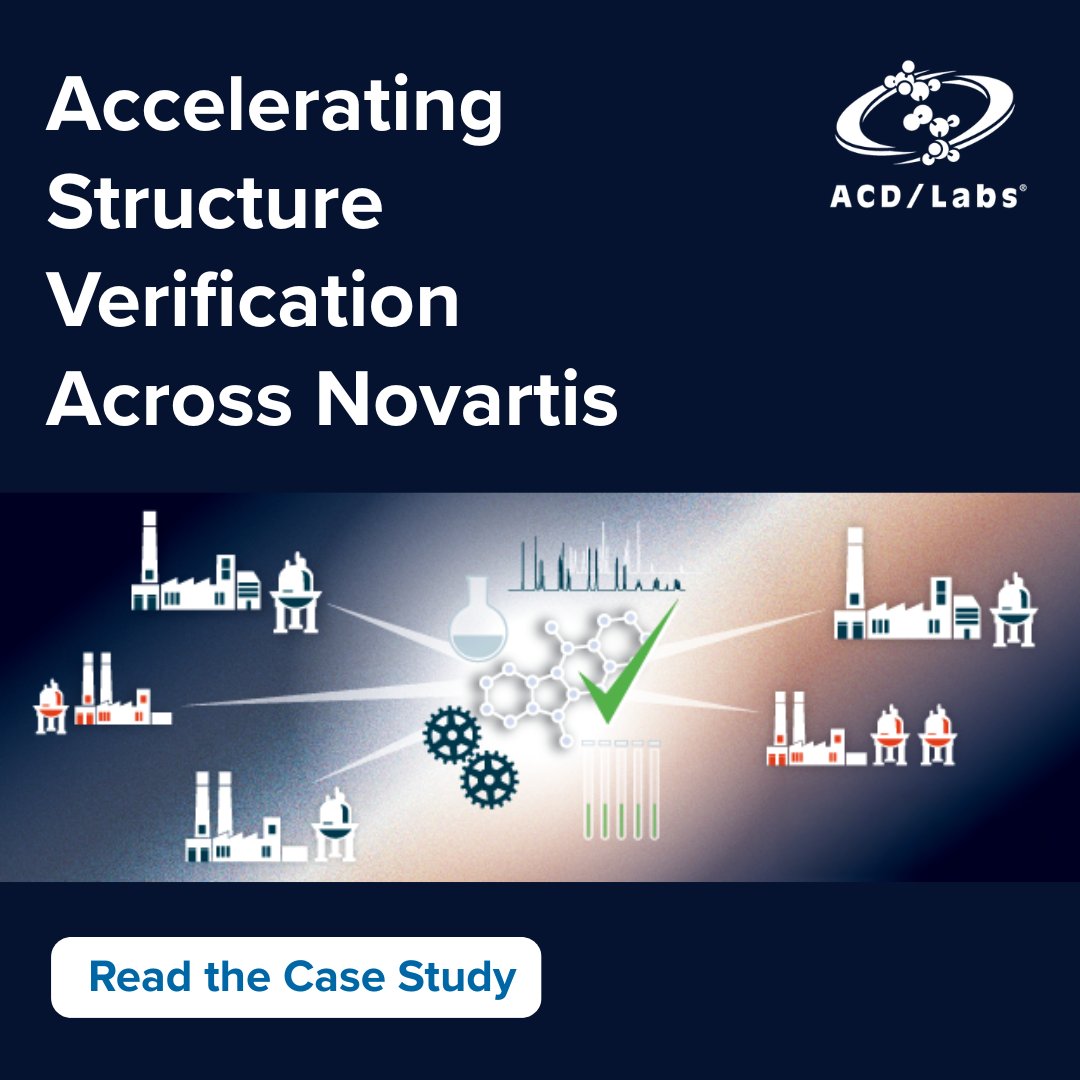
Less time verifying. More time discovering.
At Novartis, automated structure verification reduced analysis time by up to 90%, helping chemists move faster and focus on higher-value work.
Read the case study: https://t.co/MnAtgY3Kg3
Physicochemical and ADME data drive lead optimization, but translating them into structure design decisions isn’t straightforward.
Property-based optimization helps convert these insights into design choices prior to synthesis. Read more: https://t.co/veqRijcnMu
Disconnected data slows down data workflows.
Luminata helps teams reduce data management time by up to 84%, freeing up hundreds of hours per step in a synthetic process. Download the eBook: https://t.co/LM8863rZ3V
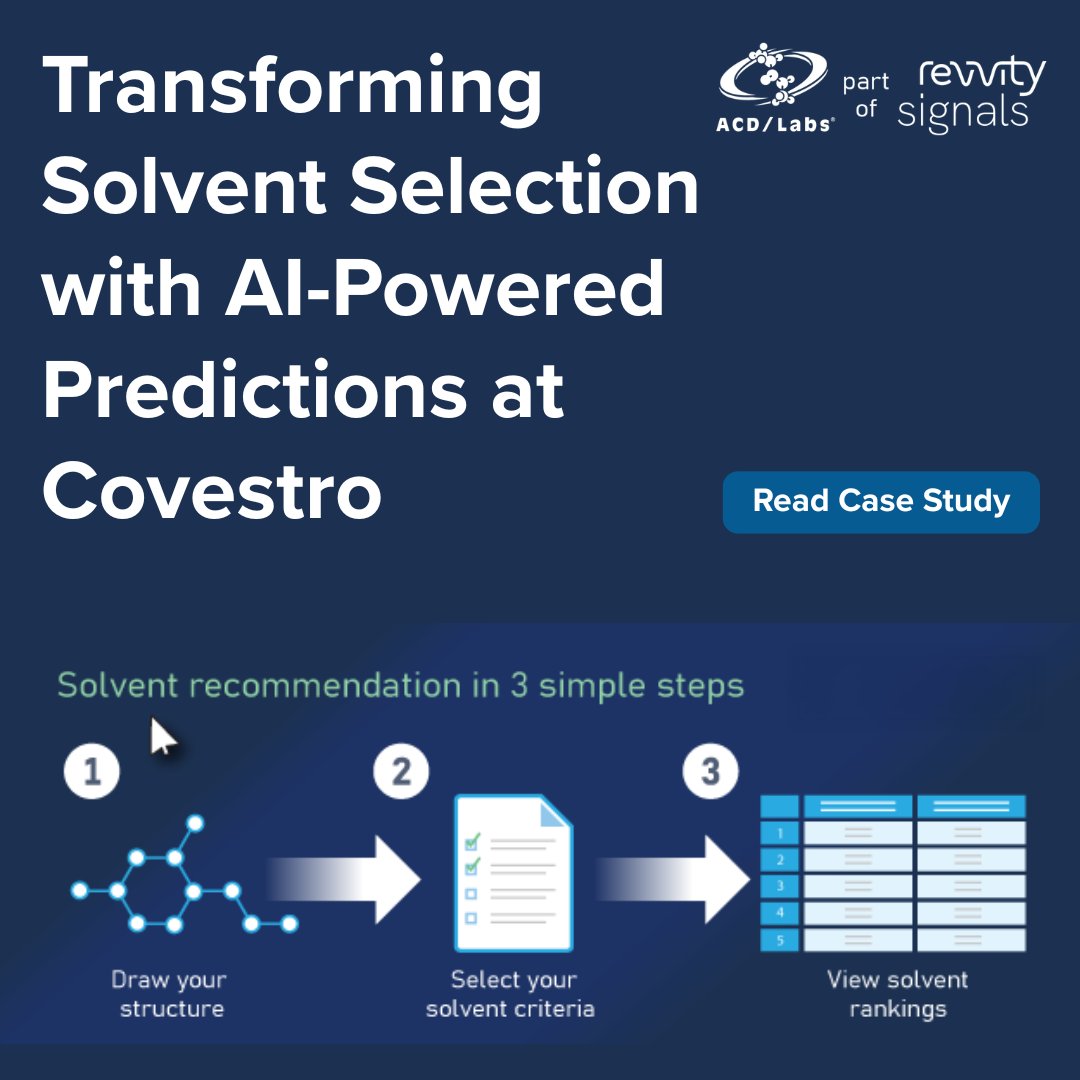
The future of solvent selection is predictive.
With AI-powered solvent recommendations, Covestro unlocked broader exploration, faster insights, and more collaborative workflows. Explore the full case study: https://t.co/2v2qcDDfnw
#AI#DigitalTransformation
Headed to #ASMS2026?
Don't miss our poster presentation to see how in-silico fragmentation is scaling modern mass spec workflows, becoming faster, smarter, and cloud-ready.
Visit Booth 702 to meet our experts. We hope to see you there! https://t.co/IQus09NJav
The future of chemistry isn’t just digital; it’s efficient. But getting there starts with small, practical changes in the lab.
Explore five ways to streamline workflows, improve data handling, and reduce manual work: https://t.co/gJMkfi3i4l
Fragmented systems still slow R&D, leaving scientists to bridge the gaps.
A connected DMTA cycle can change that. See how it enables AI-driven innovation: https://t.co/CGHaT3ticZ
#AI#DMTA#drugdiscovery
Today is Day 1 of @PANICNMR. Catch up with our Account Manager, Katharine Lewis, to discuss how ACD/Labs can help #NMR scientists improve research outcomes.
Stay up to date on ACD/Labs events here: https://t.co/zbWRRldrTH
#NMR#PANIC2026#nuclearmagneticresonance
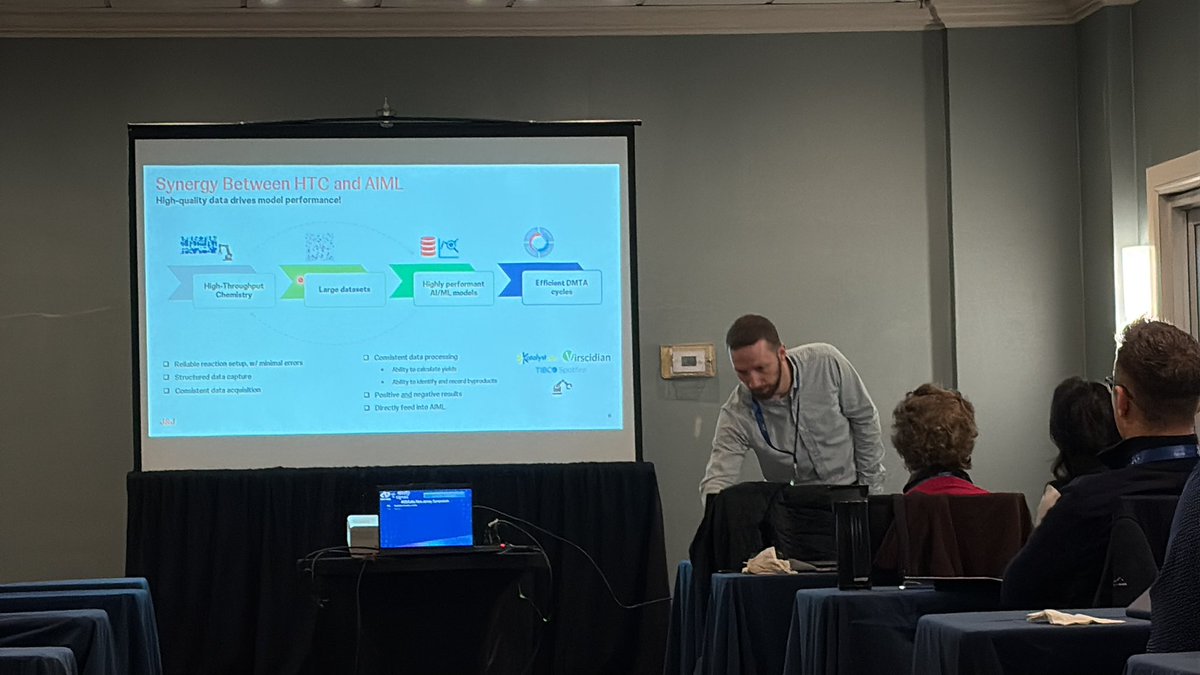
Joe Parry (Merck) shares how HTE data is scattered across multiple systems and adoption of Katalyst D2D for homogenizing and contextualizing data for automated reaction execution and future insights.
For companies and organizations to truly reap the benefits of AI and ML, technologies must be trained on heterogenous data so that AI can move beyond proof-of-concept usage toward fully integrated, AI-ready workflows.
Read more in @IPTmag: https://t.co/1Ynh0gaI29
#AI#ML#data