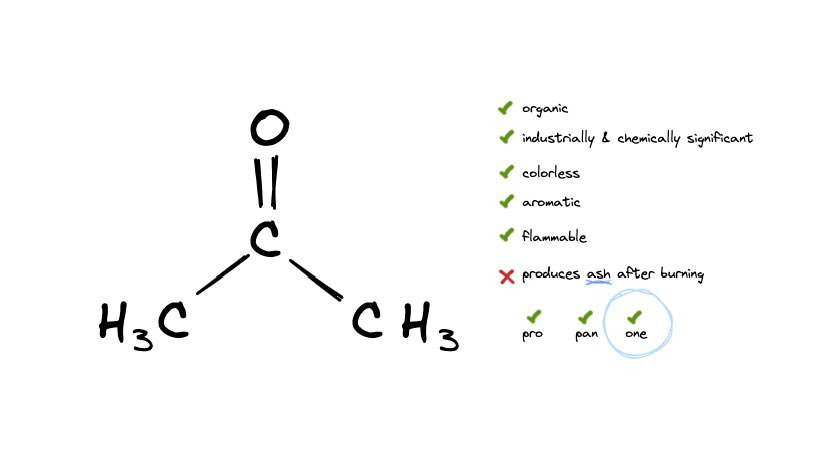
universe might be defined by thermodynamics, physics, metaphysics or even mathematics....
but life is chemistry
and good chemistry is not a mystery
it is just a formula
qed
One UI. Three breakpoints. Zero extra config.
Every Create UI element adapts to desktop, tablet, and mobile automatically. Spacing, typography, layout, all responsive and in sync.
👇🔗
Introducing Impeccable 3.5, the best way to design in production: iterate on real UI with your AI agent, in the codebase you actually ship.
Turns out many popular design skills, including Impeccable and Anthropic's frontend-design, weren't actually very good at...design (the workflow was valuable, but the output didn't magically make LLMs like GPT great designers). We measured it across thousands of generations: 74% of pages used the cream AI-default background, 76% reached for extreme letter-spacing, 90%+ failed the contrast floor.
So we started fixing slop systematically, specific to each model. The skill now compiles rules for the exact defects each model makes, instead of shipping one generic file to everyone. The biggest jump is in GPT-5.5 and Codex.
Also new:
◆ It now knows the difference between a new project and an existing one. Existing codebase, it reads your design system and preserves your identity. Greenfield, it seeds a fresh palette from 129 hand-curated anchors so every cold start doesn't drift to the same safe colors.
◆ Live Mode is now in beta, and works at two scales. Type a direction into the new Steer bar, or speak it, and the agent reads the whole page and edits it in place. Or pick a single element, steer it with a sub-command, live-edit any copy, and accept the variant straight back to source. Insert mode scaffolds brand-new elements between the ones already there. Recovery survives HMR, hidden heroes, and dev-tool overlays.
◆ A rebuilt anti-pattern detector. Torn off jsdom and onto a real CSS cascade resolver: roughly 20x faster, dependency-free, and now small enough to run inline inside the skill, not just the CLI and extension. 14 new rules, 41 total.
◆ The skill keeps itself current, checking once a day and offering to update. Plus /impeccable init and a bare /impeccable that reads your repo and tells you the next move.
Free, open source. Claude Code, Codex, Cursor, and more.
https://t.co/Q5dmE5wB7X
another fun in-product announcement!
designed the svgs in figma and then built the animation and movement in cursor, this was SO fun to work on because I knew the animation would land in prod exactly as I intended
Introducing Dashboard Blocks! 🖤
The most demanded @shadcn blocks, engineered to help you ship beautiful analytics interfaces in seconds.
• Registry ready
• Native light & dark mode support
• Fully compatible with @base_ui + @radix_ui
• Agnostic to any icon library (@lucide_icons, @huge_icons, @tabler_io ... more)
Stop spending days aligning charts.
Grab them below 👇
Comparison demo without and with the Transitions skill
Demo page with more details, usage and commands
https://t.co/nuaxB4Xo4n
npx skills add jakubantalik/transitions.dev
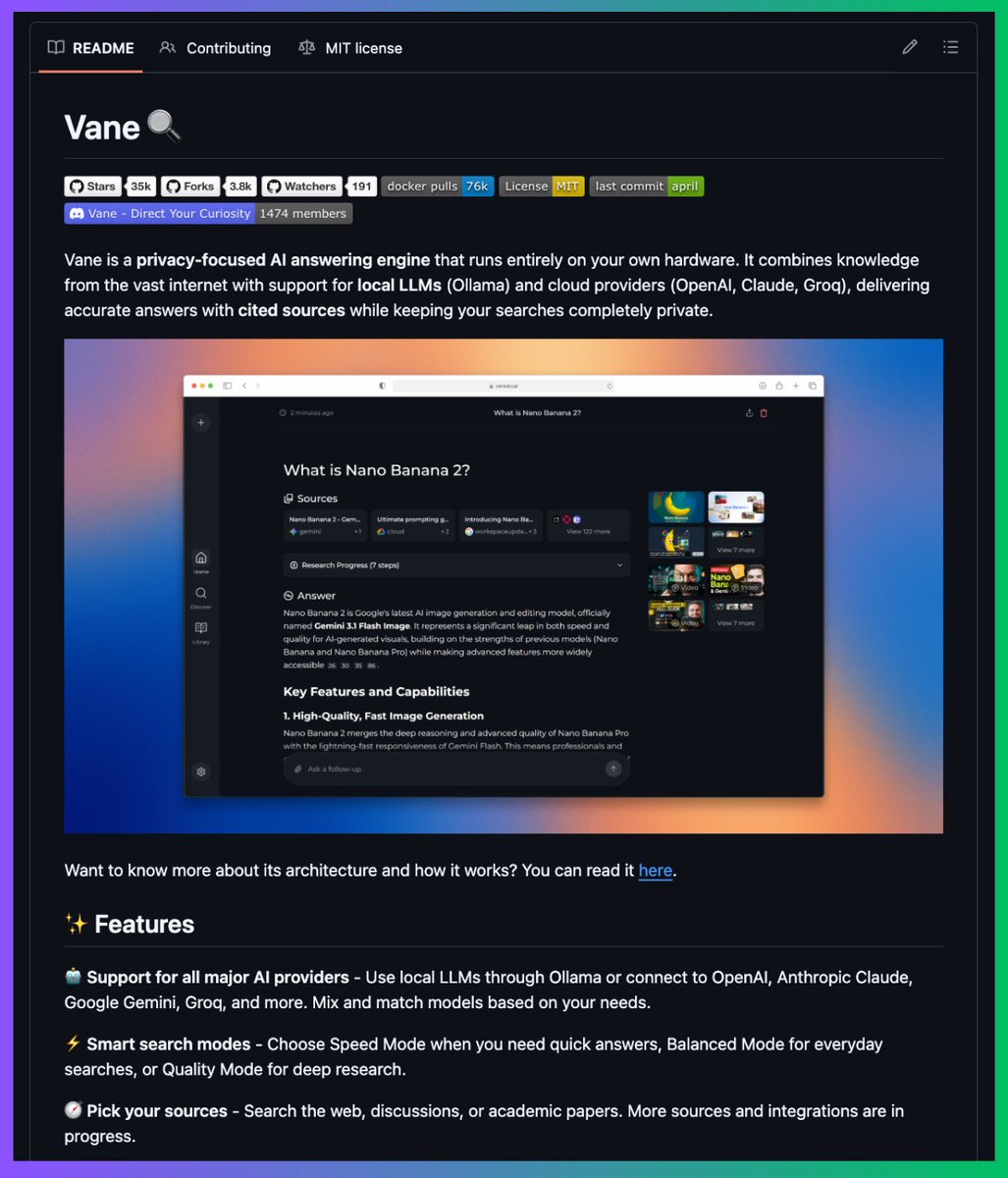
A team in San Francisco killed Perplexity's $20/month subscription.
It's called Vane. You get AI-powered search with cited sources, follow-up questions, image and video search, and focus modes for academic papers, Reddit, YouTube, and Wolfram Alpha, running entirely on your own machine.
Here's how it works.
Vane is an open-source clone of Perplexity built on top of SearxNG which is a meta-search engine that pulls results from Google, Bing, DuckDuckGo, Brave and 70+ other sources without tracking the user. You plug in any LLM you want including OpenAI, Anthropic, Groq or local models through Ollama and it answers your questions with real citations pulled from the live web in real time.
The entire stack can run 100% locally with Llama 3 and SearxNG on your own hardware which means zero API calls going out and zero data ever leaving your machine.
→ No $20/month Pro subscription holding the good models hostage
→ No query limits cutting you off mid-research
→ No tracking and no profile being built from your searches
→ Local mode with Ollama supporting Llama, Mistral, Qwen and anything else you throw at it
→ Focus modes that narrow the search to Academic papers, YouTube, Reddit, Wolfram Alpha or Writing
→ Image and video search built directly into the interface
→ Copilot mode that breaks one question into multi-step research and synthesizes the findings
Perplexity charges $20 a month for Pro and trains its ranking algorithm on every query you send them. Their entire business model assumes you would never spend an evening with a Docker compose file and a local LLM.
Vane runs in one container and SearxNG runs in another and the whole thing points at a Llama 3 model running on your laptop with no internet account involved anywhere in the chain.
MIT License. 100% Opensource.
https://t.co/rg17qIjsH3
Dear frontend devs and UI designers. I bring you Liquid DOM, a complete and faithful implementation of Liquid Glass on the Web.
- Shape morphing
- All properties animatable
- Dynamic refraction and reflection
- Adaptive tint
- Adaptive specular highlight
- Dispersion
- Full html integration
- Super fast layout engine that works across Canvas and html
- Pointer event handling
- Framework and renderer-agnostic low level API
- High level React API
- Ootb @threejs and r3f integration
And lots more.
Read on for implementation details and demos.
Vibe coding was fun…
until your AI-generated website started animating like a PowerPoint slide.
Cursor. Claude. Gemini.
They could build beautiful UIs —
but GSAP animations were always the weak spot.
That changes today.
An open-source repo just dropped with official GSAP prompts + agent skills designed specifically for vibe-coding workflows.
Now AI agents can create:
• cinematic scroll animations
• smooth timelines
• buttery transitions
• Apple-style motion design
• actually polished frontend experiences
This is the missing layer between
“AI-generated” and “professionally crafted.”
REPO ↓
Introducing Hallmark!
An open source design skill to make beautiful UIs and landing pages by default.
Works in Claude Code, Cursor, and Codex.
npx skills add nutlope/hallmark
We did it. Katha Room is nominated for the Apple Design Awards final.
After 16+ years of building for the Apple ecosystem, 6 years of starting and growing Parjanya, and 2 intense, beautiful, challenging years of building Katha Room, we are beyond humbled, thrilled, and honestly still processing this.
Years of staying committed to showcasing India to the world through Prayoga, Vedike and Immersive India, this recognition feels special.
Thank you @AppStore for recognizing this.
This is a great one from Google!
I turned it into a powerful skill you can use in your projects with Codex, Claude Code, or any other agent. It's also a public, open-source repo – contributions to further improve the skill are welcome.
Link below👇
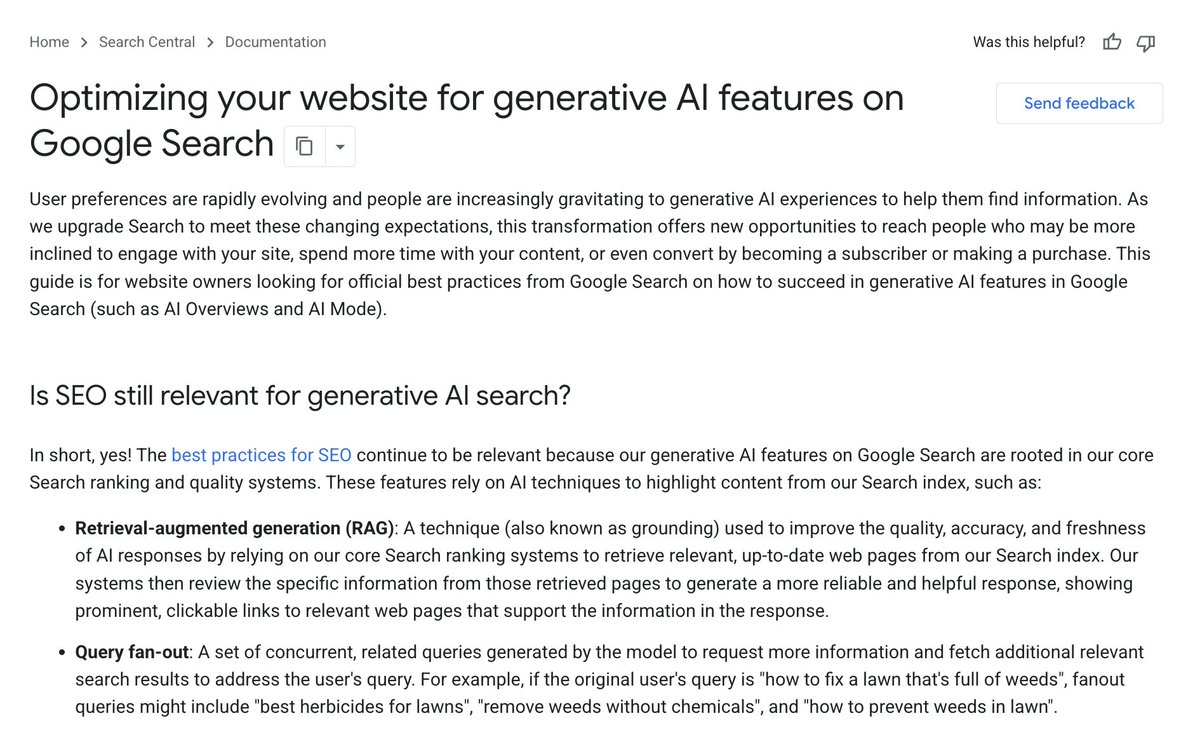
🚨 JUST IN - Google published a long piece about "Optimizing your website for generative AI features on Google Search" 👀
A lot in it https://t.co/22t75EtwUH
🧵