We at @SCVillaJogoo are happy to hear that the @CID1_UG has done incredible work in the investigation of the murder of our captain, the late David Owori. So far the the phone of our captain that was robbed from him has been recovered & leaders of 6 gangs arrested in the area. We know there’s still more work to do especially in arresting the real killers & the motivation for his murder. We thank you for the attention you’ve given this case like in many other cases you’ve handled. We have full trust in the rejuvenated CID. Asante sana @PoliceUg@Tom_Magambo
@kutegyekaivan1@BajeProducts@kutegyekaivan1, do you even know what you are talking about? Those are condominium apartments that have been on sale for the last 8 years. Hard working Ugandans are paying for these through mortgages and you are running your mouth for political clout.
Building a home, school, or commercial project? Our cement provides the strength that lasts. Find us at hardwares near you. YouBuy Yaobai, Kiba Kiggwa!
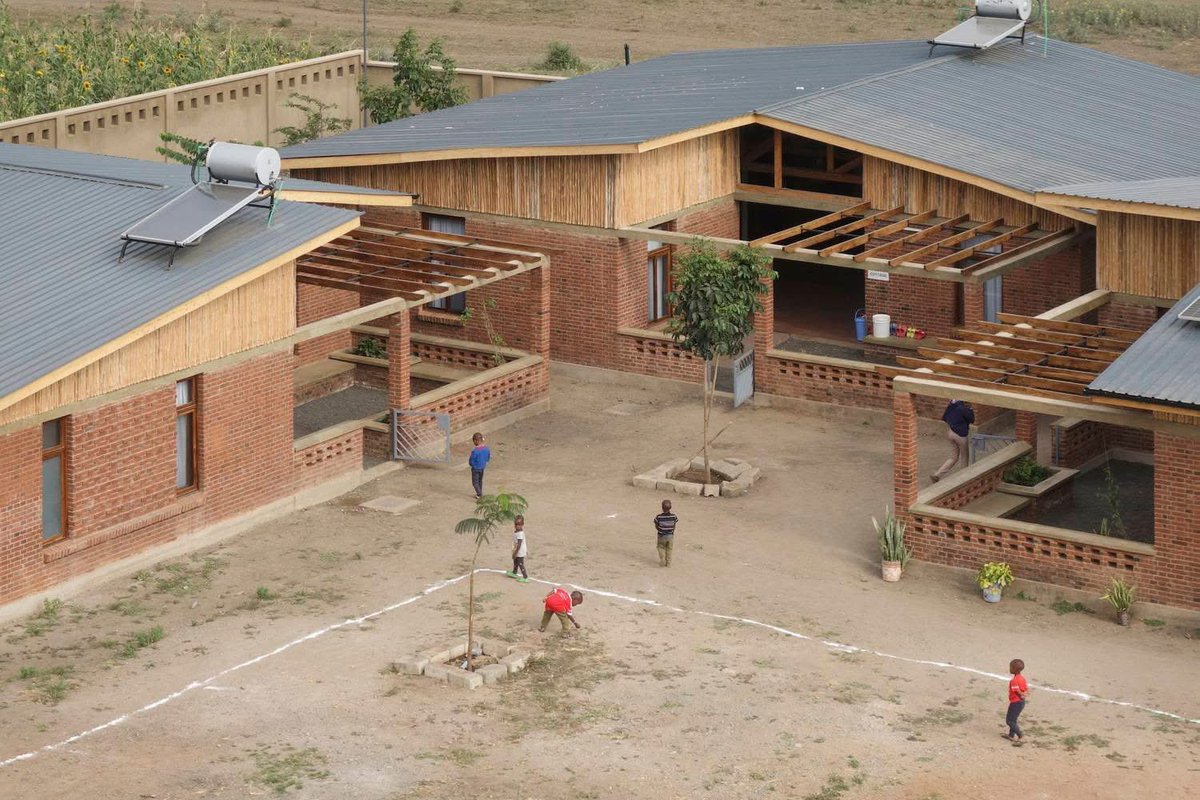
In Tanzania, at the foot of Kilimanjaro, someone asked a question that most governments on this continent have refused to ask. What does a child who has lost everything actually need from a building?
Kao La Amani Children’s Village is the answer. Article 25, working with the Tír na nÓg Children’s Foundation, completed Phase 1 of a children’s village housing 60 children in six family-style cottages, each with a live-in mother, a dining terrace, a library, a games room and courtyards designed for the kind of play that tells a child they are safe. The walls are clad in sisal poles. The bricks are fired with rice husks. The village runs entirely off-grid on solar power, borehole water heated by solar, and waste filtered through constructed wetlands. Nothing imported that did not need to be.
Africa has millions of orphaned and vulnerable children and most of what we build for them reflects exactly how much we value them. Cement rooms. Shared dormitories. Institutions that look like institutions. We give the children who need the most the buildings with the least thought put into them.
Kao La Amani proves it does not have to be that way. Phase 2 is already planned, more living space, staff facilities and community amenities. The children in Phase 1 are already there, laughing, playing and learning in a place that was built specifically around their lives.
We need more of this on this continent. Far more.
Kilimanjaro, Tanzania | Article 25 & Tír na nÓg Children’s Foundation
These tourists, a white American couple and their friends, were in Uganda 🇺🇬 on holiday and they are wondering why foreign media are saying there is Ebola in Uganda. "Our trip to Uganda almost got cancelled we persevered and have enjoyed "A trip of a lifetime."
@kigambira
Unlike the black roofed square boxes with tiny windows our people build across this continent, this house is 150 years old and still standing because someone built it with the right materials, the right roof and the right relationship to its climate. The renovation in 2023 did not replace it. It continued it.
Muthana House. Vadakara, Calicut, Kerala. Designature Architects. 3,500 sq ft. Completed 2023.
The house was crafted 150 years ago in harmony with its natural surroundings. When renovation became necessary, the goal was to breathe new life into the structure while preserving its original charm, addressing termite proofing, concealed wiring and updated spatial layout without touching what the original builders understood correctly. The terracotta tiled sloped roofs were retained and extended. Large openings were kept because the original architect understood ventilation. The columns were redesigned but the veranda remained because the original architect understood how people actually live.
A home is where we spend most of our lives. It should be built like it is part of us, not a flashy box that costs everything and lasts nothing. The people who built this house 150 years ago knew that. The question is why we stopped knowing it.
Designature Architects | Muthana House | Vadakara, Calicut, Kerala | 2023
I keep a file with vital documents on what to do first and who to contact. The documents are broken down into the following;
https://t.co/RiQZ53BMy0 & DECISION MAKING
- Will| Power of Attorney|Healthcare Directive
2.IDENTIFICATION & RECORD
Copies of:
⁃Birth certificate
⁃Social Security card
⁃Marriage certificate
⁃Driver's license
⁃Recent tax returns
3. FINANCIAL SNAPSHOT
⁃List of all accounts (bank, retirement, investments)
⁃Credit cards & SACCOS
⁃Where money is held (not statements)
4. DIGITAL ACCESS PLAN
⁃Where passwords are stored (not the passwords themselves)
⁃How to access them
⁃Backup codes
5. INSURANCE & PROTECTION
⁃Life insurance
⁃Health insurance
⁃Home / rentals/Investments
6. HOME, CAR, EVERYDAY LIFE
⁃Deed / mortgage info(If applicable)
⁃Car Logbook
⁃Bills that must keep getting paid
⁃Trusted contacts (CPA, lawyer, etc.)
7. PERSONAL NOTES
⁃Letters to loved ones
⁃Notes for kids
⁃Where to access photos/videos
⁃People to notify
PUBLIC ALERT ‼️
Theft situation around Jinja Road traffic lights mainly is getting out of hand and somehow it’s starting to look normal
The moment the lights turn red and cars stop, groups of like 3 thugs move between vehicles targeting side mirrors and car grille in traffic jam.
This mostly happens around 4am-7am and again 5pm-8pm almost every single day.
I’ve personally been a victim of this twice while heading home. I’ve also witnessed a Range Rover driver get his grille pulled off in traffic jam in the evening. Right there in front of everyone. Multiple times too.
If you’re lucky, they only take the mirror glass. Worst case, they remove the whole side mirror, mostly on the co-driver side.
Cars mostly targeted are Subaru Imprezas, Range Rover grilles, Mercedes Benz mirrors with lane assist, Harrier Kawundos grilles and more.
Please be cautious. Engrave or label your mirrors with your plate number, and Libiti em
Keep your windows up, and central lock your car while in traffic.
Security authorities we need your help this is getting ridiculous. Please tag em.
2019 during the EVD outbreak I worked on a project as an RA and I was posted to Western Uganda in the regions that border Congo . In Kihiihi Kanungu District was a recovery and checking point funded by UNICEF ; day 2 in the field a random person was tested from Congo was tested and it turned out it was positive . First things first the eyes were as red as hot charcoal , the body temperature was hotter than hell . In no minute blood oozed from his openings and in the next few hours he was identified as a deceased . Not to create fear its signs accelerate very quickly . They checked all of us and I think out of panic and fear I had gained temperature and asked to go to the isolation room , I asked the doctor whether I could make a will and die since I was in an area with my burial grounds I called my people back home and told them things may have overturned . What saddened me eveb my family wouldn’t have been able to bury me because there is a trained team to handle that 🙌🙌 I had a run of my life
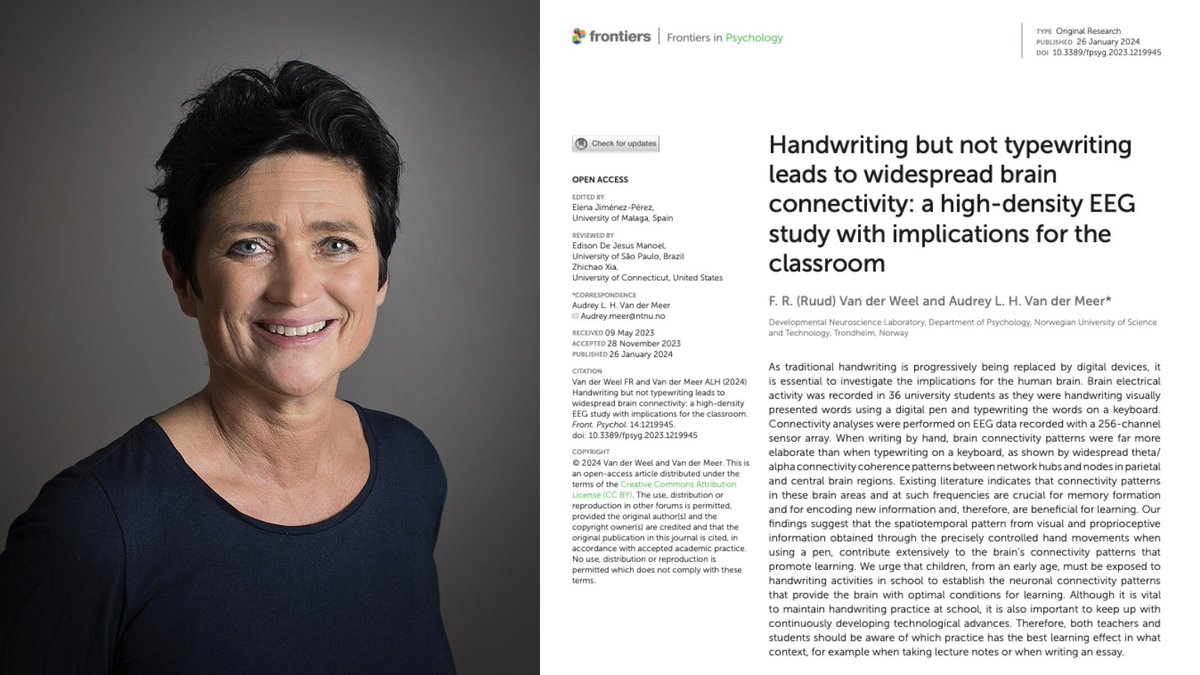
A Norwegian neuroscientist spent 20 years proving that the act of writing by hand changes the human brain in ways typing physically cannot, and almost nobody outside her field has read the paper.
Her name is Audrey van der Meer.
She runs a brain research lab in Trondheim, and the paper that closed the argument was published in 2024 in a journal called Frontiers in Psychology. The finding is brutal enough that it should have changed every classroom on Earth.
The experiment was simple. She recruited 36 university students and put each one in a cap with 256 sensors pressed against their scalp to record brain activity. Words flashed on a screen one at a time.
Sometimes the students wrote the word by hand on a touchscreen using a digital pen, and sometimes they typed the same word on a keyboard. Every neural response was recorded for the full five seconds the word stayed on screen.
Then her team looked at the part of the data most researchers had ignored for years, which is how different parts of the brain were communicating with each other during the task.
When the students wrote by hand, the brain lit up everywhere at once.
The regions responsible for memory, sensory integration, and the encoding of new information were all firing together in a coordinated pattern that spread across the entire cortex. The whole network was awake and connected.
When the same students typed the same word, that pattern collapsed almost completely.
Most of the brain went quiet, and the connections between regions that had been alive seconds earlier were nowhere to be found on the EEG.
Same word, same brain, same person, and two completely different neurological events.
The reason turned out to be something nobody had really paid attention to before her work. Writing by hand is not one motion but a sequence of thousands of tiny micro-movements coordinated with your eyes in real time, where each letter is a different shape that requires the brain to solve a slightly different spatial problem.
Your fingers, wrist, vision, and the parts of your brain that track position in space are all working together to produce one letter, then the next, then the next.
Typing throws all of that away. Every key on a keyboard requires the exact same finger motion regardless of which letter you are pressing, which means the brain has almost nothing to integrate and almost no problem to solve.
Van der Meer said it plainly in her interviews.
Pressing the same key with the same finger over and over does not stimulate the brain in any meaningful way, and she pointed out something that should scare every parent who handed their kid an iPad.
Children who learn to read and write on tablets often cannot tell letters like b and d apart, because they have never physically felt with their bodies what it takes to actually produce those letters on a page.
A decade before her, two researchers at Princeton ran the same fight using a completely different method and ended up at the same answer. Pam Mueller and Daniel Oppenheimer tested 327 students across three experiments, where half took notes on laptops with the internet disabled and half took notes by hand, before testing everyone on what they actually understood from the lectures they had watched.
The handwriting group won by a wide margin on every question that required real understanding rather than surface recall.
The reason was hiding in the transcripts of what the two groups had actually written down.
The laptop students typed almost word for word, capturing more total content but processing almost none of it as they went, while the handwriting students physically could not write fast enough to transcribe a lecture in real time, which forced them to listen carefully, decide what actually mattered, and put it in their own words on the page.
That single act of choosing what to keep was the learning itself, and the keyboard had quietly skipped the choosing and skipped the learning along with it.
Two studies. Two countries. Same answer.
Handwriting makes the brain work. Typing lets it coast.
Every note you have ever typed instead of written went into your brain through a thinner pipe. Every meeting, every book highlight, every idea you captured on your phone instead of on paper was processed at half depth.
You did not forget those things because your memory is bad. You forgot them because typing never woke the part of the brain that would have made them stick.
The fix is the thing your grandmother already knew.
Pick up a pen. Write the thing down. The slower road is the faster one.
A light snuffed out too soon. Maxine had so much promise. This girl was truly a gem for the Gazelles. It’s so sad that she died from something as simple and routine as a knee surgery. 🕯️ 💔 🕊️
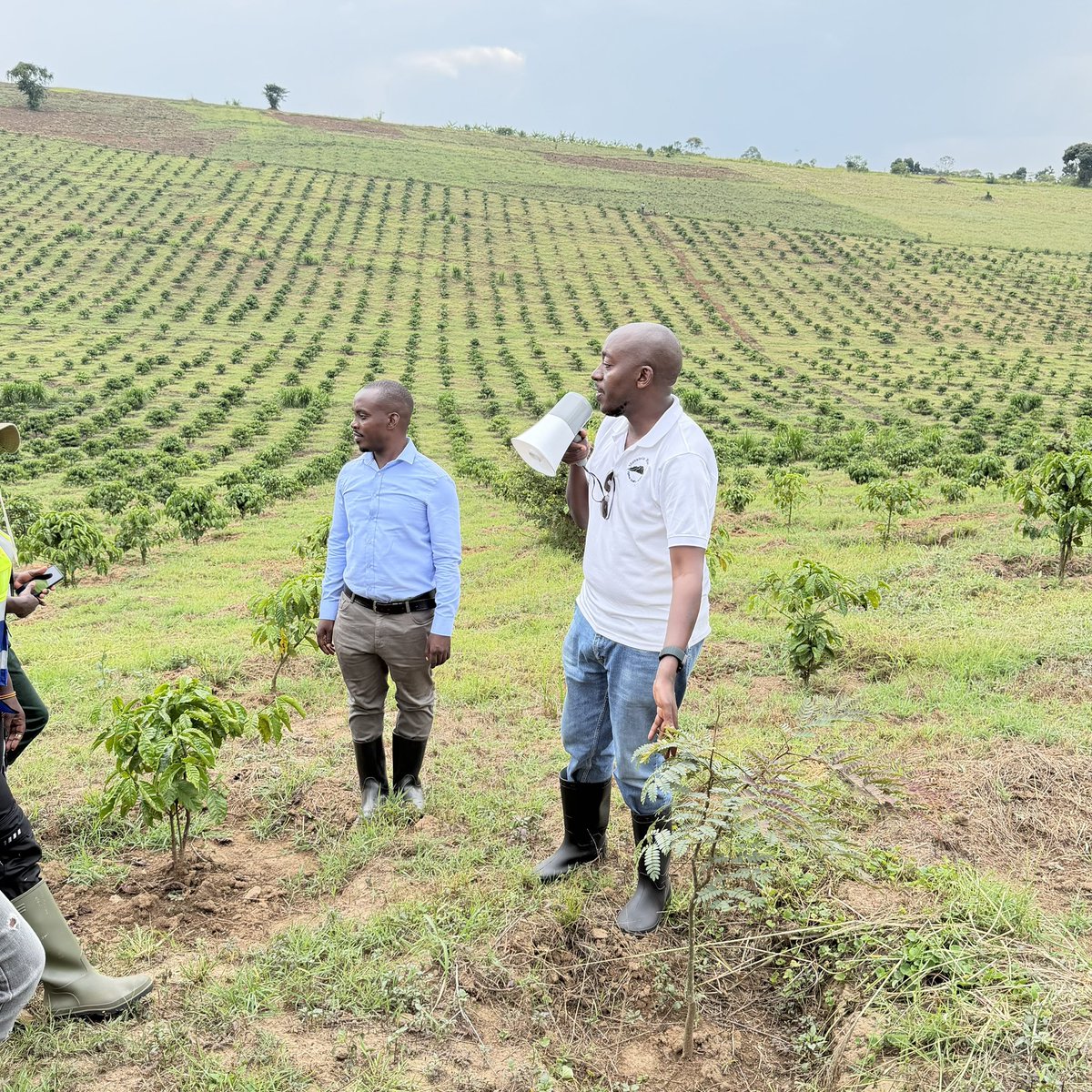
Uganda’s coffee story should not only be measured in exports, but in how much value reaches the farmer, how supply chains reward producers, and how competitiveness translates into shared prosperity. A strong coffee sector is not only export-driven; it is farmer-centered. Justice and competitiveness must go hand in hand.