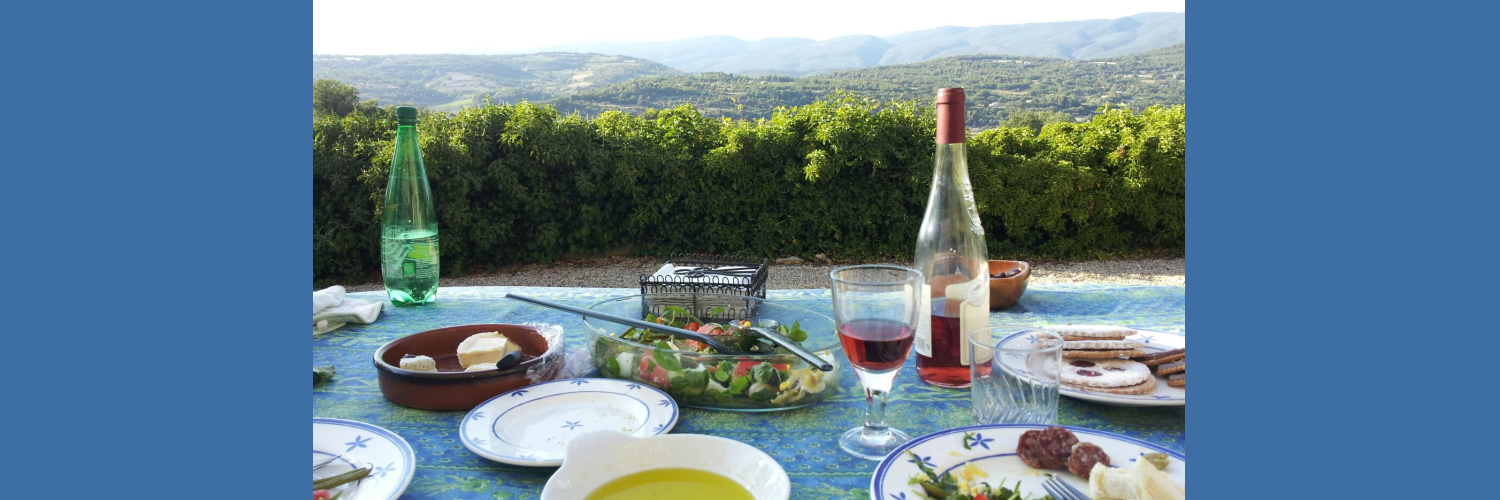
That water clarity is an engineering decision, and the math behind it is wilder than the video.
Roman aqueducts ran on gravity alone. No pumps, no pressure systems. Engineers carved channels with a gradient so shallow it borders on absurd. The Pont du Gard in southern France drops 2.5 centimeters over 275 meters. That's roughly the thickness of a coin over the length of three football fields. They surveyed that accuracy with plumb lines and wooden leveling instruments.
The clarity you're seeing is a direct product of flow velocity. Too steep and the water erodes the channel walls, picks up sediment, turns brown. Too flat and it stagnates. Roman engineers targeted a slope of about 20 centimeters per kilometer, which kept the water moving fast enough to stay fresh but slow enough to stay clear. Before the water reached the city, it passed through multi-chamber settling tanks where velocity dropped near zero. Suspended particles sank. Clean water flowed out the top into the next chamber. Repeat three or four times.
Pliny specified the minimum slope in writing. Vitruvius published the exact mortar ratio for hydraulic cement: one part lime to two parts volcanic ash for underwater work. The pozzolana from Pozzuoli reacted with water to form a calcium-aluminum-silicate compound that actually gets stronger the longer it sits submerged. Modern concrete degrades in water. Roman concrete bonds with it.
Scale the whole system and it gets harder to process. Eleven aqueducts fed Rome at its peak. Combined output: roughly 1 million cubic meters of water per day. That works out to about 250 gallons per person for a city of one million. Modern New York delivers about 125 gallons per person per day. Ancient Rome had access to double the per capita water supply of the largest city in the United States, running entirely on slope and stone.
The Trevi Fountain in Rome is still fed by one of them. Two thousand years, same source, same gravity, same water.
Only one chance in this lifetime…
Like watching sunset at the beach from the most foreign seat in the cosmos, I couldn’t resist a cell phone video of Earthset. You can hear the shutter on the Nikon as @Astro_Christina is hammering away on 3-shot brackets and capturing those exceptional Earthset photos through the 400mm lens. @AstroVicGlover was in window 3 watching with @Astro_Jeremy next to him.
I could barely see the Moon through the docking hatch window but the iPhone was the perfect size to catch the view…this is uncropped, uncut with 8x zoom which is quite comparable to the view of the human eye. Enjoy.
I don’t want to connect my coffee machine to the wifi network. I don’t want to share the file with OneDrive. I don’t want to download an app to check my car’s fluid levels. I don’t want to scan a QR code to view the restaurant menu. I don’t want to let Google know my location before showing me the search results. I don’t want to include a Teams link on the calendar invite. I don’t want to pay 50 different monthly subscription fees for all my software. I don’t want to upgrade to TurboTax platinum plus audit protection. I don’t want to install the Webex plugin to join the meeting. I don’t want to share my car’s braking data with the actuaries at State Farm. I don’t want to text with your AI chatbot. I don’t want to download the Instagram app to look at your picture. I don’t want to type in my email address to view the content on your company’s website. I don’t want text messages with promo codes. I don’t want to leave your company a five-star Google review in exchange for the chance to win a $20 Starbucks gift card. I don’t want to join your exclusive community in the metaverse. I don’t want AI to help me write my comments on LinkedIn. I don’t even want to be on LinkedIn in the first place.
I just want to pay for a product one time (and only one time), know that it’s going to work flawlessly, press 0 to speak to an operator if I need help, and otherwise be left alone and treated with some small measure of human dignity, if that’s not too much to ask anymore.