"The core strength of the semiconductor industry—nanofabrication—is formidable. History proves that, given sufficient time and economic incentives, the industry has been able to turn any idea into reality, as long as that idea does not violate scientific laws." - Chenming Hu
Another good signal for $INTC. Two years ago, $CDNS wasnt interested in Intel processes. Seems like there are real, high volume 14A customer engagements now, driving this interest.
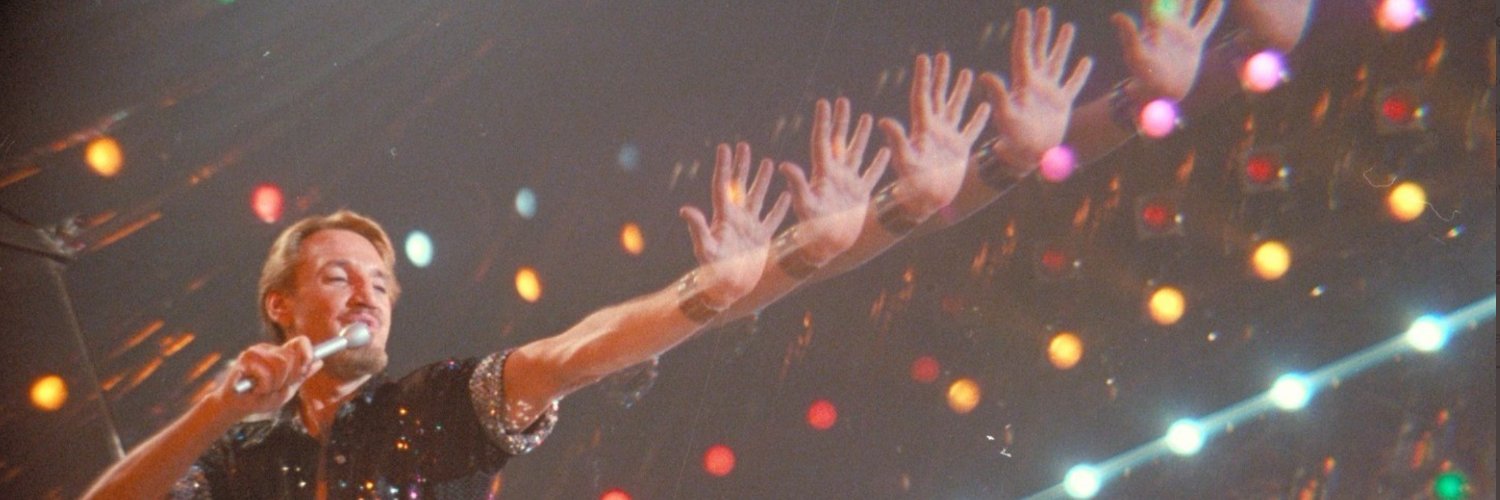
It's 1982 in Austin and you're at the City Coliseum to see The Clash perform "Rock The Casbah" (44 years ago today)📽️🎸
AUSTIN, TX June 8 & 9, 1982 (@fox7austin) -- On this day in Austin history, British punk legends The Clash rolled into town—not just to play two sets over consecutive nights at the old City Coliseum, but to spend those same two days filming the music video for what would become their biggest commercial hit, "Rock the Casbah." Directed by punk icon Don Letts, the video makes a commentary on Middle Eastern oil politics, censorship, and rebellion right onto a distinct, sun-baked 1980s Austin landscape across June 8th and 9th.
The storyline features shots of the downtown skyline, cooling off by a local hotel pool, grabbing a drink at a dive bar, and tracking down a scurrying armadillo near Congress and Oltorf.
If you look closely at the footage, you can spot local landmarks hidden in plain sight. The pool scenes were shot at the old Villa Capri Hotel, the characters grab food at a former Burger King on Guadalupe, and the convenience store stop was filmed at the old Rio Mart at 29th and Rio Grande.
This edited version has isolated all of those classic Austin backdrops from the original 1982 music video.
happy heavenly birthday to prince 💜👑
at just 19 years old, prince played all 27 instruments on his debut album, ‘for you’ 🎸🥁🎹
released in 1978, the album served as an early glimpse into the musical genius that would redefine pop, rock, funk, and r&b for decades to come ✨
TSMC fumbles Copackaged optics for the Nth time like some fucking donkeys and now the whole industry is limping towards NPO, and the pod bros who price the entire AI TAM off Nvidia’s BOM line items still can’t actually explain what the problem is. So let me do the engineering for you, since clearly nobody on here will.
The bottleneck was never can you make light go through a waveguide. It’s all fucking thermals which is downstream of packaging. Specifically, how do you get a photonic engine onto the same substrate as a switch ASIC or XPU without your yield falling off a cliff and your reliability failing.
TSMC’s answer is CoWoS where they bolt everything onto one big monolithic silicon interposer. Cute, until you hit the reticle limit and start duct-taping interposers together (CoWoS-S, then -R, then -L, soon -PleaseStop). Every chiplet and HBM stack you add to that single interposer compounds your defect probability and one bad die leads to a five-figure package going into the dumpster. CoWoS is thermally retarded and the whole industry knows this and it’s why capacity “can’t expand” and Jensen is acting like a bouncer in the front of a club choosing who gets pass the velvet rope.
There is ONLY one company that will make copackaged optics work and expand in the rack… it’s not Lumentum, it’s not Coherent, it’s fucking INTELLLL.
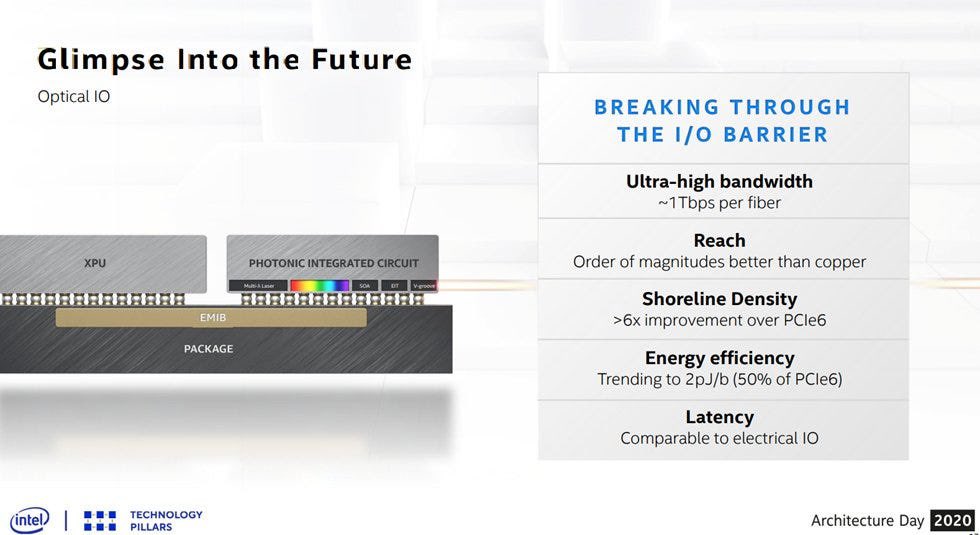
Intel’s EMIB gets rid of a giant reticle limited interposer and replaces it with a tiny silicon bridge that does the high-density coupling locally, exactly where you need it. You localize the hard part and the thermals in one area and your yield is ridiculously high. Comparing EMIB & CoWoS is so funny cause EMIB is north of 95% yield with like 12 reticle size equivalent package while CoWoS falls off a cliff after 5.5 reticles it’s that bad…now imagine adding thermally sensitive photonics.
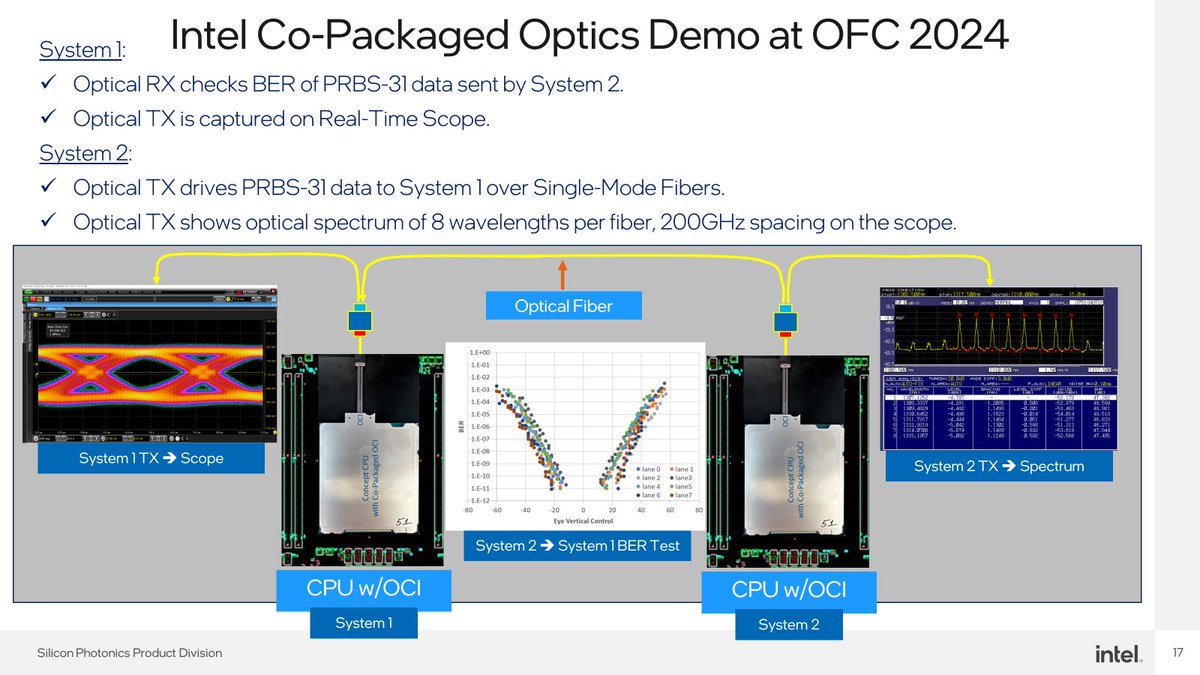
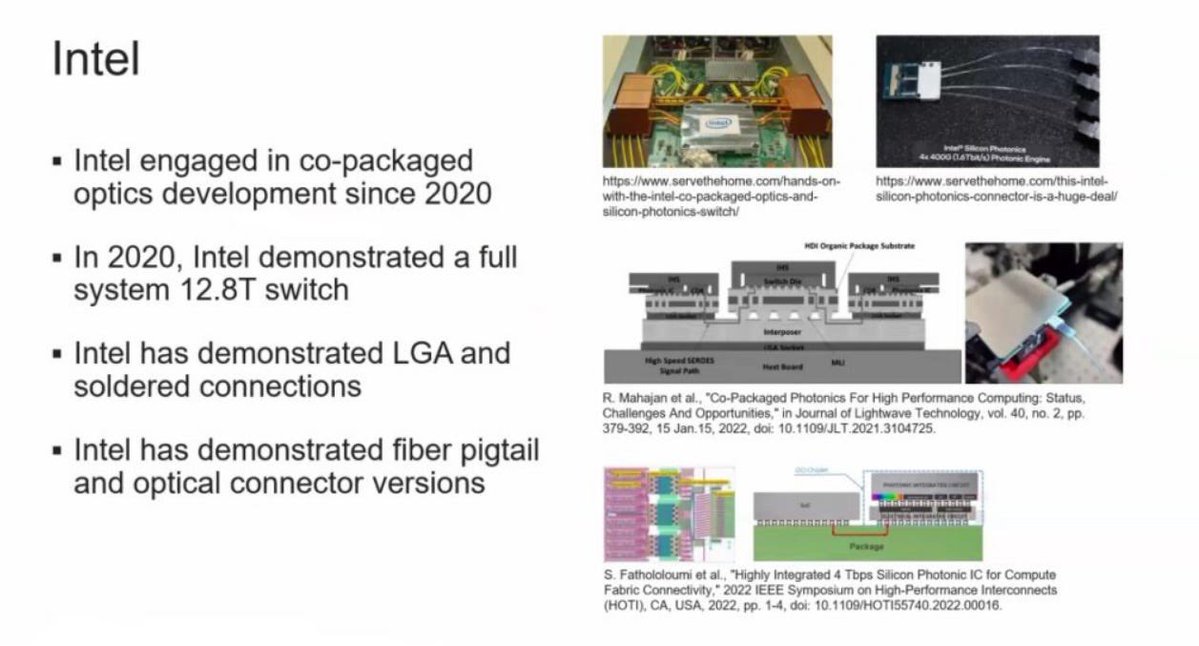
People don’t know this but Intel has been doing silicon photonics in-house for ~25 years... In 2024 they showed an Optical I/O chiplet doing 2 Tbps bidirectionally at ~5 pJ/bit, with the PIC and EIC co-packaged right against the ASIC and it’s all because of EMIB. And even more critically than that, they’ve actually run the fiber-attach and reliability/test flow to JEDEC-grade standards already, which everyone hand-waves until their links flap in production.
My prediction is clear: Intel will capture over 90% of the copackaged silicon photonics market in the next five years because there is NO ALTERNATIVE.