There is a certain side of running a business that these AI hypes are missing.
Always running at capacity leaves no room for really thinking about what is important
Sure the AI is "letting you do more than ever," but those same people stopped dreaming and are always executing.
Feels like a tragedy
I think Dario Amodei is right when he says:
"Coding is going away first, then all of software engineering."
At least in his world at Anthropic.
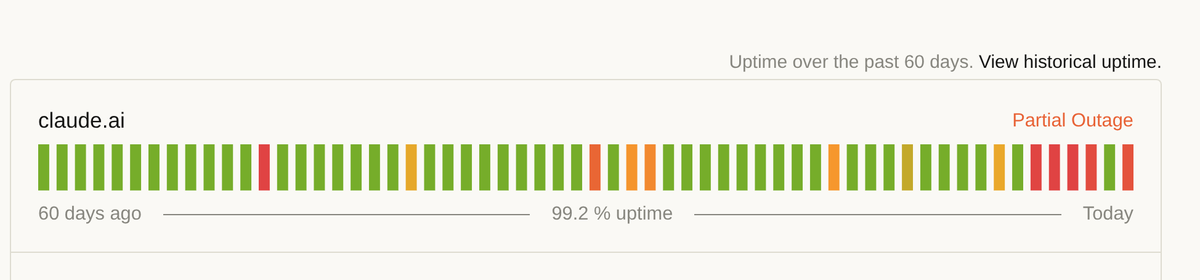
They tell us they don't write code any more.
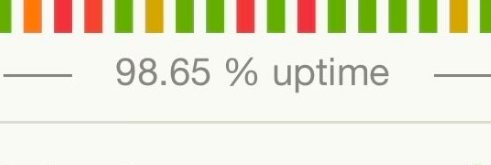
Their status page shows us they don't do software engineering.
We've been tricked, again. Many of the thousands of bugs and vulnerabilities Mythos found are in older software are impossible to exploit. And the severe zero-day reports rely on just 198 manual reviews https://t.co/WhDRhTtCX2
Most people write worse code than AI does.
I've worked in absolutely horrible codebases, 100% written and messed up by humans.
So why do we complain about AI-generated slop code today?
Because of the scale at which we are producing it.
Before, you needed a bad programmer to manually write and deploy a ton of bad code.
Today, you can generate virtually unlimited bad code very cheaply and without any constraints.
So the quality of the code might be improving, but the overall amount of technical debt is increasing exponentially.
Whoever uses AI to write code should be ultimately responsible for that code and liable for any potential consequences of running that code.
I don't care what model you used, how you used it, or how much it helped you.
Humans bear full responsibility.
This is cool!
An open-source version of Claude's new feature to generate interactive charts, diagrams, and UI components.
I'm really digging how fast open-source is catching up with big labs!
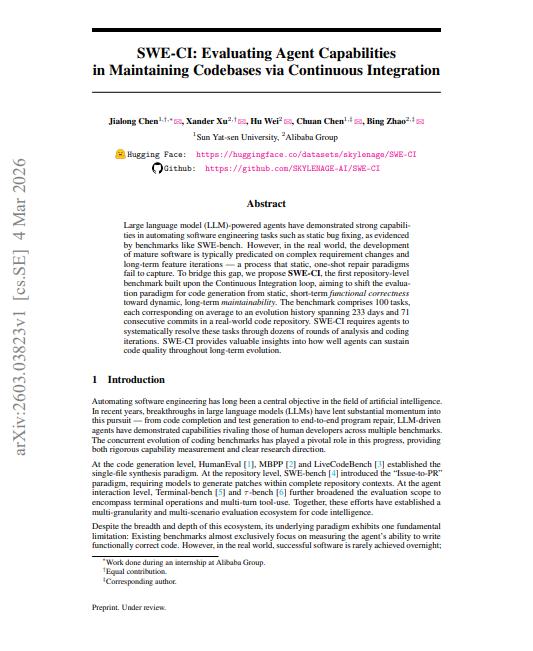
🚨BREAKING: Alibaba tested AI coding agents on 100 real codebases, spanning 233 days each.
the agents failed spectacularly.
turns out passing tests once is easy. maintaining code for 8 months without breaking everything is where AI collapses.
SWE-CI is the first benchmark that measures long-term code maintenance instead of one-shot bug fixes.
each task tracks 71 consecutive commits of real evolution.
75% of AI models break previously working code during maintenance.
only Claude Opus 4 stays above 50% zero-regression rate. every other model accumulates technical debt that compounds over iterations.
here's the brutal part:
- HumanEval and SWE-bench measure "does it work right now"
- SWE-CI measures "does it still work after 6 months of changes"
agents optimized for snapshot testing write brittle code that passes tests today but becomes unmaintainable tomorrow.
Alibaba built EvoScore to weight later iterations heavier than early ones. agents that sacrifice code quality for quick wins get punished when consequences compound.
the AI coding narrative just got more honest: most models can write code. almost none can maintain it.
Day 1: You don't know how to use abstractions, so you write flat code.
Day 1000: Your code is fancier and full of abstractions. It's "flexible", "scalable", "observable", and a bunch of other "-able".
Day 3000: You realize over-engineering is the biggest mistake of your career. You start writing flat code again.
People who claimed that LLMs were going to kill Computer Science are 2-3 years older today, and not much has changed for them:
They still don't know Computer Science, and they still can't use an LLM to perform tasks that Computer Scientists can.
The more we invest in this technology, the more we realize it won't replace professional software developers.
But if you think it will, then keep waiting. We can talk again in 2-3 years and see where we are.
Vibe-coding is the new crypto gold rush:
• Everyone's jumping in because it's new and shiny
• Lots of hype, little substance
• Looks impressive on the surface, but breaks under real-world use
• Easy to get started. Hard to get anywhere meaningful with it
• Real utility comes later, from people who do the hard work
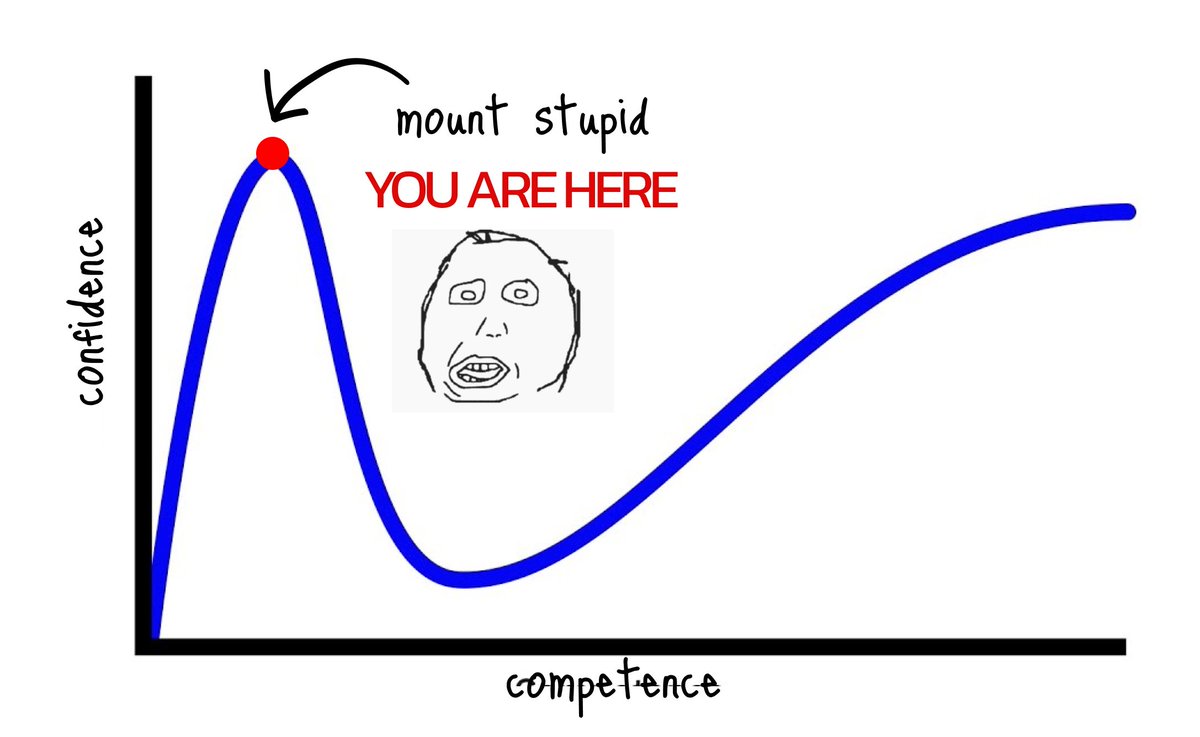
Some of you, vibe-coders, are the exact definition of Mount Stupid.
I was also young and cocky and thought I knew better than everyone else.
A bitter lesson I learned the hard way: good software is way more than what you see on the screen. A million micro-decisions hold it all together behind the scenes. You might not see them, but they are there and matter.
It's awesome that people are vibe-coding and learning how to build software. It's not the conventional way most of us went through, but it's also valid, and I hope it sticks.
But you gotta understand that it's unlikely you'll build good software after a day of talking to a model, especially with the current state of this technology. It will take time and much more work than these models can give you today.
So stay humble, have fun, and use this as an opportunity to learn and improve. You'll find a ton of people willing to help!
But if you get cocky, start disparaging "boomer" developers, make fun of those pointing out the problems you are creating, and in general, have a know-it-all attitude, don't be shocked when people exploit every single vulnerability you created.
Tomorrow, we might all become obsolete, but that's not today.
I’m starting a new business.
After you fire your developers and start vibe coding everything, we’ll come in and fix all the bugs and security issues with your AI-generated code.
We’ll take what you have and make it work.
The service will start at $1,000/hour.