When I look at my kids, I have 2 thoughts:
1) I have never loved anything as much as I love them.
2) I have never looked forward to 8:30PM so much in my entire life.
A parent got ejected from my kid’s 4th grade basketball game today. Acted badly, warning from ref, needed the last word, ref followed through. I’ve seen A LOT of bad sideline behavior with no consequences, so I truly appreciate the refs for putting the kids first! #youthsports
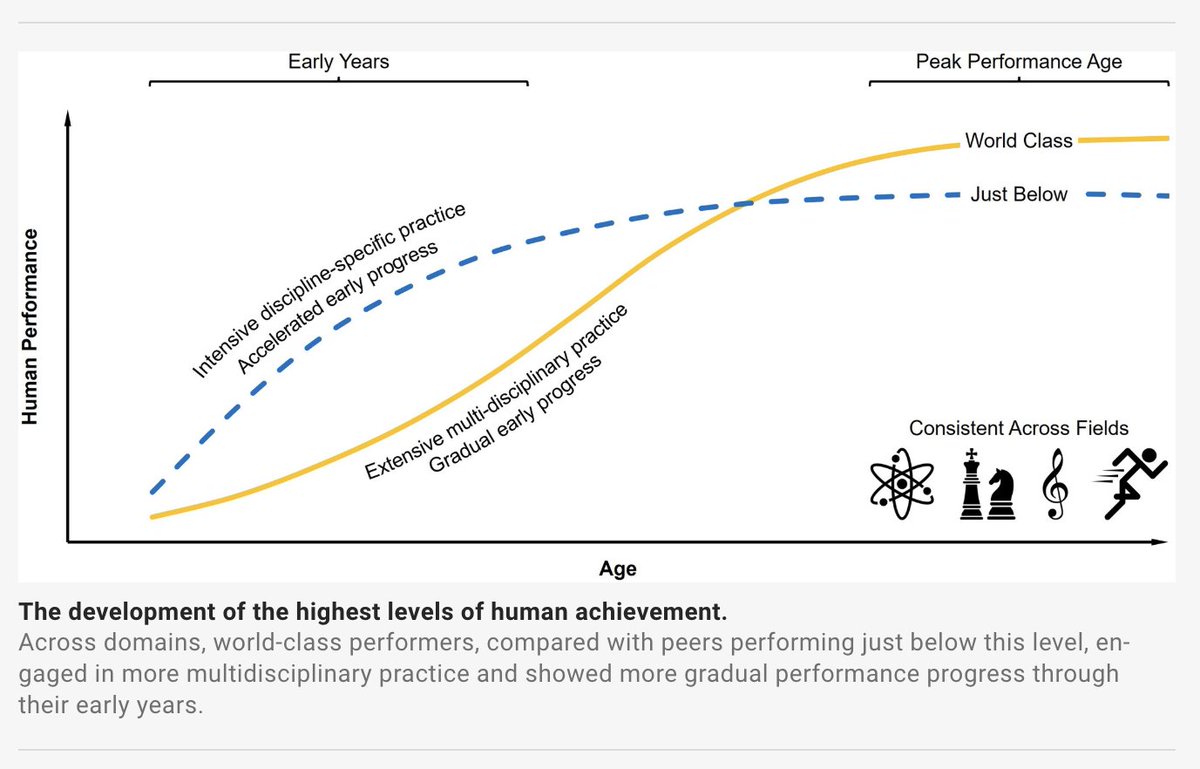
A massive new study on peak performance included 34,000 international top performers: Nobel laureates, renowned classical music composers, Olympic champs, and the world’s best chess players. It shows early specialization is a trap, and the road to greatness is long and varied.
Sorry to be corny, but youth sports are supposed to be extremely cheap and open to everyone. Learning teamwork and sportsmanship with kids from different backgrounds, that sort of stuff.
Rumor has it the adults cause most of the problems in youth sports. Parents hating other parents. Coaches on the same team not getting along. Parents blaming coaches. Coaches blaming parents. Adult jealousy. How adults treat officials. Adults manipulating GameChanger stats. Parent coaches playing parent ball. Adult unrealistic expectations of children.
The worst part is the kids see it and learn the behaviors. Be better adults.
There are players out there right now who no one is noticing at 11, 12, 13 years old who will end up playing past high school. There are also kids out there at the same ages everyone talks about and coaches drool over who will become just another player in high school.
Be very careful of judging and labeling those late bloomers AND those early developed players. So much can change in those teenage years.
Expectations
Woah…Slow down…
They’re 8…They’re 9…They’re 10…They’re 11…They’re 12…They’re 13…
They are kids. They trip for no reason when they are walking. Their knees hurt because they are growing. They are starting to go through puberty. Their social life is becoming more and more important to them. They’re kids!
We as adults seem to forget this. They have a bad day, it doesn’t matter how much they train or who their coach is, it’s going to happen. It’s just that, a bad day. We have to keep this in perspective. If you played growing up, don’t forget how hard it was. If you didn’t, it may be hard to truly understand, maybe go out on the field and try to do everything they are doing.
These kids love the game. They just want to play with their buddies and have a good time. They train to be the best they can be and we take that very serious, but let’s not forget that this is a game. As they grow, their passion for the game and getting better will determine their future in the game but in the end, they should never have a bitter taste in their mouth because of a coach whose priorities were in the wrong place and treated their players like garbage. They should not hate Baseball because of how their parents talked AT them when they had an off day. It’s not easy to hit. It’s not easy to locate every pitch you throw. It’s not easy to field a ground ball on a bumpy youth field. IT’S NOT EASY!
I have been in the dugout for many games (who knows how many youth games and approx. 3,400 professional games) and unless your last name is Jeter, and you are on a winning team nearly every year, you WILL most likely see just as many losses as you will wins, over the course of your baseball life. It’s just a game. I love to compete, but I’m here to tell you, that losing a baseball game is not the end of the world. They won’t win every game just as they won’t lose every game. In fact, the truth is, EVERY player can grow more from those loses (when they learn how to process them correctly) than they will from success as failure is a much better teacher.
Coaches and Parents, understand this, at the end of the day the wins don’t mean anything AND the losses don’t mean anything. It’s the experience they are gaining. It’s them getting to do what they are passionate about. It’s them developing great life skills along the way.
Find a coach. Find coaches. Find a program. Find an organization that understands this. One that focuses more on the person than they do the win. Find those with a passion for the kids and teaching. Find those with experience and knowledge. Find those that genuinely understand what “the process” means and have the patience for it. Find those who have, and have proved to have, a mindset on development, no matter what time of year it is.
THIS IS YOUTH BASEBALL, not the big leagues. Keep your Expectations realistic.
10 Tips for Parents of Athletes:
1. Control your emotions. Be a consistent example of mental stability. Show them how to properly respond when things don't our way. They will be able to get the most out of their skills when they are mentally in control.
2. Support them away from their team. All players should practice their sport on their own time. They will always have more time away from their team to get better than they will while with them. Help them develop this great habit. Help them learn to take their development into their own hands.
3. Be realistic. Put them in a position to thrive. We want them to get better but just because we want them to be ready for a certain level doesn't always mean they are ready for that level. Just because that's where their friends are doesn't mean it's the right place for them at that moment.
4. Don't allow excuses and blaming. The longer they do this the longer they will stunt their own growth. Teach them the difference between the controllable's and the un-controllable's. Their attitude, effort, energy and focus.
5. Think twice about your conversations. What are you allowing? What are you participating in? What are you instigating? The tone, the message, the impact. Know this too, sometimes the best thing we can say is nothing at all. Silence is okay!
6. Sports are hard. If you played while you were younger, keep perspective on how hard it was. If you never did, I suggest you go out there and practice with them. Try doing everything they are trying to do.
7. Slow down!! It's a process. They all grow at different rates. Support them, encourage them, motivate them and help them be their best but be careful of comparing them to their peers. The process and journey is different for all. Some are early bloomers while many are late bloomers. The most important years for an athletes performance don't even happen until after puberity kicks in and again, that even hits at different ages.
8. Look for leaders. Place them in front of those who are great people. People who will help instill the same values you are trying to tech them at home. Raising children is hard. Never underestimate the power of outside voices.
9. Youth sports has a way of becoming a toxic enviornment. From gossip about other players to coach bashing to berating and belittling officials. Don't be a part of it. Don't get sucked into the emotions of it. If you want these years to be as enjoyable as possible, beware of the nonsense and stay away from it.
10. Please don't ever let sports come between you are your child(ren). Don't let your attitude about their performance cause strain in your relationship. This game is a temporary phase in their life and meant to be enjoyable. Your relationship is forever. Nurture it now to have for life.
Hey @coachballgame, any advice for a parent (me) who tries to act appropriately on the sidelines to engage other parents? I find myself in the minority often and though I believe they’re well intentioned, the bleacher chatter often dominates the games.
Parents of kids 8-14, my livelihood solely rests on people paying me for their kids to play baseball for my organization and I’m telling you with 100% certainty that the majority of your children are playing too much baseball. There is literally not one justifiable reason that any child should be playing baseball everyday or even close to everyday. If you don’t stop having your children on two or three teams during the same season with zero to few days of rest I can promise you a usage related injury that could’ve very easily been prevented. You’re doing way way too much and I promise you’re not missing out on anything. I’ve been doing this a long time and more is not more.
I love this! My favorite memory of Little League was playing for coaches who owned Snow King, an ice cream shop. We went there after every game for cones. Couldn’t tell you if we won or lost but I can remember every detail of that place.
My son’s coach pitch team won their playoff game Saturday.
But he barely remembers the game.
After the game, we had a potluck at the park.
I brought out my Legends summer camp playlist, fired up the speaker, and before long...
Every player and sibling was singing and dancing for well over an hour.
It was pure joy.
Parents laughed.
Took photos and videos.
Bonded.
And on the walk back to the car, my son looked at me and said:
“Dad, that party was so much fun.”
He didn’t even mention the game.
And that stuck with me.
As youth coaches, we have limited impact on what happens between the lines.
We can teach the game.
We can prepare.
But we can’t control the outcome.
Where we can have the most impact…
Is outside the lines.
That’s where the magic lives.
That’s where the memories are made.
So yes—let’s compete.
Let’s aim to win.
But what if we tried to out-fun everyone instead of just outplay them?
What if we made intentional space for kids to be kids?
To dance.
To sing.
To laugh.
To play.
Because years from now...
They won’t remember the batting order.
But they will remember that dance off.
Also for podcast fans, super youth coach and occasional fill-in umpire @brianos78 and I have started binge listening to the @pureathleteinc podcast. It's a great resource for parents, kids and coaches! Thank you @JeffFrancoeur and crew for making it and sharing your wisdom!
I came across this letter from Mike Matheny to the parents of his youth baseball team, worth a read. As a mom of two sports crazy kids, I've found well intentioned parents turning youth sports toxic for our kids. Curious what others have experienced? https://t.co/voowxlakm6
Just read up on “Anxiety Disorder” and I’m now convinced where our youth sports culture gets its reputation from.
Players worried about who’s watching, what they are thinking, what they are saying and how those people will react if they make a mistake.
Parents with unrealistic expectations of their kids abilities and mental maturity while trying to play one of the toughest games in the world.
Coaches who feel the need to control everything but are coaching a game where the results are often undesirable.
Every day, every game played, “Performance Anxiety” dominates. The more anxiety, the cloudier the judgement. The calmer, the more consistent. It’s a game of emotions, if you want to win more games, get good at the head game.
Adults, you play a big role in this with the younger players. BTW, high school and college players are still young too!!