We achieved the magical number. Please don't join or leave the server now!
jk, here's the link to join: https://t.co/D8WXYlLowx
Thanks a lot for the unconditional support!
Read this if you are from a tier 3 college or struggling with job opportunities.
There's a reason I always vouch for DSA/CP-- not just to crack a FAANG offer, but to actually build problem-solving muscle. Especially if you're from a tier 3 college, this stuff matters.
It's not just survivorship bias but have seen it play out hundreds of times.
Many of the most active folks in my own discord community were students from tier 3 colleges. Struggling with CP, having big dreams but lacking opportunities.
Today most of them are placed in FAANG or top tech companies! no on-campus, no paid courses. Just pure grind.
For instance every single mod of the community started from scratch. They learned, taught, built with the community-- and flipped their career trajectories.
All without fancy credentials. Just discipline, curiosity, and DSA.
So if you're sitting around blaming your college tag just stop cribbing (I know am gonna get hate for saying these facts).
Tier 3 isn't your barrier. It's just your excuse.
It's surprisingly easy to overlook gaps when you're deep into building a complex system. You get so caught up in making things work that you forget to think about how they might fail.
One mindset shift that really helps:
Switch roles. Become the intruder.
Approach your system like someone actively trying to break it.
Once you do that, vulnerabilities start to surface.
Race conditions, edge cases, failure paths-- things that once seemed minor become potentially disastrous issues.
Judge the quality of a decision irrespective of the quality of its outcome.
Sometimes even a good decision can lead to a bad outcome, but that does not make the decision bad.
Newsletter #233: Be the Person Everyone Wants to Work With
Beyond a point, your reputation determines how high you will go in the career ladder. And it takes months, sometimes years, to build one that truly matters. The people who consistently grow, get trusted with important projects, and influence decisions aren’t always the loudest or most self-promoting. They’re the ones people want to work with, listen to, and trust.
I covered this in detail, so give it a read.
Also, I published a video titled "Scanning Bug That Took Down GitHub." We dissect a 53-minute outage, understand its root cause, and explore best practices and mitigation.
I also shared a paper I read - Megastore: Providing Scalable, Highly Available Storage for Interactive Services, which explains how Google achieved strong consistency at massive scale in 2011 - an engineering-first approach that set norms for the industry.
As usual, here are three articles I recommend:
- The future of Python web services looks GIL-free
- Mistakes I see engineers making in their code reviews
- Modern perfect hashing
So a fake screenshot of someone bagging a 4 crore package goes viral and tech Twitter loses its mind.
Chill out, anon. Even though it was fake, still those numbers aren't unheard of. And slightly lower numbers are common, earning 1 crore+ in India isn't some wild fantasy anymore.
In good orgs, it's fairly achievable by 5+ years of solid experience; especially if you've built depth and ownership.
So instead of spiraling over hype posts, focus on actually getting better.
Write code. Build stuff. Grow real leverage.
Let the comp follow your craft! not the other way around.
A week is too long for startups.
A week is too short for big tech.
"Oh, the release is a week away. Chill."
"Oh f**k... the release is only a week away."
Most freshers tend to ignore DevOps; partly because problem-solving through DSA feels more engaging, and mostly because DevOps doesn't appear lucrative to their career path early on.
But once you start working, and begin owning systems end-to-end, the importance of DevOps becomes crystal clear.
You realize how easy it is to break things ; pushing bad configs, messing up deployments, skipping observability, simply because you don't understand the basics.
No one's asking you to be an infra wizard (not even sure anyone masters DevOps entirely), but knowing the fundamentals helps you:
- Think holistically: from writing code to getting it to production safely.
- Understand bottlenecks, failure points, and how your code behaves in the real world.
- Build with awareness of infra trade-offs, instead of treating infra as someone else's problem.
Bottom line: If you want to build serious products- learn just enough DevOps to respect the system you're building on.
Projects are the best way to learn a programming language, and here are the three projects I did to learn Golang back in 2016.
1. Build a command-line todo application
2. Build a simple in-memory message broker
3. Chat Application using WebSockets
Each project covers a different aspect of Golang, and doing them all builds a holistic understanding. Here's what you will get from each project.
1. Build a command-line todo application
Golang is heavily used to build internal tools and command-line utilities. Building a todo application on the CLI will help you
- start with Go without being intimidated by the problem statement
- understand how to structure the code and follow best practices
2. Build a simple in-memory message broker
Message brokers are simple queues exposed over the network. Doing this project will help you understand
- writing HTTP web servers
- concurrency primitives like channels, mutexes, and WaitGroups
- goroutines as you will use them to simulate the load on this broker
3. Chat Application using WebSockets
Building a simple real-time chat application using WebSockets will help you understand
- how WebSockets and persistent connections work
- how to store and retrieve data from databases
Doing these projects well will cover most Golang constructs and help build a solid foundation to learn advanced topics.
Hope this helps.
After taking a large number of interviews recently, here's a piece of honest advice:
Please don't apply to remote startup roles if your only strength is DSA.
If you lack a functional understanding of system design, real-world architecture, or how services are actually built and scaled- you're simply not ready for these roles.
It's disappointing how often bigTech candidates fall short on basics.
DSA alone won't help you design scalable systems, debug real-world infra issues, or understand tradeoffs in production.
Learn the fundamentals. Build things. Think beyond the interview prep grind.
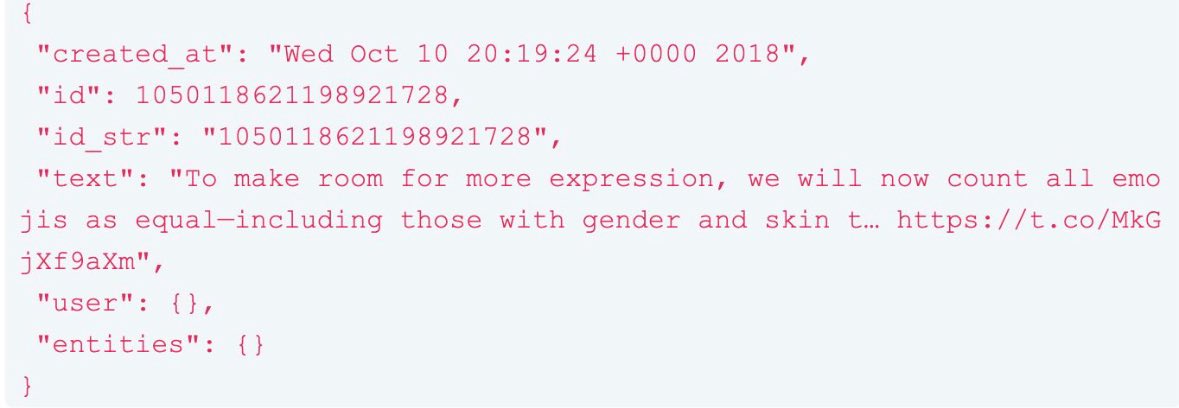
Why does X's (twitter) API return both id and id_str?
That's not because X wants to send more data in and out of their system but rather to accommodate language limitations (specially javascript). Let's deep dive!
id: a 64-bit unsigned integer
id_str: the same identifier represented as a string
X uses "Snowflake" IDs (there's a discord discussion I conducted a few months ago available on my YT: https://t.co/uwhUufi8YR), which are 64-bit integers encoding timestamp and sequence information. While some environments can handle 64-bit integers directly, JavaScript cannot safely represent integers larger than 53 bits.
Attempting to do so risks precision errors- an unacceptable risk when identifiers must remain exact.
By returning both numeric and string formats, the API provides flexibility:
Systems with full 64-bit integer support can use id.
JavaScript and similar languages can rely on id_str, ensuring IDs remain accurate across operations.
It's a small but thoughtful example of API design that balances backward compatibility, developer experience, and reliability.
For teams designing APIs at scale, this highlights an important lesson: account for how different languages and ecosystems will consume your data. Subtle implementation details can be the difference between robust adoption and frustrating integration challenges.
Was going through the AtCoder DP playlist and tried solving J - Sushi Problem. The problem required knowledge of "Expected Value" and guess which video came to the rescue!!!
Ever wondered how LinkedIn instantly shows who's a 1st or 2nd‑degree connection on every profile?
The secret lies in its multi-layered graph infrastructure: especially the Liquid database, smart caching, and traversal optimisations.
Liquid- The Engine Behind Connection Classification
Liquid is LinkedIn’s proprietary, distributed graph database. It represents members as nodes and connections as edges, sharded across data centers for scale and low-latency traversal.
When you view a profile, Liquid performs bounded breadth-first traversal (1-2 hops) to determine your connection degree efficiently.
Bidirectional BFS: Traversal Done Smarter
LinkedIn applies a bidirectional BFS algorithm, simultaneously exploring from both your node and the target profile, and meeting in the middle. This significantly reduces search space and speeds up determining whether the relationship is 1st or 2nd‑degree.
Caching with Network Cache Service: At the scale of billions of users and connections; real-time traversal for every request would be costly. That's where the Network Cache Service comes in:
It precomputes and caches your 2nd‑degree connections, sharded and replicated across multiple servers, it ensures both availability and speed.
Greedy Set Cover: Efficient Query Routing
To avoid the inefficiency of querying all data shards, LinkedIn uses a Greedy Set Cover algorithm:
It selects only the most relevant servers holding the needed edges.
This optimised selection reduces query complexity and helps maintain ultra-fast lookup times across the distributed graph.
End-to-End Flow: Here's how the system works end‑to‑end when you open a profile:
1. Check for direct connection: Liquid fetches and evaluates your 1st‑degree edges.
2. If not direct, check 2nd‑degree: either quickly via cached 2nd‑degree edges, or using bidirectional BFS from user & target, optimised by the cache, optimise with Greedy Set Cover to pick relevant shards.
3. Apply privacy filters, edge types, and freshness checks.
4. Surface the degree badge ("1st", "2nd") instantly.
db nugget: uuids bloat indexes.
companies that operate at scale often avoid them for transactional use cases.
moreover, uuids cause inserts to occur in random order, leading to index fragmentation and frequent b-tree rebalancing, which results in higher write latencies.
Opened LinkedIn after a while and was surprised to see hundreds of messages, mostly asking for referrals, but quite a few reaching out with genuine opportunities from remote startups to big tech.
It feels like the market is picking up again. The opportunity you've been waiting for might be just around the corner.
Make sure you've got enough visibility for recruiters to notice you!
If you are into competitive programming and still not on ACD discord. You are NGMI!
Interact with world's best competitive programmers!
It's all free and would forever be! Would appreciate sharing with your friends/juniors as it's lesser known in tier-3 circles.
I know I'm pretty bad at promoting my own work- but I just came across a comment that took me back.
Back to the days when I used to upload regularly on YouTube. The videos may not have had flashy thumbnails or clickbait titles, but they genuinely helped people not the masses, but the ones who truly wanted to learn. That always meant more to me.
Have been thinking of starting again- especially with System Design content.
If you've any good mic/camera/lighting setup suggestions, drop them below. Would appreciate the help!
P.S. If you're seriously into DSA/CP, do check out the ACD YouTube channel.
It may not win a design award, but if you're aiming uptil Expert/CM on CF, the content might just get you there.
Recently had an incredibly detailed and insightful conversation with @striver_79 about a product we're building at ACD to teach system design.
The kind of clarity and feature ideas he shared were mind-blowing, things that hadn’t even crossed our minds in weeks, he pointed out in minutes. Truly selfless, sharp, and generous with his time.
In a world full of influencers with scarcity and crab mindsets, it’s refreshing to meet someone who genuinely helps others.
We’ll be incorporating many of his suggestions, and I’m more confident than ever about the potential of this product.
Launch coming soon!
Just a quick appreciation post for someone who absolutely deserves it 🙌