Winston Churchill fought his depression with bricks. He'd lay them for hours at his country home in Kent. He joined the bricklayers' union. And in 1921 he wrote about why it worked. It took psychology another 75 years to catch up.
He called his depression the "Black Dog." It followed him for decades. His method for fighting it back was as basic as it sounds: laying brick after brick, hour after hour.
Churchill spelled out his theory in a long essay for The Strand Magazine. People who think for a living, he wrote, can't fix a tired brain just by resting it. They have to use a different part of themselves. The part that moves the eyes and the hands. Woodworking, chemistry, bookbinding, bricklaying, painting. Anything that drags the body into a problem the mind can't solve by itself.
Modern psychology now calls this behavioral activation. It's one of the most-studied depression treatments out there. Depression sets a behavior trap. You feel bad, so you stop doing things, and doing less means less to feel good about. Feeling worse makes you do even less. The loop tightens until you can't breathe inside it.
Behavioral activation breaks the loop from the action side. You schedule the activity first, even when every part of you doesn't want to. Doing it produces small rewards: a wall gets straighter, a painting fills in, a messy room gets clean. Those small rewards slowly rewire the brain. Action comes first, and the feeling follows.
Researchers at the University of Washington put this to the test in 2006. They studied 241 adults with major depression and compared three treatments: behavioral activation, regular talk therapy, and antidepressants. For the people who were most severely depressed, behavioral activation matched the drugs. It beat the talk therapy. A 2014 review of more than 1,500 patients across 26 trials backed up the result.
Physical work like bricklaying does something extra on top of this. It crowds out rumination, the looping bad thoughts that grind people down during the worst stretches of depression. Bricklaying needs both hands and gives feedback brick by brick: each one is straight or crooked. After an hour you can see exactly how much wall you built. No room left for the mental chewing.
The line George Mack used in his post, "depression hates a moving target," is good poetry. The science behind it is sharper. Depression hates a brain that has somewhere else to be.
Here is a quick compilation of heartfelt eulogies by Mike Francesa. If you're not aware, nobody could care less if someone dies than Mike Francesa.
Thanks to the assist from @BigActionBill for providing a voice for Mike's unbelievably insensitive tweet about Horace Clarke.
@TayyibAbu1@dpshow@MadDogUnleashed Baseball teams have lost 4 straight thousands of times. The fact that it happened in the postseason only once is because there such a tiny sampling of it being possible
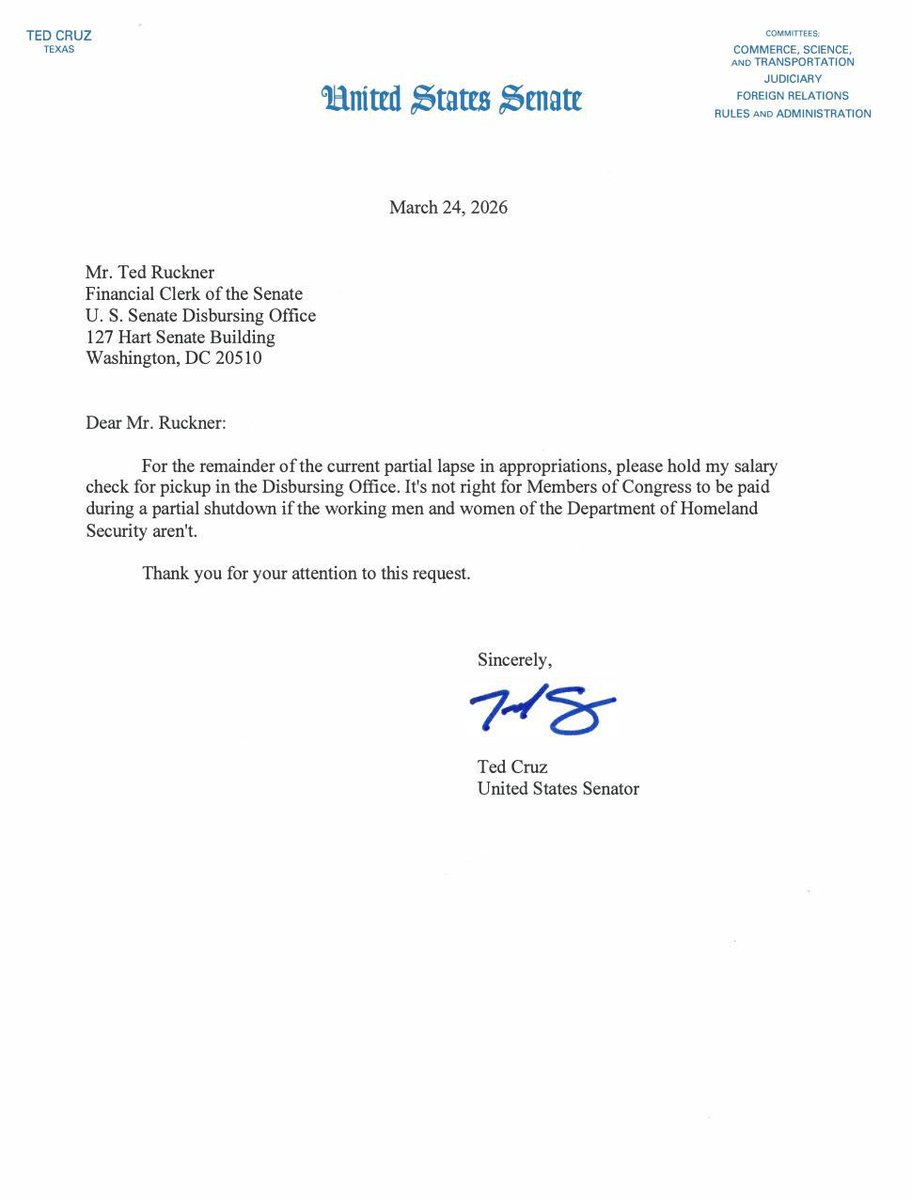
Due to the Democrat’s Shutdown, I’ve asked the Financial Clerk of the Senate to hold my salary.
It’s not right for Members of Congress to be paid if the working men and women of DHS aren’t.
Nearly 25% of SNAP benefits go toward soda, chips, and snack cakes. My Nutritious SNAP Act stops taxpayer dollars from subsidizing junk food that can lead to chronic disease and empowers states to set their own nutrition standards. Common sense shouldn't be this controversial.
https://t.co/yCQ6WYLfDw