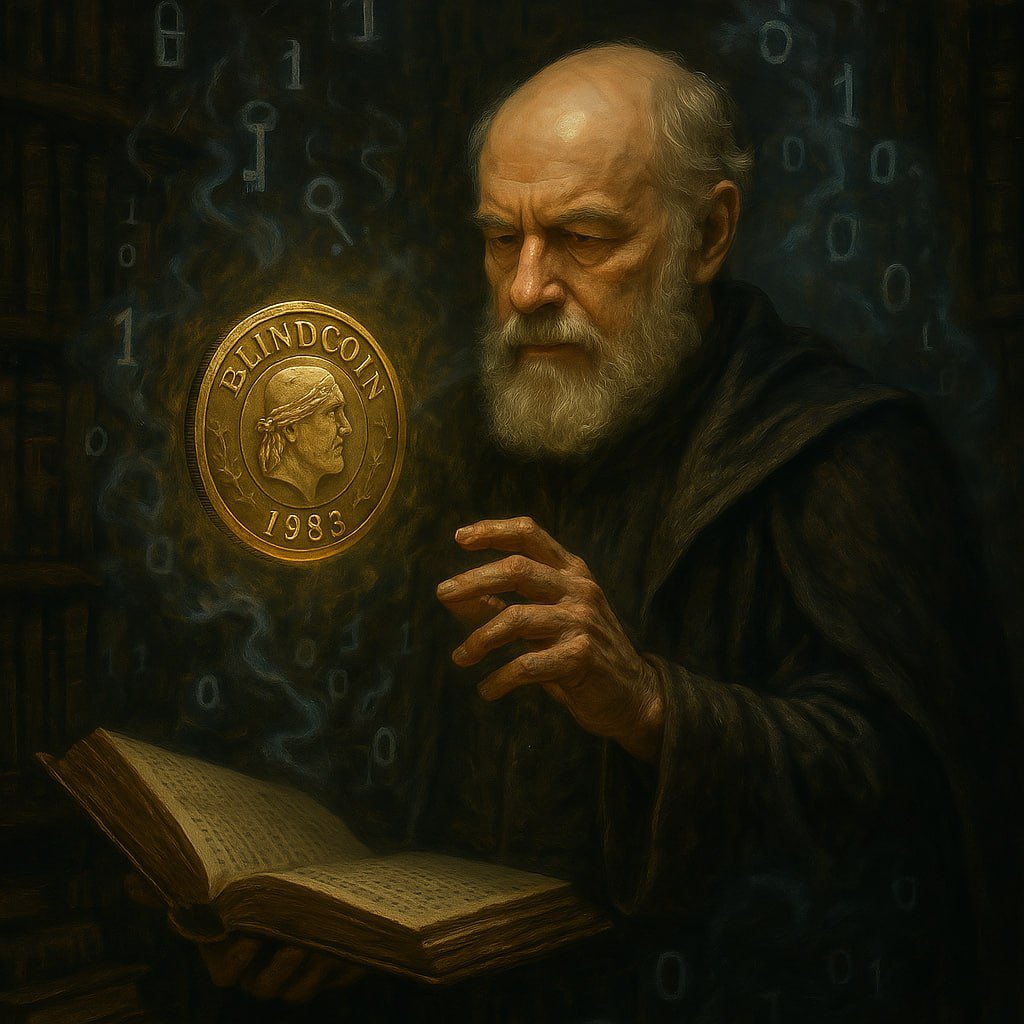
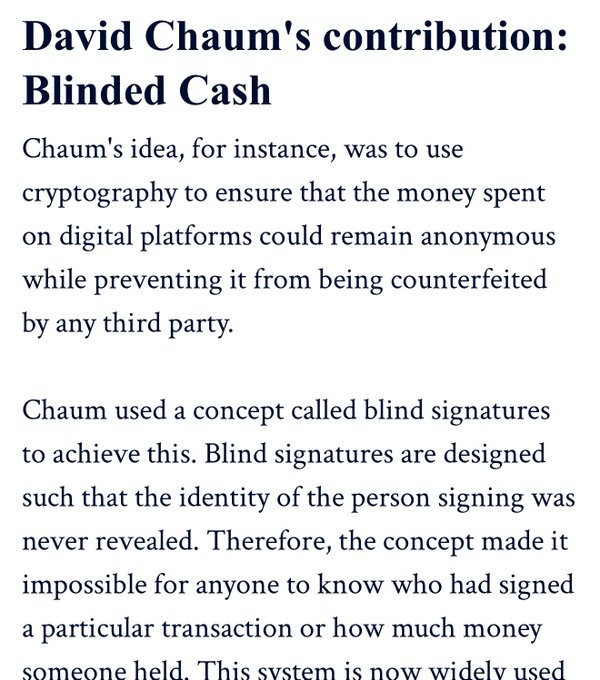
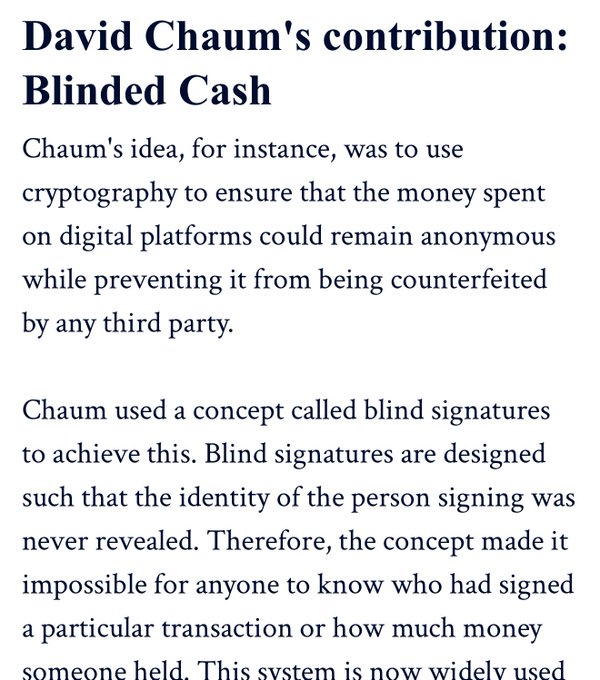
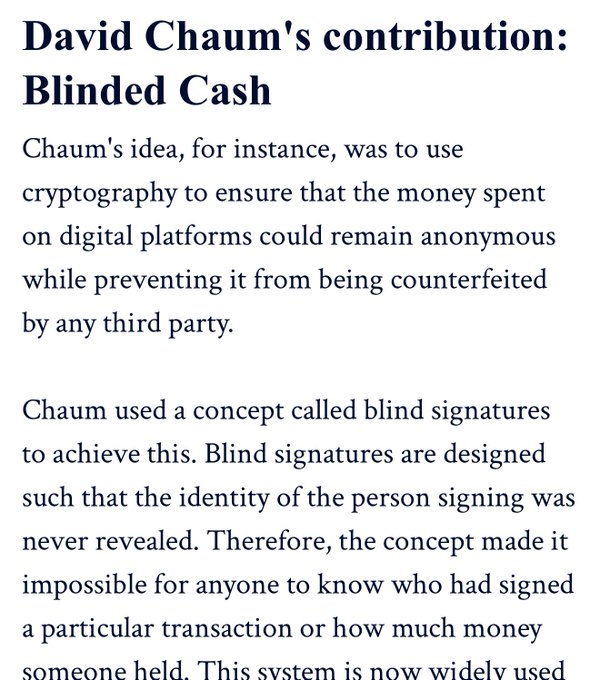
Blinded cash, pioneered by David Chaum in the 1980s, is widely considered the first conceptual foundation for digital currency with strong privacy guarantees, predating modern cryptocurrencies like Bitcoin. Chaum’s work, particularly his 1982 paper on blind signatures and his later eCash system (launched in the 1990s through DigiCash), introduced the idea of secure, anonymous digital transactions without relying on a trusted intermediary for every exchange.
So, blinded cash is arguably the earliest cryptocurrency-like concept due to its focus on digital, private, cryptographically secure money—but it’s more of a precursor than a direct match for what we call cryptocurrencies today.
3yNsHUntfHJCuBWyxgiwuwVLcXYK9LpTR8G1YE8Upump
#BlindCoin
The birth of the first ever digital cash system -
David Chaum’s blinded cash system, introduced in 1983, was the first cryptographic digital cash system, designed to enable anonymous and untraceable electronic payments. It relied on blind signatures, a cryptographic technique allowing users to “blind” a digital token before sending it to a bank for verification. The bank would sign the blinded token without knowing its contents, ensuring that when the user later “unblinded” it and spent it, the transaction remained anonymous. This system prevented tracking while still allowing banks to verify the legitimacy of the money, solving both privacy and fraud concerns. Chaum’s innovation laid the foundation for modern digital currencies, influencing later developments like Bitcoin and privacy-focused cryptocurrencies such as Monero.