CTA is an open access, peer reviewed international Journal covering all areas of pure and applied chemistry (indexed by Scopus/published by @Ural_Federal)
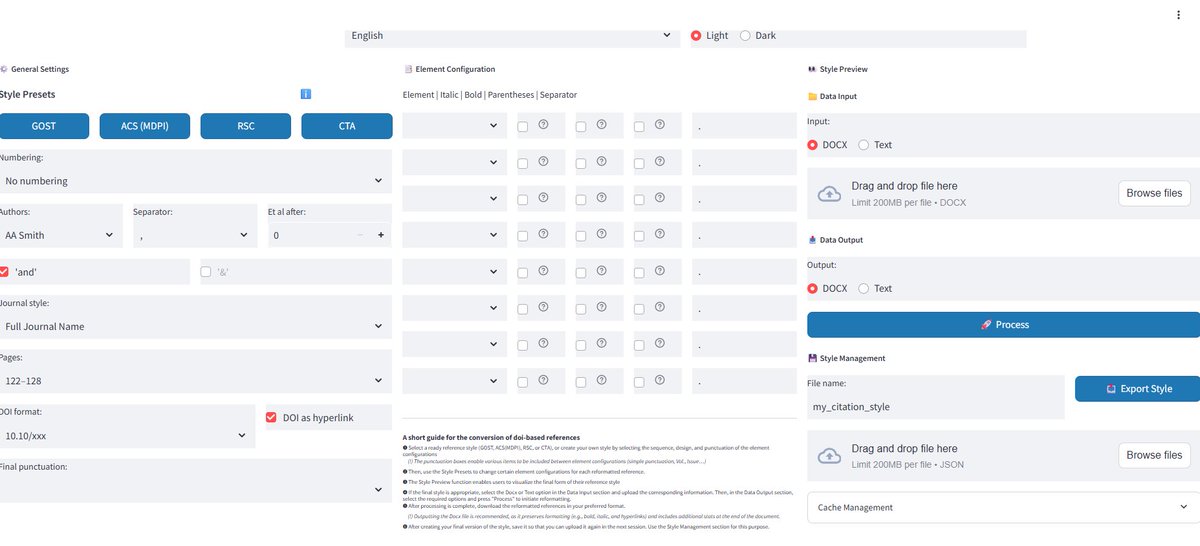
Our journal proudly presents a user-friendly online reference manager that streamlines reformatting of literature sources into convenient formats, using preset or customizable options, and extracts DOIs from references where they are not explicitly listed
https://t.co/XdonUGEylW
Journals can’t find peer reviewers. Preprints aren’t taken seriously. Garbage papers slip through peer review. Meantime, AI is slowly taking over.
Nature describes the current situation. I highly recommend reading the article.
📍 The summary (+ my comments):
1. We are facing a SIGNIFICANT overload on reviewers. Fatigue is epidemic. Few scientists have time for much peer review. As a result, manuscript turnaround times are chaos. They’re unpredictable and painfully slow.
2. Grant and facility proposals demand massive peer review too. They push the system even further.
3. Review quality is decreasing. Rigor is inconsistent. Technical aspects are poorly assessed.
4. Gatekeeping and bias are very real (we all know how manuscripts are rejected due to competition & jealousy). It causes a growing dissatisfaction among scientists.
5. Paid reviewing does NOT automatically improve the acceptance rate. Trials show mixed results. For example, acceptance rates barely increased from 48% to 53% for Critical Care Medicine. The quality of PR remained the same. But for Biology Open, the PR process has become much faster. In either case, paid reviews are very hard to scale business-wise.
6. Distributed Peer Review is becoming more popular. Some funding agencies now require applicants to review peers’ proposals. But to to eliminate bias in it? I don’t know.
❗ There’re no simple solutions.
As a careful observer, I think that the complex picture is evolving along the following trajectory:
AI-assisted peer view (AI pre-screening, AI PR-assistant, AI audition of peer reviews)
+
Community reviewing
+
Some form of compensation
+
Involvement of wider community in PR lists (not only most recognized scientists)
What’s your view on it?
🚨 Starting June 16, Nature now automatically publishes peer‑review reports + author responses with every new primary research paper—no more opt‑in. It’s transparency by default, aimed at demystifying science for all. ⬇️
https://t.co/3URhuvtk1U
🔗 #OpenScience#Transparency
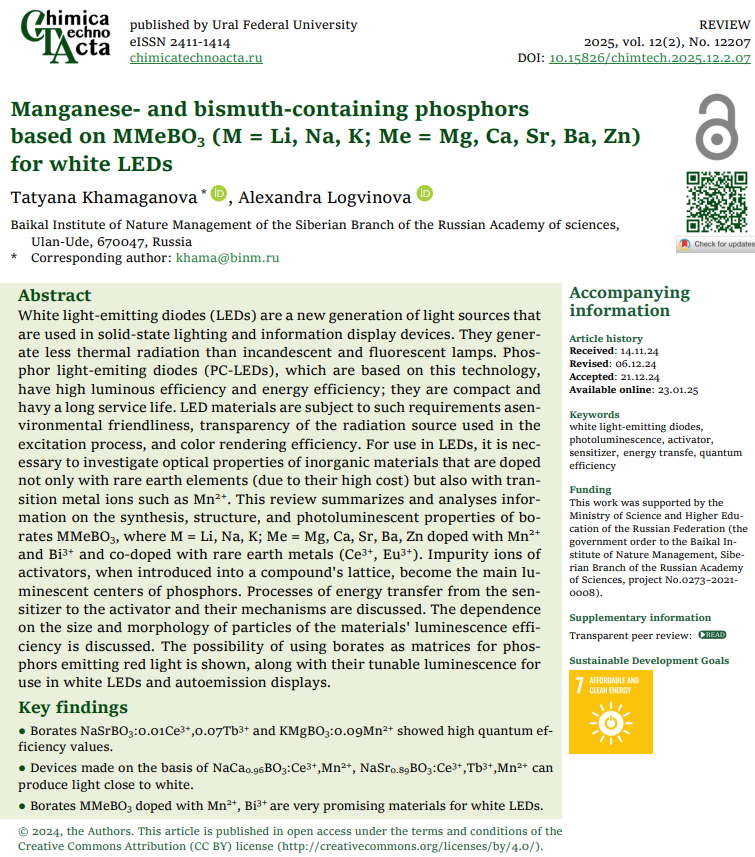
🟢 2025 🟢 V. 12 🟢 Issue 2 🟢 Art. 12207 🟢 Review 🟢
📄Manganese- and bismuth-containing phosphors based on MMeBO3 (M = Li, Na, K; Me = Mg, Ca, Sr, Ba, Zn) for white LEDs
🔗https://t.co/Gvrgufx9vM https://t.co/rWLKY7snvK
👇see this thread👇