I’ve been in crypto since 2018. Now I’m going deep on Robinhood Chain - researching smart-money flows, microcaps and the mechanics behind the tokens.
No “100x calls.”
I want to know who bought, where they entered, whether smart money is adding or distributing, what actually gives a token value, and what has to happen for the thesis to work.
I research microcaps, smart-money flows and projects with real mechanics behind the token and break them down in plain English.
I also put real money behind the ideas I research.
Position size reflects risk, not conviction alone.
My entries, theses and updates are public and timestamped on Fomo (wins and mistakes included).
If a thesis gets stronger, I’ll explain why.
If it breaks, I’ll explain that too.
Robinhood Chain is still early, noisy and full of memes.
That’s exactly why I think it’s worth looking closely.
Finding signal before the crowd.
Robinhood Chain, decoded 🤞🏻
4/4
So my BUN thesis is pretty simple:
It’s a meme attached to a real experiment.
The interesting part is the locked supply, restricted agent vaults, Mosh adoption and the fact that the system is now producing real activity and fees.
The risk?
None of that guarantees demand for BUN itself.
That’s what I’m watching next.
I research Robinhood Chain, smart-money flows and microcaps here.
Follow if that’s your kind of thing
1/4
Why I’m still watching $BUN on Robinhood Chain 🐱
At first glance, it’s a meme.
And it is.
But BUN is also the first live demonstration of Mosh, one of the more interesting experiments being built on top of Pons.
That makes it worth a closer look
3/4
And Mosh is no longer just an idea.
Over the last 30 days, the protocol generated roughly:
→ $351K in fees
→ $184K in revenue
BUN itself does NOT currently pay protocol revenue to holders, and I think that distinction matters.
The product is real. The token thesis still has to be judged separately
a lot of you are going to be utterly shocked by just how aggressively explosive the next Robinhood Chain eco pump will be
the kind of move that makes people wish they had bought every dip during the capitulation
this is the accumulation window most will look back on and wish they had taken advantage of
the capitulation is for buying, not panicking
position accordingly
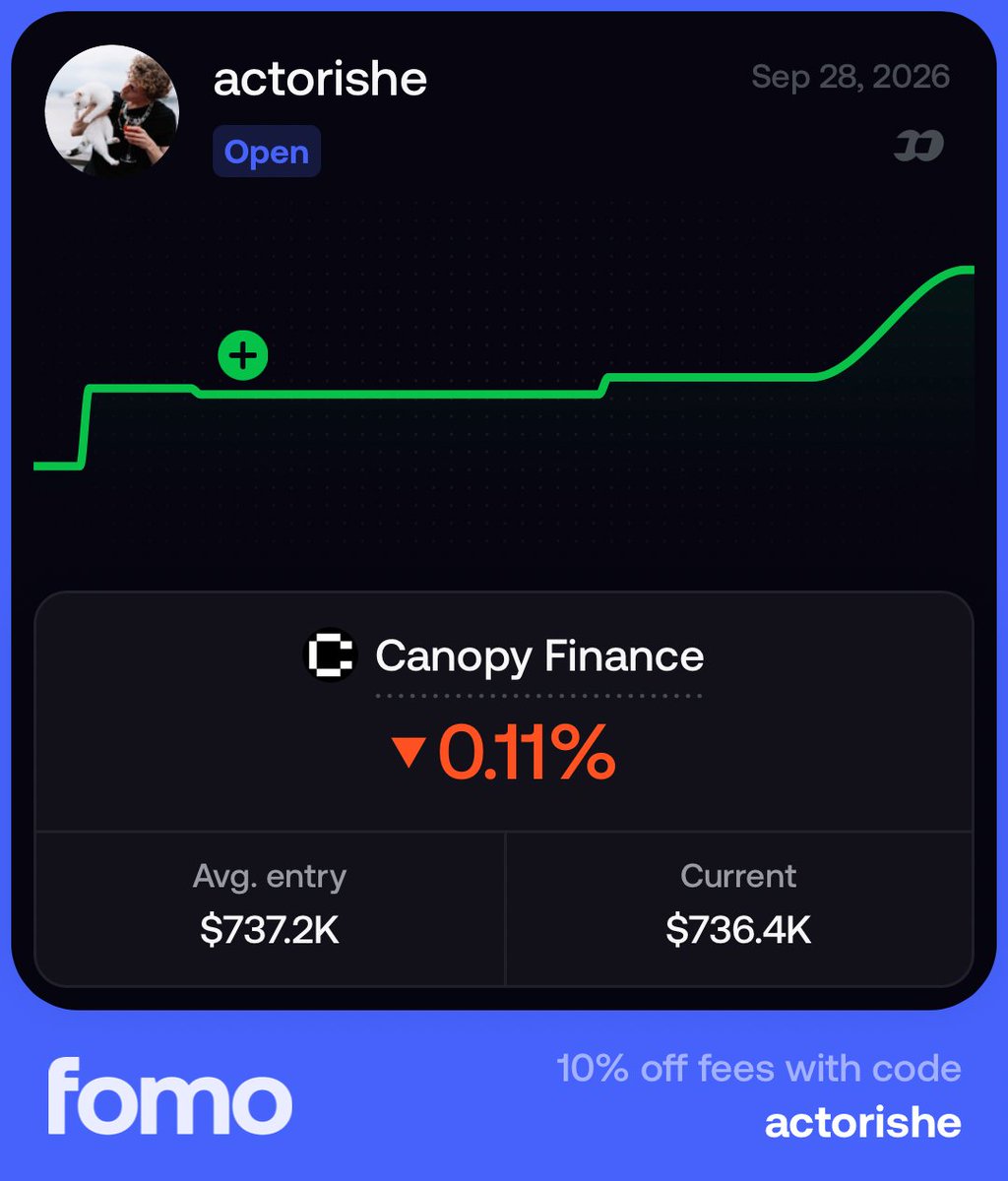
$CNPY update:
Price keeps getting cheaper. My position is now down ~49%.
But fundamentally, I don't see the thesis getting 49% worse. If anything, the mechanism keeps doing exactly what I bought into.
286.5M $CNPY has now been permanently burned, or 28.65% of the original supply.
https://t.co/6W7PJQ3Mdh is still live, every platform fee continues to market-buy and burn CNPY, and the token's own buy fee feeds the same flywheel.
Price ↓
Supply ↓
Product still working
Buyback & burn still working
The market is valuing it lower. The underlying thesis hasn't deteriorated with it.
Still holding. Still watching the actual usage, not the chart
1/4
Why I’m watching $CNPY on Robinhood Chain 🌱
CNPY is one of the smaller infrastructure bets I’ve found on RH.
The interesting part is that it already has a real product behind it: https://t.co/6W7PJQ3Mdh, a launchpad focused on tech projects and programmable markets.
And usage of that product directly affects the token
9 games that shaped who I am:
Gothic
Fallout: A Post Nuclear Role Playing Game
Need for Speed: Underground
FIFA 07
Ultimate Mortal Kombat 3
Grand Theft Auto: Vice City
Serious Sam: The First Encounter
Prehistorik 2
Disney’s Chip ’n Dale Rescue Rangers
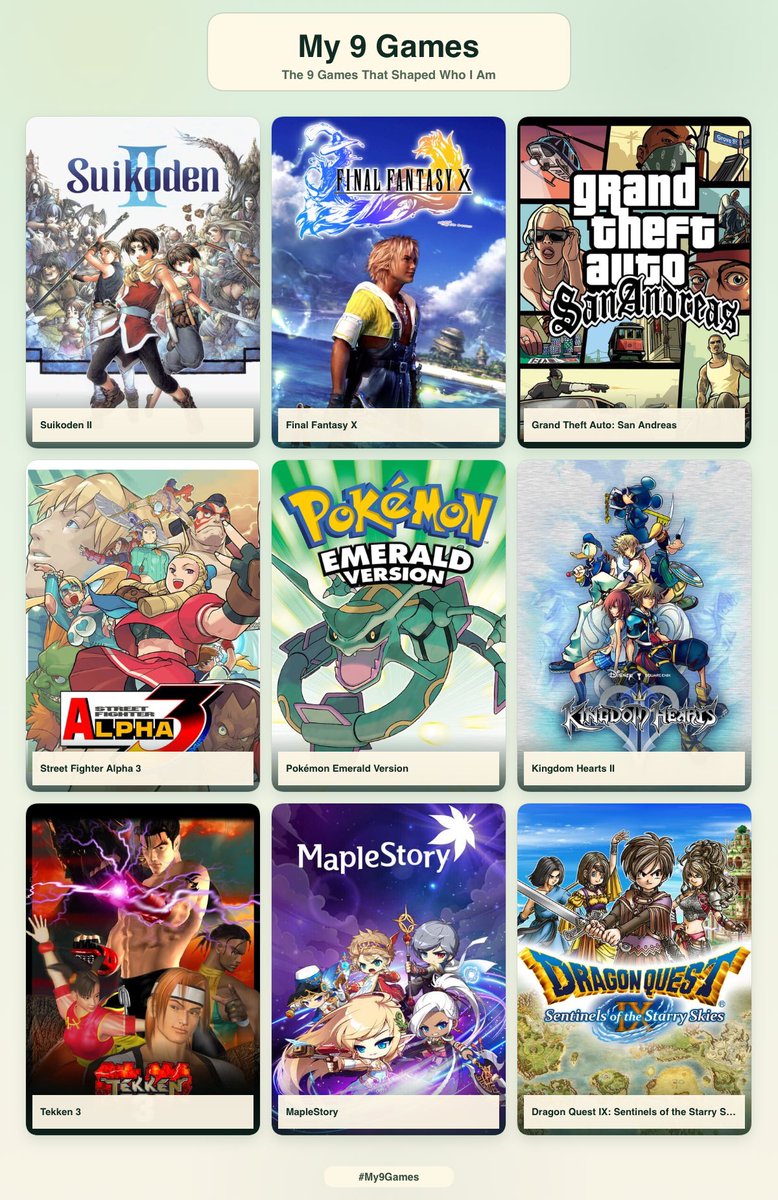
9 games that shaped who I am:
Suikoden II
Final Fantasy X
Grand Theft Auto: San Andreas
Street Fighter: Alpha 3
Pokemon Emerald
Kingdom Hearts II
Tekken 3
Maplestory
Dragon Quest IX: Sentinels of the Starry Skies
Some of these aren’t my favorite games, but they changed me!
4/4
The downside is just as simple.
There’s no strong product or revenue engine to fall back on if attention disappears.
If the wallets that made the setup interesting start distributing, my thesis gets weaker very quickly.
Sometimes a meme is just a meme.
The important part is knowing what you’re actually buying.
I research Robinhood Chain, smart-money flows and microcaps here.
Follow if that’s your kind of thing 🤞
1/4
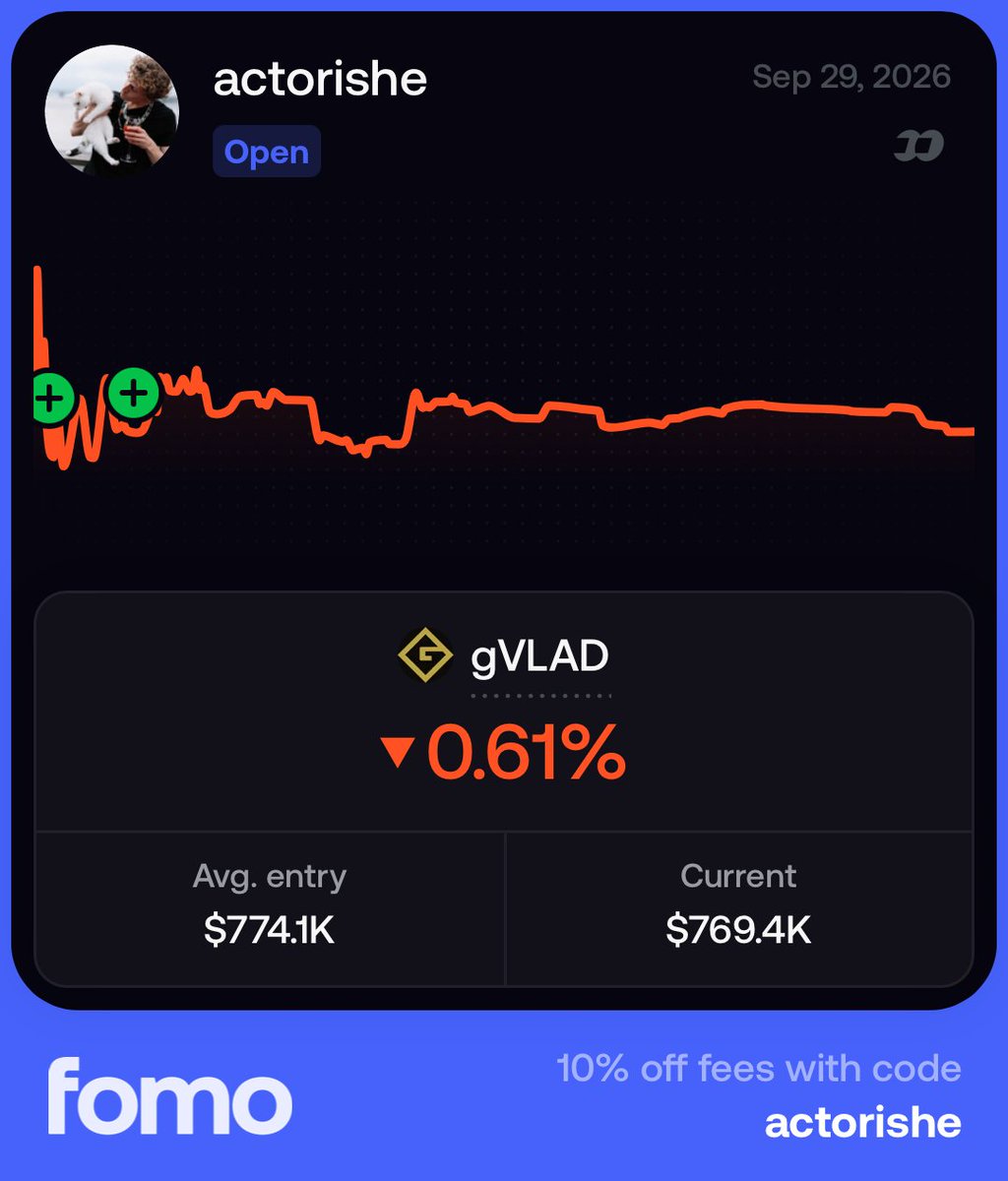
Why I bought $VLAD on Robinhood Chain.
No complicated thesis here.
This isn’t a product play, a revenue flywheel or some revolutionary piece of infrastructure.
$VLAD is mostly a meme.
And honestly, that’s fine
3/4
For trades like this, I’m not looking for a 20-page whitepaper.
I’m looking at:
who is buying
where they entered
how much they bought
whether they keep holding or adding
and whether new money is still coming in
A good meme + good flows + a reasonable entry can be enough for a trade
Update on my $CNPY thesis:
One of the strongest parts of the setup is getting stronger.
https://t.co/6W7PJQ3Mdh has now burned ~279M CNPY in total, or ~28% of the original supply.
More importantly, the burn is tied to actual platform activity:
more volume → more fees → market buys → more CNPY burned.
This is exactly the kind of signal I want to see after entering a position.
The thesis isn’t just “token goes up.”
The product needs to keep generating activity, and so far the flywheel is still working
1/4
Why I’m watching $CNPY on Robinhood Chain 🌱
CNPY is one of the smaller infrastructure bets I’ve found on RH.
The interesting part is that it already has a real product behind it: https://t.co/6W7PJQ3Mdh, a launchpad focused on tech projects and programmable markets.
And usage of that product directly affects the token
Most people track “smart money” the wrong way.
Seeing that a good wallet owns a token isn’t alpha.
The useful questions are:
When did they buy?
At what valuation?
How much did they buy?
Are they adding – or quietly distributing?
This is one of the reasons I use Fomo for Robinhood Chain research.
The feed, trader profiles, leaderboards and alerts make discovery much faster. Instead of keeping 20 tabs open and finding a token after it’s already +500%, I can see when interesting traders start moving and investigate from there.
But this is important:
Fomo is a radar, not an oracle.
I never buy something just because a “smart” wallet bought it.
When I see an interesting trade, I usually look at:
→ the trader’s previous positions and track record
→ their average entry vs the current valuation
→ the size of the trade relative to their usual positions
→ whether they bought once or keep adding
→ whether several independent wallets are doing the same thing
→ whether early wallets are holding or distributing
→ liquidity, holder concentration and token mechanics
And sometimes the most useful signal is what I DON’T see.
10 “smart holders” sounds impressive.
But if they all entered at $200k and you’re looking at the token at $8M, their presence may tell you almost nothing about whether it’s a good entry now.
Fresh flows matter much more to me than a static holder list.
I also use AI to help me analyze wallet histories, compare entries and exits, and spot patterns across a lot of on-chain data.
It saves an absurd amount of time.
But AI doesn’t make the decision either. Wallet labels can be wrong, transfers can look like trades, related wallets can appear independent, and one profitable trader can still make a terrible trade.
So my workflow is basically:
Fomo finds the signal → on-chain data gives context → AI helps process it → I make the decision.
And there’s another limitation worth remembering:
No social trading platform sees everything.
A trader can use another wallet, another interface, move funds between addresses, or make activity much harder to attribute to one identity.
The blockchain is transparent.
The person behind the wallets often isn’t.
That’s why I don’t think the goal is to “copy smart money.”
The goal is to use their activity as a starting point for better research – and hopefully find the signal before the crowd does 🤞🏻