We're ready to share our next verification pipeline!
Meet KEQ, a semantic equivalence prover based on the K Framework.
AI is getting good at rewriting legacy code, but the new version has to behave exactly like the old one (bugs included).
Tests can only show the presence of bugs, but not their absence. KEQ proves that two programs written in different languages match on every input, or it gives you a concrete counterexample.
Our first real-world trial has been proving equivalence between SHA 256 Rust and C implementations.
For more on how KEQ works, what's next, and how we're thinking of solving large-impact verification challenges, check out our latest blog post below.
A special thanks to the @Code_Metal_AI formal methods team, which inspired this work.
https://t.co/oN0ujsOnod
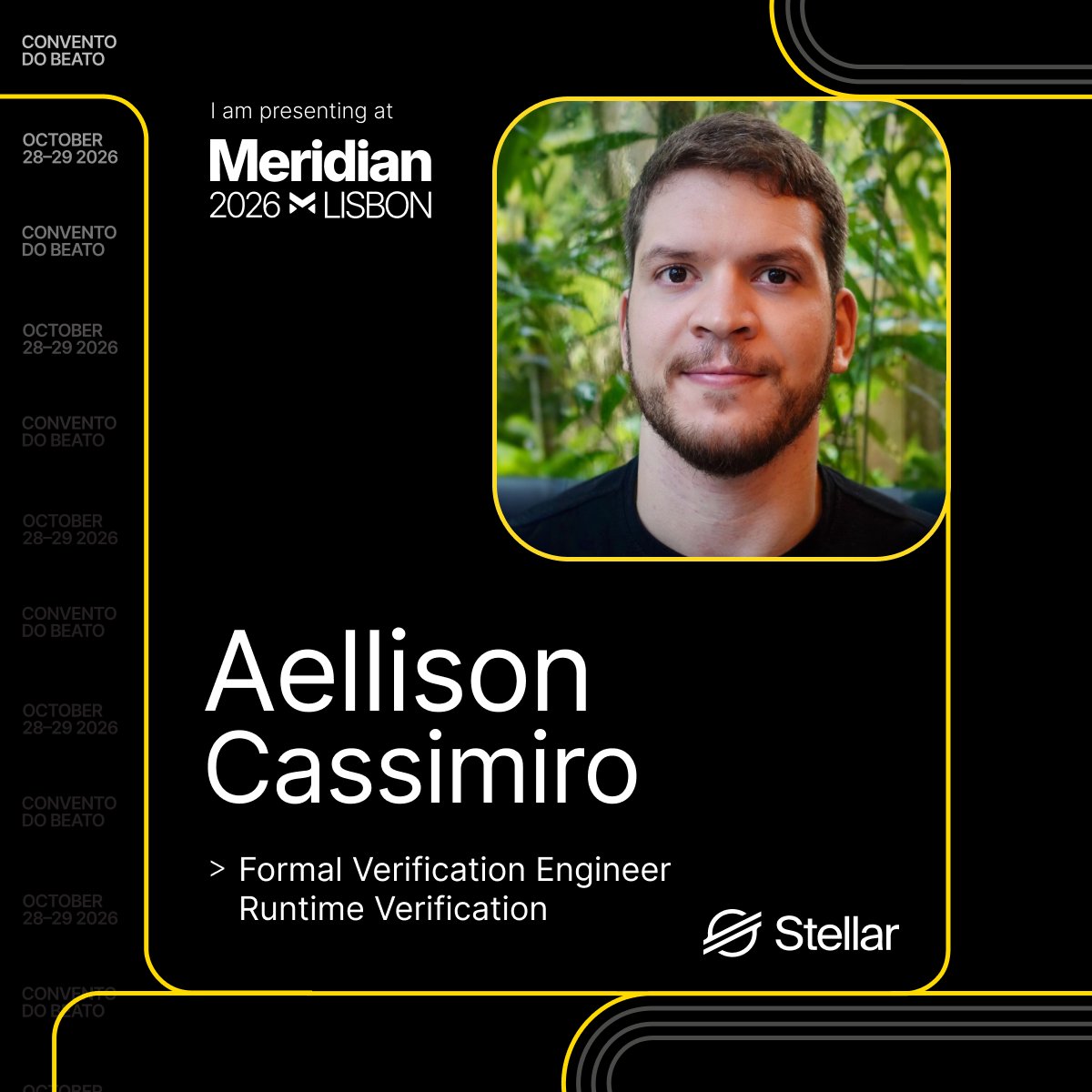
Olá, Lisboa! 🇵🇹 I’ll trade a pastel de nata for your nastiest Soroban bug story.
I’m speaking at #Meridian2026 about debugging smart contracts. If you care about making the ecosystem safer, let’s talk. Feel free to find me after the session or send DM me!
Thanks @StellarOrg!
Our RWA x DeFi event during Meridian in Lisbon brings together friends, partners, and industry leaders.
We're pleased to welcome @rv_inc as our security partner!
@rv_inc is auditing XOXNO's lending protocol on @StellarOrg, bringing deep expertise in formal methods and smart contract security.
Join us to discuss security on Stellar/Soroban and the challenges of building secure DeFi infrastructure.
RSVP: https://t.co/58AuHaE4yU
@TellusCoop@StellarOrg Not sure if there's gonna be a recording, but I'll be talking about Runtime Verification's Stellar debugger!
https://t.co/xZ9mYCkbDh
Feel free to use it and share your feedback!
Today, we bring a new article that follows up on our work and our last post on verifying the Linux kernel.
This time, we migrated a piece of the kernel's C to safe Rust, choosing a video descriptor parser that had already carried two CVEs of the same class sixteen years apart. We also dive into how comparing the two implementations against each other led us to a genuine defect in the original C, now being fixed upstream.
https://t.co/10UJizRYp1
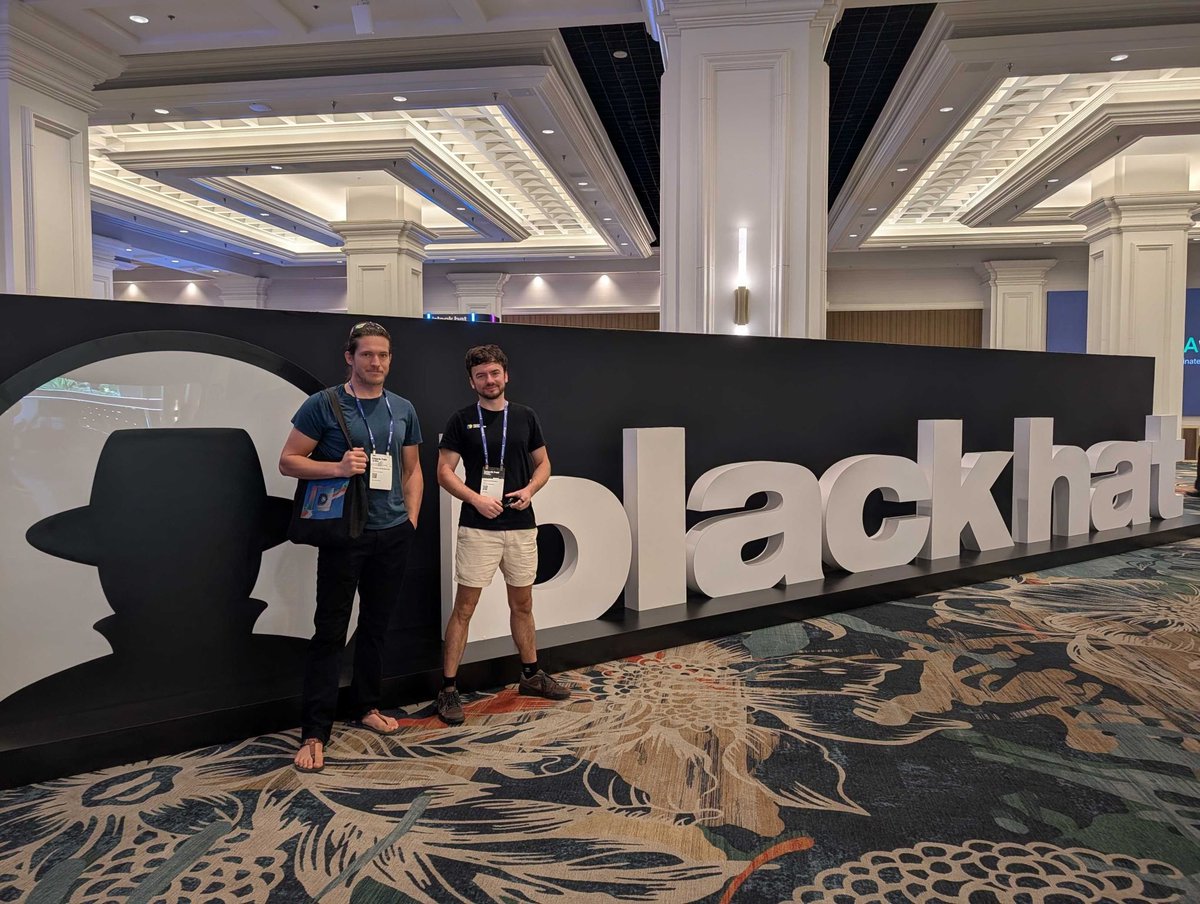
Who's in Las Vegas this week?
Everett Hildenbrandt (CEO) and Paul Len (COO) are on the ground at the Black Hat conference until Friday.
If you're around and want to chat about formal verification, fuzzing, and their place in AI guardrails & agentic security, our DMs are open.
Monero community, we need your help.
After deep discussions with the Cuprate contributors, we've identified an avenue to stress-test Cuprate's consensus rules (the code that decides which transactions are valid) and catch bugs before they can cause network splits, especially around the FCMP++ upgrade.
Our CCS proposal to build the initial consensus fuzzing infrastructure would give Cuprate its first automated tests that go beyond parsing and actually hammer the validation logic itself.
By generating valid transactions and feeding them to both Cuprate and monerod, any disagreement between the two surfaces a consensus bug.
This initiative would help identify drifts between clients early on (when it's easier to spot and fix those issues), helping to make sure that Cuprate's implementation is correct as it's being developed.
The same harness can then be extended to cover FCMP++ once it lands upstream!
If Monero's development is close to your heart, please support our proposal below 👇
Donate to Simbolik: https://t.co/wk7eoWML22
Simbolik is the favorite Solidity debugger in the Ethereum ecosystem, and it’s built by our security engineers. But Simbolik is not just a debugger anymore, but a comprehensive security toolkit and a must-have for any builder. And the best part? We are just getting started, and you can help us by donating to the quadratic funding initiative, part of the @Giveth and @thedaofund
Nowadays, with Simbolik, any developer can:
-> Source-level debugger
-> Foundry Test Explorer
-> Test Coverage
-> Static Analysis
With your help, we have planned a series of new features, including the integration of Kontrol into Simbolik, our Foundry-native formal verification engine, to AI-assisted, coverage-guided test synthesis, static analysis detectors for stack-too-deep errors, and interactive symbolic execution.
Donate to help expand Simbolik's capabilities, and if you have a feature you would like to see, talk to @RaoulSaffron
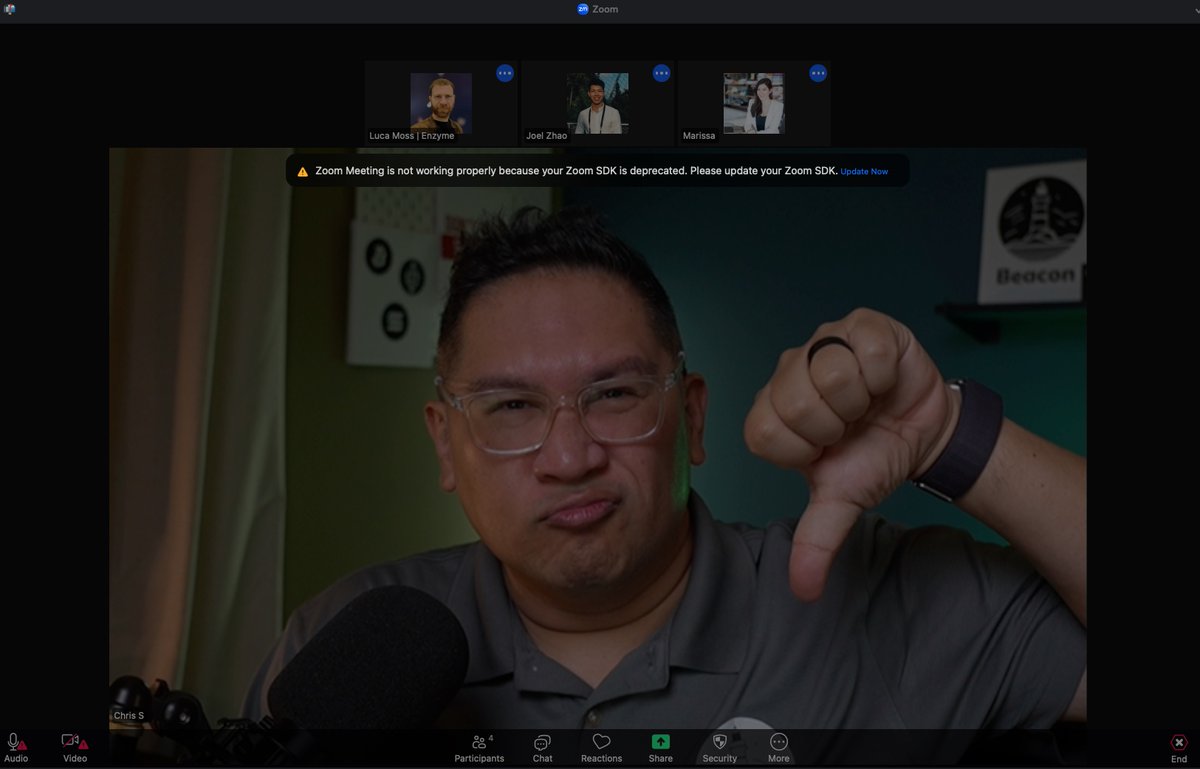
🚨 WARNING (AGAIN)
DPRK threat actors are still rekting way too many of you via their fake Zoom / fake Teams meets.
They're taking over your Telegrams -> using them to rekt all your friends.
They've stolen over $300m via this method already.
Read this. Stop the cycle. 🙏
Come see me speak about the work we have been doing at @rv_inc! My talk "Kompass: Ensuring SPL-Token Stays Safe on Pinocchio" will be on the Lock In stage at 11:30am December 12th @SolanaConf!