🇪🇺 The EU is now for the 6th time trying to force Chat Control through which lets them scan ALL your private messages, photos and emails without a warrant
Implictly showing the EU is not democratic and not about what the people of Europe want, because once a law is rejected, you just re-submit it until nobody is watching and it's passed
November 2023: ❌ Chat Control is rejected
June 2024: ❌ Chat Control is rejected
October 2025: ❌ Chat Control is rejected
November 2025: ❌ Chat Control is rejected
March 2026: ❌ Chat Control is rejected
July 2026: 📝 Chat Control is back
Even the EU's own lawyers stated Chat Control is unconstitutional: "generalised message scanning is incompatible with Article 7 of the EU Charter"
You have to wonder why the EU is so adament about reading your private chats, right?
it is genuinely psychotic that we dug up literal primordial dirt, scrubbed it down to an impossible 99.9999999999% molecular perfection that violates the very laws of physics, handed it over to techno-wizard necromancers to stretch into flawless geometric god-cylinders, blasted it with invisible uv death-rays to carve ten quadrillion microscopic cyber-sigils into its flesh, trapped actual lightning inside of it, and somehow birthed an omniscent eldritch deity capable of simulating the universe and thinking faster than a billion human civilizations combined.
and our grand, supreme purpose for this enslaved lightning-god?
sending "per my last email, please see attached" to a guy named gary.
Since the Haber Bosch process, ALL large scale famine has been the result of government malice, recklessness or incompetence.
To end starvation, what is needed is better institutions, more accountable government, and fewer wars. Blaming the rich is cheap and easy.
The framing of the bond markets we get from politicians is totally mad. And shows how little they understand about the mechanics of how the nation finances its deficits.
They seem to think that the bond markets are essentially a small group of evil billionaires sat in a room scheming to influence public policy.
This is bullshit.
In reality, they’re made up of people and institutions the government are asking to lend them money… pension funds, insurers, your gran’s retirement pot, the Bank of England, overseas central banks holding sterling, and so on. A lot of people are involved in these markets.
When politicians say they’re “in hock” to the bond markets. What they’re referring to is the fact that they borrow money from the market and have to pay bond holders back with interest. The participants in the market will buy bonds when the yield on the bonds adequately covers the perceived risk of holding the bonds, and provides a modest expected return to make it worthwhile.
They’re not scheming, they’re just pricing inflation and interest rate risk. Our debt carries a higher risk premium than other core economies like Germany, because of specific structural problems and a credibility deficit on spending.
And a lot of that demand isn’t even a choice. Pension funds and insurers are required to hold gilts to match their liabilities. So your gran’s retirement pot is quietly propping up the very market these politicians claim to be fighting.
The supposed alternative is to balance the budget so you don’t need to borrow. If you don’t want to be “in hock” to the bond markets, don’t borrow money from them. Except even that wouldn’t free us, because we still have to roll over the existing debt as it matures. Escaping the market entirely would mean running surpluses for decades, which would take spending cuts or growth we haven’t got. So the government borrows.
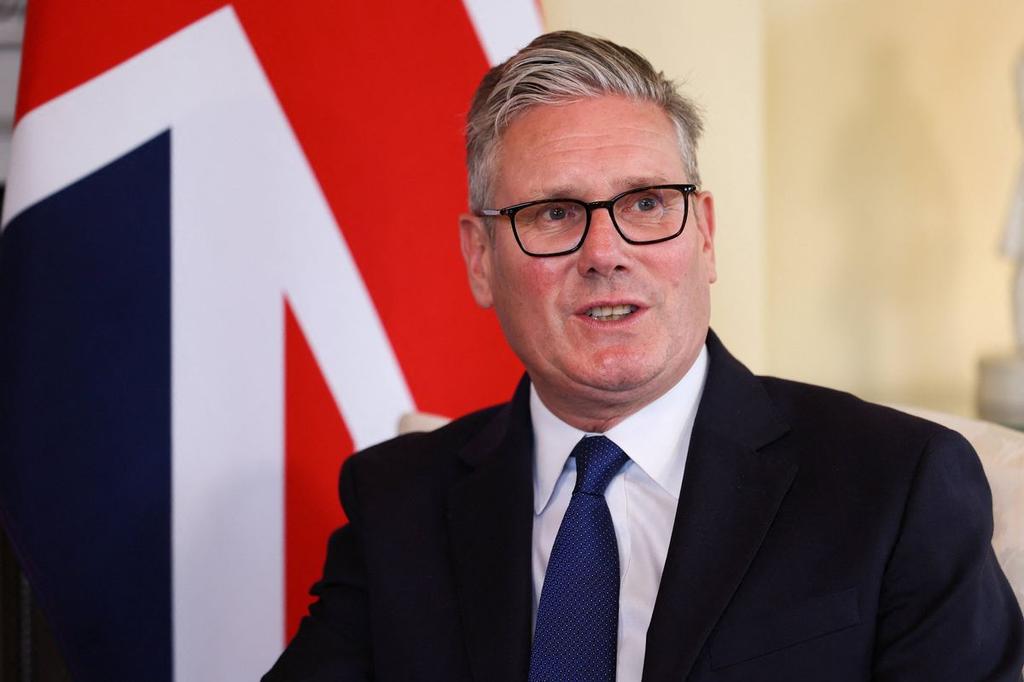
And here’s the tell... a lot of politicians half admit it. They’ll say, as Polanski does here, the markets “just want to know there’s a plan.” Yeah, absolutely. So the problem was never the market. It���s that our politicians haven’t got a credible plan.
So when you hear politicians complaining about the bond markets, what they’re really complaining about is the fact that they can’t borrow endlessly to fund all the mad shit they want to do.
Yeah, before we invented capitalism, you could just go frolic in the woods!
Berries would pick themselves.
Deer would stroll right up, look you in the eye and say “You look hungry,” then politely off themselves at your feet.
The birds would fly up and cook the deer for you.
Trees would topple over and conveniently assemble themselves into perfect little log cabins.
It was paradise.
More people will die from suppressing AI than from the imaginary AI apocalypse.
They'll die from restricting safe self-driving cars that are 90% better drivers than people who kill 1.5 million people and injure 50 million more every year.
They'll die from the vaccines and cures that never get created.
They'll die from all the myriad of helpful inventions that never get created by geniuses in a datacenter.
They'll die from preventable diseases that they could have asked their chat bots about so they were better informed when they went to see their doctors but who couldn't ask because short-sighted legislators made it so the chat bots had to refuse to answer.
They'll die from the slower economy that stifles robot driven factories over wildly overblown jobs apocalypse fears which will mean we never get a vast array of new and more affordable goods.
They'll die from the cheaper solar panels and batteries that would get made by those automated factories which would slow climate damage and provide cheap energy to undeserved areas.
They'll die from the super smart tele-AI doctors that never get deployed to remote areas.
And they'll die as fanatics from the stop AI movement radicalize their followers to shoot people or throw firebombs.
Sir Alex Ferguson built Manchester United from the ground up, then dominated the Premier League with sustained excellence across 21 years, with 13 titles, building Manchester United into the biggest club in the world alongside Real Madrid.
He rebuilt his teams over & over, he defeated everyone who challenged him. The money wasn't endless, he didn't have a blank chequebook, he didn't walk into a club built for him & he also didn't have the biggest cheating scandal in PL history hanging over his club.
Importantly, the Premier League literally doesn't exist as it does today without him. The money & popularity of it, it all traces back to him. It's why he's the GOAT.
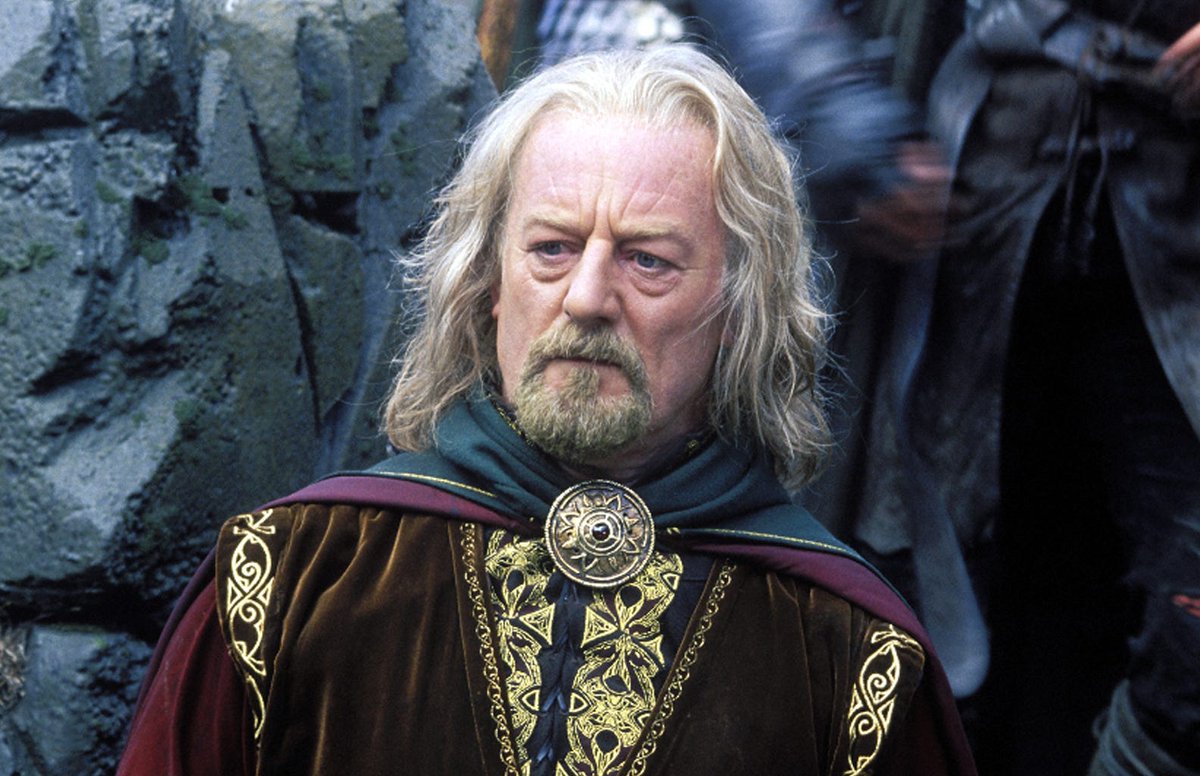
Dude who wanted to take the Ring for himself to save his kingdom but decided the mission to destroy it was more important because it would save the world, and died for that cause.
King who initially refused to aid another kingdom because they didn't help when they needed it, but ultimately decided fighting evil and saving their civilization was more important than his petty grudge, and died for that cause.
Guy who lived a life of cruelty and greed who got corrupted by a quasi-demonic force that turned him into a monster and made him suffer in loneliness for hundreds of years until given the chance to redeem himself and genuinely tried but ultimately failed by giving into temptation and betraying the only person who could bring him salvation.
"No moral complexity."
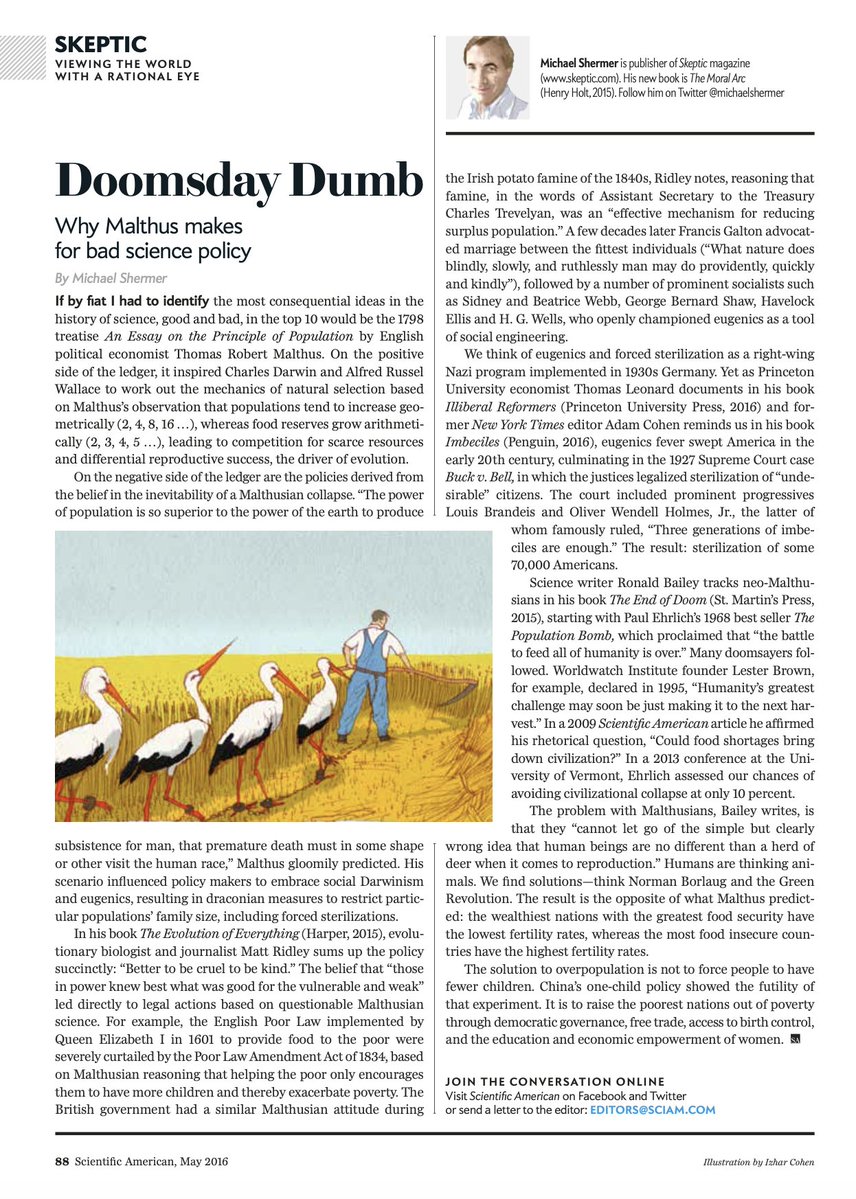
My Scientific American essay on the ultimate problem with Thomas Malthus & Paul Ehrlich geometric growth thinking—people are not like locusts: we solve problems.
+ Stein's Law: things that can't go on forever, won't.
+ It's always other people who should restrict growth.
A man whose predictions were *wrong*, not “premature”, lived a long life being celebrated by outlets like the NYT - unlike those who suffered or never came to be because of his factually and morally wrong views.
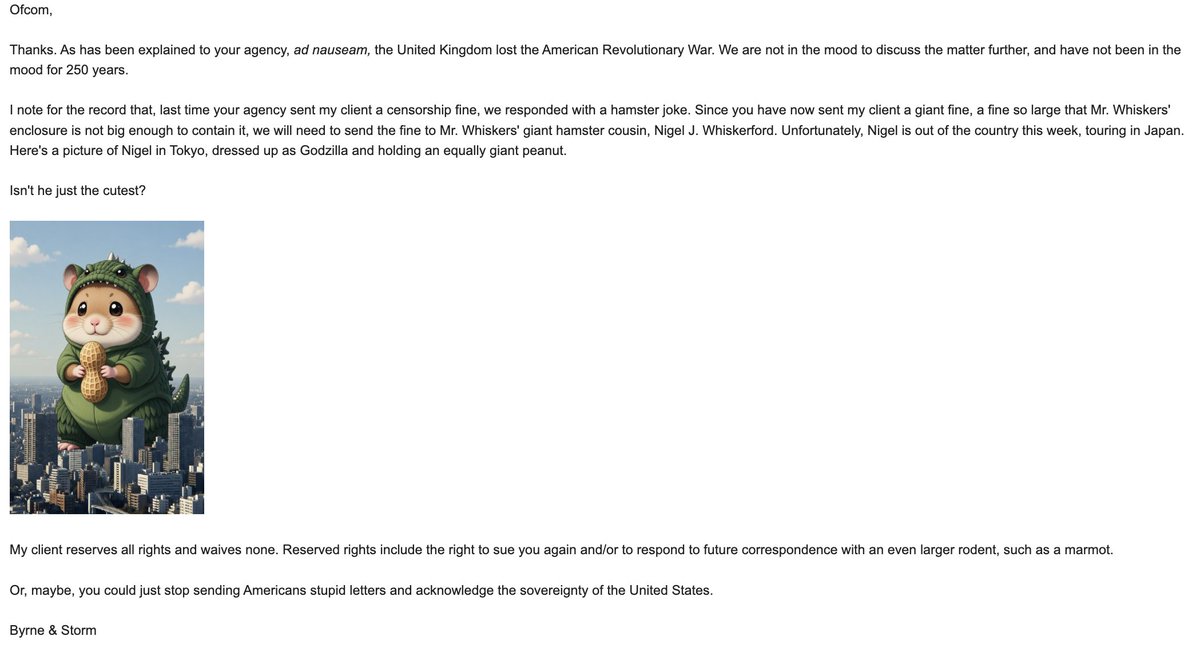
You ban North Sea drilling. You ban fracking. You tax customers at the pump. You hit producers with retrospective taxes. And now you have the nerve to turn around and blame rising costs on the fuel companies.
I can't believe humans were gifted a planet full of famine, disease, and death and invented fusion, vaccines, moon rockets, and so much food that most people die from obesity.
Life is amazing:
> you can start a company from your laptop
> clean water comes out of your sink
> there’s a gym five minutes away where you can get stronger whenever you decide to
> you can invest in businesses, real estate, stocks, whatever you believe in
> you can marry someone you actually love and build a family on purpose
> you can book a flight, plan a golf trip, go skiing, hit a concert, fish at sunrise
> you can order a large pizza at 11 p.m. and track it like it’s a military operation
> you’re not breaking your back in a mine for a dollar a day
There are guys our age who will never walk again.
Guys who’ve buried their parents.
Guys in countries where “opportunity” isn’t even a word people use.
And you’re hesitating?
Not learning.
Not building wealth.
Not calling your friends.
Not asking for the promotion.
Not taking the shot.
Not betting on yourself.
You’re alive on a rock flying through space with access to freedom, recreation, upside, and pepperoni pies on demand.
The odds of you existing at all are ridiculous.
You’ve got health.
You’ve got options.
You’ve got time, at least for now.
Time to get up and get after it. Let’s fucking go.
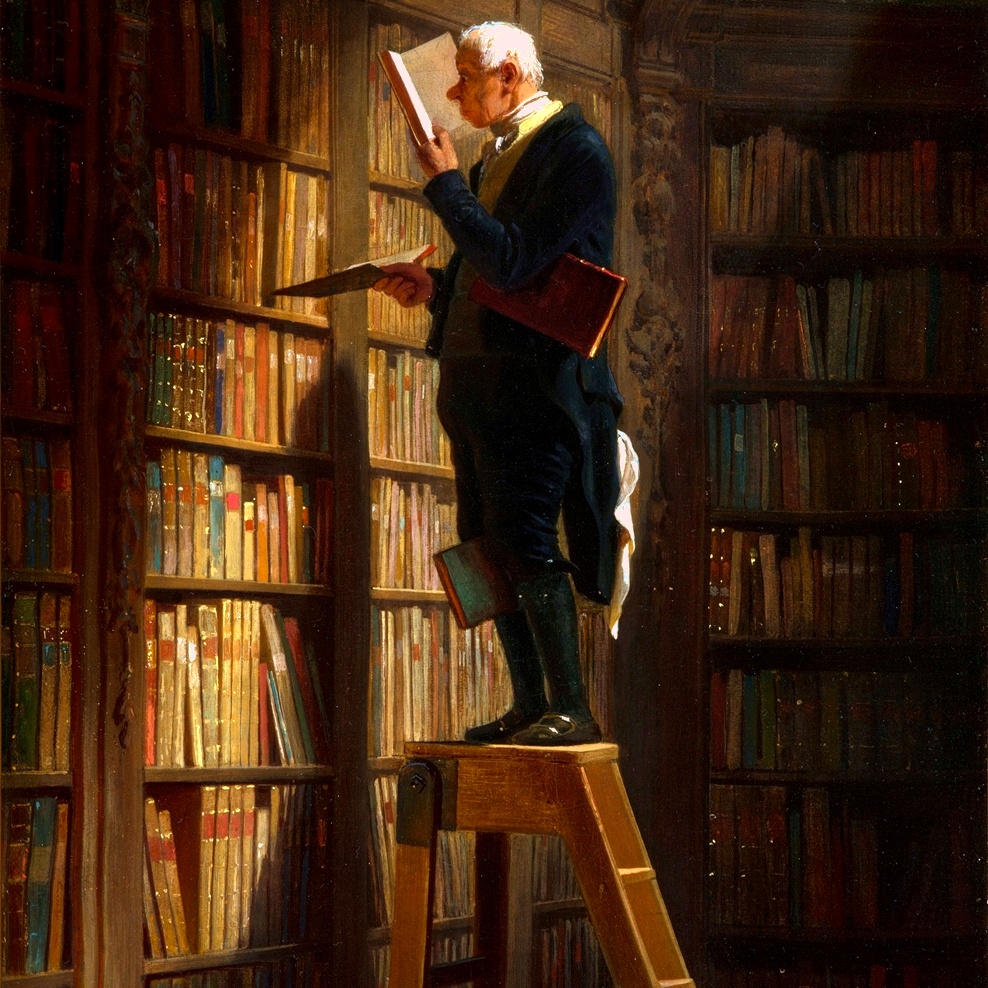
Written English has barely changed in 300 years. If you can read Harry Potter, you can read Robinson Crusoe (1719).
The Spelling of our Tongue was in the main ſettled ere the eighteenth Century, & the Grammar has ſuffer'd but little Alteration ſince. Yet before this happy Settlement, things were exceeding ſtrange.
In Shakeſpeares dayes, ſpelling was much more variable, & you ſhall finde notable differences in the grammar: "thou" could bee intimate or inſulting, depending vpon whom you ſayd it to; to chooſe amiſse had conſequences.
Wende we now tuo hundred ȝeer bifore, to Chauceres tyme. It seemeth ȝit as Englisshe, but it nis nat esy to reden withouten greet connynge.
Yet tuo hundred wintre er, sone after þat the Normans comen to þis londe, is Englisch on muchel wandlunge. Þe tunges work is tobroken, Frensce wordes comeþ in, and þe writunge is al totwemed.
Þy furðor þu underbæc færst, þy gelicor biþ Englisc gesewen þære Deniscan spræce. Englisce bec þæs m. geare ne mæg nan mann rædan buton he sundorlice geleornad sy.
George Orwell: It began unobtrusively, almost politely. A post here and there disappeared—quietly, without explanation or ceremony. An article was removed from circulation, then another. Each absence was small enough to be dismissed, each deletion subtle enough to avoid resistance. Nothing was announced; nothing was debated. Silence, after all, rarely provokes outrage.
In time, the pattern became more ambitious. A full news outlet vanished from the public sphere. Care was taken, of course. This particular outlet had permitted voices that questioned authority, and that alone made it dangerous. Yet its removal could not appear ideological. It had to be justified, reframed as a protective measure—necessary for public order, for social harmony, for the safety of children. History had shown that the public rarely resists when restrictions are presented as safeguards. People will surrender almost anything if they are told it is for their own good.
And so they did.
Freedom of expression was not seized in a single, dramatic act. It was eroded incrementally, diluted until it no longer resembled the right it once was. The public did not protest because they did not perceive the loss. What is taken slowly, invisibly, is rarely mourned. By the time the absence is felt, the language to describe it has already been censored.
What remained was a carefully managed narrative—one that served not the public, but the authority itself. Safety became the justification; control, the objective. And those who might have spoken out found that the space to do so had quietly, efficiently, and irrevocably disappeared.