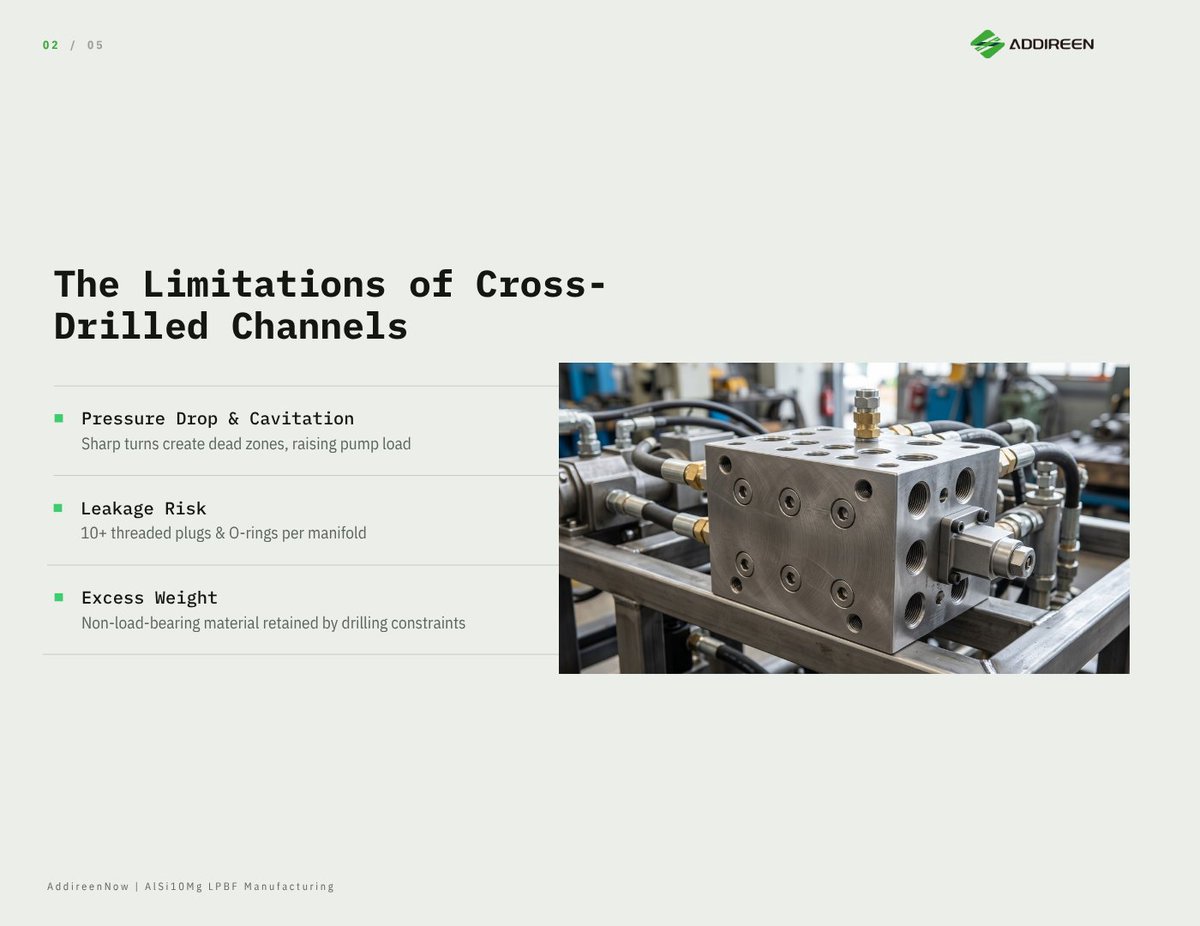
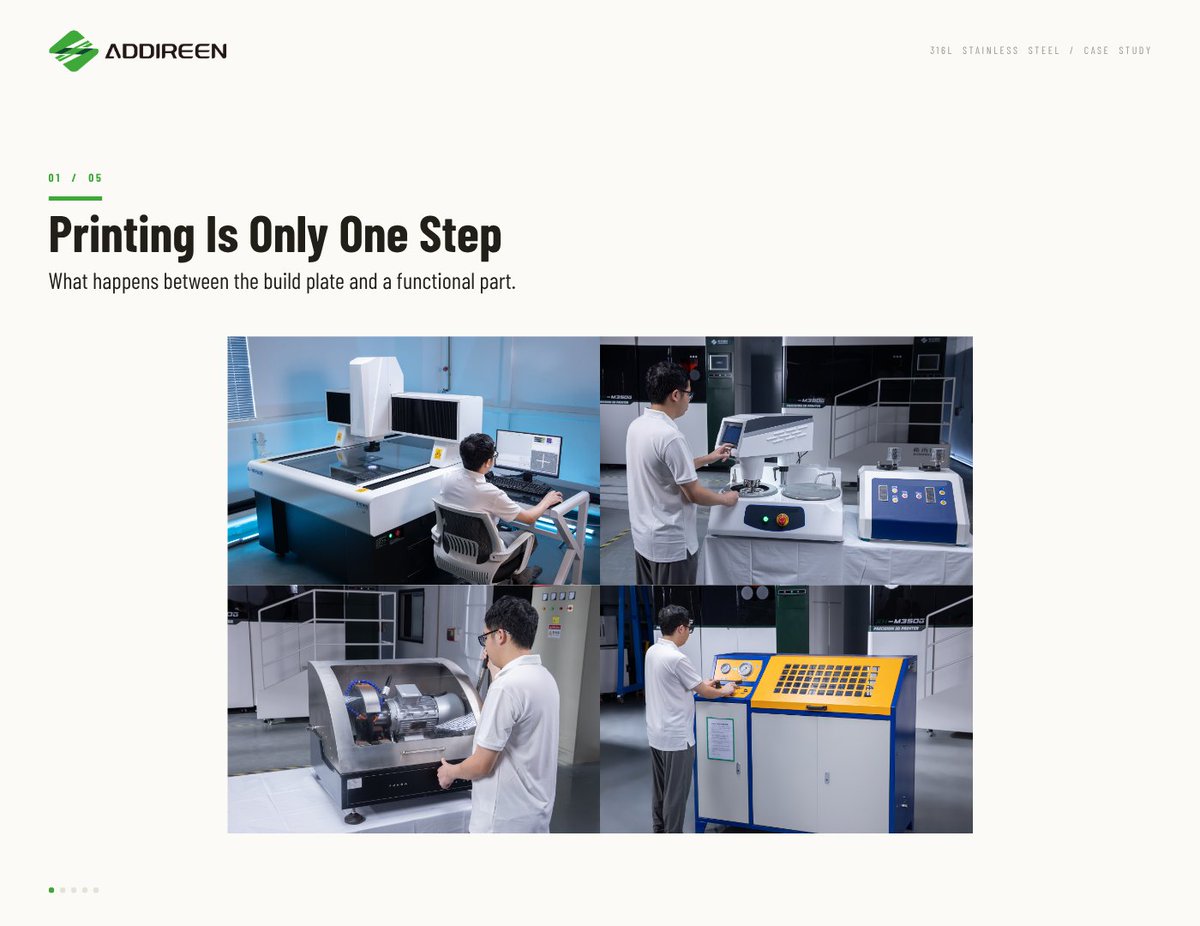
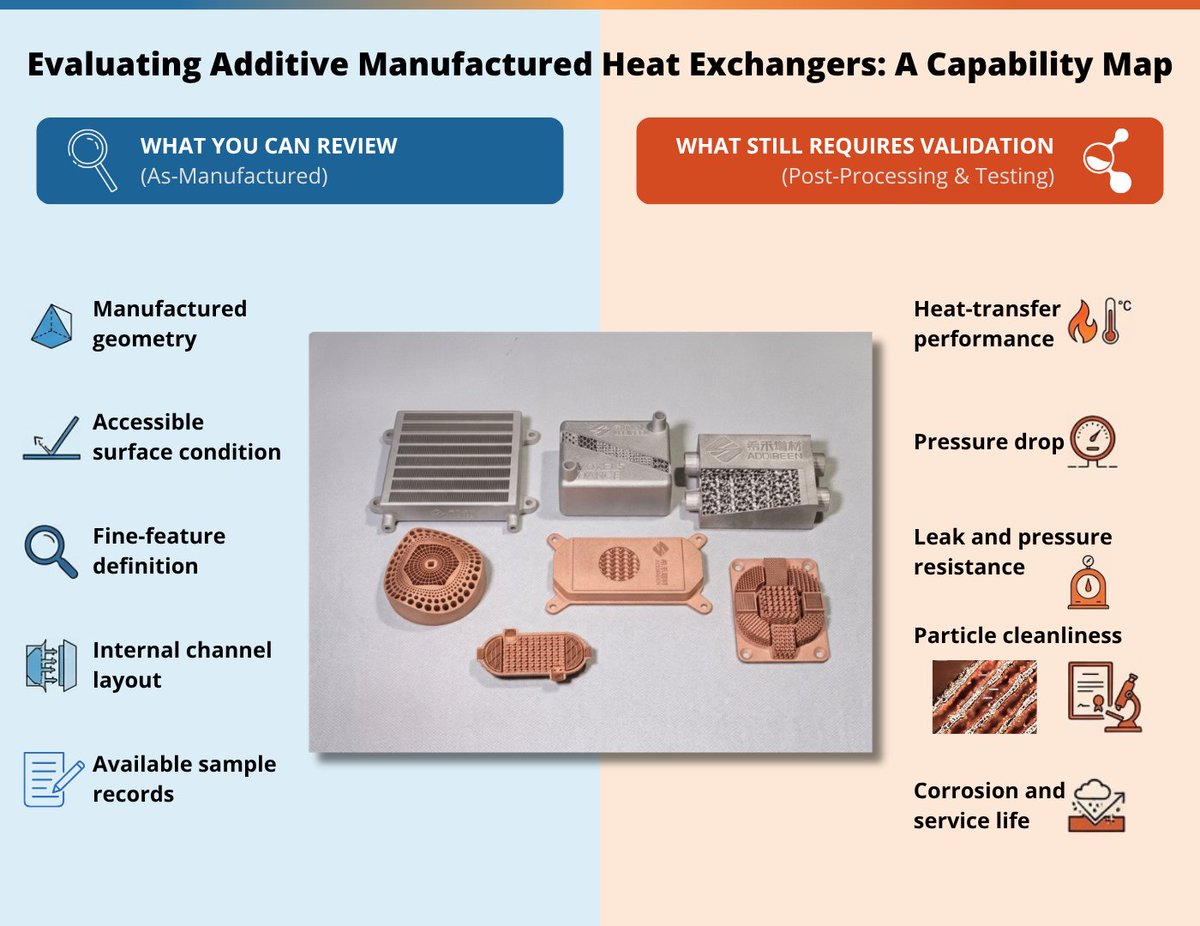
A printed heat exchanger sample ≠ a production part.
Manufacturability is step one. Validation is everything after that.
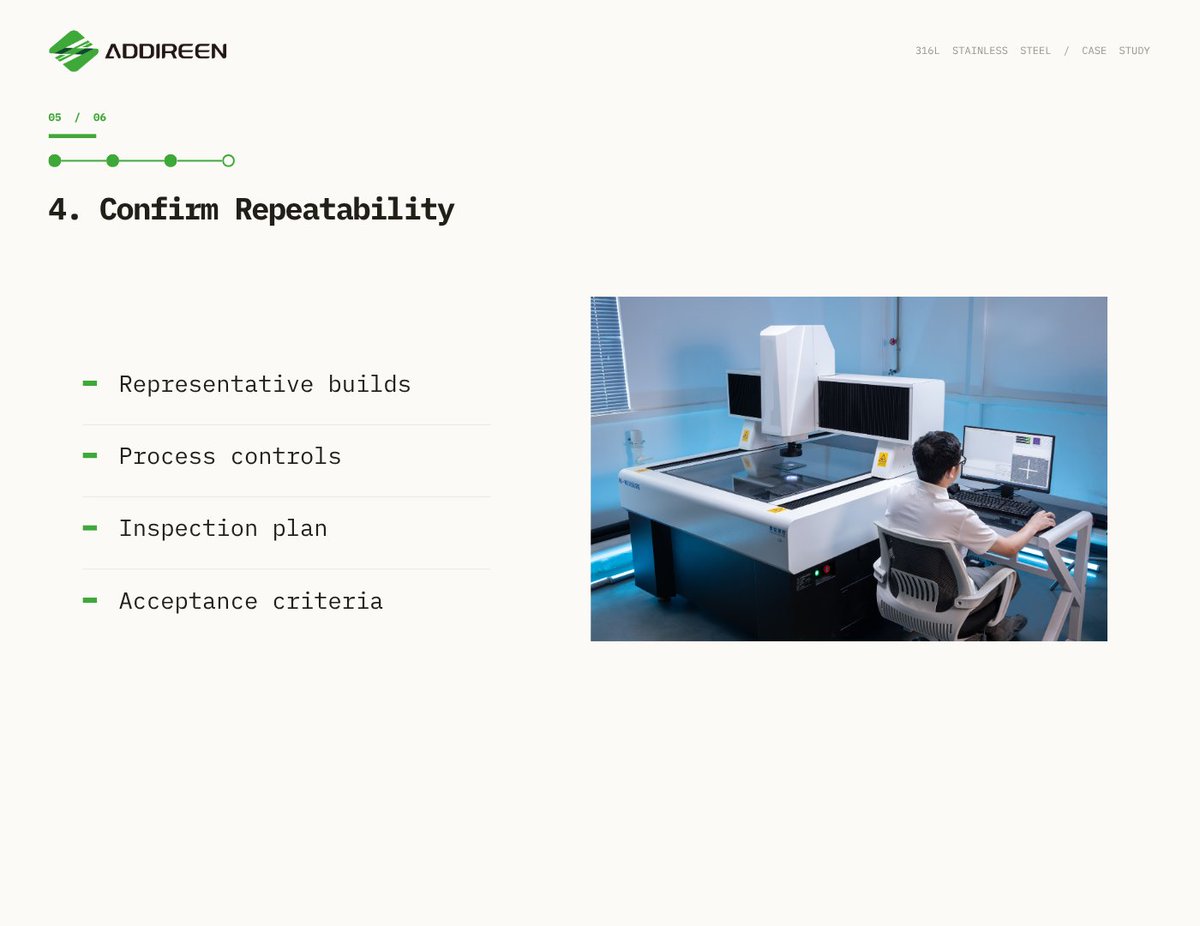
5 steps before we call a part production-ready 🧵
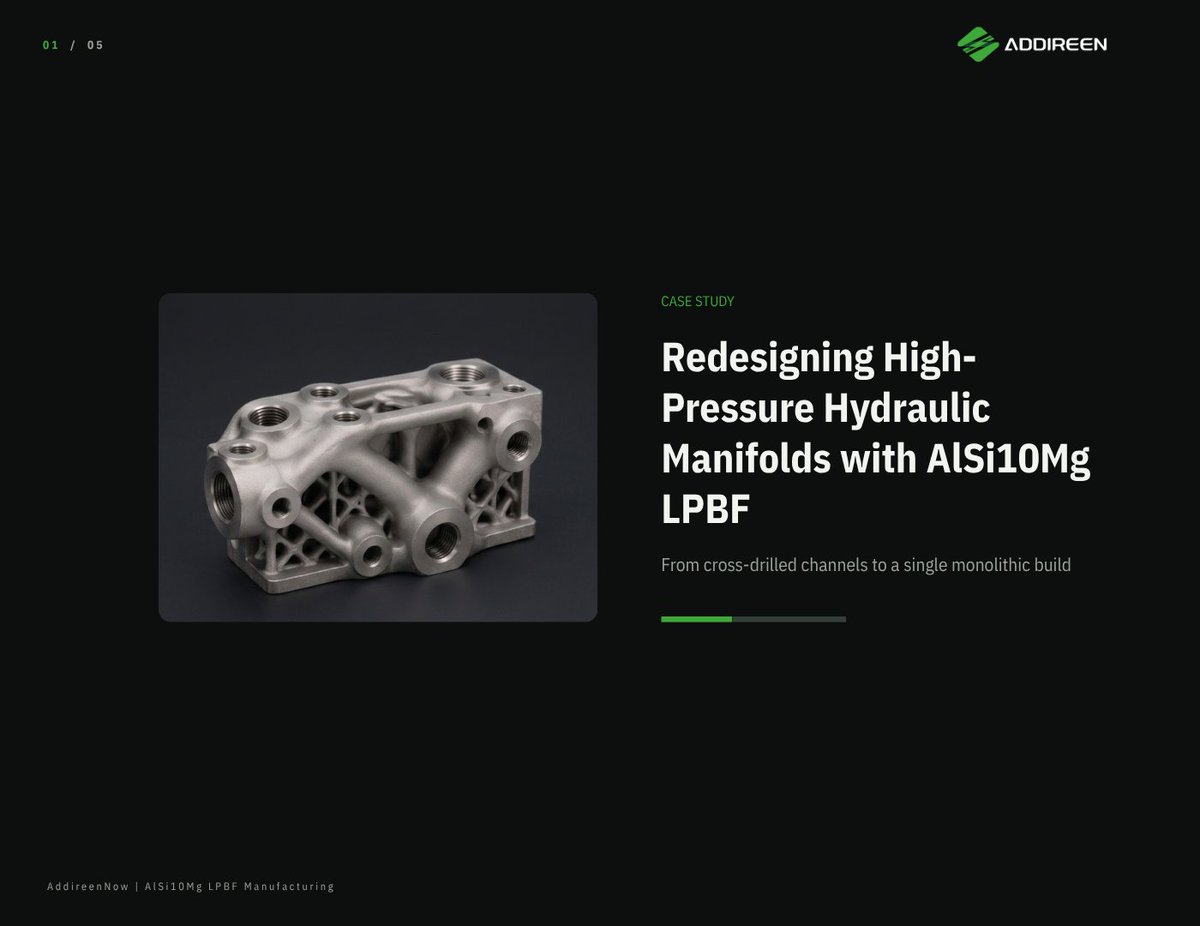
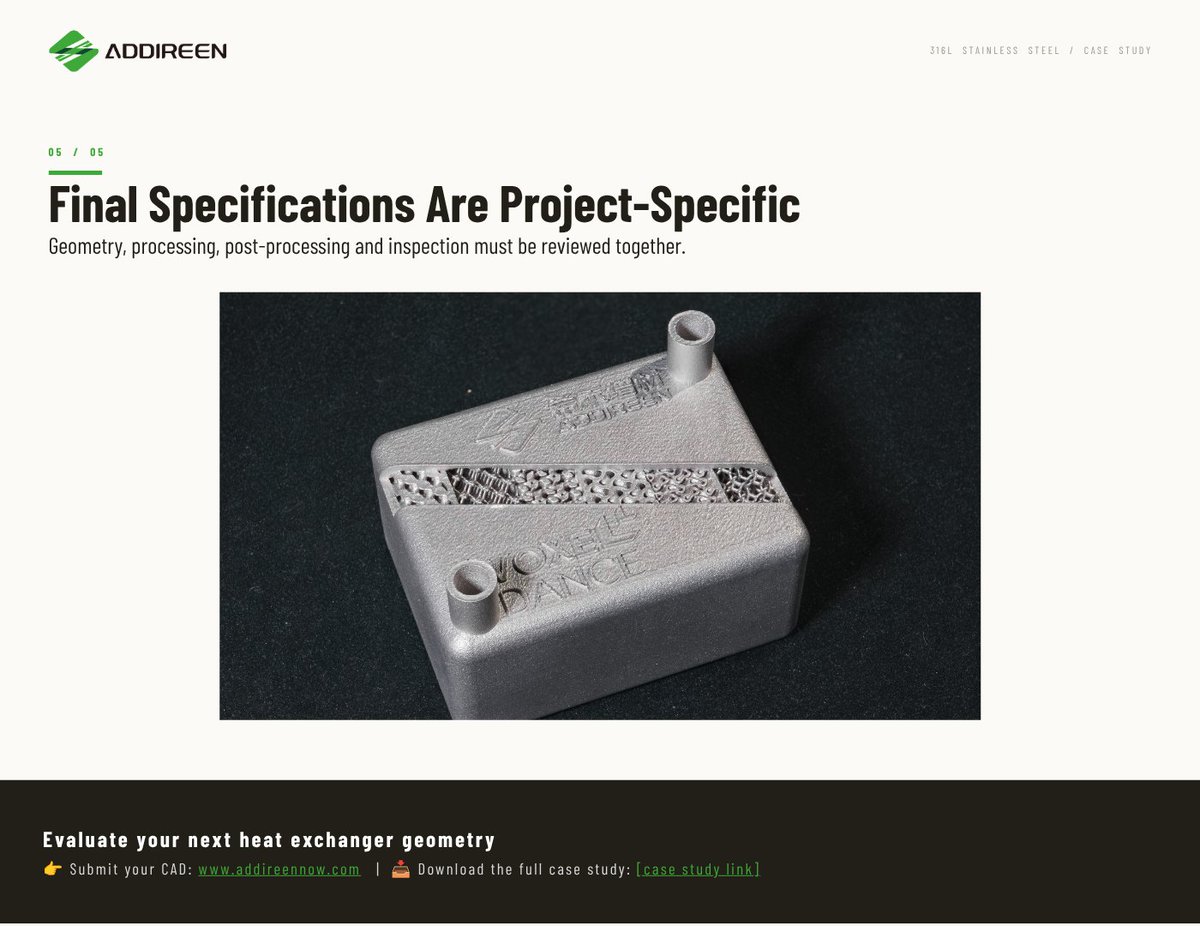
Powder removal, sealing surfaces and post-machining were planned at the DfM stage, not after the print.
Case study: https://t.co/DFcvJfsdrq
#AlSi10Mg#DfAM#AddireenNow
Design also enables tailored coil cross-sections, more uniform spacing on complex workpieces, and fewer brazed joints. Results apply to this tested config — operating current/temp/cycling need separate validation.
Part count is the easy part. Holding powder-bed condition, chamber atmosphere, and process data steady for the full 140-hour run is what actually decides the outcome. Full build here: https://t.co/PlwSmgGfpb
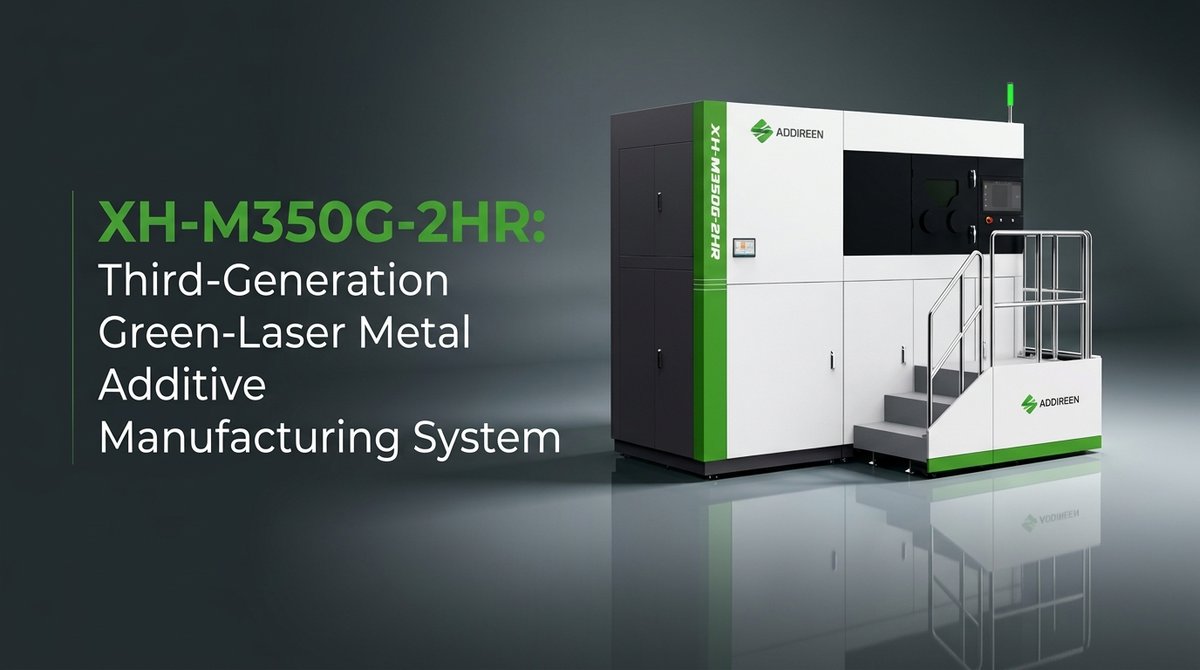
~400 pure copper optical transceiver heat sinks off one build plate on the XH-M350G-2HR. ~140 hours. 350×350mm layout. Local wall thickness under 0.5mm. #PureCopper
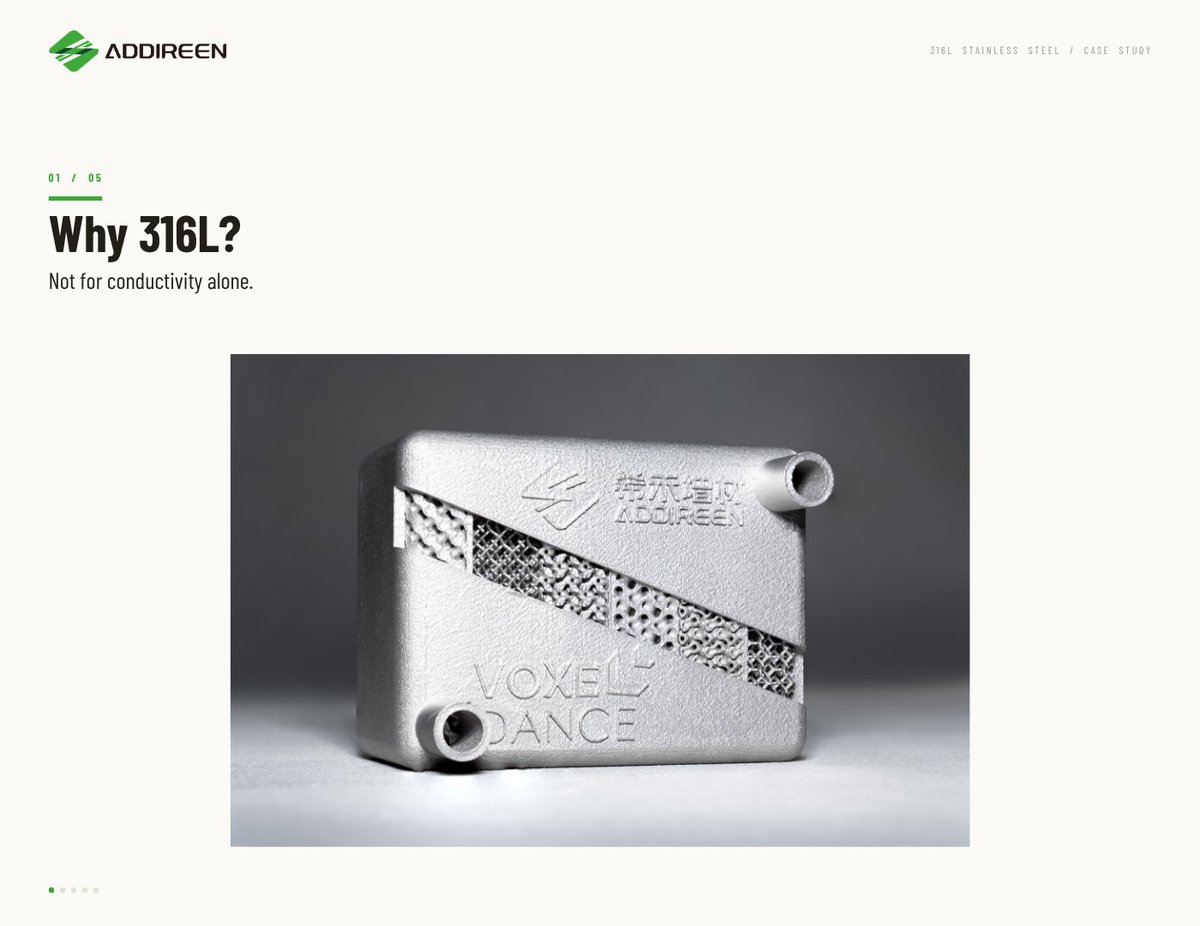
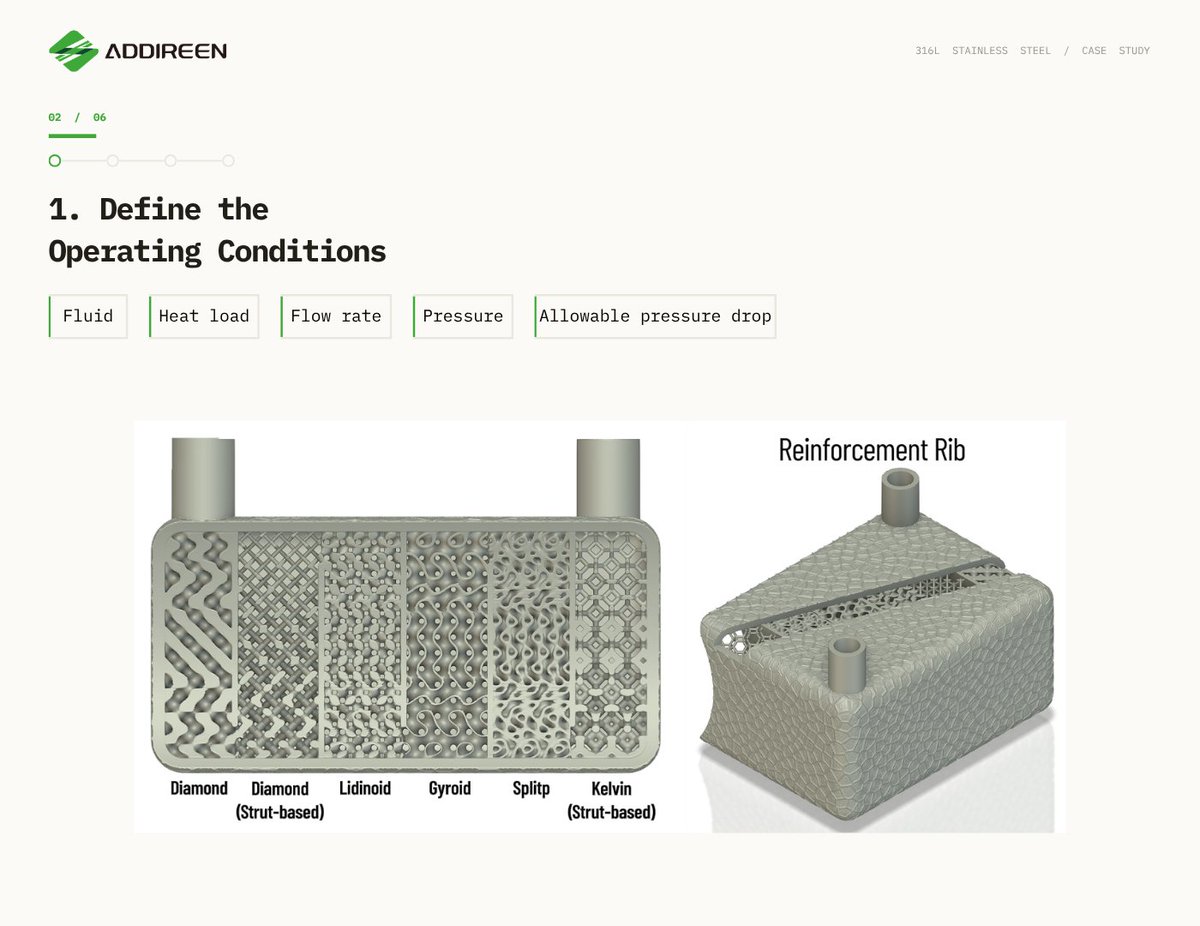
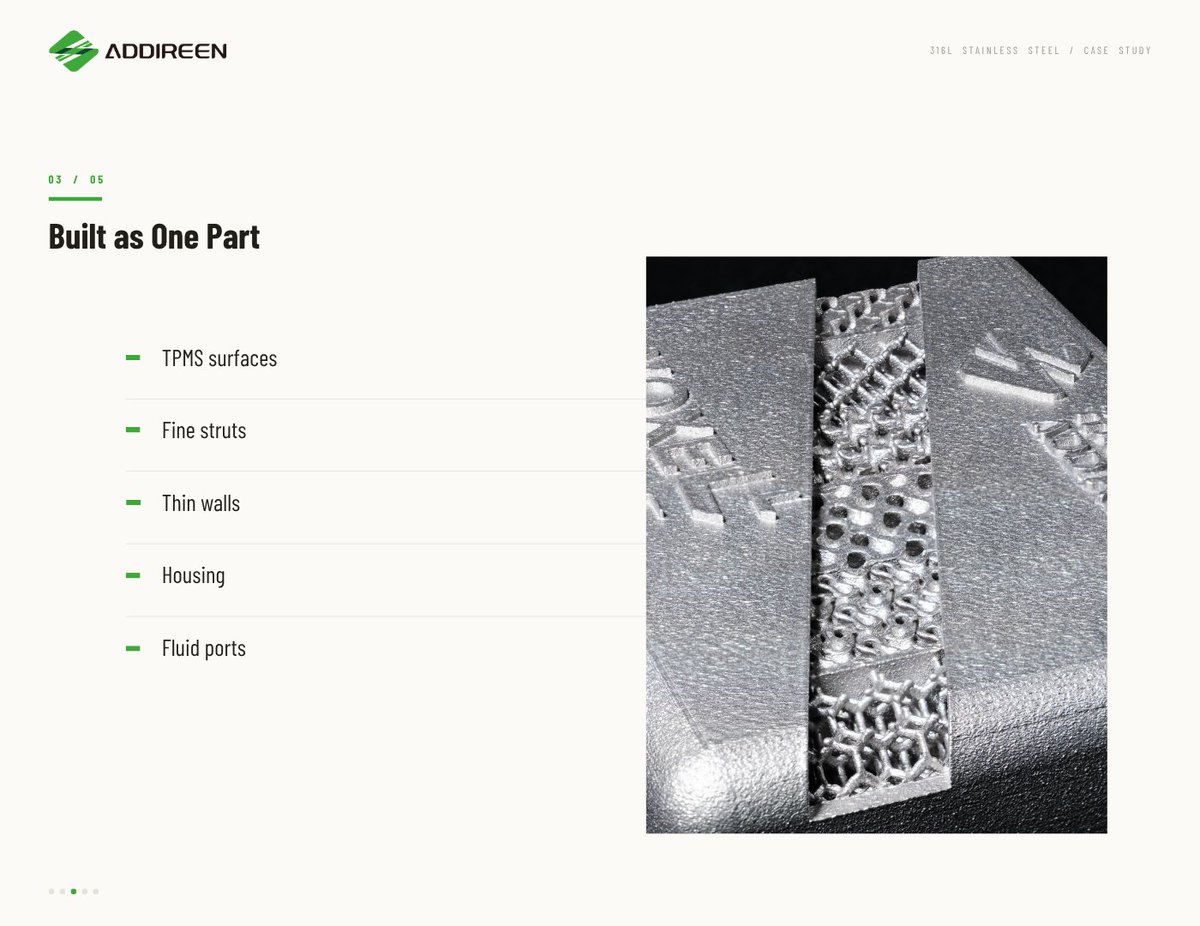
A 316L stainless heat exchanger isn't ready to use off the build plate. Enclosed channels, sealing faces, fluid ports all need post-processing: depowdering, CNC finishing, cleanliness checks, leak + pressure-cycle testing. No fixed package — scope follows the part.
The third-generation XHM350G2HR was developed around three production priorities for pure copper.
🟢 Higher production efficiency
🟢 Stable operation during long builds
🟢 Consistency across the full build plate
Copper conducts heat better than 316L. So why did this heat exchanger use 316L?
Conductivity is one factor. Corrosion resistance, fluid compatibility, pressure, and structure matter just as much.
Result: 0.3mm min walls, Ra 5-9μm finish, up to 99.9% relative density.