I started Korean in January 2020 with one simple goal.
6 months until graduation.
Get fluent enough to surprise Mrs. Jeon with a thank you speech in Korean.
I thought 6 months to fluency was reasonable.
COVID canceled graduation.
Never got to give her that letter.
But something unexpected happened.
I fell in love with the language itself.
Kept going.
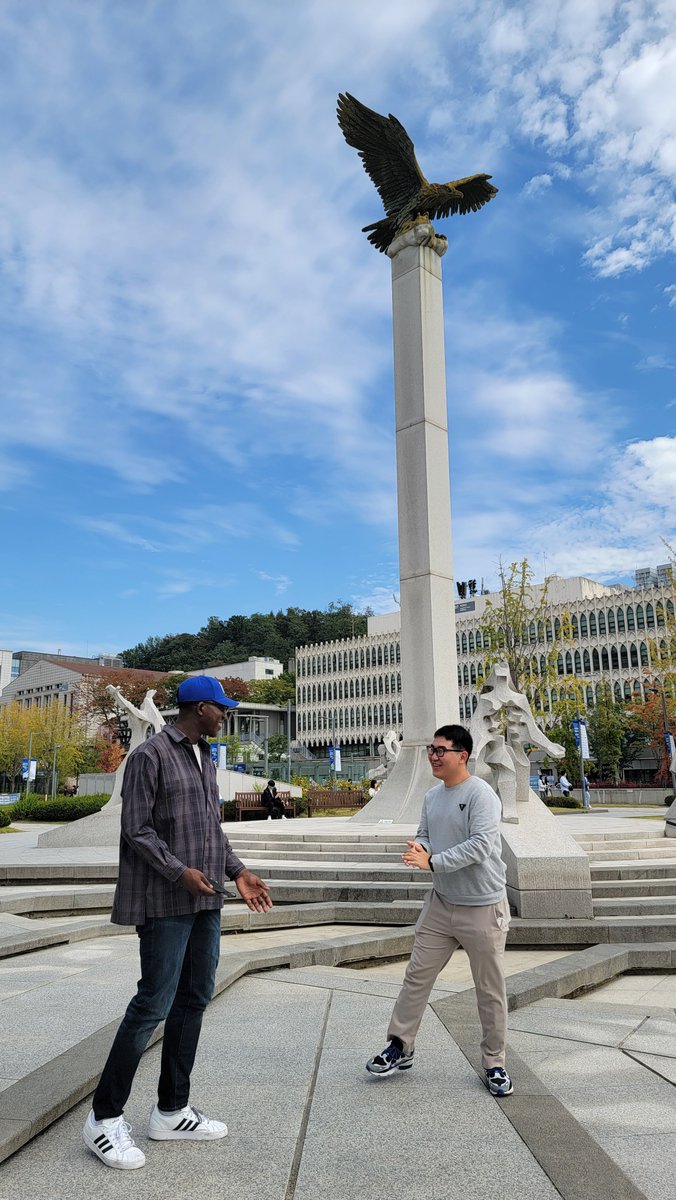
2022: Got accepted at Yonsei in Seoul.
My first time ever stepping foot in Korea.
Took poli sci classes entirely in Korean as the only non-Korean in the classroom.
Made incredible lifelong friends.
Played basketball on the Yonsei team.
And all of this happened within 3 years of the day I decided to learn.
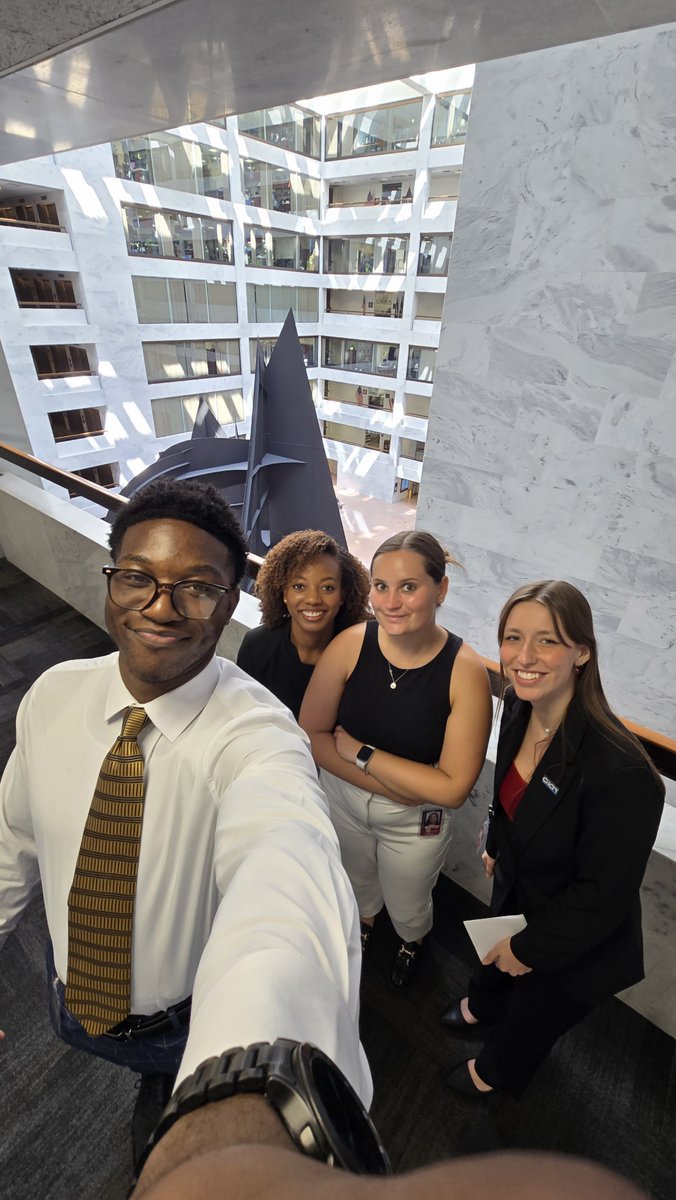
Two years later, I was working in a Senate office on Foreign Affairs in East Asia.
Start with one reason.
Stay for the life it builds that you never imagined.
Stop studying your target language.
Start using your target language to study something else.
The best language learners are the worst language students.
Koreans say "고생 끝에 낙이 온다"
(go-saeng kkeut-e nak-i on-da)
Literal: "At the end of hardship, joy comes."
Meaning: "Success and failure are on the same road. Failure is just an earlier stop. If you're still going through it, you haven't reached the end yet."
The struggle is proof you're still on the path.
Keep walking.
English: "Easier said than done."
Korean: "말은 쉽지."
(mal-eun swip-ji)
English needs 4 words to say it.
Korean needs 2.
Literal: "Words are easy."
That's it. That's the whole sentence.
Korean punches with fewer fists.
Koreans say "밥 생각 없어요"
(bap saeng-gak eop-seo-yo)
Literal: "I don't have thoughts about rice."
Meaning: "I'm not hungry. Not cause of you. Not because of the food. My appetite just isn't here right now."
Hunger as a thought, not a feeling.
When you feel like quitting Korean, watch Squid Game.
When you feel like quitting Spanish, watch Money Heist.
When you feel like quitting French, watch Lupin.
Great stories will remind you why you fell in love with the language in the first place.
Korean words that hit different once you understand them:
마음 (ma-eum) - Heart-mind. Where emotions live.
정 (jeong) - Deep bond beyond love.
한 (han) - Generational grief carried in the soul.
고생 (go-saeng) - Purposeful suffering.
다행 (da-haeng) - Fortunate relief.
English separates these into paragraphs.
Korean compresses them into syllables.
That's why Korean hits harder.
"생각이 없다" hits two ways:
When YOU say it:
"밥 생각이 없어요" = I'm not in the mood to eat.
When someone says it ABOUT you:
"넌 진짜 생각이 없어" = You're an inconsiderate idiot.
Same phrase. One is self-care.
The other is a slap.
Mind the context.
English: "Cut me some slack."
English: "Let me off the hook."
English: "Give me a pass."
All transactional.
Korean: "한 번만 봐주세요."
Literal: "Please look at me, just once."
You're not asking for a pass.
You're asking the relationship to do its job.
That's the gap.
Koreans say "한 번만 봐주세요"
(han beon-man bwa-ju-se-yo)
Literal: "Please look at me, just once."
Meaning: "Pleaseee let it slide. I know I messed up. Don't punish me this time. I'm on my hands and knees rn..."
Mercy as a request to be seen.
Koreans say "까칠하다"
(kka-chil-ha-da)
Literal: "Rough/prickly to the touch."
Meaning: "That person who answers in one syllable. Who makes you feel stupid for asking. Who isn't mean, just sharp enough to leave a scratch."
Sandpaper personality.
Koreans say "눈코 뜰 새 없이 바쁘다"
(nun-ko ddeul sae eop-si ba-ppeu-da)
Literal: "No time to even open my eyes or nose."
Meaning: "Busy isn't the word. I haven't blinked. I haven't breathed. I'm not living, I'm executing."
Busy as bodily impossibility.
Use 말은 쉽지 (mal-eun swip-ji) when:
- Someone tells you to "just stop overthinking"
- A friend lectures you about the gym while eating chips
- A guru on Twitter says "just start"
- Anyone advises from a place they've never been
Don't use it when:
- Talking to your boss
- The person actually did the thing
Best used as a verbal eye-roll.
The voice in your head saying "I'll never be fluent" is lying.
It said you'd never learn Hangul.
It said you'd never understand a full sentence.
It said you'd never watch without subtitles.
You proved it wrong every time.
You'll prove it wrong again.
믿어. Believe.
어쩐지 (eo-jjeon-ji)
Use it when:
- Your friend's been happy all day → they got a raise
- Your ex is suddenly being nice → they need a favor
- The restaurant was empty → it's closing down
- Something FINALLY makes sense
The Korean "ohhhh that explains it."
Content discovery hack:
Search YouTube in Korean, not English.
Don't search: "Korean cooking videos"
Search: "요리 브이로그"
You'll find what Koreans actually watch,
not what's made for learners.
Real content > Textbook content
In Korean, you don't "keep" a promise.
You "protect" it.
약속을 지키다 (yak-sok-eul ji-ki-da)
Literal: "To guard a promise"
Promises are precious things that need defending.
Breaking one isn't just disappointing, it's a failure to protect.
One pattern I've noticed in fluent speakers:
They weren't the smartest.
They weren't the most talented.
They just refused to stop.
Every person I know who got fluent has one thing in common:
They stayed longer than everyone else.
That's the secret. There's no other one.
Koreans say "알바" (al-ba)
Literal: Short for 아르바이트 (from German "Arbeit" = work)
Meaning: "Part-time job. Side hustle. The gig you do to survive while chasing bigger dreams."
Every student knows 알바 life.
Koreans say "나이스~~~~!" (naiseu)
Literal: "Nice!"
Meaning: "YOOO THAT WAS CLEAN. THAT'S WHAT IM FUCKING TALKING ABOUT!"
Korea took the most luke warm complement and made it 1000x more fun to say.
"바늘 도둑이 소 도둑 된다"
(ba-neul do-duk-i so do-duk doen-da)
"A needle thief becomes a cow thief."
Starts with:
- "Borrowing" office supplies
- "Just one" white lie
- "Nobody will notice"
Ends with:
- A pattern you can't explain
- A reputation you can't repair
Small acts write your character.