Anton Chekhov died in 1904 on this day. He was a good person and a great writer.
But he was a bad prophet: a month before he died, he said people would read his stories for 7 years at most.
122 years later, people are still reading. Here's why (link in comments):
@dwarkesh_sp Chris Miller, on how the chip supply chains and competition have evolved since he wrote Chip War.
Sir Roger Penrose. I'm interested in seeing how his views on sentient/conscious AI have changed since 2023.
Douglas Hofstadter.
I sometimes help my friends rewrite their announcements/launches/blog posts for Twitter.
Sharing what ends up commonly helpful.
90% of my value ends up being just getting them to say what they're trying to say.
Literally the first thing I do is discard their current draft, turn on Whisper narration, and just ask them to explain their idea to me like I was hearing about it for the first time.
Every single time, it's immediately so much better than what they'd written before.
What commonly changes:
The first thing they say is closer to the material in the original draft's paragraph 4. Something about writing down an essay or thread makes people feel the need to clear their throat for 3 paragraphs. If you were explaining your company or blog post idea to me at lunch, you wouldn't open with, "For years, our research community has been..." You'd say, "We're making x for y. The way we do this is..."
Other advice:
1. Be as concrete as possible. People don't have the tangible understanding of your company or result that you do. So you need to first just explain what you're actually doing before you start talking about the underlying motivations and the big implications.
I was complaining earlier about ML announcements. Apply this to your domain:
"Every time someone proposes training a model for some domain (virtual cells/materials/whatever), the first sentence should be: input data: x, output data: y, loss function: z. Otherwise I have no idea what's actually being proposed."
2. Cut fluff ruthlessly. People are going to read 10% of whatever you want to write. Have it be the 10% you chose, rather than the 10% they randomly stumbled upon.
You can be smart about a thousand things that don’t matter or you can be smart about like the 5 things that do
some will say “oh why not be smart about 1005 things” but in a sense the 6th thing is a distraction from the first thing
it’s endlessly complicated of course
Notes on short stories #2: Mrs. Bixby and the Colonel’s coat by Roald Dahl
A very O'Henry-esque story. A woman cheating on her husband tries to hide her tracks. Simple premise but it's surprisingly tricky to make such stories work without sounding cliche or contrived.
This story is a good lesson in craft for beginners. It uses an interesting frame device. The narrator opens by saying something like “You know all those outlandish stories divorced men tell each other where the man triumphs over his cheating wife? This is one of those.” This serves two purposes: First, the narrator has an excuse for the goofiness and parablish nature of the story. Second, he's already set up the end - you're expecting the twist in the end.
The rest of the story just has to work its way toward the end. The pacing is measured and masterful (though one plot detail is a bit contrived). You're expecting a particular kind of twist, but there are surprises till the end. Genuinely an amusing story. Literature? No. But a good 15 minute read.
Notes on short stories #1: The great automatic grammatizator by Roald Dahl
An engineer builds a machine that writes stories better than he ever could. Once he has the machine, he starts churning out stories for the weeklies. His business model for the world’s best LLM is basically to sell stories to the gatekeepers. Maybe if ChatGPT and Claude were anachronistically present in the 1950s with everything else remaining unchanged, that’s how they would have made money.
It’s fascinating how much of the mechanics of LLMs and the bag-of-words model Dahl got right in a throwaway paragraph:
Then suddenly, he was struck by a powerful but simple little truth, and it was this: that English grammar is governed by rules that are almost mathematical in their strictness! Given the words, and given the sense of what is to be said, then there is only one correct order in which those words can be arranged.
No, he thought, that isn’t quite accurate. In many sentences there are several alternative positions for words and phrases, all of which may be grammatically correct. But what the hell. The theory itself is basically true. Therefore, it stands to reason that an engine built along the lines of the electric computer could be adjusted to arrange words (instead of numbers) in their right order according to the rules of grammar. Give it the verbs, the nouns, the adjectives, the pronouns, store them in the memory section as a vocabulary, and arrange for them to be extracted as required. Then feed it with plots and leave it to write the sentences.
Of course, the engineer’s machine isn’t a power guzzler like the data centers of today and there is no uproar from writers about their lives being automated away. There is no internet in this world and writers are still at the mercy of their gatekeepers. Dahl is interested in a very narrow fantasy. He plays it out in an amusing fashion, though there are so many wasted opportunities for tension in this story. Everything goes the engineer’s way. There is no judgment day, no conflict, no moment of truth.
Still, an entertaining little story.
I understand these support systems had immense power when families/communities were geographically localised and finances were concentrated within a large family (e.g business/agriculture families)
But do you think this still holds true in a cosmopolitan setup? With families becoming nuclear and dispersed, the practical impact of the extended family's opinion might be going down. I see more women opting to take risks because they have the buy-in of supportive and non-judgmental parents, who also understand this power shift.
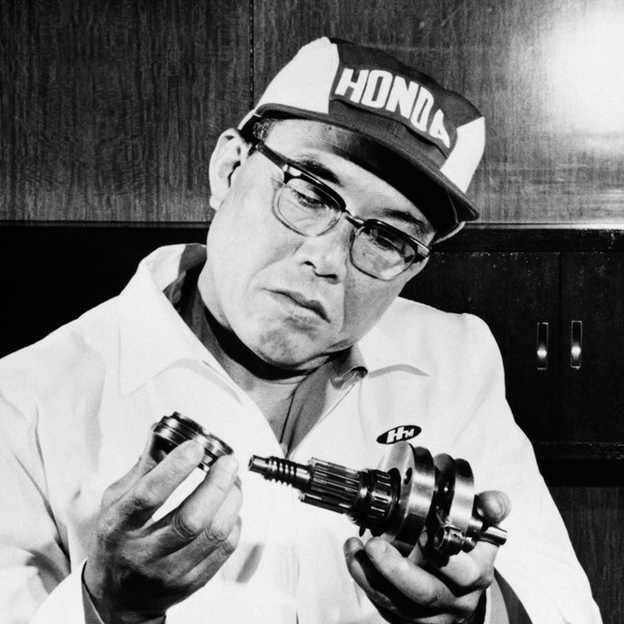
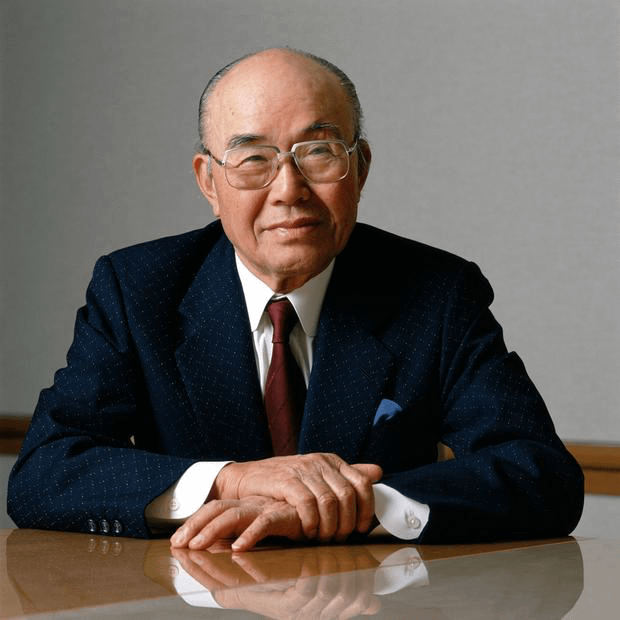
• be Soichiro Honda
• born a blacksmith's son, despises school, loves the smell of oil
• 1936: spends his life savings developing a piston ring concept
• pitches it to Toyota; their engineers laugh at him
• out of 50 rings submitted, only 3 pass quality control
• Rejected.
• pawns his wife’s jewelry just to buy food and materials
• goes back to school at age 30 to learn metallurgy, gets bullied by younger students
• sits in the back, refuses to take exams, tells the professor: "A diploma won't feed me."
• finally perfects the manufacturing process, builds a factory
• 1944: US B-29 bombers destroy the factory.
• rebuilds it from the rubble
• 1945: Mikawa earthquake flattens it again.
• realizes the universe is telling him to stop
• sells the wreckage to Toyota, buys a giant tank of alcohol, and does nothing but drink for a year
• wakes up broke, sees his wife struggling to pedal her bicycle to the market
• has a spark of madness: finds a surplus radio generator engine and straps it to her bike
• it makes a "bata-bata" sound; neighbors beg him to make one for them
• founds Honda Motor Co. in a wooden shack
• 1954: company is near bankruptcy, but he announces he will enter the Isle of Man TT (the deadliest race on earth)
• "I pledge my entire heart and soul to win this race."
• goes to Europe, sees German engines are 3x more powerful, returns to Japan to work 18-hour days
• returns to the Isle of Man and dominates the 125cc and 250cc classes
• decides to build cars; Japanese Government (MITI) bans him
• "Japan doesn't need another car company. Stick to motorcycles."
• sends the government a furious letter: "I will do it anyway."
• enters Formula 1 in 1964 just to spite the bureaucrats
• 1973: US passes the Clean Air Act; GM and Ford say the standards are "impossible" to meet
• Honda buys a Chevy Impala, flies it to Japan, installs his CVCC engine heads on it
• flies it back to the US, passes the EPA test with flying colors
• humiliates the biggest car companies on earth with a fraction of their budget
• dies as the "Henry Ford of Japan"
Success represents the 1% of your work which results from the 99% that is called failure.