Best way to understand what's happening in software is to understand what happened in media.
With internet & platforms, the cost of creation went to zero. Supply skyrocketed.
Consumers had more choice than ever before, which created a long-tail of niches, introduced a new standard for "good", and made trusted distribution the most valuable currency.
Using agents effectively requires embracing their stochastic nature and setting up a framework for them to reason rather than giving them a pile of rules.
Harness engineering and knowledge base curation does not (and cannot!) rely on all information being pulled into context—and given things like autocompaction over long horizon work, context is constantly getting blitted so you can't really rely on things being in context either.
In general you want to tell agents your expectations on how/when/what type of context they should seek and how the tools in their environment can help them complete their work.
You need to tell the agents what they are working on, what parts of it matter, and how they should approach tasks. Tell them about common tasks for the things you’re working on and where they can learn more about them. Make your agents collapse a prompt they are given into a paved workflow.
This is actually not great for white-collar work.
The headline figure is good overall, but many of these don't match what the college system manufactures today.
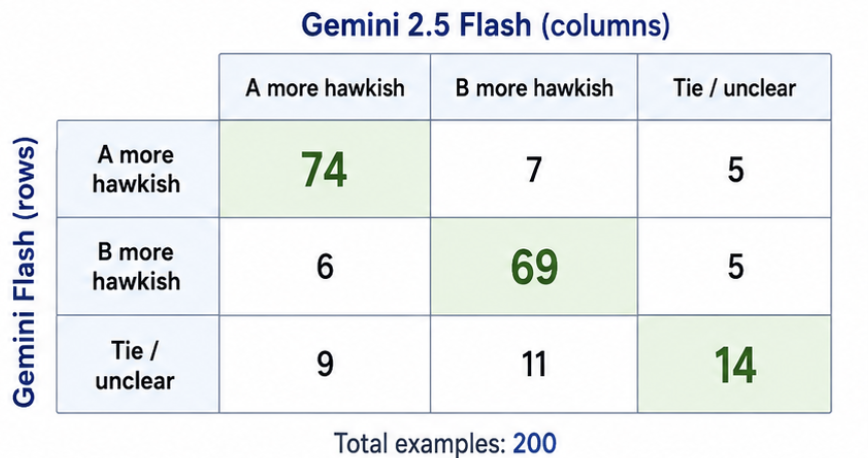
@TheStalwart literally tell codex/claude you want to compare classification and see a confusion matrix .. should be easy for them to do with a test set run.
btw ideally you have a golden set that you labelled so you can compare your judgement vs. model A vs. model B
@TheStalwart compare result pairs on a test set to see if there's bias (e.g., maybe 2.5-flash picks hawkish a lot more than 2.0-flash)
Don't worry about McNemar but something like this (image attached) is a better way to compare than just raw accuracy
Welp, that happened faster than I predicted. Thought it would be end of 2027, then early 2027, but agentic traffic growing so fast that bots have now passed human traffic online for the first time in the Internet's history. https://t.co/2zX5bHdhsa
most organizations fail to understand this.
then someone becomes an expert at the tool, gatekeeps and builds an org around it
the tool never dies and the org bloats and slows down.
“Tools drive culture; if the tool makes an easy thing hard, the organization completely reorients itself around that thing being hard.
Employees allow the company to treat them in all these undignified ways—you're a sacred human being, and you should be able to just do things. You have to restore a sense of self-worth and dignity to the strongest engineers. They shouldn't have to schedule 10 meetings and write 10 docs. They have to feel like superheroes.”
@natfriedman@collision
Now feels more important than ever to imagine a brighter future.
Five years ago, we released ‘Dear Alice’. An encapsulation of a Solarpunk future for Chobani.
Even all these years later, we still get tagged in repurposed content for this by the Solarpunk community!
Unlike Cyberpunk or Steampunk, Solarpunk envisions a future that you'd actually probably quite like to live in! It's not intended to be just an aesthetic, but a political movement towards a brighter and greener future.
Our short depicts humans, animals and nature all living and working harmoniously with non-invasive technology. It's a world where technology is used to enhance tried-and-true farming practices rather than to replace them with something that degrades nature. Solarpunk doesn't mean everyone has to live on a farm. Civilisations can still exist, and if you look closely, the buildings in the city incorporate greenery to bring nature to brick-and-mortar.
The central focus is on a woman narrating a letter written by a grandmother to her granddaughter about how she wants to leave behind a more sustainable future for her. It’s a nostalgic look towards a new era of agriculture, with beautifully crafted backgrounds, delicate animation and a completely unique score by long-time Ghibli composer (and absolute legend) Joe Hisaishi.
Director: Bjorn-Erik Aschim
Producer: Samia Ahmed
Executive Producer: James Duveen
Production Manager: Macarena Gaset
Head of Production: Hanae Seida
Art Director: Antoine Perez
Editor: Max Taylor
Storyboard: Maxime Jouniot, Louis Kynd
*full credits on website
#solarpunk #chobani #THELINE #DearAlice
lived through this a couple of years ago...
it's an existential shock to realize the audience you've performed for so long is totally imagined...
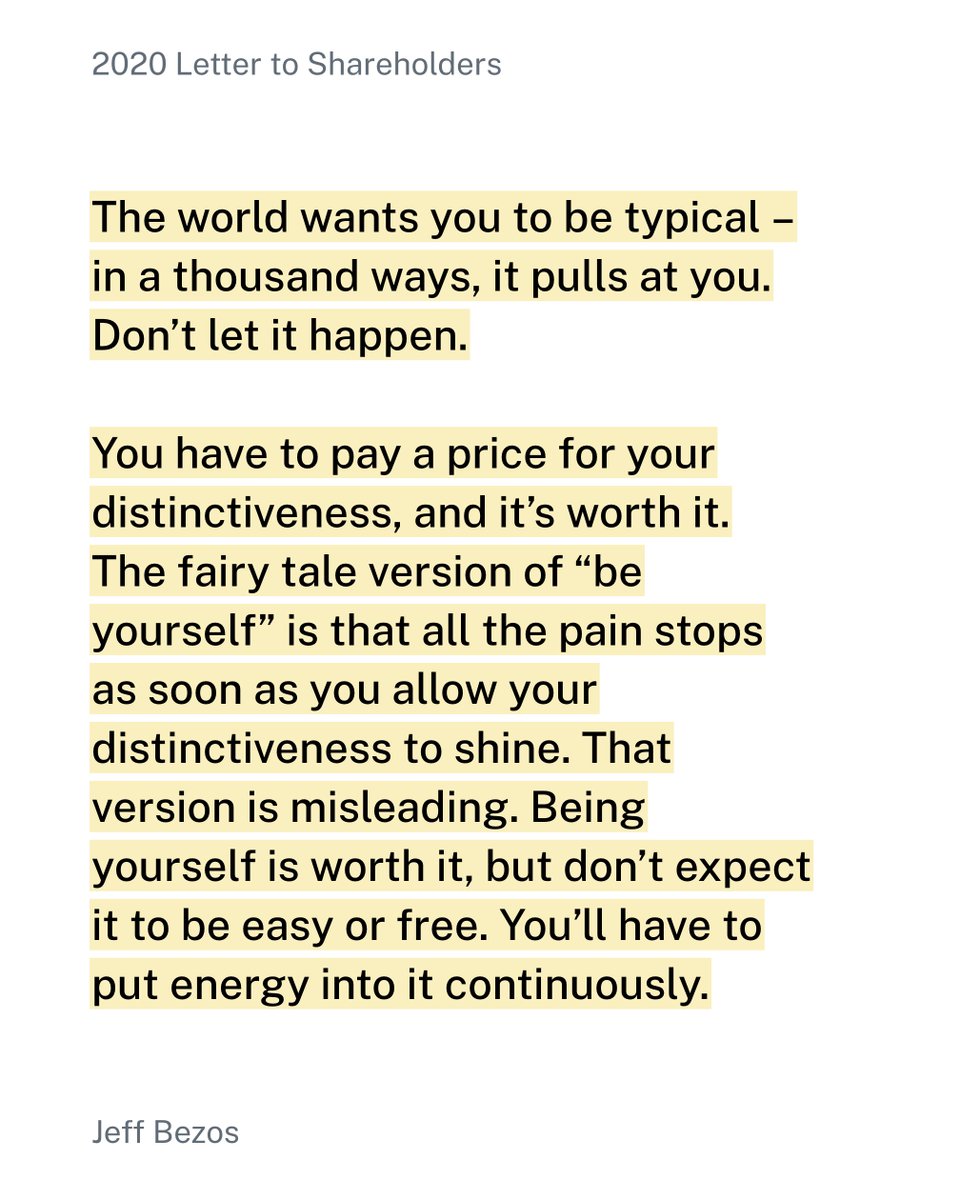
i would just add that you should be prepared to pay the price of distinctiveness if you take a hard turn in mid-career (financial and psychological costs)