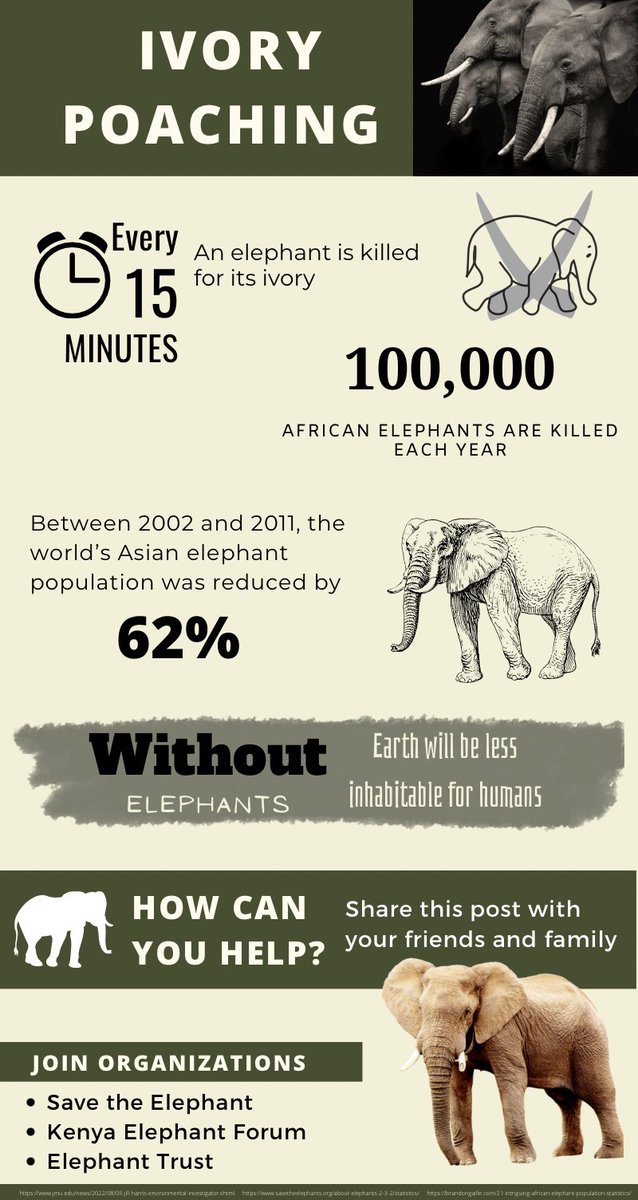
Elephants are the world’s ecosystem engineers. They modify landscapes, create micro habitats for small animals, and facilitate plant diversity through seed dispersal. Earth would not be an ideal place to live without them. Stop ivory poaching!
#39canimals#banivorytrade
An infographic about the pressing issues that dolphins deal with and efforts to minimize those threats. They deserve to be protected! https://t.co/5oiVTAbTcu #39canimals
The United Nations is looking to reduce plastic pollution in the oceans with a global plastics pollution treaty. Help support this treaty by signing this petition: https://t.co/9ACQI6yiDV #39canimals
The First Institute of Canadian Inventors has developed new technology to collect oil spills from surface water, helping drastically reduce chemical pollution in the oceans. https://t.co/VrHRdGBiwb #39canimals
The National Oceanic and Atmospheric Administration (NOAA) through The Coastal Nonpoint Pollution Control Program helps control surface runoff by implementing regulations on destroying vegetation and building impervious surfaces. https://t.co/hXhAMHJ1TU #39canimals
Whale and Dolphin Conservation (WDC) is a non-profit organization and every little bit of support helps them expand their programs and protect dolphins. Consider donating here: https://t.co/XMAAdAD8CJ #39canimals
We need active efforts like those from WDC to protect dolphin life. This was their response to the killing of 100 bottlenose dolphins in the Faroe Islands. #39canimals
We are continuing to put substantial pressure on the Faroese government by briefing MPs, MSPs, MEPs and civil servants on the gruesome hunts, and collaborating with our partners, fish buyers and companies in the UK, EU and USA to build commercial pressure.
They are committed to creating pollutant free seas and preventing the hunting of dolphins to create a safe environment. Learn more here: https://t.co/6QAaCOymcB
Whale and Dolphin Conservation (WDC) is one of the leading organizations in the world that is working towards a world where dolphins and whales are protected. #39canimals
According to Sunnie Brenneman, a researcher at the Chicago Zoological Society, chemicals can even make their way to pregnant dolphins and kill their calves before they are even born. https://t.co/eVtT3YYffz #39canimals
Larger animals like dolphins that eat small fish and plankton go through a process called bioaccumulation where they ingest all of these chemicals from smaller organisms, resulting in high concentrations of the chemicals in their body. https://t.co/G8tL3YIrwe #39canimals
One of the biggest problems that threaten dolphins and other marine life is chemical pollution in the oceans. Scientists call it an "invisible" problem as it is hard to keep track of. https://t.co/gYRtwl6KBd #39canimals
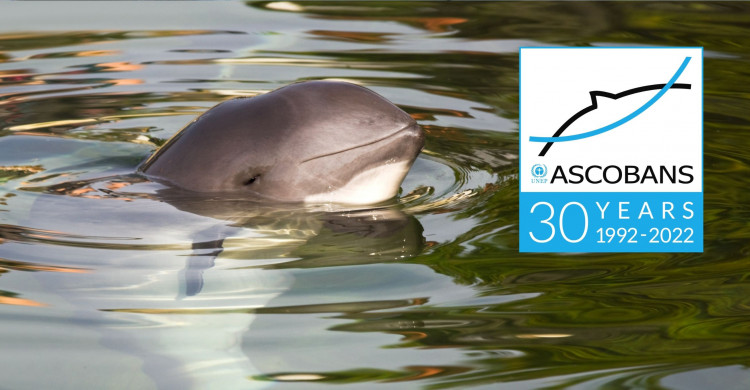
ASCOBANS, an agreement made between different governments to conserve marine life, helped form a group to examine noisy human activity and proposed alternate practices for noise management. https://t.co/85BL9SXXzR #39canimals
Consider joining Silent Oceans; a program that strives to reduce underwater noise pollution and save dolphins and other marine life. https://t.co/ByXQvT73i0 #39canimals
Dr. Maria Morell, a professor at University of Veterinary Medicine at Hannover, is researching the causes of hearing damage to cetaceans, helping identify the human activities that caused the damage in the first place to reduce noise pollution underwater. #39canimals
You can help support the American Cetacean Society by donating, volunteering, or becoming a member! Learn more here: https://t.co/Y4UxHLZl1P #39canimals