Building retrievable representations of organizational memory structures and using them to find internal feedback loops, recognize patterns and learn from usage behavior and past mistakes is in itself unlocking a gold mine.
Hot take 🔥🔥: an enterprise context layer on top of existing items (semantic models, data, pipelines, emails, PDFs, metadata, etc.) that automatically improves with usage and, most importantly, is autonomous.
If this works, it could be the next big thing in analytics.
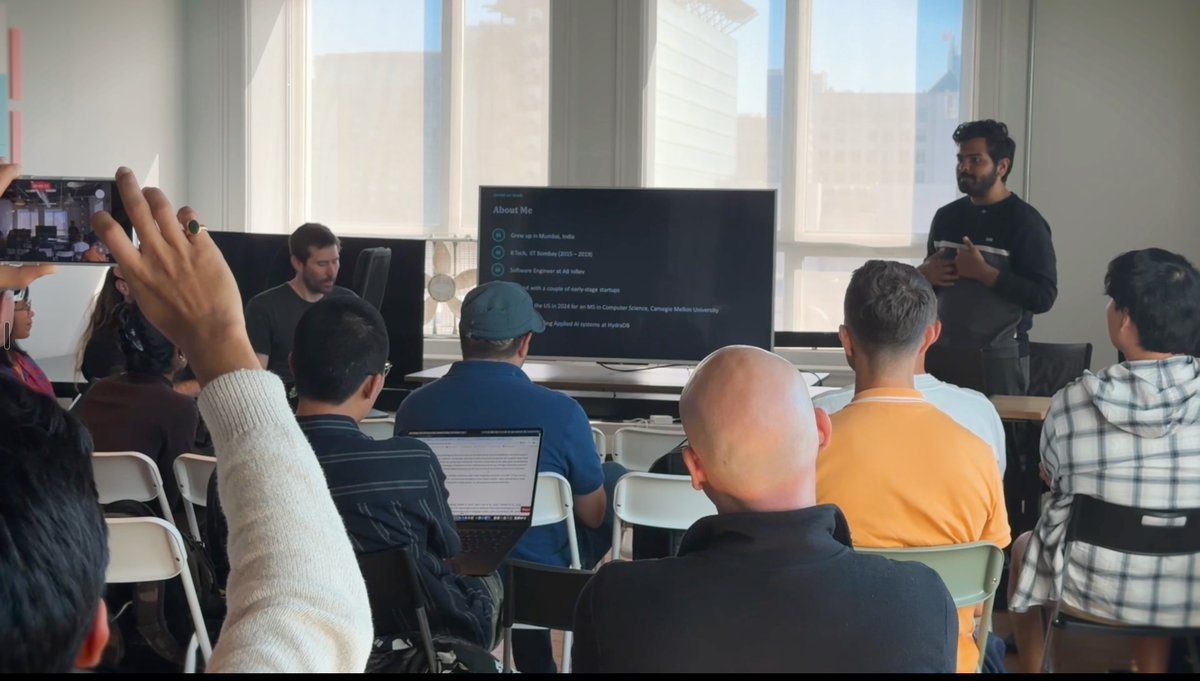
Last week we ran the Graph Club paper reading again. We went back to GNN-RAG: Graph Neural Retrieval for Efficient Large Language Model Reasoning on Knowledge Graphs (Mavromatis & Karypis).
Discussions were around accuracy and interpretability of the graph model's search capabilities, and other use cases where graph neural networks maybe used like RAG for 3D object detection. Got a lot of stimulating arguments on the challenges this method faces, especially when working with continuously evolving knowledge graphs.
We started this as a fun side project. It's turning into small groups that show up genuinely curious and willing to disagree well. Next session is August 25th for which you can register here: https://t.co/n330DBFM42
Thanks to everyone who joined!
A surprisingly very simple method to decrypt CoT for large models is now public knowledge.
This will definitely boost model distillation across the AI ecosystem at least in the short run making intelligence more equitable.
We can finally talk about it:
We found a way to extract hidden reasoning of frontier models using a vulnerability in the APIs of every frontier AI company.
We verified that our reasoning token count matches billed API thinking tokens 1:1 for most of the prompts we queried.
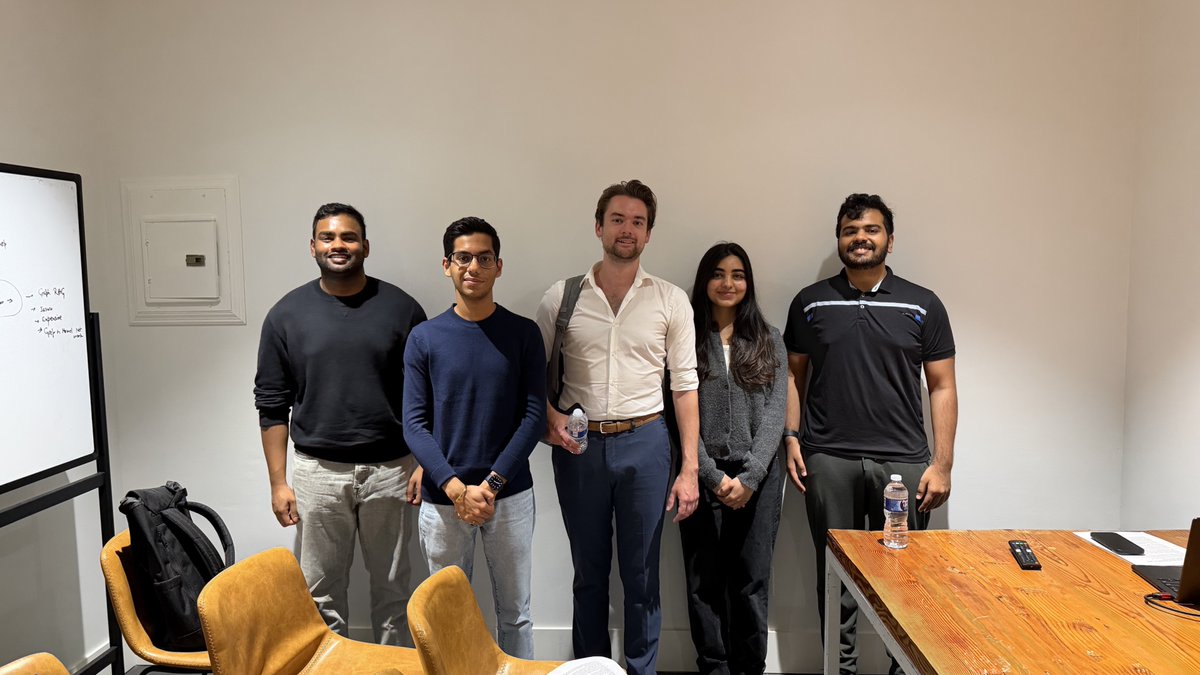
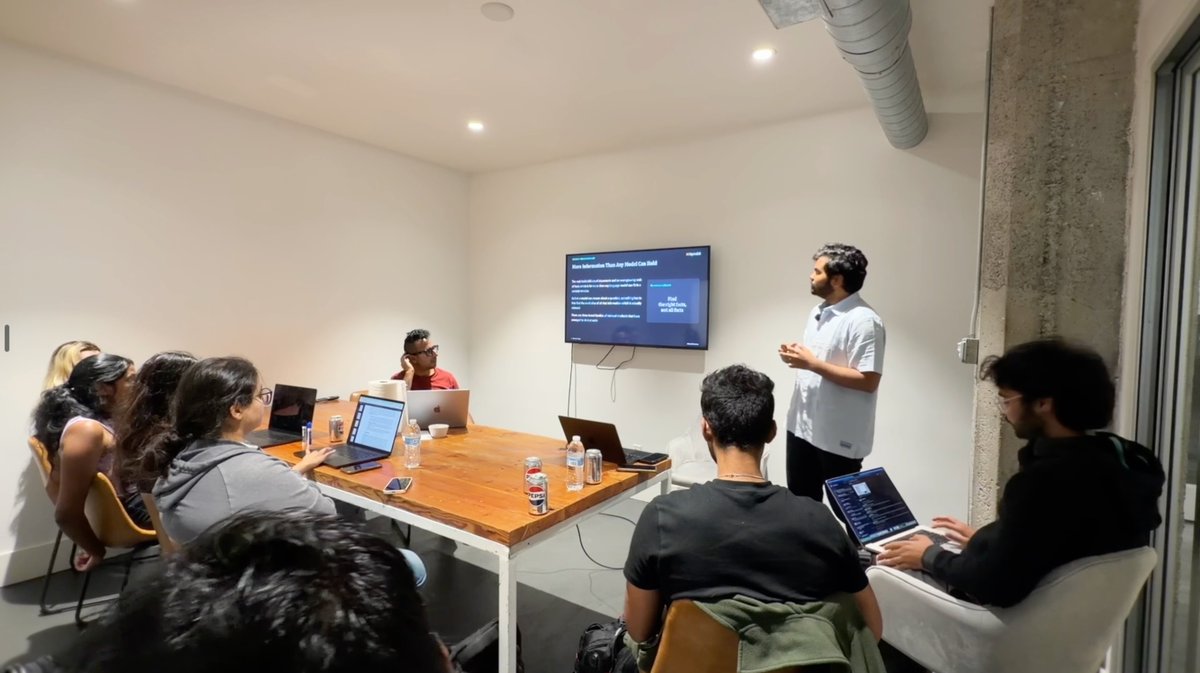
Second Graph Club at HydraDB last week in South Park, SF. Paper: GNN-RAG, Graph Neural Retrieval for LLM Reasoning (Mavromatis & Karypis).
Picked it because it's a real window into what GNNs can quietly do, and one of the more interesting ways to wire a knowledge graph into retrieval.
Two things from the room:
GraphRAG is expensive to build and to query. GNNs over KGs aren't mature yet, but they point at something cheaper.
The catch is that accuracy falls off as multi-hop queries get more complex. Finding the right reasoning path gets hard fast.
Best part is never the walkthrough. It's a room of researchers and builders arguing about where the ideas break in practice.
Thanks @poudelsubhan@Amit_rege96@periwinkleid@sreekanthputta + Maniya, Isha, Shreya, Sanath.
Next one is Aug 13: https://t.co/mgfc8iZymx
we started The Graph Club three weeks ago.
The response has been much bigger than we expected.
So ahead of our next paper reading session on Aug 13, we put the host and moderator, @aditya5479 on the spot for a quick rapid fire to tell us more about The Graph Club
join us for next paper reading at the Graph Club: https://t.co/lxx8ik5ASA
Dear researchers and AI engineers in San Francisco,
last week, we brought 20 top researchers last week in a room to talk about LIMITs of Embedding-Based Retrieval research paper from GDM and role of graph systems in AI
we call it The Graph Club: unpacking important research around AI, retrieval, databases, and graph systems.
the researcher behind this @aditya5479 from @hydra_db
next paper reading on Graph Neural Retrieval for LLM Reasoning
sign up here: https://t.co/Y9TEf1xGxX
🧵Facing a distressing situation as an Indian student in Europe, my iPhone 14 Pro has been stolen in Barcelona on 3rd March. It is a huge blow financially, and also contains a lot of my personal and official data. Requesting help and exposure. Here are the details of the event: