I worked 20 years for a child sex trafficking rescue group. I want you to know this:
90% of Lost Children Are Found Within 30 Minutes.
That statistic should both comfort you and wake you up.
Most lost children are found quickly. But the ones who aren’t? They usually made one mistake.
And here’s the uncomfortable truth:
It’s often the exact thing most parents teach them.
We tell our kids:
“If you get lost, come find me.”
It sounds logical. It sounds empowering.
It’s WRONG!
The Mistake Most Lost Children Make:
When children realize they’re separated, they do three things almost automatically:
They panic.
They wander.
They try to find you.
Every step makes them harder to locate.
From a search standpoint, movement creates chaos.
Parents retrace their steps.
Security scans zones.
Staff lock down areas.
Search works best when movement stops.
When a child keeps walking, they move outside the original search radius. Helpers are looking where they were last seen — not where they’ve wandered.
Stillness increases probability.
Movement expands the problem.
The first lesson is not “go find me.”
It’s this:
Stop. Stay. Yell.
Why Stillness Wins:
Think like a search team.
If a child stays put:
Parents can retrace steps.
Security can scan systematically.
Helpers converge to one fixed location.
The search radius remains small.
If a child keeps moving:
The search area expands.
Adults pass each other.
Missed connections multiply.
Minutes stretch into hours.
Stillness keeps the math on your side.
Teach Them Who to Approach:
The second mistake we make as parents?
We say, “Find an adult.”
Not any adult. Not the nearest stranger. Children need a filter.
Teach them to look for, if at all possible:
A mother with children.
Caregivers who already have kids with them are statistically among the safest people to approach in public settings. They are visible, stationary, and more likely to engage quickly.
It’s a clear, concrete instruction.
Children don’t process vague categories like “safe adult.”
They process visuals.
“Find a mom with kids” is visual.
A Phone Only Helps If the Number Is Known:
We often assume phones solve everything.
They don’t — unless your child can use one. Even young children can memorize a 10-digit phone number with repetition.
But you must train it.
Practice it like a song.
Sing it in the car.
Chant it at bedtime.
Turn it into rhythm.
Repetition becomes recall.
In an emergency, recall matters more than theory.
The Code Word Rule:
One more layer of protection.
Choose a private family code word.
Something only your household knows.
If someone approaches and says:
“Your mom sent me.”
Your child asks:
“What’s the code word?”
No word.
No go.
This simple rule eliminates manipulation attempts instantly.
It gives your child agency without requiring them to evaluate character.
Real Safety Is Training — Not Luck!
We don’t get safer by hoping.
We get safer by practicing.
Teach:
• Phone number
• Code word
• Stop, stay, yell
• Find a mom with kids
Multiple skills.
Simple instructions.
Clear visuals.
Five minutes of training can replace hours of panic. This isn’t about fear. It’s about preparation.
Because when a child gets separated, the clock starts.
And what they do in the first minute determines what the next thirty look like.
That’s real protection.
Why does LinkedIn even have this feature man? This is one of those things that you do to juice up your DAU number but not think about what it *actually* accomplishes..
Yeah, nothing.
Numbers go up but I'm sure it doesn't accomplish anything meaningful.
Cursor just launched automations!
Seems like once a use cases get validated (i.e. openclaw, perplexity computer), other tools seem to follow and it ends up being available to everyone.
I had a stage 2 lymphoma diagnosis last year, just finished 6 rounds of chemo earlier this year.
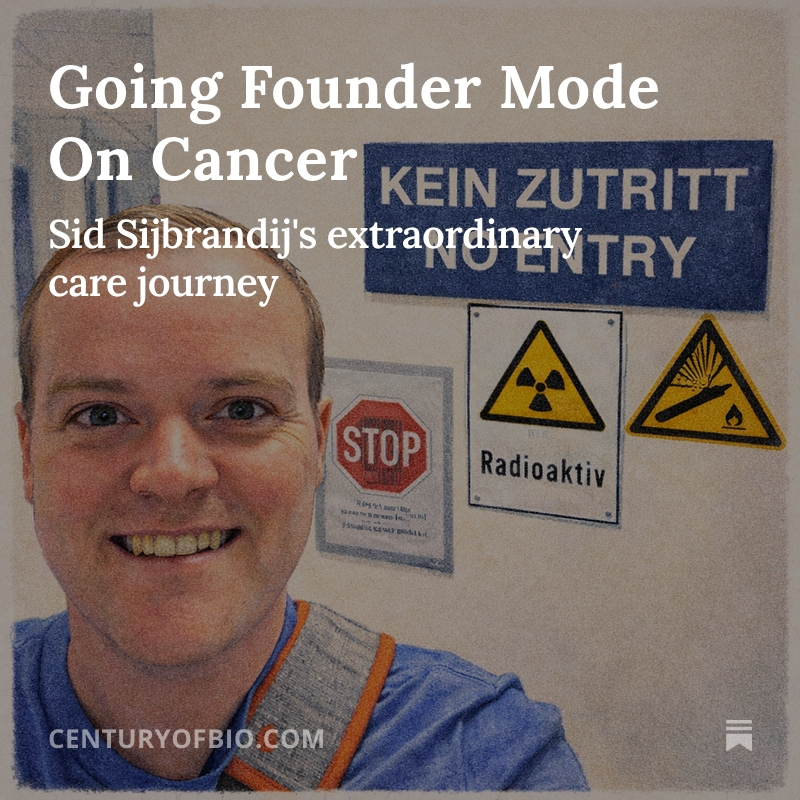
What Sid is doing here is extraordinary.. Most people would've just resigned to their fate - but not him. This is accountability at the next level, this is the real Founder Mode.
Going Founder Mode On Cancer
https://t.co/vAqXIV5zvE
Sid Sijbrandij is a generational founder. He founded and led GitLab, one of the largest remote companies in the world, from idea-stage startup to NASDAQ-listed software giant.
But in 2022, a six centimeter mass growing from his upper spine threatened to end all of that. He had cancer.
What happened next is nothing short of remarkable. Sid went founder mode on his care journey. In the years since, he's deployed cutting-edge genomics to profile his disease. Based on this data, he's developed a growing armamentarium of personalized therapies.
As a result, his disease is now undetectable.
A simplistic version of this story could be, “Wow! A brilliant billionaire seemingly cured his cancer. Good for him!”
But as I’ve gotten to know Sid, it’s become abundantly clear to me that there is more to the story than that.
In an in-depth profile for The Century of Biology, I explore Sid's journey and what this might mean for the future of cancer care.
Okay so the SaaS for my mother's tuition care is looking great - at least for an MVP. Student management system is looking nice.
Tried deploying it using vercel. Database is using supabase. All coded by Claude code.
Gonna read on security best practices before rolling it out
- Use claude code to build a solution to my mother’s tuition centre backend (student mgmt etc)
- Fleshing out raw thoughts from incomplete notes
Exciting times! Gonna try clawbot next!
Moved from chatgpt to claude like a few weeks ago before the DoW situation.. tried manus, perplexity, but claude feels the best out of them all imo
Some of my use cases:
- Get claude code to read my obsidian-vault and extract recurring patterns, hanging tasks, connecting notes
Kalau disuruh milih spending di Meta Ads vs Marketplace, pilih mana?
@atalonid sendiri lebih banyak spending di Meta. Karena:
- Iklan Meta bentuknya konten kreatif, bukan cuma listing produk
- Algoritma & data gila2an, gampang scaling Top Funnel