300+ Indians have spent years of their lives building satellites and critical technology for this country. They deserve better than having their work and patriotism questioned by manufactured controversies.
I owe them a response. Here it is: https://t.co/vZnnwus4LP
India's bona fide rock music legend legend Mahesh Tinaikar passed away Thursday. Rock Machine - later Indus Creed - was in many ways touchstone for Indian rock bands. Saw them live few times was fortunate to meet him briefly once. Terrific lead guitarist.
https://t.co/UGcQR3QIWM
The debate over Starlink vs Jio and Airtel is missing a key question: who gets to switch Starlink on and off in India?
Starlink is not really competing with cheap fibre and 5G for most Indian consumers. Its real value is in places where towers and cables cannot reach: remote borders, mountains, ships and disaster zones.
These are also places where reliable communications can become a matter of national security.
Consider two recent examples.
In February, Ukraine worked with SpaceX to block Starlink terminals used by Russian forces while keeping Ukrainian terminals connected. SpaceX could identify and disable individual terminals, and did so successfully.
Iran has been trying to stop unauthorised Starlink operations within its territory since 2023. In July 2026, the International Telecommunication Union was STILL urging the US and Norway to secure compliance. The matter remained unresolved despite repeated decisions and appeals.
The technology to switch terminals off exists. It was done in Ukraine but was not doen in Iran. The differentiating factor was SpaceX's cooperation.
India can license Starlink, require local gateways, demand that Indian data stays in India and penalise violations. But India cannot itself operate the satellites, control their software or decide which terminals receive service.
There are two risks here. Starlink could continue operating where India orders it switched off. Or it could stop working where India desperately needs connectivity.
Imagine an Indian military unit or emergency response team depending on a network that can be disabled by decisions made outside India.
I am not arguing that India should reject Starlink. Satellite internet offers genuine benefits, particularly in places with poor terrestrial connectivity.
But India needs the ability to independently verify compliance, maintain alternative connections for critical users, and develop domestic satellite networks. Where fibre and mobile networks are viable, we should be investing in them too.
The question is much bigger and more consequential than whether Musk should be allowed to compete with Ambani.
Should India allow a foreign company to sell satellite internet? Certainly, subject to its laws.
Should India's critical communications become dependent on that company? That's a very different decision.
The fate of the world turned on a tennis court in India. My column in @firstpost
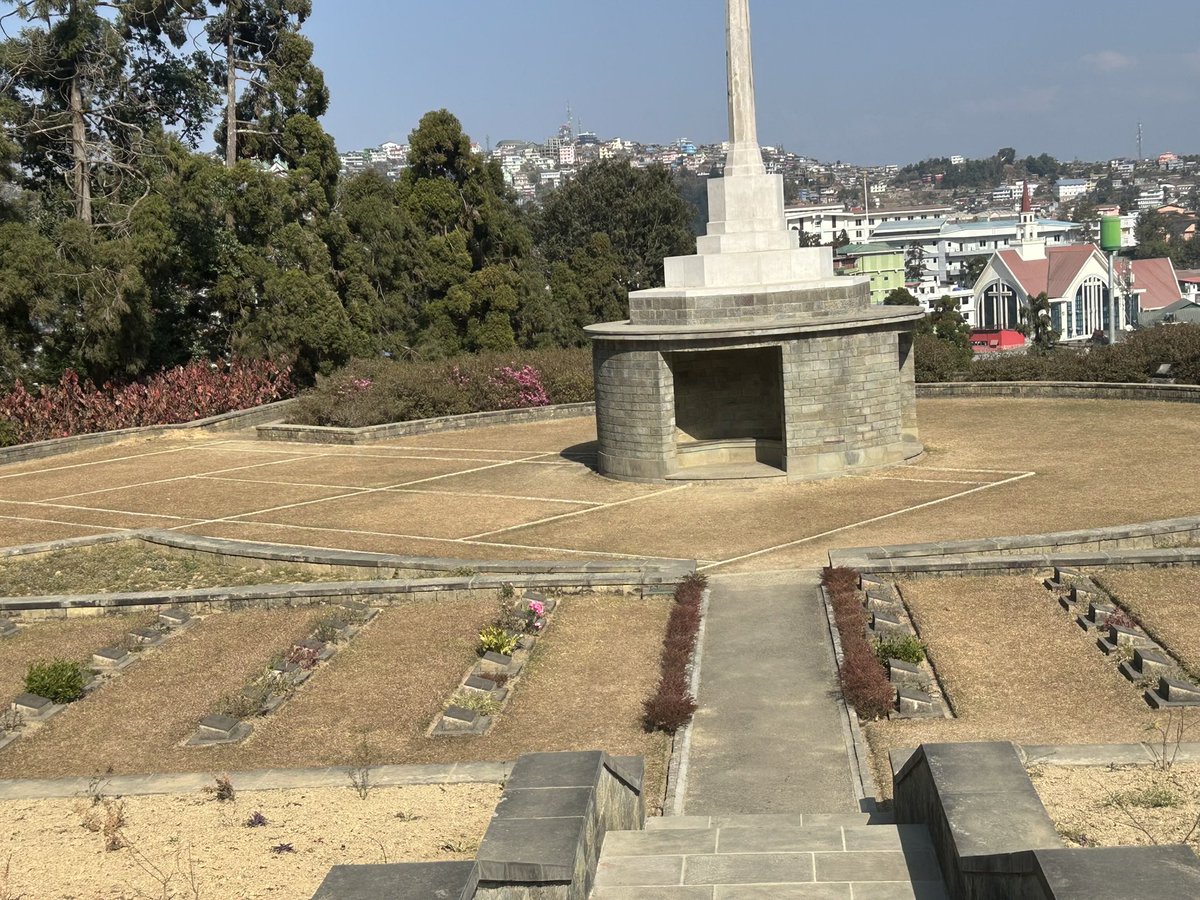
The Battle of the Tennis Court is sometimes called the ‘Battle of the Cherry Tree’, since the historic tree marks the last point of Japanese advance.
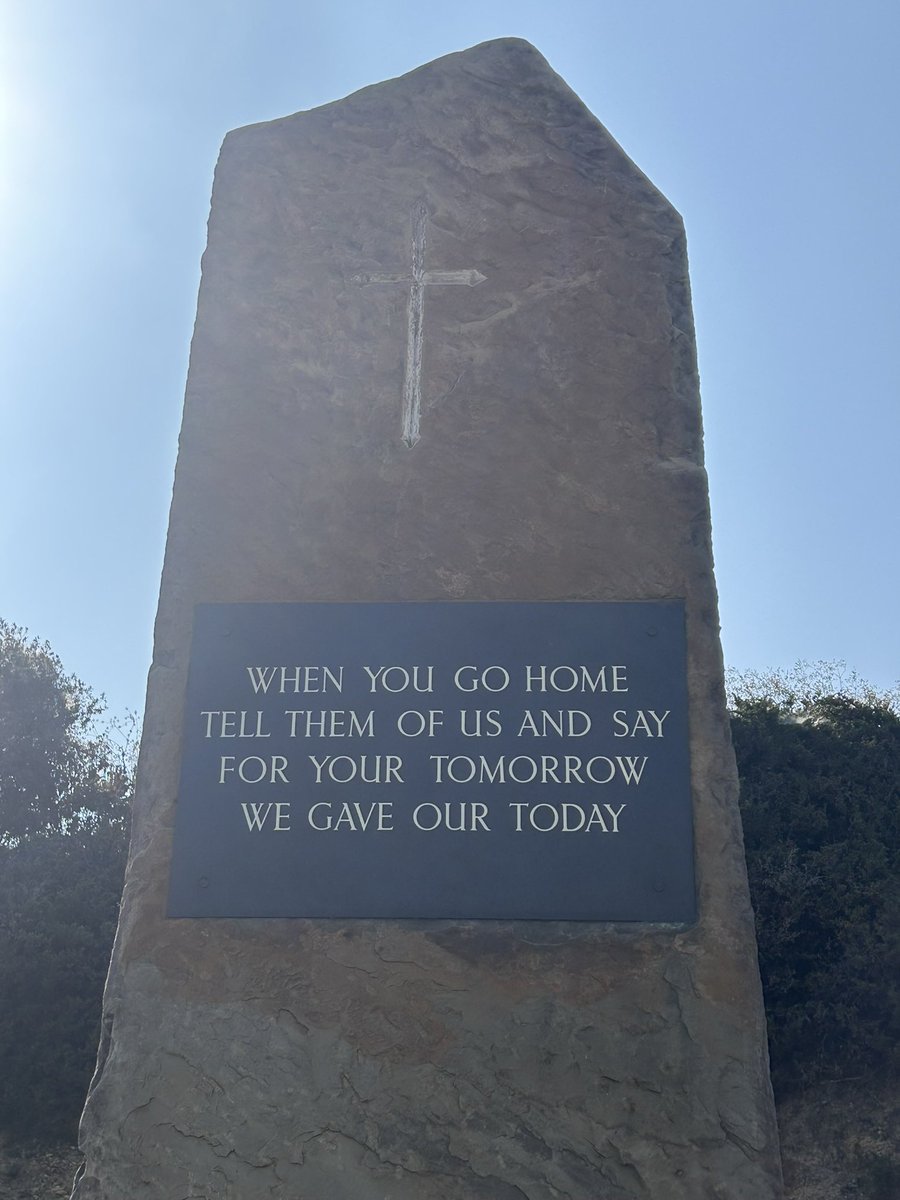
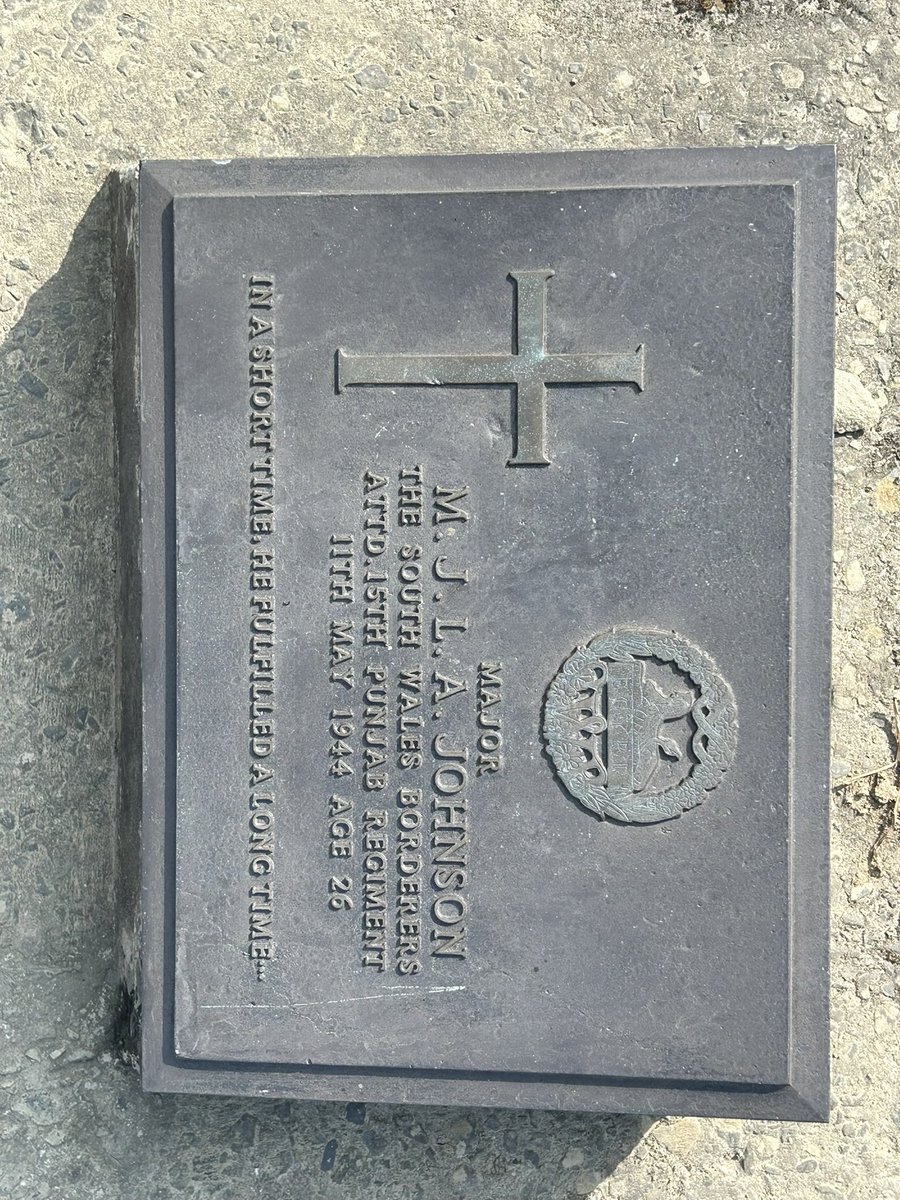
A British Army Museum poll chose the twin battles of Kohima and Imphal over Waterloo as the greatest battles in the last 400 years. In a significant way, Indian soldiers played a key role in bringing the world war to a close.
To commemorate the Japanese soldiers, there is a peace memorial in Kohima that features a cenotaph bearing the Japanese word ‘Chinkon’, which means ‘may the souls rest in peace’. Kohima is a rare war that found its closure.
@rakesharma15@palepurshankar@bsdhanoa@srikantkesnur@HISTORYTV18@WW2Facts@historyinmemes@HISTORY@WW2Today@WWarII@YashMor5@vvssays@Jaishree_7@schahm@rhinohistorian@probirpaymate@SanjoyRoyTWA@adgpi@PaliwalAvi #history #facts
In 1983 HMS Ambuscade was involved in a collision with a US Navy ship in the Arabian Sea & limped into Bombay harbour with a damaged bow. She was taken in hand by Mazgaon Docks Ltd where she underwent extensive repairs & received a new bow section.
Just 1 day left to apply!!
Space Power is an online course over 4 weekends that explores the strategy, business, and governance of space. Ideal for professionals and students working across policy, defence, technology, and law.
Application deadline: 3 Sept 2026
Programme begins: 5 Sept 2026
Apply now: https://t.co/MF17C9MgRg
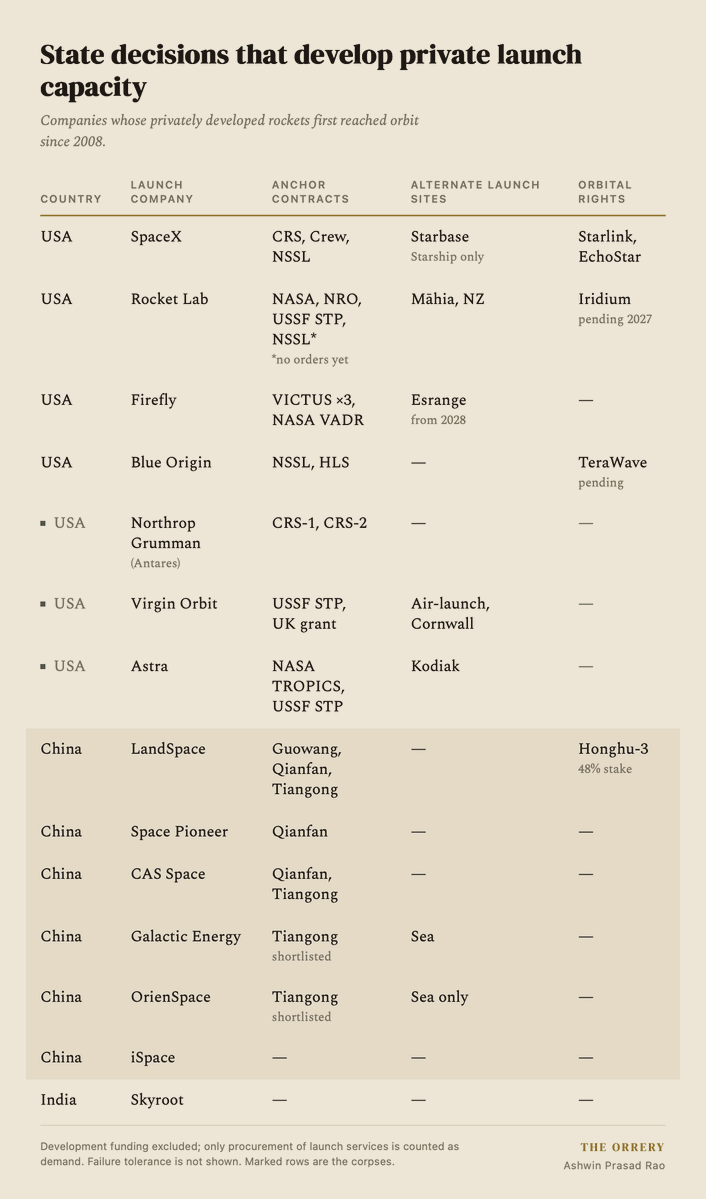
India may need 100+ launches by 2030 to meet its national space goals—over 25 launches per year.
But over the past decade, India has averaged about 5.
That gap is demand India could use to build a competitive launch industry.
My argument in The Orrery, linked in the comments.
A common assumption about #space warfare is that a peer conflict will begin with a “space Pearl Harbor”: satellites are destroyed, one side is rendered blind, deaf, and dumb, and that this enables a rapid terrestrial victory.
That assumption is becoming outdated. 🧵 1/9
There's only one day left to sign up for our Space Power course!
In four weeks of online webinars, we cover the commercial, legal and strategic aspects of space power with a faculty consisting of Takshashila staff, practitioners, and academics.
Simply put, it's awesome.
Power is increasingly projected through space. Satellites, launch capabilities, and commercial space companies are reshaping geopolitics, and India must be prepared for what's next.
Space Power is an online course over 4 weekends that explores the strategy, business, and governance of space. Ideal for professionals and students working across policy, defence, technology, and law.
Application deadline: 3 Sept 2026
Programme begins: 5 Sept 2026
Apply now: https://t.co/MF17C9MgRg
Every satellite begins as an act of belief that something which does not exist today can be imagined, engineered, and sent into orbit tomorrow.
A week ago, I had the privilege of meeting Prime Minister @narendramodi and presenting to him a frame of images captured by our satellites as a reminder of the transformation India has undergone under his aegis. He was especially pleased that the images revealed the extraordinary beauty of our own country from the Himalayas to the Ganga to the Sunderbans.
His support for India’s private space sector has been both consistent and consequential. By opening the ecosystem and placing real trust in Indian entrepreneurs, his government has allowed a generation of companies like ours to dream at an entirely different scale.
We also spoke about what comes next. It is bolder, larger, and much closer than it once seemed. What began in a college room has travelled farther than we could have imagined. The scale of our ambition at Pixxel is about to go a few orbits higher.
More soon!
@PMOIndia
What Likely Happened on 26 August: A Terrain-Based Assessment.
The disaster originated on the Nepal side, on the north face of Langtang Lirung inside Langtang National Park.
Satellite imagery suggests this was not simply a glacier calving event but a large bedrock slope failure that carried part of the overlying glacier with it.
The collapse, at roughly 5,100–5,200 m elevation, generated the seismic signal initially mistaken for an earthquake. The resulting ice-rock avalanche entered the Lhende Khola valley, close to the Nepal–Tibet boundary.
This 3D terrain walkthrough with voice-over, using January 2026 imagery, shows the likely impact pathway:
Slope failure → ice-rock debris enters the valley → possible temporary river blockage → water accumulates → blockage fails → sudden flood surge downstream.
Note: The yellow line in the 3D walkthrough is the boundary line between Nepal and the Tibet Autonomous Region, China.
The surge then travelled through the narrow valley, striking the Gyirong border checkpoint on the Chinese side, damaging major structures, before continuing downstream and affecting hydropower infrastructure and settlements on the Nepal side.
@TakshashilaInst Image credits: Google Earth.
#NepalFloods #Nepal #Rasuwa #BhoteKoshi #Bhotekoshi #FlashFlood
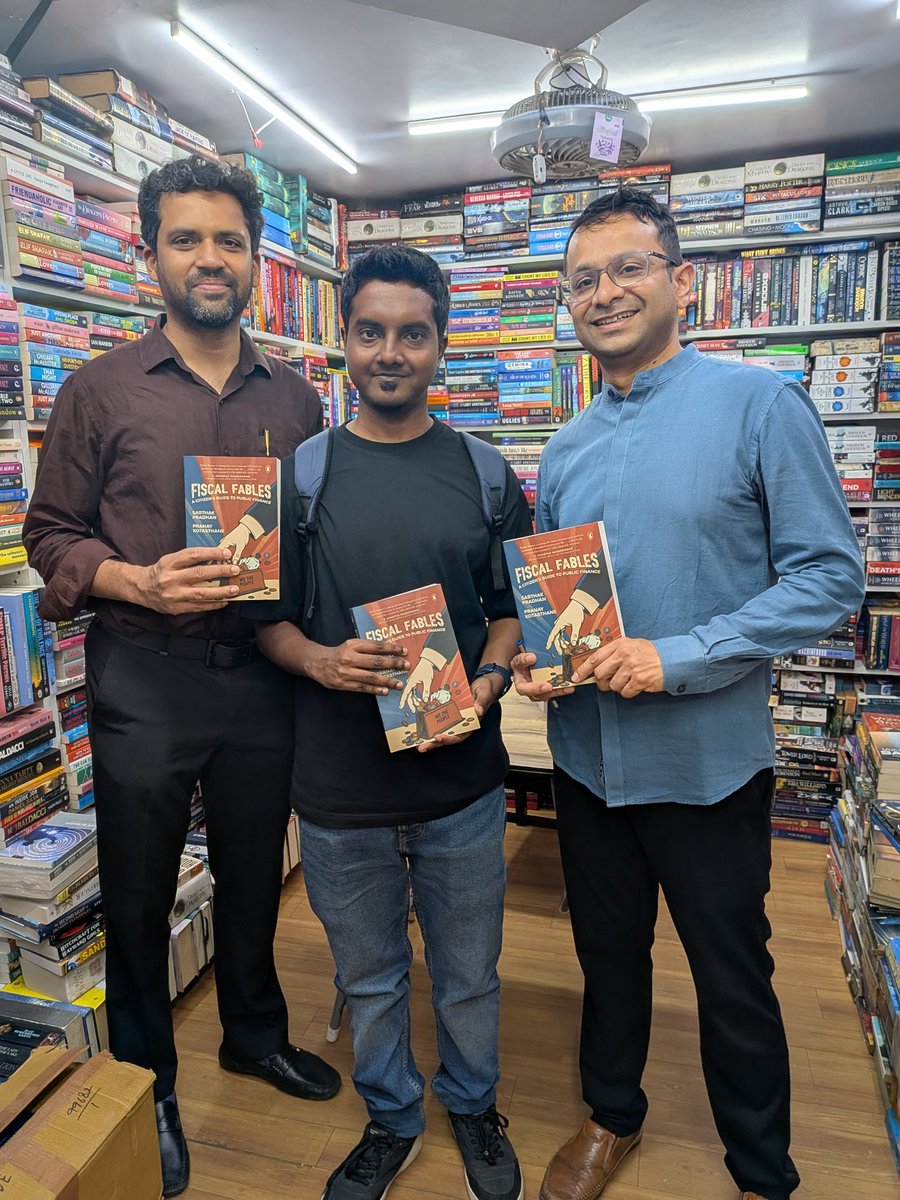
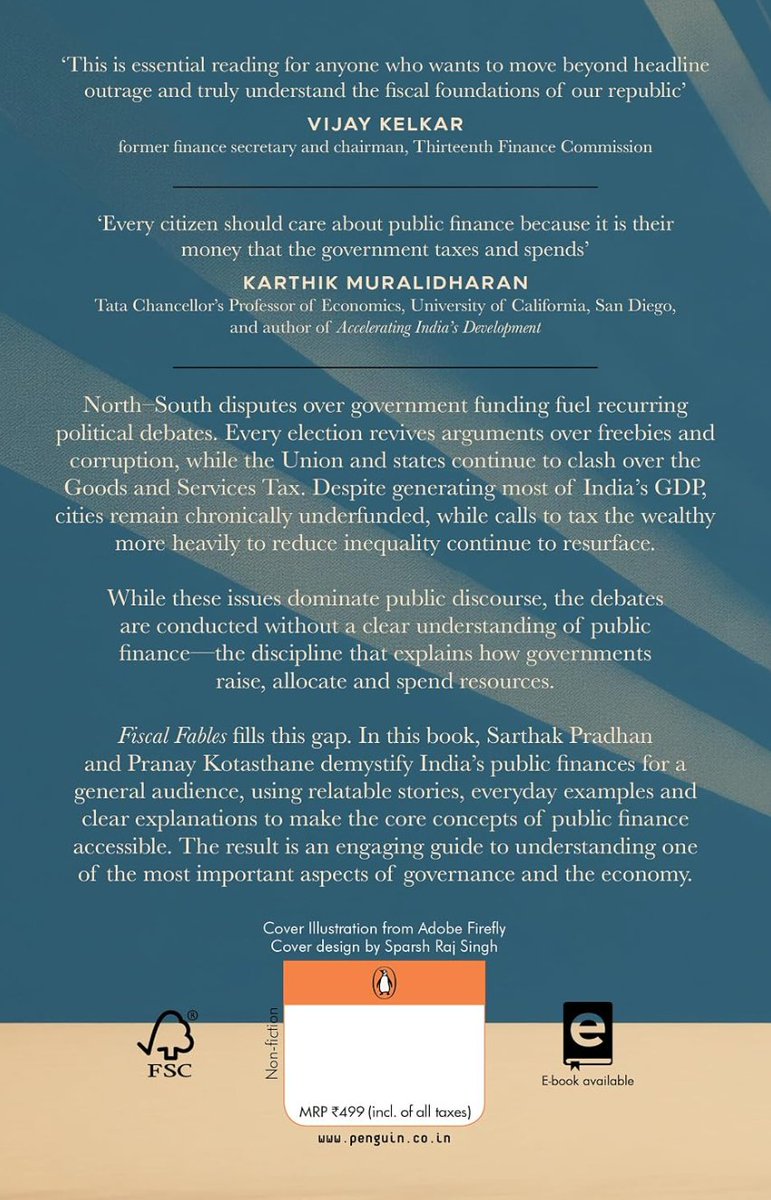
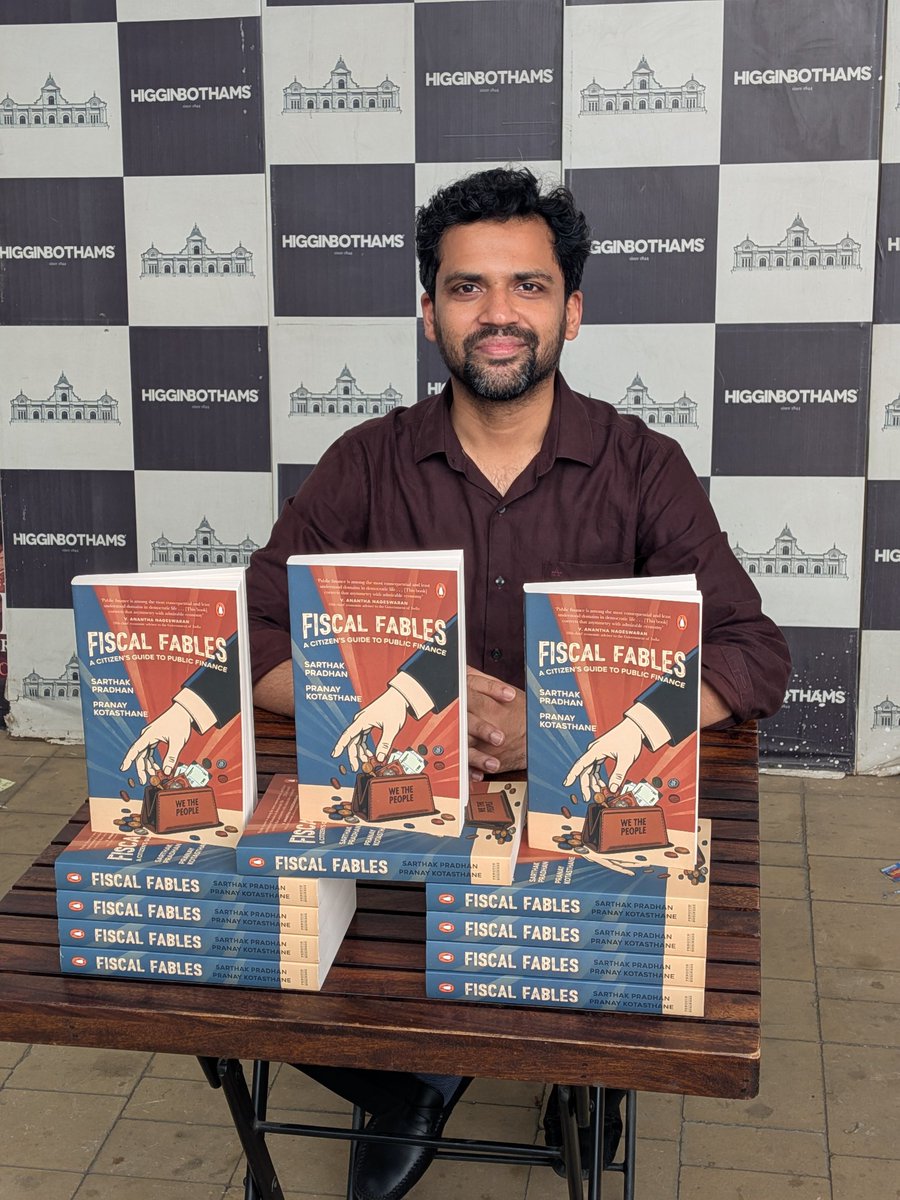
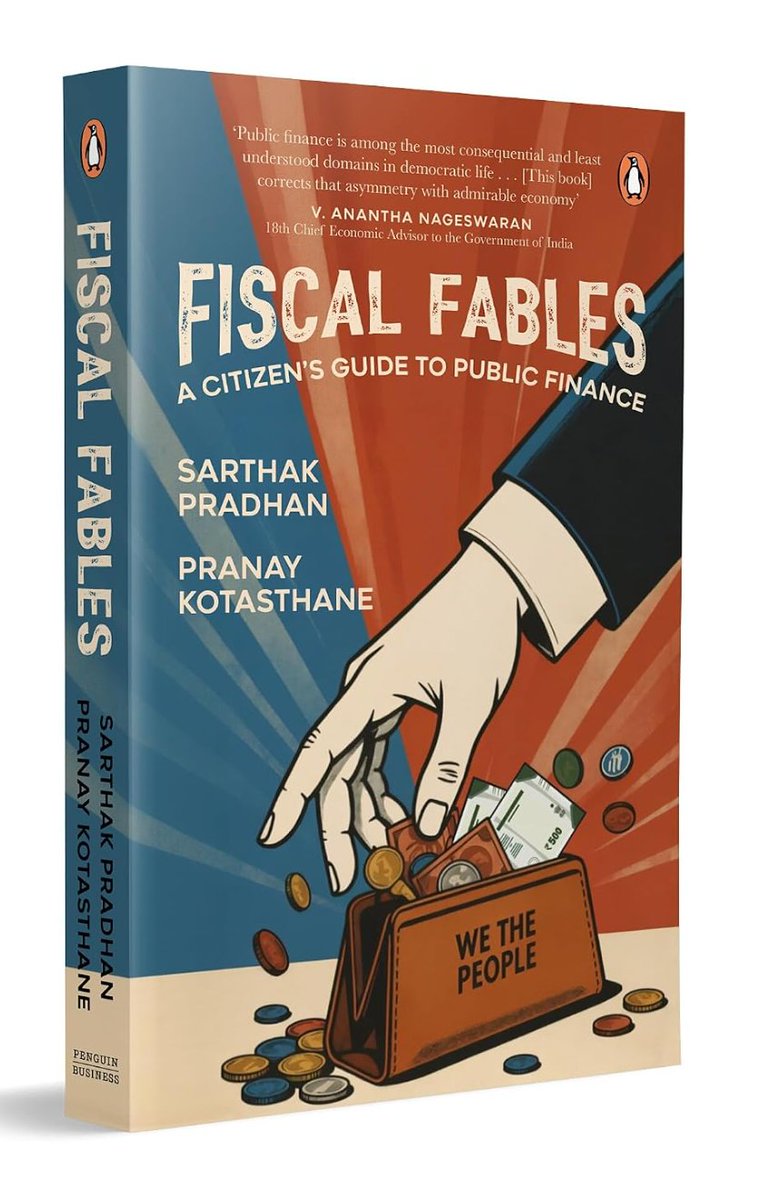
Today is the launch day of our book Fiscal Fables. Now available at your favourite bookstore or online. Please give it a read and tell us what you make of it.
Q: What connects Gabbar Singh, The Beatles, Lagaan, and deadweight loss?
A: Our new book, Fiscal Fables: A Citizen's Guide to Public Finance. @PSarthak19
No equations and lots of stories. Our aim is to make public finance fun. Will you read it? Please say yes, and pre-order!