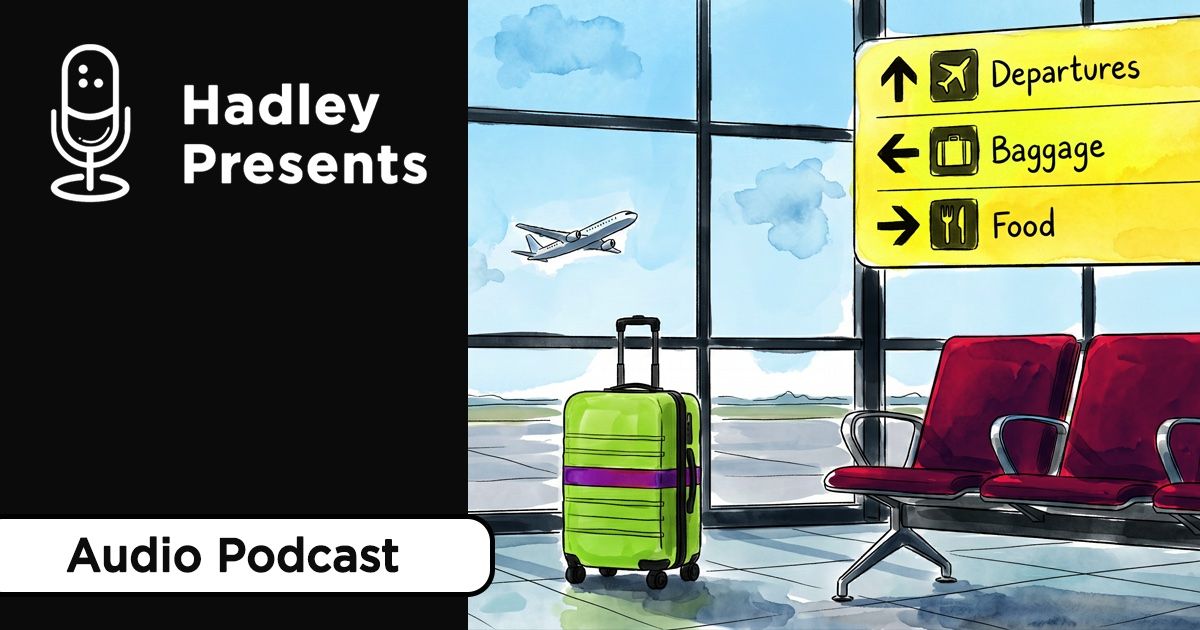
✈️ Flying with vision loss? The latest @HadleyHelps podcast shares practical tips for requesting airport assistance, using accessible travel tools, navigating airports with confidence, and making your next trip less stressful.
🎧 Listen: https://t.co/ENk8MK2ZAP
#Blindness #LowVision #AccessibleTravel #HadleyHelps
What does real support for the blind and low vision community look like? 💙
Janice Barrocas shares how Adjusting To Vision Loss is helping connect blind and low-vision individuals in the Macon area with the resources, guidance, encouragement, and community support they need to live capable, independent, and accessible lives.
From emotional support to practical resources and community connection, this work is helping people realize they do not have to navigate vision loss alone.
Find out more by checking out the website https://t.co/5mlZS4wuuN and/or contacting Janice here https://t.co/Ndd1z12QQ4
#BlindnessAwareness #LowVision #VisionLossSupport #MaconGA #BlindCommunity #Accessibility #DisabilityAdvocacy
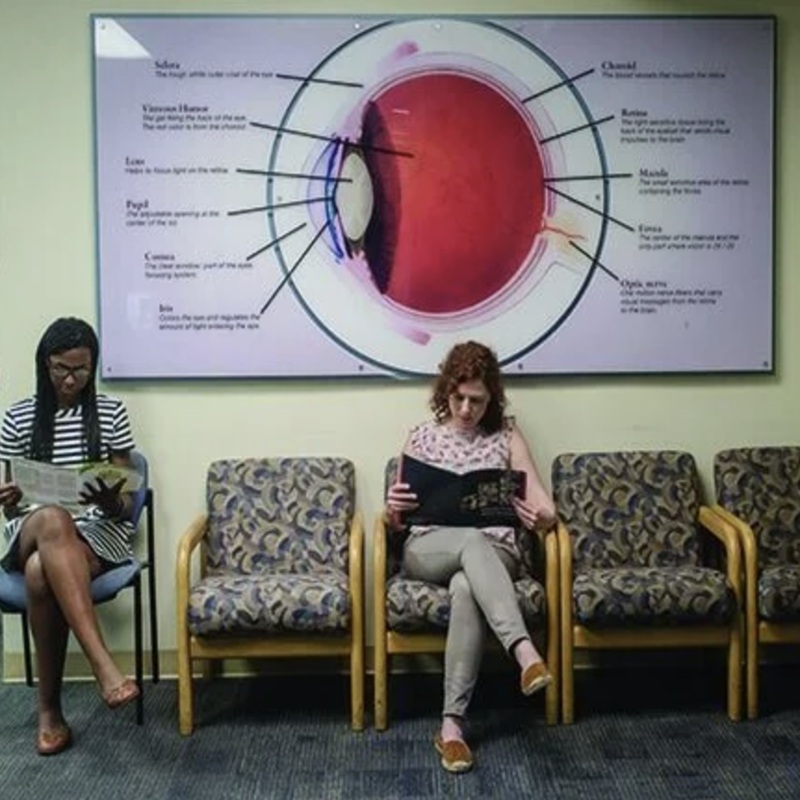
Most people schedule yearly physicals… but skip one of the most important health checks of all: a comprehensive eye exam. 👁️
Eye exams don’t just help detect vision changes — they can also reveal signs of diabetes, high blood pressure, neurological conditions, and other health concerns before symptoms become serious.
For individuals experiencing low vision or gradual vision changes, specialized low-vision exams and rehabilitation services can also open the door to tools, support, and strategies to improve everyday life and independence.
Your eyes can tell a bigger story about your health than you may realize. Don’t wait until something feels “wrong” to get checked.
https://t.co/p3p4hqyK4I
#EyeHealth #LowVision #HealthyLiving
💙Just diagnosed with an eye condition that could lead to vision loss? Take a deep breath.💙
That moment can feel overwhelming. Confusing. Scary. Maybe your mind is racing with questions about work, driving, reading, independence, or what life will look like moving forward. 🫂
But here’s something we want you to know:
✨ A vision loss diagnosis is not the end of your story.
✨ There are tools, skills, technology, and communities that can help you adapt and thrive.
✨ Life can still be joyful, meaningful, connected, and full of possibility.
At Adjusting to Vision Loss, we’ve gathered resources to help make those first steps feel a little less lonely and a lot more manageable. From assistive technology and daily living tips to emotional support and practical guidance, we’re here to help you move forward with confidence. 🌟
💡 Some things that can help right away:
📱 Learning accessible technology
🦯 Connecting with blindness organizations
🎧 Exploring audiobooks and screen readers
👥 Talking with others who truly understand
❤️ Giving yourself grace while you adjust
You do not have to figure this all out overnight. One step at a time is enough. 🌈
And believe it or not… many people discover strengths, resilience, and new opportunities they never imagined possible before vision loss entered their lives.
We’re cheering you on every step of the way. 💪💙
#VisionLoss #BlindnessAwareness #LowVision #Accessibility #AssistiveTechnology #BlindCommunity #DisabilityAwareness #MentalHealthMatters #AdjustingToVisionLoss
Hey y’all 👋
Looking for helpful resources? We’ve got you covered.
✨ We just added new tools to our Resources section—designed to support you wherever you are on your journey.
Whether you're exploring next steps or just gathering information, there’s something there for you.
Take your time, dive in, and see what connections you can make 💡
🔗 https://t.co/IzngI8dNps
✨ The AER International Conference 2026 is happening SOON!
⏳ Only 2 weeks left for Early Bird Registration!
Join us 📍 in Louisville
📅 July 29 – August 2, 2026
Get ready for 4+ days of:
✨ Learning
🤝 Collaboration
💬 Meaningful connection with professionals across the blindness & low vision field
🌟 Conference highlights include:
✔️ Symposium Day sessions
✔️ General & breakout sessions
✔️ Networking opportunities & more!
💡 Don’t miss out—early bird rates are available through May 3, 2026
🎟️ Flexible options include full conference & daily rates!
👉 Register now to lock in the lowest price! - https://t.co/A62budPpaw
#AER2026 #BlindnessAndLowVision #VisionRehab #ProfessionalDevelopment #AccessibilityMatters
Asking for help can feel… uncomfortable 😬
Especially if you’ve always taken pride in being independent. Many people who are blind or visually impaired say embarrassment shows up when they need assistance.
And honestly? That reaction makes sense. A lot of us were raised to believe capable adults should “handle things on their own.” So when vision changes and everyday tasks suddenly require support, it can feel like a personal failure instead of a practical adjustment.
But here’s the truth 💡 Strong, competent people do ask for help. Everyone depends on someone at some point — for directions, tech support, emotional backup, you name it. Needing assistance isn’t a weakness. It’s part of being human.
At the same time, most of us don’t want unnecessary dependence — and that’s valid too. The goal isn’t to constantly ask for help. It’s to build skills, confidence, and solid routines 👏
• Learning nonvisual techniques
• Using assistive technology
• Creating systems that work for you
When you intentionally grow your independence, the moments you do ask for help become purposeful — not embarrassing.
True independence isn’t doing everything alone. It’s knowing when to rely on your own abilities and when to reach out. That balance? That’s empowerment. 💙
#IndependenceWithConfidence #BlindCommunityStrong #EmpoweredNotEmbarrassed #HealthyInterdependence
#AdjustingToVisionLoss
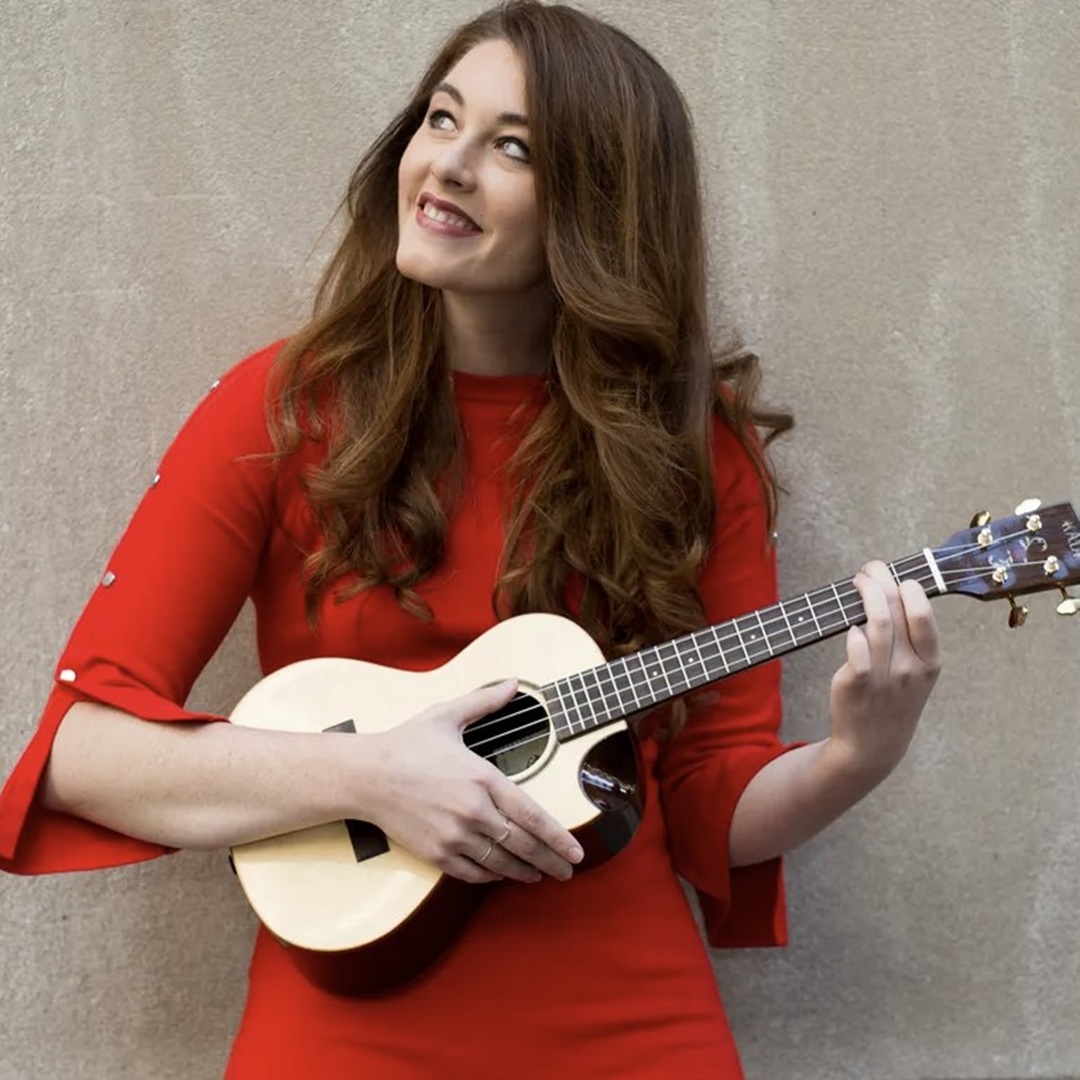
✨ “When we choose to TRY, we create our own harmony.” 🎶
In the video below, Mandy Harvey, a talented singer and songwriter who lost her hearing at 18, reminds us that limitations don’t define our possibilities — perseverance does.
After going profoundly deaf, she didn’t stop making music. Instead, she re-learned how to sing using muscle memory, visual cues, and trust in her own voice, turning silence into song that moves hearts.
To our blind and low vision community:
🌟 You are not defined by what you can’t see — but by what you can feel, imagine, and create.
🌟 Your brilliance echoes far beyond sight.
🌟 Every challenge you’ve faced has shaped the strength you carry today.
Like Mandy’s song Try — which became a symbol of resilience and self-belief — your courage speaks volumes.
Keep trying. Keep dreaming. Keep expressing your unique voice. 🎤💛
When we show up for ourselves, we inspire others to do the same. Let’s keep lifting each other up — one beautiful try at a time. 💪
https://t.co/PJ6dBAWZxv
#TryWithPurpose #BlindAndLowVisionStrong #InspirationEveryDay #AdjustingToVisionLoss
🎧✨ Okay, we’re trying something fun…
If your life had a theme song this week… what would it be?
Not your all-time favorite.
Not the “cool” answer.
Just the song that matches your vibe right now.
Is it calm? 🎹
Determined? 💪
A little chaotic? 😅
Peaceful? 🌅
Drop the title (or just the mood!) in the comments.
Help build a community playlist from your answers and share it back with everyone. 💛
Because our lives aren’t defined by vision levels — they’re full of rhythm, story, and personality.
Let’s hear your soundtrack. 🎶👇
🎉 Happy Hump-DAY! 🐪✨
Wednesday is here — the halfway point of the week! Whether your week has been smooth sailing ⛵ or a bit bumpy 🚧, today is a great day to pause, take a deep breath 🌬️, and give yourself a little boost.
💡 Tip: Treat yourself to something small that sparks joy — your favorite snack 🍫, a short walk 🌳, or a fun playlist 🎶 to lift your spirits. Remember, you’ve already conquered half the week! 💪
Let’s celebrate getting over the midweek hump together! 🥳
#HumpDayVibes #MidweekMotivation #BlindAndThriving #JoyfulJourney #AdjustingToVisionLoss
When someone you love is losing their vision, it can feel overwhelming — for them and for you. 💛
If you’re a friend or family member, you don’t have to have all the answers. What matters most is how you show up.
Here are three meaningful ways to support your loved one:
1️⃣ Listen more than you fix. 👂
Vision loss brings real emotions — grief, frustration, fear, even anger. You don’t need to rush in with solutions. Sometimes the greatest support is simply saying, “I’m here. Tell me what this has been like for you.” Feeling heard is powerful.
2️⃣ Ask before you help. 🤝
It’s natural to want to jump in, but independence matters. Instead of grabbing an arm or doing a task for them, try: “Would you like help?” or “How can I support you right now?” Respect builds confidence.
3️⃣ Learn alongside them. 📚✨
Take time to understand what they’re experiencing. Learn about accessible tools, orientation & mobility training, screen readers, or community resources. When you educate yourself, you reduce the emotional load on them to explain everything.
Most importantly — stay steady. 🌿
Vision loss changes how someone sees the world, but it doesn’t change who they are. Your consistency, patience, and belief in their capability make a bigger difference than you realize.💙
#BlindCommunity #LowVisionSupport #VisionLossJourney #DisabilityAlly #StrongerTogether #AdjustingToVisionLoss
What Does “Coping” Even Mean? 🤔💭
We hear that word all the time.
“You’re coping so well.”
“Just focus on coping skills.”
But what does coping actually mean — especially when you’re blind or living with low vision? 👩🦯👨🦯
Coping isn’t pretending everything is fine.
It’s not “staying positive” 24/7.
And it’s definitely not pushing your feelings down.
Real coping means:
✨ Giving yourself space to feel frustrated, tired, or overwhelmed
🧠 Learning practical strategies that make daily life easier
💬 Finding safe people to talk to
🛠 Building skills that increase independence and confidence
❤️ Letting yourself adapt at your own pace
Psychologists often define coping as the thoughts and behaviors we use to manage stress.
The American Psychological Association explains it clearly here:
🔗 https://t.co/vWLvAJyg35
For our community, coping might look like:
• Asking for clarification when you miss a social cue
• Using technology that supports your independence 📱
• Setting boundaries when you’re exhausted
• Practicing self-compassion on hard days
Here’s the truth: coping isn’t about “handling it perfectly.”
It’s about building tools — emotionally and practically — so life feels more manageable and more yours. 🌱
If you feel like you’re barely holding it together some days, that doesn’t mean you’re failing. It means you’re human.
And learning to cope is a process — not a personality trait. 💛
#BlindCommunity #LowVisionLife #VisionLossJourney #MentalHealthMatters #CopingSkills #AdjustingToVisionLoss
Finding out you’re losing your vision can feel like the floor just dropped out from under you. 💔
If that’s where you are right now, take a breath. You are not weak for feeling overwhelmed. You’re human. And this season deserves real care. 💛
Here are a few coping tools that can truly help in those early days:
🌊 Let yourself grieve.
Vision loss is a real loss. Pushing down sadness or anger doesn’t make you strong — it just delays healing. Give yourself permission to feel it.
🗣️ Talk to someone who “gets it.”
A counselor, a peer support group, or another blind/low-vision adult can normalize what you’re experiencing. Isolation makes everything louder. Connection makes it lighter.
📚 Get accurate information.
Fear grows in the unknown. Learning about your diagnosis, rehabilitation services, orientation & mobility training, and assistive tech can turn “I can’t” into “I’m learning how.” Knowledge builds control. 💪
🧭 Focus on one small win at a time.
Not your whole future. Not five years from now. Just today. Maybe that’s making one phone call. Downloading one accessible app. Taking one short walk with a cane. Small wins rebuild confidence.
🧘♀️ Create simple daily anchors.
Morning coffee ritual. A favorite podcast. Prayer or meditation. Music that grounds you. When life feels unstable, routines bring steadiness.
🤝 Accept help — strategically.
This is not about giving up independence. It’s about preserving your energy for what matters most. Smart support is strength.
And here’s the truth no one says loudly enough:
Your life is not over. It is changing. Change is hard. But blind and low-vision people build full, rich, powerful lives every single day. 🌟
If you’re at the beginning of this journey, we see you. You are allowed to struggle. And you are absolutely capable of adapting.
Drop a 💙 if you needed this reminder today — or share one coping tool that helped you in your early days.
#BlindAndLowVision #VisionLossJourney #MentalHealthMatters #NewlyBlind #StrongerTogether #AdjustingToVisionLoss
The Power of Speaking Up
A lot of people think vision loss is mainly about mobility 🧭 or reading 📖
Hannah Fairbairn’s book When You Can’t Believe Your Eyes: Vision Loss & Personal Recovery (2019) makes it clear that the social side can be just as disruptive — sometimes more.
When you can’t reliably see expressions or gestures 😕, people may misinterpret you. And after enough awkward moments, it’s tempting to withdraw 🚪
Fairbairn emphasizes the importance of “speak-up skills” 🗣️ — simple, assertive ways to explain what you need or ask for clarification. Not apologetic 🙅 Not aggressive 💥 Just clear ✅
Because confidence in conversation isn’t about fixing eyesight 👓
It’s about navigating the world with the tools you have 🧰✨
#DisabilityAwareness #BlindAndLowVision #Advocacy #AdjustingToVisionLoss
Why Vision Loss Feels Different Socially
Why can everyday interactions feel so hard after vision changes 🤔 Hannah Fairbairn, in When You Can’t Believe Your Eyes: Vision Loss & Personal Recovery (2019), points out something powerful 💡: vision loss removes access to the very cues most people rely on to manage human connection.
Eye contact 👀
Nods 👍
Gestures 🤲
The tiny signals that keep conversations flowing 💬
So even when someone moves well or communicates clearly, they may still be working overtime just to figure out what’s happening socially 🧠💥
When others don’t realize this, misunderstandings multiply ➕ Stress rises 📈 Confidence can take a hit 💔
Understanding the why helps all of us respond better 🤝
#LowVisionLife #BlindCommunity #InclusionMatters
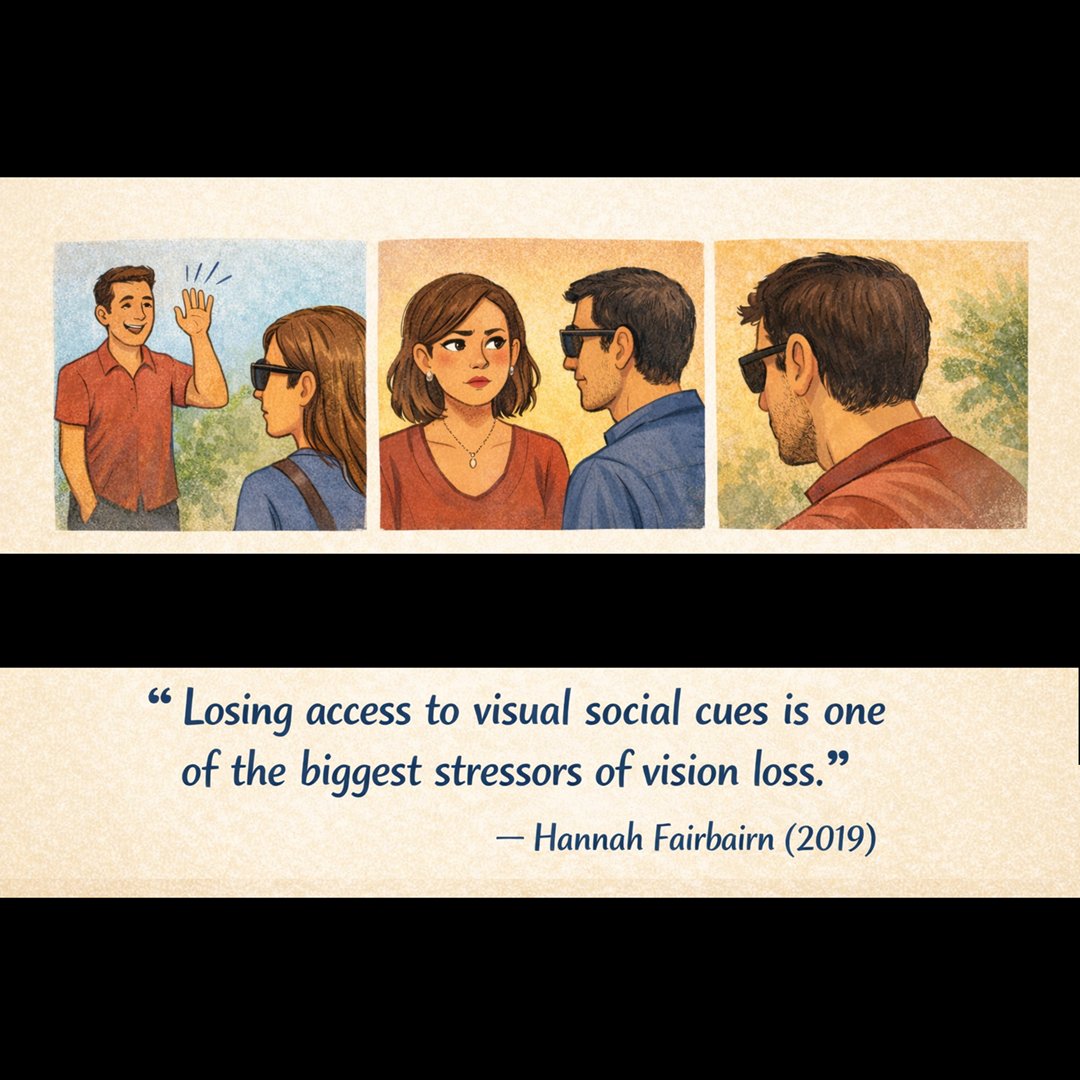
Everyday Misreads
Misunderstandings are exhausting 😮💨
Not noticing a wave 👋
Missing a facial expression 😐
Looking away because your eyes aren’t giving you usable information 👀
To someone else, it can look like disinterest or attitude.
In When You Can’t Believe Your Eyes: Vision Loss & Personal Recovery, Hannah Fairbairn (2019) explains that losing access to visual social cues is one of the biggest stressors of vision loss.
Conversations become unpredictable, and people are often judged for things they literally cannot see.
That’s not a personality flaw 💙
That’s a communication gap 🤝
The more we understand this, the easier it becomes to replace awkwardness with clarity and grace ✨
#BlindnessAwareness #LowVision #DisabilityInclusion #AdjustingToVisionLoss #Atlanta
🎉 It’s Friday! 🎉
Whether you knew it was Friday because your routine told you…
your screen reader said “calendar”…
or you just felt it in your soul—you made it. 🙌
If this week asked too much of you, you’re not alone.
If you’re running on coffee, stubbornness, and muscle memory—same.
So here’s your friendly Friday check-in:
How’s your energy today? 😌
What’s one small win you’re celebrating (even if it’s just “I survived”)?
Drop it in the comments, take a deep breath, and let’s roll into the weekend together. 💙
✨ Happy Friday, friends.
#BlindJoy #LowVisionLife #FridayCheckIn #AdjustingToVisionLoss