Financial Services Consultant | Passionate about @afcwimbledon, travel, #fintech, #banking and politics | All views are my own, retweets ≠ endorsements
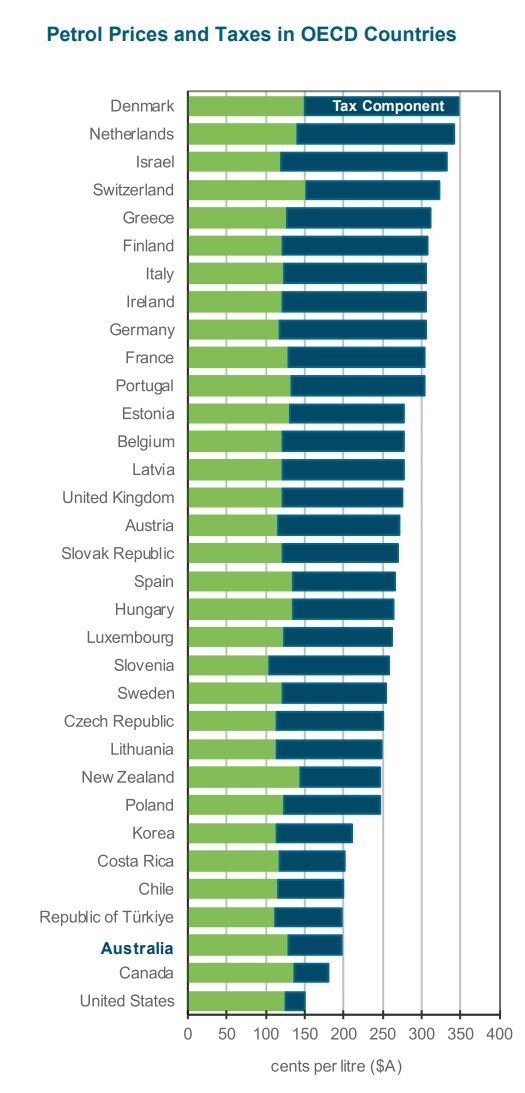
Despite the spike in petrol, Australia still the third cheapest (according to the long-running monitor by the Australian Institute of Petroleum) in the world...
The first day of increased Formula 1 lockdowns at Albert Park has left residents confused and lost. They claim a lack of signage is making them feel like strangers in their backyard. @BlakeJohnson
Flying from an airport soon?
After handling the security tray, wash your hands. It's the riskiest part of the journey. By bringing the people of the world together, aviation inadvertently combines their various malaises in a terrifying microbial cocktail.
https://t.co/y4IwTzQdze
Jeff Bezos explains the “releasing the work” framework he used to build Amazon
In the early days of Amazon, Jeff Bezos had too many ideas.
Then Jeff Wilke, a new Amazon executive at the time, told his boss, “Jeff, you have enough ideas to destroy Amazon.”
“This was just a shocking idea for me,” Bezos recalls. “As a founder, I had the great luxury of always being able to hire my tutors. I would hire these experienced, senior executives . . . And I would listen to them and they would teach me.”
When Bezos asked Wilke what he meant by this, Wilke responded, “You have to release the work at the right rate so that the organization can accept it.”
Bezos reflects on this point:
“Every time I released an idea, I was creating a backlog of work in process. And because it was just stacking up, it was adding no value. In fact, it was creating distraction . . . This sounds so obvious, but it was not obvious to me at the time. And this was a profound insight for me. So I started prioritizing the ideas better, keeping lists of them, and keeping ideas to myself until the organization was ready for the ideas.”
He continues:
“I also started figuring out how to build an organization that can be ready for more ideas. That’s about having the right senior team and leadership and giving those people the executive bandwidth so they could do more ideas per unit of time. And that is what we built. We built a company that’s very good at inventing and doing more than one thing at a time. And as the company gets bigger, you do want to be able to do more than one thing at a time. But that idea of ‘releasing the work’ was very profound for me. It made us operationally more effective while still being inventive.”
Video source: @Reuters (2025)
Who should own the chargers for the EVs? Energy companies? Power providers or someone else.
A battle is on to own pole-mounted EV chargers – and make users pay https://t.co/JdHi0wlYKW
We just learned that the world’s most powerful person, Donald Trump, has a boss: the bond market.
He may not have acknowledged this to himself, yet, but the global financial tumult he caused - and has temporarily eased - has locked him in a fiscal prison.
Because, as I have been saying for 24 hours, he came perilously close yesterday to having caused such an extreme fall in the price of US government debt that it would have become prohibitively expensive for his administration to fund a large deficit - more than 6% of GDP - and also to refinance the almost $8 trillion of government debt that matures in the coming year (almost a third of America’s sovereign debt).
The point is he is totally in hock to the good will of bonds investors.
And when he announced his reckless roster of massive tariffs eight days ago he alienated them, because they feared he would tank the economy such that tax revenues would plummet and the deficit would balloon.
So they sold US government bonds, Treasuries, and the yield on the bonds - the de facto interest rate - soared.
Which is why Trump blinked, and put on hold the more extreme tariffs, except for the 140% on China, for 90 days.
You might think the worst part of this is the uncertainty he has created for businesses and investors for the next 90 days. Since no one in their right minds would make a major US investment till the final tariff determinations are made.
But the cancerous uncertainty is not the worst of it.
The worst of it is he has shredded any respect that overseas governments and investors might have had for America’s economic and fiscal competence.
Shades - you might say - of how Truss and Kwarteng’s unwise unfunded tax cuts undermined the perceived fiscal competence of the UK.
But unlike Truss and Kwarteng, there is pretty much no mechanism for removing Trump.
All of which means that bond and stock markets will remain fragile and volatile - fearful that Trump will regain his mojo and engage in some other fiscal extravagance.
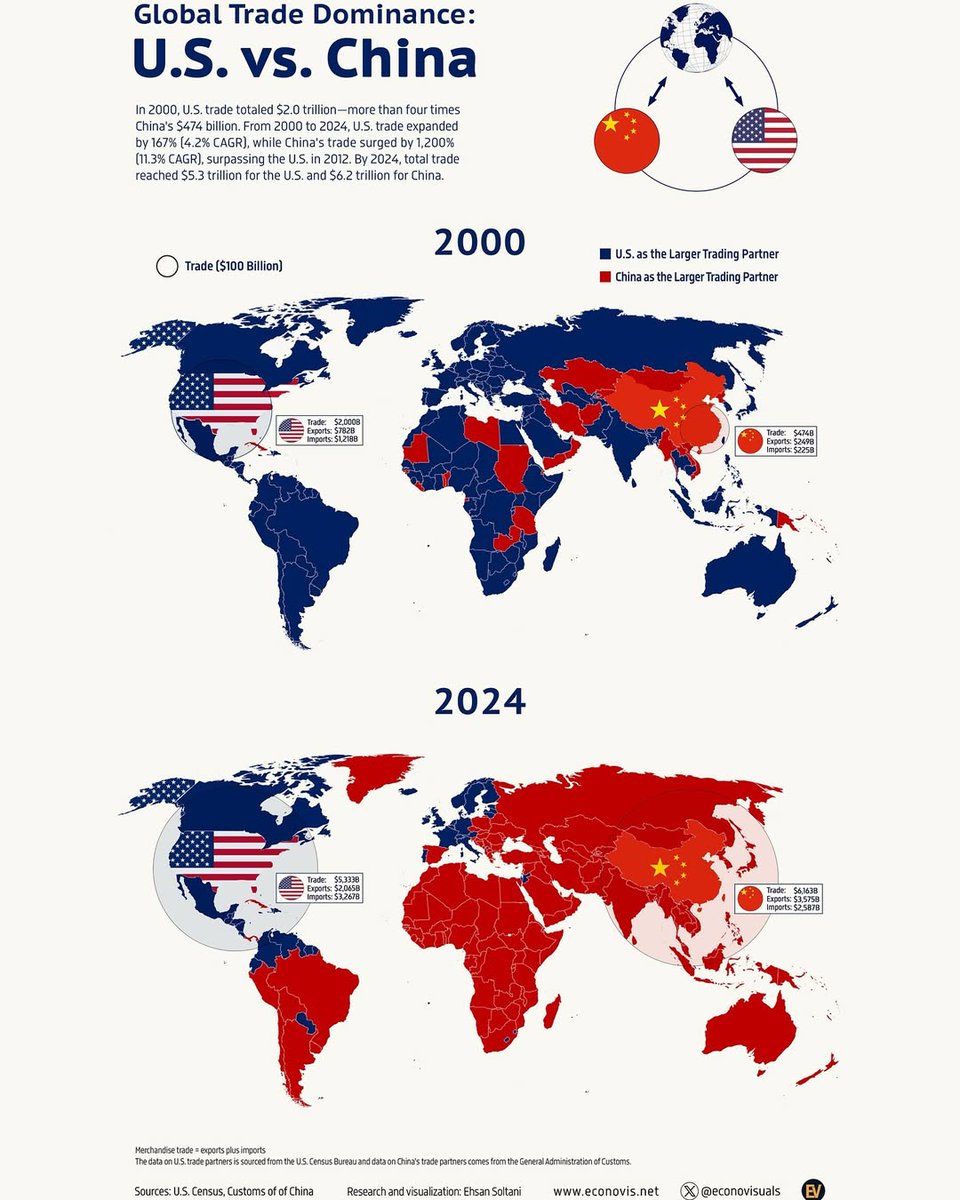
He has also handed a loaded gun to his perceived enemy, China, and his supposed ally Japan.
This matters in both cases, because he is engaged in the mother of all trade wars with China - and Japan wants a trade deal with him that would see it escape mega tariffs.
The loaded guns they have are their massive loans to the US government. Japan owns more than a trillion dollars of US Treasuries and China not much less.
If they were to sell those bonds, or even if they chose not to refinance maturing bonds, that could be a disaster for Trump. Because it could cause another potentially crippling spike in bond yields.
Here is the measure of Trump’s debacle.
He may well have trashed America’s single most important financial competitive advantage, namely that investors have traditionally bought the dollar and US Treasuries at a time of economic and political uncertainty.
No more - because he personally has become the world’s source of economic uncertainty snd anxiety.
So, as I say he, is now in a fiscal prison. And if bond investors, including Japan and China, see him imposing tariffs or cutting taxes in ways they don’t like, they learned yesterday they have the means and power to stop him.
Just left Ukraine. What I saw proved to me we can’t give up on the Ukrainian people. Everyone wants this war to end, but any agreement has to protect Ukraine’s security and can’t be a giveaway to Putin. Let me tell you about my trip and why it’s important we stand with Ukraine.🧵
ECB cut by another 0.25% noting that disinflation is still “well on track”, growing concern about growth and still seeing policy as restrictive. Ongoing 0.25% rate cuts are likely.