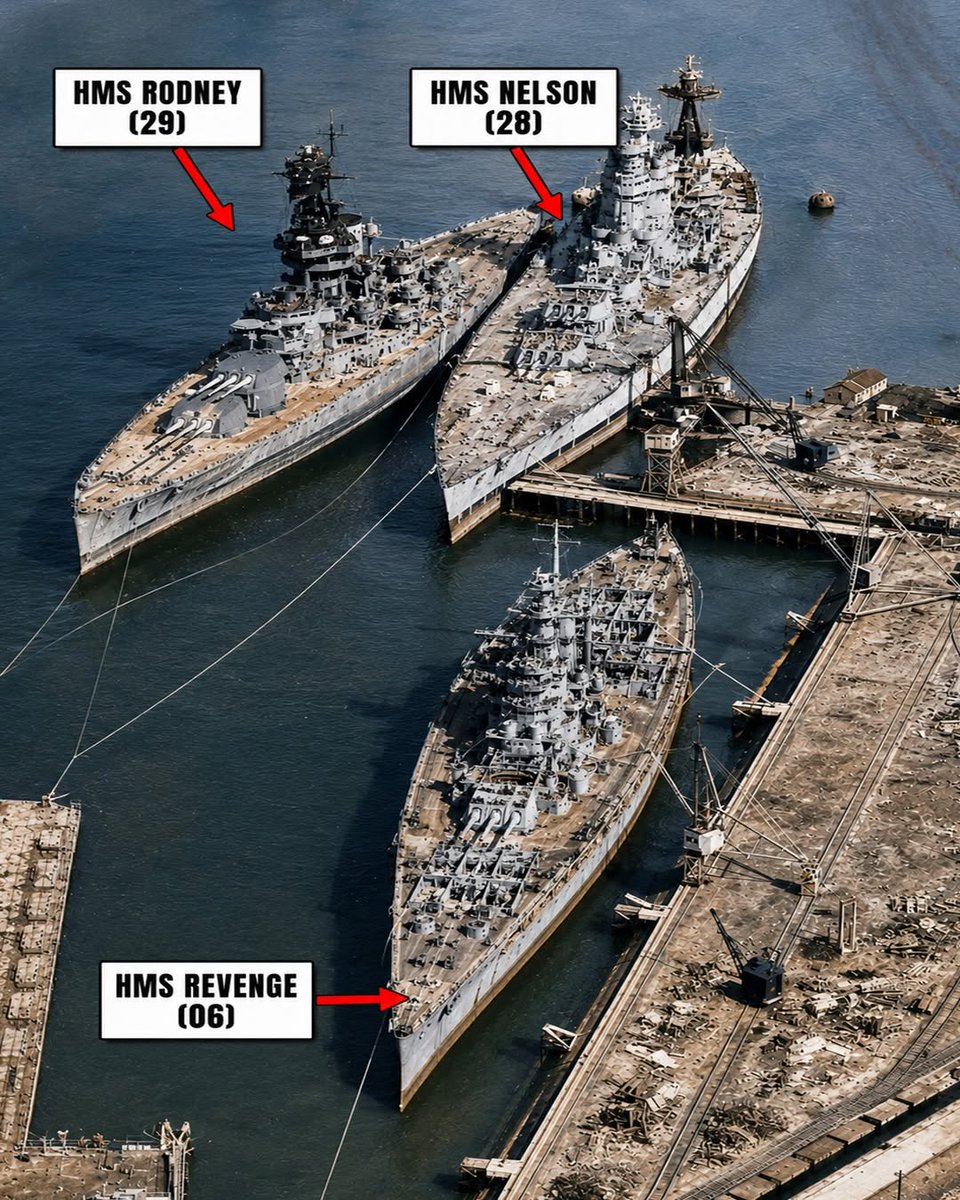
This historic photograph shows three legendary battleships of the Royal Navy—HMS Rodney, HMS Nelson, and HMS Revenge—being dismantled at the Thos W. Ward shipyard in Inverkeithing, Scotland, circa 1948.📷📷
After serving and playing a vital role during World War II, these iconic ships were eventually cut up for scrap. This sad sight marked the end of an era for some of the most famous warships in the history of the Royal Navy, now remembered only through photographs and historical archives.
The Ju 87 G "Kanonenvogel" turned an obsolete, sluggish dive bomber into one of the most lethal anti-tank weapons of World War II. Introduced on the Eastern Front in early 1943, this variant abandoned dive-bombing to counter overwhelming waves of Soviet armor. Engineers stripped the Stuka of its dive brakes and added two underwing 37 mm BK 3,7 autocannons firing tungsten-cored ammunition. The initial G-1 variant used converted D-3 airframes, while the definitive G-2 model featured an extended wingspan to help lift the heavy weaponry.
Operating the Kanonenvogel required exceptional skill because the massive gun pods crippled the aircraft's speed and maneuverability, leaving it highly vulnerable to ground fire and enemy fighters. Each cannon held just 12 rounds, forcing pilots to make precise, low-altitude passes targeting the thin rear and top armor of Soviet T-34 tanks. Despite these severe flight deficits and a tiny 24-round total payload, elite aces like Hans-Ulrich Rudel utilized the aircraft to claim hundreds of armor kills.