History's first trillionaire is a guy who catches rockets out of the sky with chopsticks and beams internet to every dead zone on the planet.
Same guy ships cars that drive themselves, humanoid robots for the factory floor, brain chips that let paralyzed people move a cursor with pure thought, and an AI running on a supercomputer his team stood up in months instead of years.
And the people crashing out about his net worth are doing it on the app he owns. The same app governments spent years trying to censor.
You cannot legislate a rocket into orbit.
20 years ago, An Inconvenient Truth put climate change at the center of global debate, shaping politics, influencing leaders, and inspiring a generation of activists.
Two decades later, we can assess not just its impact, but its accuracy. Many of the film’s most alarming predictions did not materialize, while many of the policies it inspired have proven costly and ineffective.
The lesson? Panic is a poor guide for public policy. Focusing on innovation, adaptation, and economic development can do far more to help both people and the climate—at a fraction of the cost.
https://t.co/EIJyuNeFU1
Too many still don't know this:
The neighborhoods hit on October 7th were full of peace activists. People who drove Gazans to Israeli hospitals. Who organized coexistence programs. Hamas murdered them first.
The audacity here is actually off the charts.
Return is a “Not-for-profit” funded by the public. They made €100m in year one.
This money stays on their balance sheet. It doesn’t go back to the State.
But €100m isn’t enough. They wanted tax exemptions too.
So using your money they hired a Fine Gael councillor to go and lobby his Fine Gael colleague who was Minister for State.
Both the councillor & Minister also paid entirely by you.
Throughout this chain of events Not a single extra euro in value was generated for the State.
No innovation,
No entrepreneurship
Just leeching & looting of the taxpayer.
Does anyone care ???
It’s pissed rain for 9 months solid. Half the country had their heating on last week, we get 4 days of sunshine during the ‘summer’ and now we have a bloody “heat dome???”
Then they wonder why the people of Ireland have lost all faith in our so called main stream media?
These lads are dangerous and have lost the bloody plot
Get out and have an ice cream ffs. The sun and heat dome are gone tomorrow
Time these weirdos got proper jobs and stopped trying to degrade Europe’s domestic food supply chains in the way they degraded Europe’s power production and industrial base.
🇮🇱🇵🇸 Hamas brought written instructions on how to rape their victims.
That's not speculation anymore, it's in today's "Silenced No More" report.
2 years. 430 testimonies. 10,000 images analyzed. Legal conclusion: it was systematic, deliberate, genocidal.
They filmed it, sent the footage to the families. Assaulted victims after death. Targeted faces specifically... to destroy what their families would bury.
The UN stalled for 2 years. Some academics still call the evidence thin.
1,800 hours of footage reviewed frame by frame disagrees.
Hamas used rape as written, distributed, coordinated strategy on October 7. That is now the legal, documented, unimpeachable record.
The question was never the evidence. What's the real reason for the delay?
Picture Ireland in 1987: unemployment at 17%, debt-to-GDP ratio pushing 120%, and young Irish workers fleeing to London and Boston faster than you could say "economic basket case." Finance Minister Ray MacSharry slashed government spending by 3% of GDP while dropping corporate tax rates to 10% for manufacturing (later extending it across sectors). Brussels bureaucrats screamed about "unfair competition," but MacSharry kept cutting.
By 1994, something extraordinary happened. GDP growth hit 5.8% annually, then accelerated to over 10% by 1999 (try explaining that with Keynesian multipliers). Foreign direct investment poured in as companies like Intel, Microsoft, and Pfizer set up European headquarters in Dublin, creating actual productive jobs instead of government make-work programs. The Irish called it the Celtic Tiger, and suddenly emigration reversed into immigration.
The formula was blindingly simple: slash bureaucracy, cut taxes, get out of entrepreneurs' way. Estonia used the same playbook after leaving the Soviet Union. Hong Kong became an economic powerhouse when it was still a British colony using the same principles. Yet today's politicians act like Ireland's transformation was some mystical accident rather than predictable market forces unleashed by government restraint.
Of course, Ireland later screwed it up by joining the euro and letting banks leverage themselves into oblivion during the housing bubble (because politicians can never leave well enough alone). But for one glorious decade, they proved what happens when you stop trying to manage an economy and just let people create wealth.
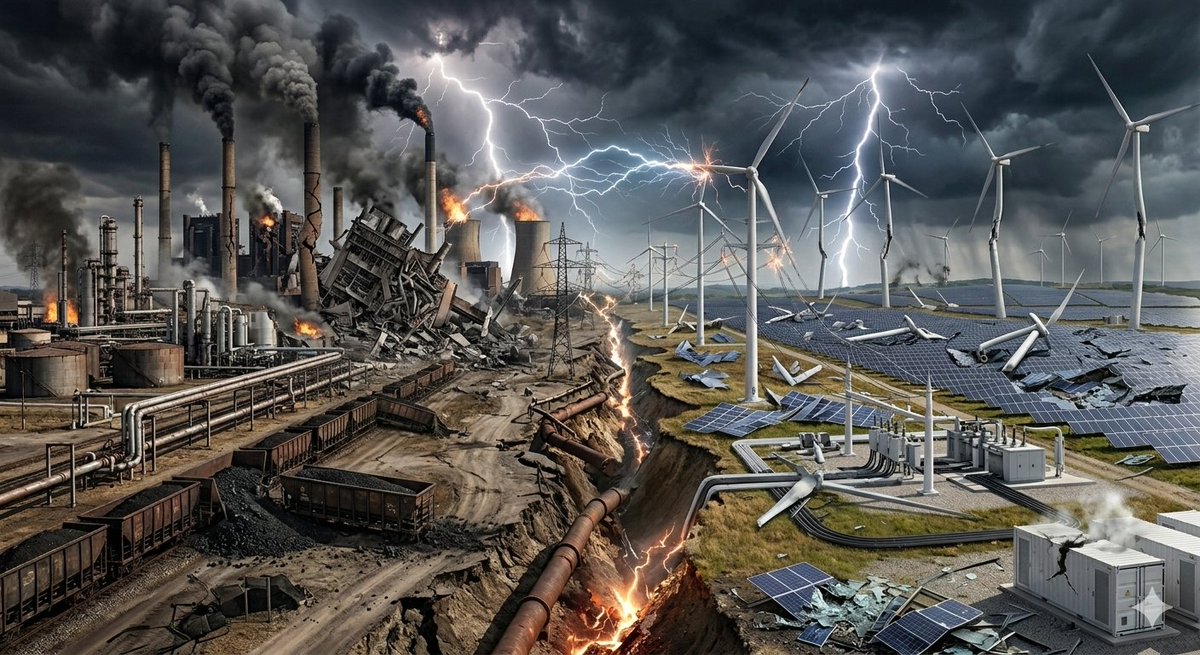
If wind and solar were truly economically and engineeringly superior to fossil fuels, we wouldn’t be talking about a transition.
We would be witnessing a wholesale acceptance.
Think back to the great energy shifts of the past. We didn’t need global treaties to move from wood to coal, or from whale oil to kerosene. We didn’t need to demonise the forest to convince people to use a coal stove. The market moved because the new energy source offered higher energy density, lower cost and greater reliability.
If renewables really were the 'cheapest form of energy' in town, as the narrative argues black and blue, the market would have pivoted years ago without a single subsidy. Capital investment always flows toward efficiency.
Instead, we see persistent intermittency. We see huge, costly wind and solar arrays lying dormant when the winds are still, on cloudy days and at night. Only an ongoing dependence on coal, oil, and gas keeps the lights on. That is not a business plan.
Without a massive, currently non-existent method for long-duration storage, wind and solar remain an adjunct to the grid - not the solution. We are essentially building two parallel grids: one for wind and sun, and a ghostly 'shadow grid' of coal and gas. This is the definition of engineering failure.
The campaign to demonise CO2 served one function: when a product cannot compete on its own merits, you change the rules of the game. If you can’t make the new technology cheaper, you make existing technology illegal.
True progress doesn't require a code red crisis to crush debate. It proves itself by providing energy and grid stability from Day 1. If renewables worked as advertised, the transition would be over in a week.
Instead, we're being told to sacrifice national sovereignty, energy security, and our industrial base - trading away jobs for a flawed system that cannot survive for a day without a backup plan.
This single experiment has completely dismantled the progressive approach to crime.
Public safety matters. And it isn’t achieved by coddling criminals or handing them endless second chances.
Once serious offenders were taken off the streets, the country began seeing real progress across multiple areas.
Standing with victims rather than perpetrators is simply better for society.
46 wetenschappers van het IPCC hebben hun ontslag genomen.
De reden?
Omdat er niet naar hen geluisterd wordt, omdat hun meningen afwijken van het gangbare verhaal!
Maar geloof me niet zomaar op mijn woord, hier zijn hun verklaringen:
Dr. Robert Balling: Het IPCC merkt op dat "er geen significante versnelling van de zeespiegelstijging in de 20e eeuw is waargenomen." Dit stond niet in de IPCC-samenvatting voor beleidsmakers.
Dr. Lucka Bogataj: "Stijgende concentraties koolstofdioxide in de atmosfeer veroorzaken geen wereldwijde temperatuurstijging... eerst veranderde de temperatuur en zo'n 700 jaar later volgde een verandering in de hoeveelheid koolstofdioxide in de atmosfeer."
Dr. John Christy: "Wat weinig mensen weten, is dat de meeste wetenschappers die bij het IPCC betrokken zijn, het er niet over eens zijn dat er sprake is van klimaatverandering. De bevindingen van het IPCC zijn in elk opeenvolgend rapport steevast verkeerd voorgesteld en/of gepolitiseerd."
Dr. Rosa Compagnucci: "De mens heeft slechts een paar tienden van een graad bijgedragen aan de opwarming van de aarde. Zonneactiviteit is een belangrijke drijvende kracht achter het klimaat."
Dr. Richard Courtney: "Het empirische bewijs wijst er sterk op dat de hypothese van door de mens veroorzaakte opwarming van de aarde onjuist is."
Dr. Judith Curry: "Ik ga niet zomaar mijn mening geven en het IPCC steunen, want ik heb geen vertrouwen in het proces."
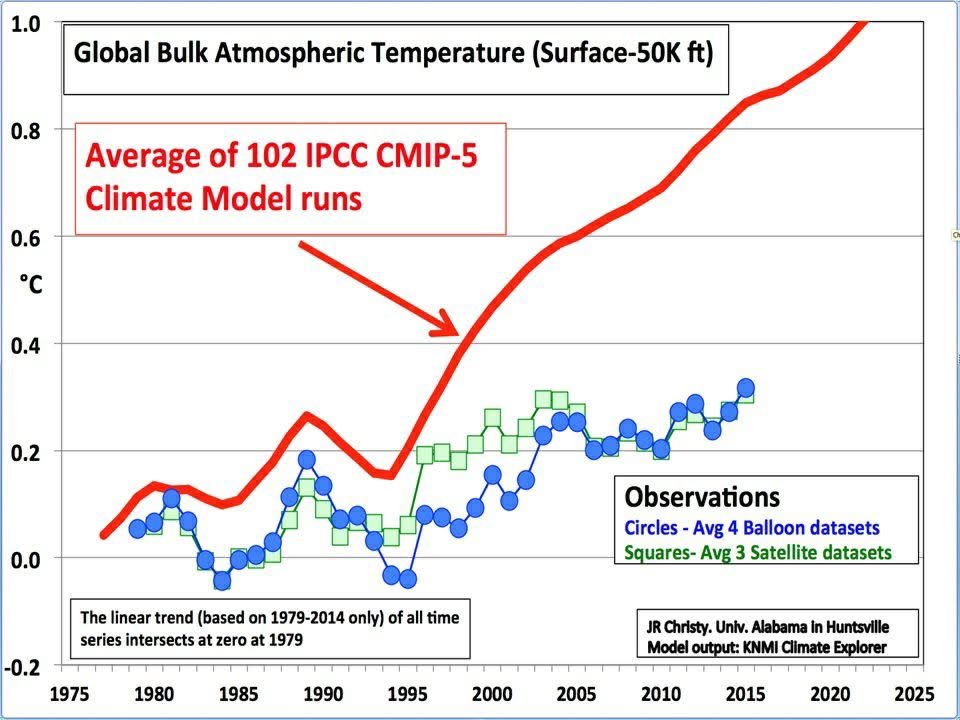
Dr. Robert Davis: "De wereldwijde temperaturen veranderen niet zoals de meest geavanceerde klimaatmodellen voorspelden. In de samenvatting van het IPCC voor beleidsmakers wordt geen enkele keer melding gemaakt van temperatuurmetingen via satellieten."
Dr. Willem de Lange: “In 1996 noemde het IPCC mij als een van de circa 3000 ‘wetenschappers’ die het erover eens waren dat er een aantoonbare menselijke invloed op het klimaat bestaat. Dat was ik niet. Er is geen bewijs dat de hypothese ondersteunt dat een ongecontroleerde, catastrofale klimaatverandering het gevolg is van menselijke activiteiten.”
Dr. Chris de Freitas: "Besluitvormers binnen de overheid zouden inmiddels moeten weten dat de basis voor de aloude bewering dat koolstofdioxide een belangrijke drijvende kracht achter het wereldwijde klimaat is, ter discussie staat; en daarmee ook de tot nu toe aangenomen noodzaak van kostbare maatregelen om de uitstoot van koolstofdioxide te beperken. Als ze het niet weten, komt dat door het lawaai van de klimaathysterie, die gebaseerd is op de drogreden van 'argumenten uit onwetendheid' en voorspellingen van computermodellen."
Dr. Oliver Frauenfeld: "Er is nog veel meer vooruitgang nodig met betrekking tot ons huidige begrip van het klimaat en onze mogelijkheden om het te modelleren."
Dr. Peter Dietze: "Door gebruik te maken van een gebrekkig werveldiffusiemodel heeft het IPCC de toekomstige opname van koolstofdioxide door de oceanen ernstig onderschat."
Dr. John Everett: "Het is tijd voor een realiteitscheck. De oceanen en kustgebieden zijn veel warmer en kouder geweest dan wordt voorspeld in de huidige klimaatveranderingsscenario's. Ik heb het IPCC en recentere wetenschappelijke literatuur bestudeerd en ben van mening dat er geen probleem is met toenemende verzuring, zelfs niet tot de onwaarschijnlijke niveaus in de meest gebruikte IPCC-scenario's."
Dan O’Brien is absolutely right. Ireland’s hard-working families and businesses are being hammered by crisis-era taxes that were never unwound, even as revenues have tripled and the public payroll and social spending have exploded by tens of billions with precious little to show for it in services or value for money.
This is fiscal madness dressed up as “fairness.” It’s time we, who are gouged for it, stopped accepting it. We must fight, and fight hard, for serious, structural tax cuts in Ireland now; lower rates, real reform, and an end to the tax-and-spend culture that is holding Ireland back. Enough is enough.
Your brain has a circuit that doesn't know you live in a city. Its only job is to monitor whether birds are still singing. Right now, in this room, it is on.
The circuit predates primates. Mammals have been using ambient soundscape continuity as a predator-detection system for roughly 200 million years. Birds stop singing when something larger moves through their territory. For most of mammalian history, a forest full of song meant no large predator was nearby, and the cessation of sound was the warning. Your nervous system never updated this software.
The Max Planck Institute tested the inverse in 2022 with 295 participants. Six minutes of birdsong dropped anxiety with a medium effect size. Six minutes of traffic noise raised depression with the same. The effect worked on subjects who lived in dense urban environments and had no regular contact with nature. The brain still ran the check.
Birdsong sits in the 1,000 to 8,000 Hz range. Your brainstem reads continuous patterns in that band as a signal that nothing dangerous is currently moving through the environment. EEG data shows birdsong at 45 to 50 decibels boosts alpha wave activity by 14.1% relative to silence. Alpha is the brainwave signature of relaxed alertness. Push the same birdsong above 60 decibels and the response flips. Stress markers rise 29%. The circuit only trusts the signal at the volume of quiet conversation, which is exactly the volume birds sing at from a typical distance.
Three things happen simultaneously when the brain registers ambient safety. The amygdala downregulates. The parasympathetic nervous system takes over from the sympathetic. Heart rate variability rises, cortisol drops. The posterior cingulate cortex, which sits at the center of the rumination circuit, quiets down. King's College London tracked this through a smartphone study with over 1,200 participants and found the mood lift lasted hours after the sound stopped. People diagnosed with depression got the same response as healthy controls.
Most of what gets labeled mental fatigue is hypervigilance running in the background. Birdsong tells the circuit it can stand down, and the brain reallocates the freed compute everywhere else.
A quiet park feels different from a quiet office because the parks have sentinels.
Basit ve güzel bir anlatımla " tüm çokgenlerin dış açılarının toplamının neden 360 derce olduğunun ispatı. Hiç bir çocuk bu şekilde anlatıldığında bunu unutmaz.
Soviet chandelier factories received production quotas measured in tons, not quality or function. Factory managers responded rationally to the incentive structure: they packed chandeliers with extra metal, concrete, and lead weights to hit their tonnage targets. The heavier the chandelier, the better their performance metrics looked to central planners in Moscow.
Apartment dwellers across the USSR paid the price. Chandeliers weighing hundreds of pounds crashed through ceilings, destroying furniture and injuring families below. Reports from the 1970s and 1980s document dozens of ceiling collapses in Kiev, Leningrad, and Moscow as these industrial monstrosities proved too heavy for residential construction. Factory managers got their bonuses while citizens dodged falling light fixtures.
The system worked exactly as designed. When you divorce production decisions from market prices and consumer preferences, you get perverse outcomes. Central planners measured success through crude metrics they could track from their desks, not through the satisfaction of end users. Factory managers optimized for the measurement system, not for making chandeliers that actually functioned as lighting.
You see identical dynamics today wherever bureaucrats substitute their judgment for market mechanisms. Public school systems optimize for standardized test scores rather than education. Hospitals game Medicare reimbursement codes rather than focus on patient outcomes. Police departments chase arrest quotas rather than reducing crime. The Soviet chandelier problem lives on in every corner of the administrative state.
The market solves the chandelier problem instantly through profit and loss. Customers refuse to buy chandeliers that destroy their homes, driving bad producers out of business and rewarding those who build functional products.
🧵 THREAD
1/ Your daughter posts something online.
She is 19. In college. Trying to figure out what she believes. She shares a political opinion that an algorithm flags as problematic.
You do not see it happen. No one notifies you. No one tells her.
But 72 hours later, her bank account is frozen. Her student loans are suspended. Her digital ID shows a compliance violation.
And there is nothing you can do to protect her.
A parasite that has been eating people for 3,500 years is about to be wiped off the planet. It infected 3.5 million people in 1986. Last year, it infected 10. And I have not seen it make a single front page.
It is called Guinea worm. You drink contaminated water from a pond in a poor village. A year later, a worm up to three feet long starts coming out of your leg through a burning blister. There is no pill that stops it and no surgery that works. You wrap the worm around a stick and pull it out slowly, over days or weeks, inch by inch. If you rush, the worm breaks inside you and causes a fresh infection.
Guinea worm is ancient. Preserved worms have been pulled out of Egyptian mummies from around 1000 BCE. The Ebers Papyrus, an Egyptian medical scroll from 1550 BCE, describes pulling the worm out with a stick. For three and a half thousand years, that was the best humans could do.
Then in 1986, public health workers decided to kill the parasite off. They had no vaccine and no drug. What they had was cheap cloth water filters and a small army of volunteers willing to walk from village to village for decades.
The plan was simple. Give everyone who drinks from a pond a cloth filter to strain out the tiny water fleas that spread the parasite. Then send volunteers walking house to house, year after year, teaching people how to use the filters and keeping anyone with an emerging worm out of the water.
It worked. From 3.5 million cases a year to 10. Four were in Chad, four in Ethiopia, two in South Sudan. The other four countries where the worm used to be common, Angola, Cameroon, the Central African Republic, and Mali, had zero human cases for the second year in a row. The World Health Organization has already certified 200 countries as Guinea worm free. Six are left.
The last hurdle is dogs. Cameroon had 445 infected animals last year and Chad had 147, so a lot of the remaining work is on animals, not humans. Strays get leashed, and crews treat ponds to kill any remaining worms. The campaign keeps watching until the number hits zero.
When Guinea worm hits zero, it becomes the second human disease ever erased from the planet. The first was smallpox. It will also be the first parasite humans have ever wiped out, and the first disease ever ended without a single dose of medicine. Volunteers walked village to village with cloth filters for 40 years. Now a plague from the age of the pharaohs is about to be gone.