A central mistake in biology was to name genes.
This over-simplification made reconciling what is happening on the molecular level a mess - it's not rare to find reports of opposite mechanisms in different contexts, claimed involvement in dozens if not hundreds of different processes, sometimes inhibiting and sometimes amplifying and most of the time being oblivious to the potential for sequence-level variation.
Nobody would be surprised about this diversity of findings if we instead recognized genes as (sometimes quite lengthy and complex) pieces of sequence that carry state and interact with and are interpreted by their environment - often producing dozens of gene products that are in turn themselves context-dependent and modulated. Naturally, such a highly amorphous composition of objects has many diverse effects, and masking this complexity behind a single name more often than not ends up being a harmful abstraction.
The primary role of gene names then is to give us the false appearance of comfort in the face of enormous biological complexity.
One under-appreciated potential of the emergence of AI tools in biology is to undo this mistake, and - instead of assuming it away - extend our ability to lean further into this complexity.
An analysis of around 1,500 blood proteins has identified biomarkers that can be used to predict the risk of developing dementia up to 15 years before diagnosis https://t.co/onY8zQld0I
Here at @MU_CCFI_Biotech, to mark International Day of #WomenAndGirlsInScience we’re delighted to celebrate the achievements and contributions by female scientists worldwide – especially our own - each of whom are making amazing contributions to the future of global agriculture.
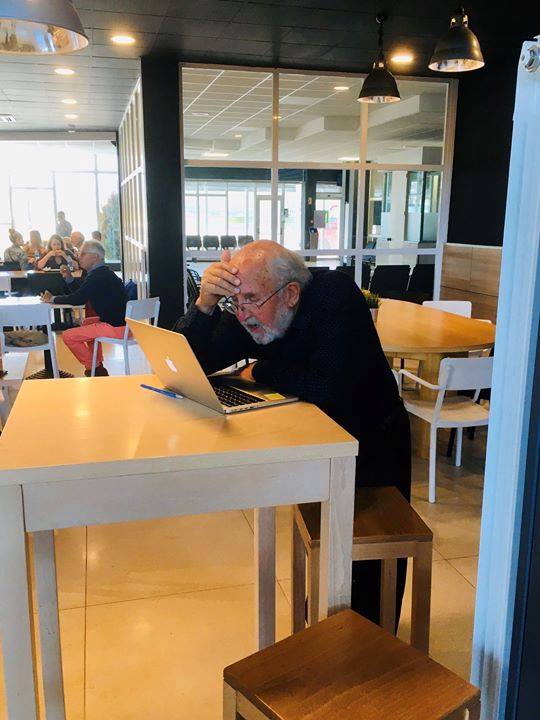
"Congratulations! Bing, bing, bing! Every five seconds you have a new email - incredible!"
2019 physics laureate Michel Mayor was heading home from Spain when he heard the news about his #NobelPrize.
Here he is in San Sebastian airport, watching the messages flooding in.
New Publication from @wheat_biology Lab
Entitled
“Transcriptome and biochemical analysis in hexaploid wheat with contrasting tolerance to iron deficiency pinpoints multi-layered molecular process” in Plant Physiology and Biochemistry (with IF 6.5)@DBTIndia
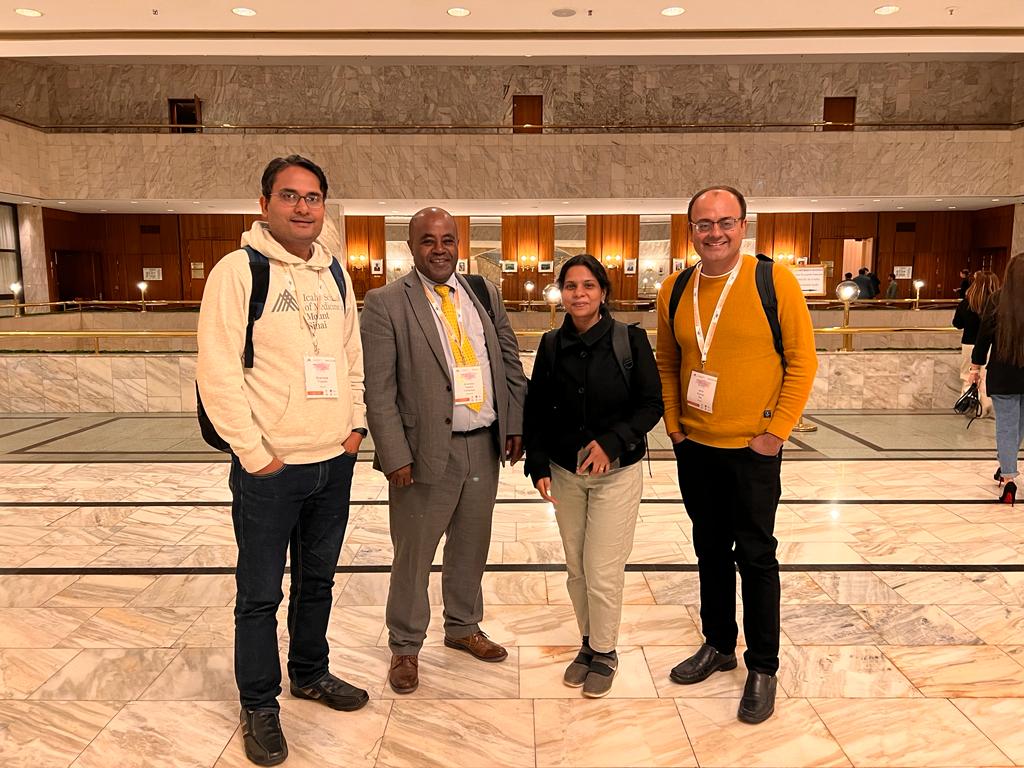
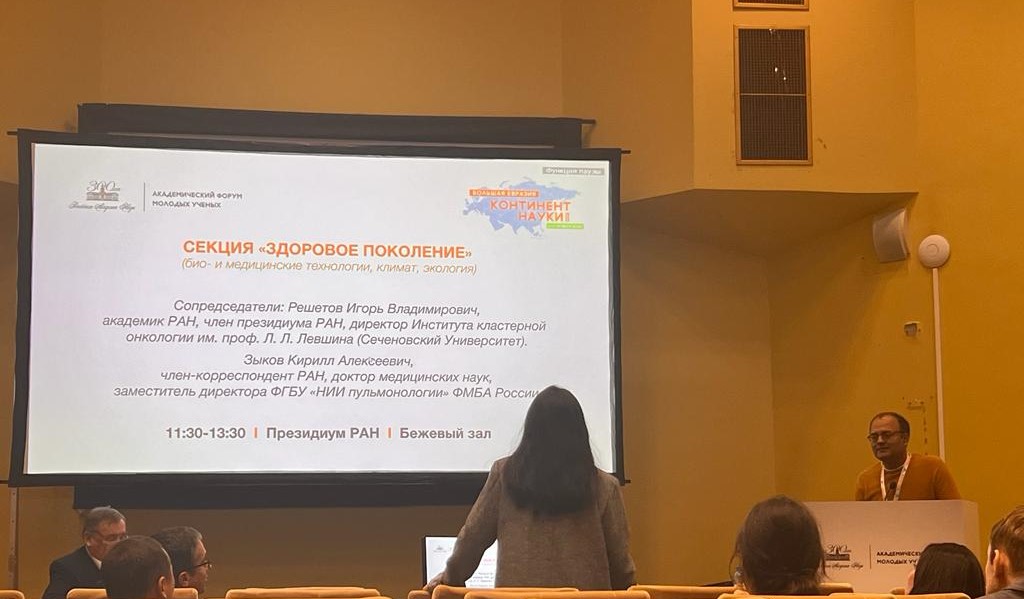
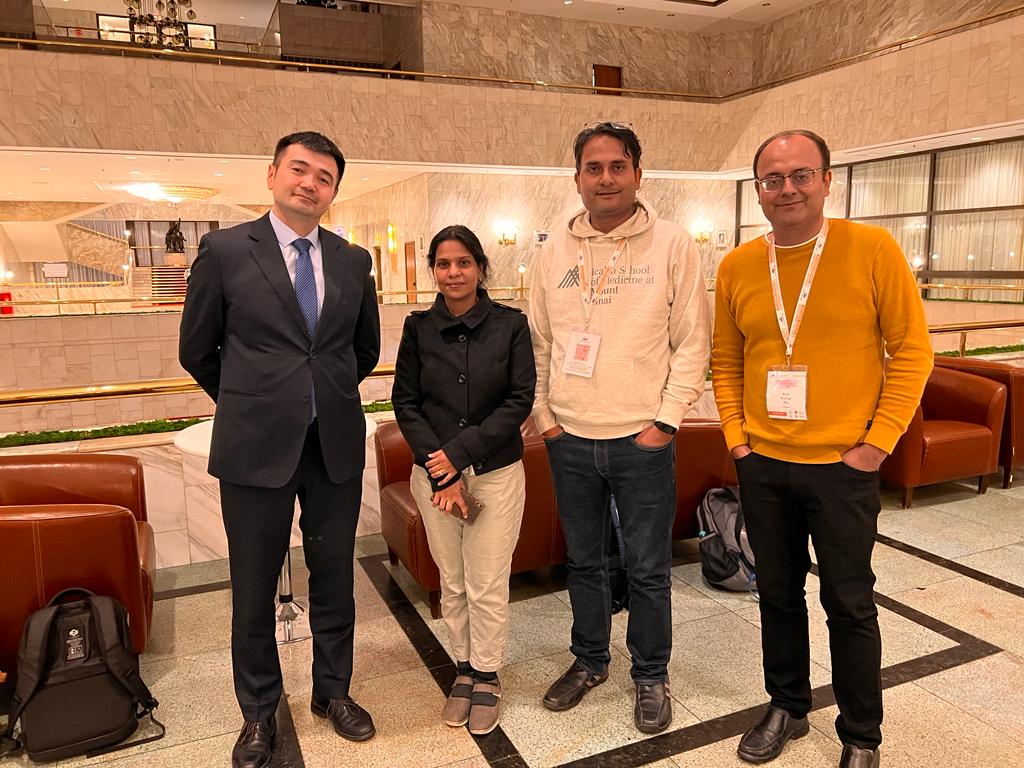
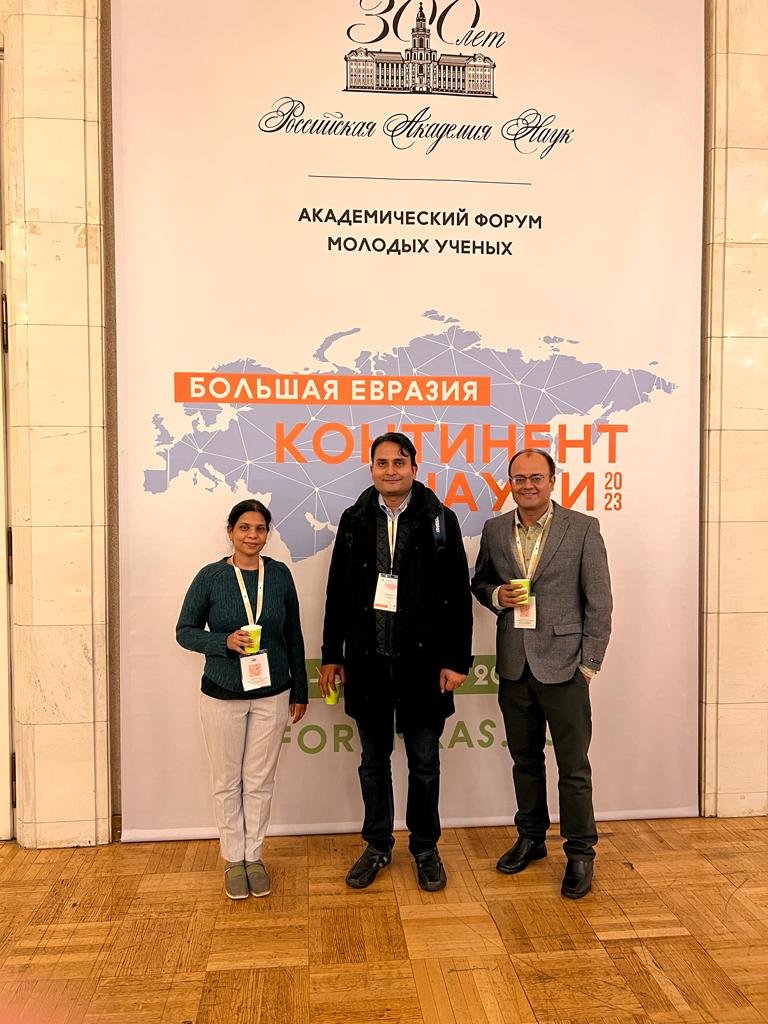
Dr. Amit Kumar Rai, Scientist-D, NABI, visited the Russian Academy of Science, Moscow, and attended "Forum of Young Scholars of the countries of Greater Eurasia" November 1-4, 2023 @DBTIndia
Today, a @US_FDA panel are discussing the first human trials of artificial womb technology.
In 2017, one of these systems sustained fetal lambs for up to 4 weeks.
Read more about the tech, which could reduce deaths and disability for preterm babies: https://t.co/nZh4EMHIKt
Your academic CV is NOT linked to your ability to make big discoveries.
▫️
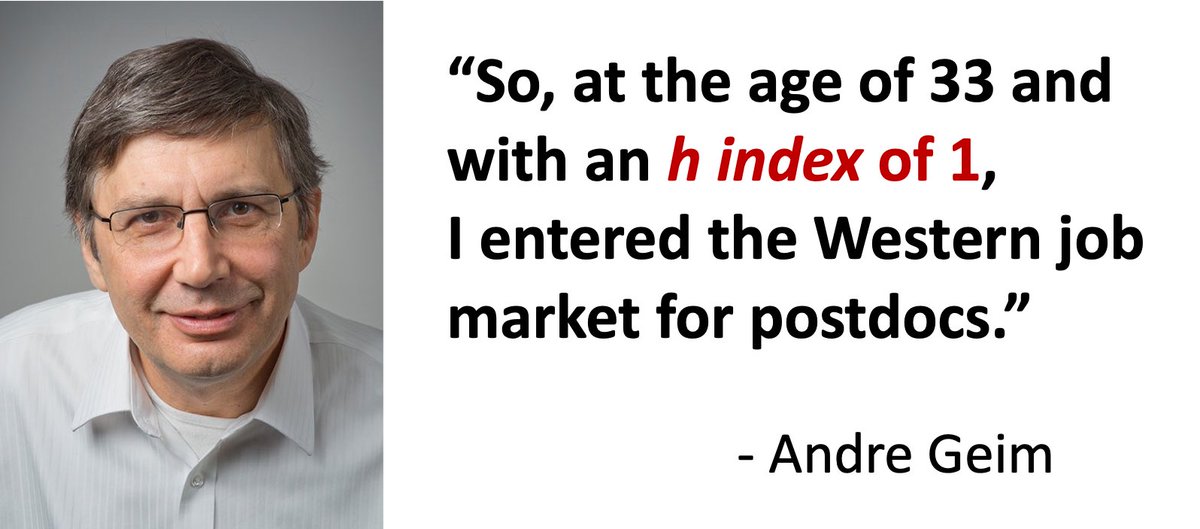
1. Andre Geim, a co-discoverer of graphene, wrote in his Nobel Lecture article:
- “So, at the age of 33 and with an h index of 1 (latest papers not yet published), I entered the Western job market for postdocs.”
2. Albert Einstein searched for a teaching position for two years. He had to accept a position at a Patent Office, where in a single year he wrote the four papers that completely revolutionized #science (the photoelectric effect, Brownian motion, special relativity, and E=mc2).
- Only few years later, he finally secured his first academic position as lecturer at the University of Bern.
▫️
Other examples include Peter Ratcliffe and Frances Arnold, who won Nobel Prizes for the discoveries they made as young PIs in newly established labs. And many others.
▫️
So, let us all keep in mind that:
1. Big discoveries are often unforeseen. They emerge from random and risky research (e.g. graphene was a tiny side project!). Make sure you have such projects in your lab.
2. Most truly impactful discoveries did not require high h-indices, excessive funding or a high-IF journal.
3. Rejection of your proposal does NOT mean it proposes bad science. Such rejections represent the opinion of one person who has a rather subjective idea of what ‘good science’ means.
4. For younger people, it’s easier to do risky research. Locking them to unnecessarily complex tenure requirements makes such discoveries unlikely.
▫️
A strong scientist is not defined by high “academic metrics”.
It is the ONE who proposes risky endeavors outside the conventional boundaries.
Who sees risk as an opportunity to make discoveries.
And who is constantly seeking out these risks in the lab.
#AcademicTwitter #AcademicChatter
NABI invites application for the 2nd Workshop on Genome Editing mediated by CRISPR/Cas9 : tools, experimental design and it’s application”
For details kindly visit
https://t.co/UTrZLb36c9
@DBTIndia@CIAB_India @AshwaniPareek10 @wheat_biology@siddharthDNA@nitsi79
Protein Shake – Molecular simulation of #aminoacids revealing their dynamic behaviour on nanoseconds time-scale. Video by @DJ_Biophys in 2nd place in video category @BiochemOxford Centenary Science Imaging Competition. More on https://t.co/wulH14F667 with
@MRC_LMS & @DrJohnAnkers
National Agri-Food Biotechnology Institute celebrated #WorldEnvironmentDay2023 with great enthusiasm by planting trees and nurturing the planet. Together, we can create a greener and healthier future! 🌍🌱🌿
@DBTIndia
@AshwaniPareek10
@CIAB_India
It's raining here in Perth 🌧️perfect weather to read our shared #plantbiotech paper. Authors discuss role of CRISPR-RNA to produce transgene-free and genetically stable plants in difficult-to-propagate and near-extinct species 🌿
Read freely here: https://t.co/YPAba2eUr0
Dr. Vijay Singh, Professor, University of Illinois Urbana-Champaign, Urbana, USA delivered a talk on “Largescale Lipid Production for Oleochemicals Industry in India" today at NABI, Mohali
@NABI_India
@AshwaniPareek10
@DBTIndia
Our paper on the discovery of a broadly conserved phosphorylation motif in GPCRs driving arrestin interaction & activation is now published in @MolecularCell.
Structural snapshots uncover a key phosphorylation motif in GPCRs driving β-arrestin activation https://t.co/BMAu6TCsWc