@1UltraMegaMAGA@OpenSourceZone The only thing that pisses me off, is it takes our crooked government to intervene and then they start to lower prices while oil goes up.
@SeanALarabee@LoneStarLegendX Agreed 100%. But much of our “news media” is sadly some type of paid agenda. Or if not paid, certainly still an agenda. We all owe each other and society, to do a little self thought and come to a sensible conclusion. Hard to do on days when everyone was to persuade an election.
@AndreasSteno Yeah, that the FED is overreactive at the wrong time everytime. Thats the only timing they’re ever spot on. Worst thing they could do is Hike into a supply shock when core is trending lower and so is the labor market. As much as they want to say it’s rocket solid. We all know BS
The bond market "collapse" as the reason why you should not buy stocks with record earnings and profit margins, strong global revisions and PMIs and tight credit spreads may be one of the best marketing jobs ever. Despite all the "scary" charts you have seen of 30y yields around the globe, here is the total return YTD (-3%) of 20+ year TLT ETF. Btw, 30y JGB yields broke to new all time highs in May 2025. Nikkei is up 70% since that day. NVDA also about to make new all time highs after the selloff post earnings.
@SeanALarabee@LoneStarLegendX I agree, but demand is a stretch. We’re all entitled to have an option and talking point, if it defers from mine, I don’t in-turn say they’re demanding me to have another opinion. I just say they’re an idiot when they’re being idiots, and best of luck out in the world. Simple.
@TheLongInvest Bro shut up already. Change your handled to some bullshit political nonsense, since that’s all you seem to talk about now. The long complainer
Remember that time a dude disguised as a police officer assassinated the only Minnesota state Dem who voted against welfare for illegal immigrants and told the cops that Tim Walz told him to do it?...
That was wild, huh?
The Fed should not tighten into an oil shock
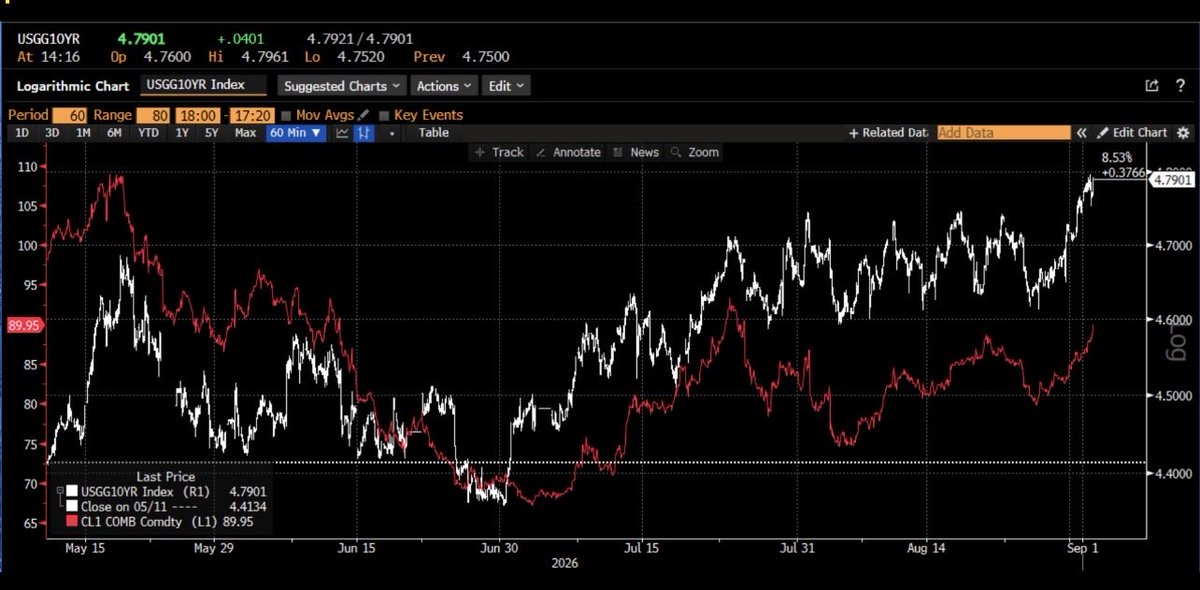
Oil is rising because the Iran crisis is not going away. The bond market has responded predictably: higher crude, higher inflation expectations, higher 10-year Treasury yields. From there comes the familiar conclusion: the Federal Reserve must stay hawkish, perhaps even resume rate hikes.
That conclusion is wrong.
An oil shock is not evidence of excessive domestic demand. It is an externally imposed tax on the economy. It reduces household purchasing power, raises transport and input costs, compresses corporate margins and curbs consumption. The inflation impulse is immediate; the damage to growth follows soon after.
This is why monetary policy should not mechanically react to a jump in headline inflation. The Fed cannot drill for oil, secure shipping lanes or resolve a geopolitical crisis. What it can do is weaken housing, capital spending and hiring. Raising rates in response to an energy supply shock would not lower the price of crude. It would simply add a domestic demand shock to an external supply shock.
The data already counsel restraint. The latest revision to the JOLTS figures points to a weakening labour market. Core PCE inflation remains tame. These are not conditions that demand another round of monetary punishment.
Yet parts of Wall Street, and apparently some within the Fed, remain eager to revive the hiking narrative.
The explanation is partly psychological. The inflation trauma of the 1970s has created a bias towards overreaction: every increase in petrol prices is treated as the first step towards an inflationary spiral.
But this is not the 1970s. There is no broad wage indexation, no evidence of uncontrolled core inflation and no clear sign that inflation expectations have become unanchored.
The more plausible risk is that consumers, already facing expensive credit and higher living costs, pull back.
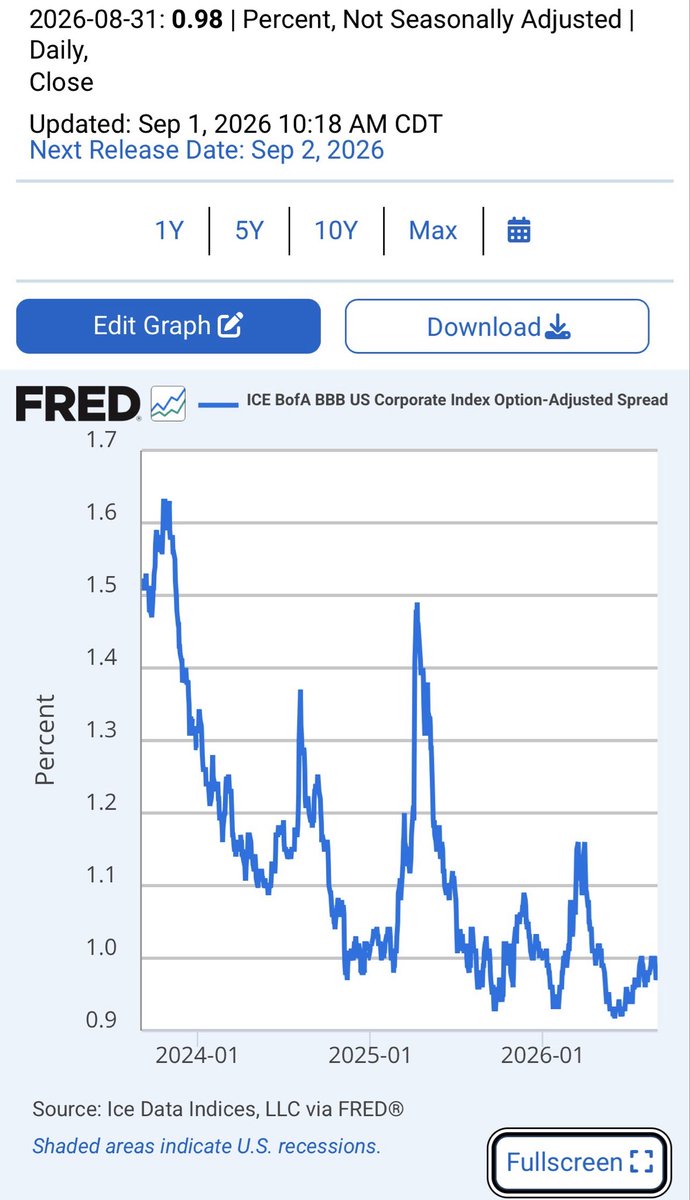
Credit markets are not yet flashing alarm. BBB option-adjusted spreads remain low, suggesting investors see limited immediate distress. But that is hardly an argument to test the system with more rate hikes. It is a sign that financial conditions have not yet cracked, not that they cannot.
The Fed should resist the temptation to validate the bond market’s crude inflation story. Oil is a growth shock dressed up as inflation. Treating it as a reason to tighten would be policy error masquerading as prudence.