Fresh fresh! In #PLOSONE!
In Chilean Patagonia, land-sea connections are important in structuring marine communities. This is recognized in indigenous knowledge of the Kawésqar, and is strongly supported by our scientific findings. @NG_PristineSeas
https://t.co/QetTP0PH78
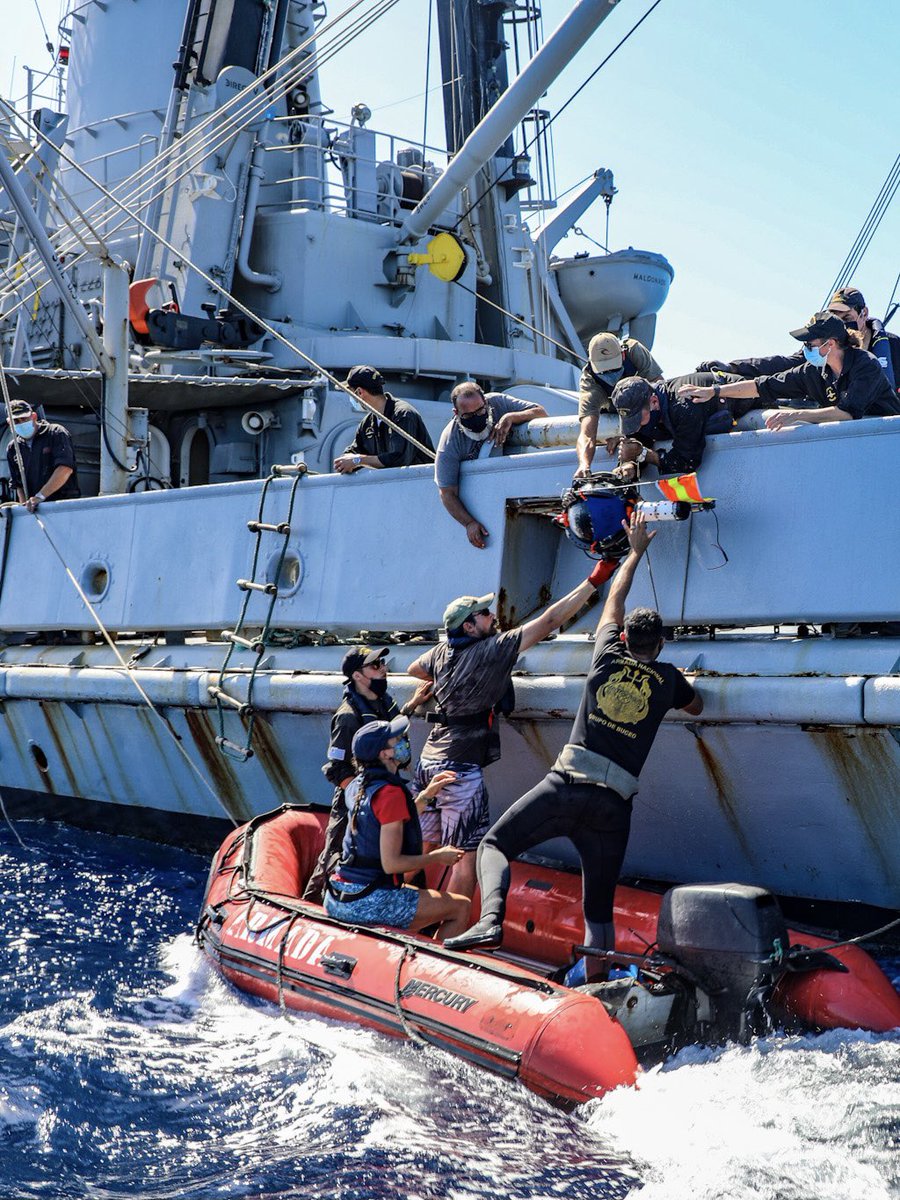
Now that we’re safely back on land, it’s time to begin our analysis & compilation of the recorded data. We are grateful to the scientists, filmmakers, & sailors aboard the ROU 23 Maldonado, whose camaraderie, hard work, and collaboration are an inspiration for ocean conservation.
The ocean in Uruguay is home to many incredible marine species, and we were thrilled to see some of them—including sharks—during our expedition. Our observations suggest that Uruguay has an extraordinarily rich marine ecosystem where threatened species live, reproduce, and feed.
Working 100 miles off Uruguay's coast, we employed remote cameras to study the marine ecosystem. Our deep sea cameras ventured down to Uruguay’s seafloor, as deep as 1400m, recording footage we’ll use to identify fish and invertebrates and determine their abundance and diversity.
La semana pasada, @NG_PristineSeas lanzó su primera expedición a Uruguay con @occuruguay a bordo de ROU 23 Maldonado. Se realizaron los primeros estudios científicos para respaldar la creación de nuevas reservas marinas. En próximos días, compartiremos los mejores momentos 💪🏼🌊
Last week, we launched our first expedition to Uruguay, with @occuruguay on board the ROU 23 Maldonado. We conducted first-in-the-field scientific studies to support the creation of new marine reserves. Over the next few days, we'll share great moments from the expedition.
¡Gracias Uruguay! Esta primera expedición de NatGeo al mar uruguayo fue un éxito gracias a la colaboración de la Armada, instituciones públicas, científicos y sociedad civil. Continuaremos este trabajo para apoyarles en la creación de nuevas reservas marinas. @NG_PristineSeas
Congratulations to team members @Enric_Sala, @juan_s_mayorga, @adventurewhit, and Alan Friedlander for the release of a new study in @nature that provides a blueprint for protecting the ocean for biodiversity, food, and climate. https://t.co/l5eSU0vPNP
A new study published on @Nature finds that strategically protecting at least 30% of the ocean could increase biodiversity, boost seafood production, and reduce carbon emissions. #30x30#CampaignForNature
https://t.co/vMfeUV41OT
Published today in @nature! Our global study to prioritize areas for #marineprotection, based on three pillars: biodiversity, food provisioning (fishery catch), and climate-relevant carbon storage. Benefits can be optimized!
https://t.co/9sCkx4fgK0
The ocean can be protected to benefit biodiversity, fishery catch, AND climate change objectives. Our study, published today in @nature, shows how global coordination of ocean protection can optimize outcomes across different goals.
https://t.co/vtCo39IsAg
When we protect the ocean, everyone benefits. In a new study published in @nature, my colleagues and I found that ocean protections not only support biodiversity but also boost fisheries and help the climate. https://t.co/4hKfv13HMD
👩🏼💻 I made it to @nature@NatureCareers in a really unexpected way!
📚Make good use of technology when doing literature reviews:
https://t.co/Ad11sueyIo
💻 If you fancy trying the code yourself or suggesting new ideas, check the GitHub repo here: https://t.co/iI5th6QZBY
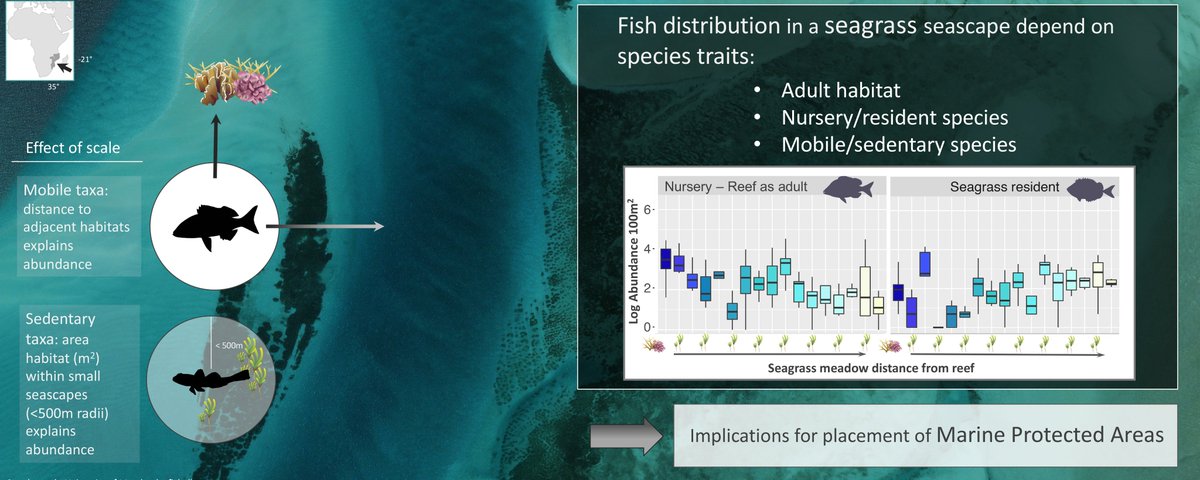
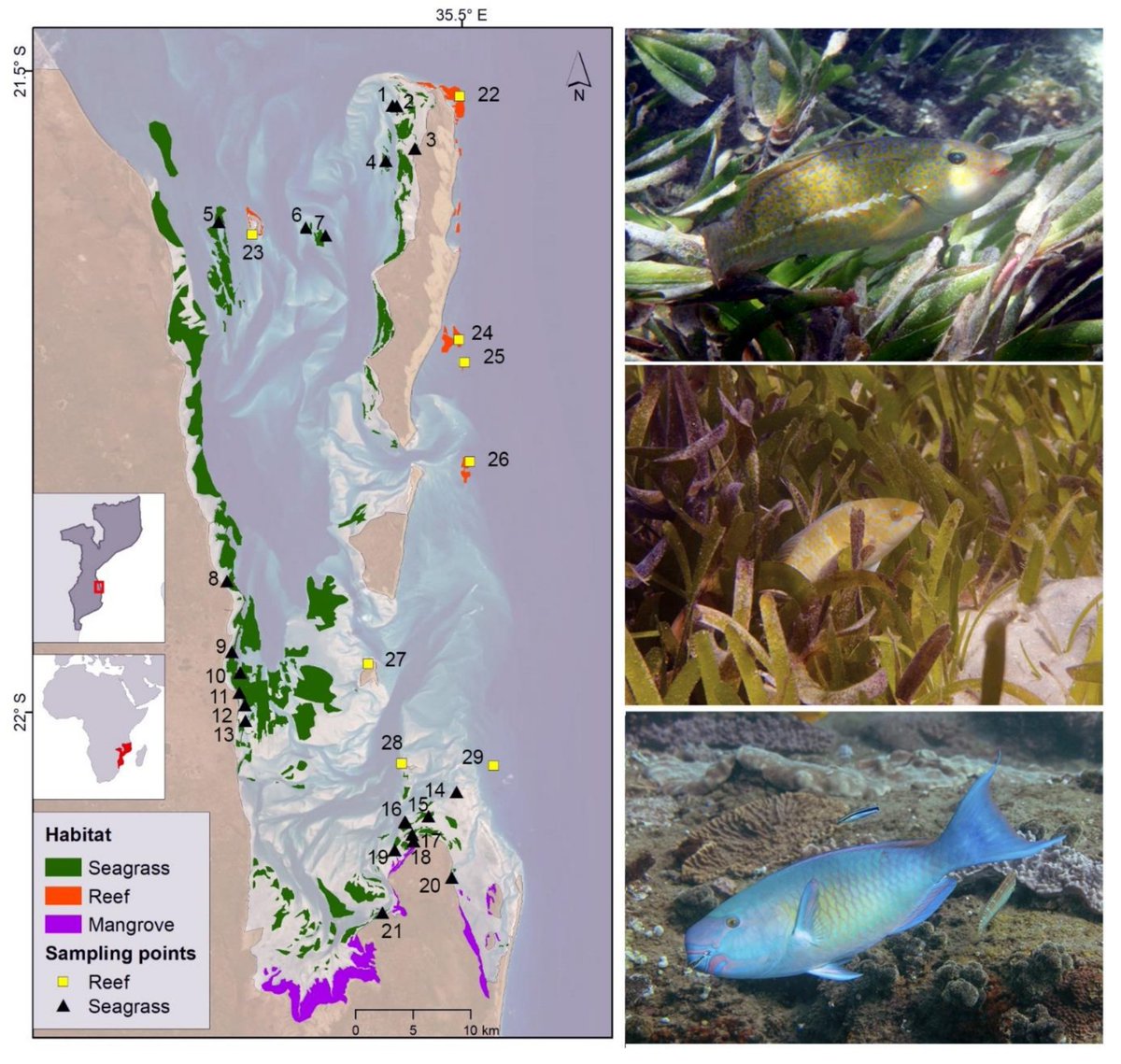
We followed parrotfish and watched them eat! Out this week, #openaccess in #Diversity: fish's ecological function varies across a seascape, influenced by life history and habitat configuration.
#WIO#seascape#fishecology#bazaruto#mozambique
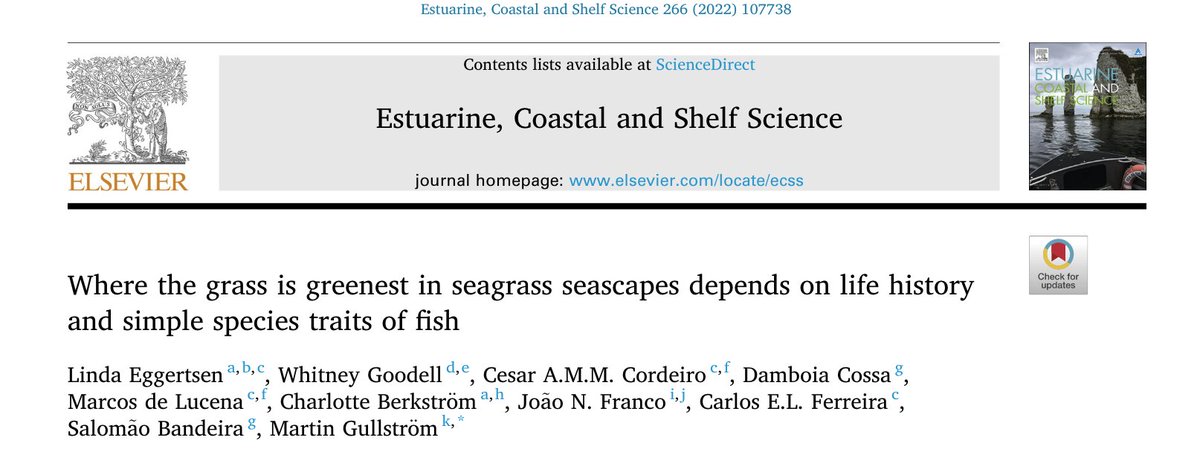
Paper here: https://t.co/wm3UDq339W