Fostering the Role of Economists in Uganda's Growth and Development | X community: Uganda Economics Society | E-mail Us: [email protected] | Use #aeaug
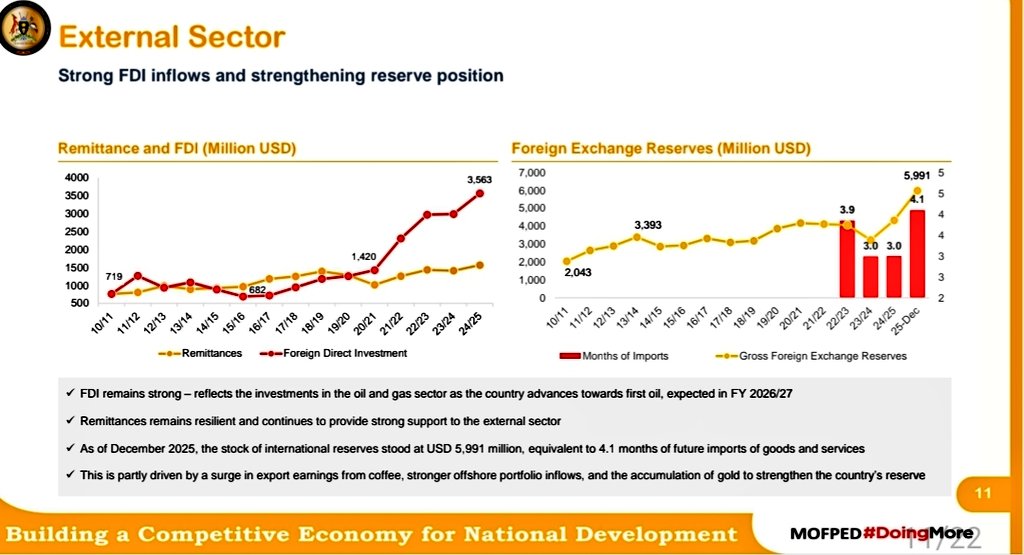
Interesting summary for FY 2026/27, my key figures are follows:
1. 84.39 trillion, an overall total significantly increasing from the previous 72 trillions. This portrays the spending levels required to grow the economy nominally to USD 500 billion by 2040.
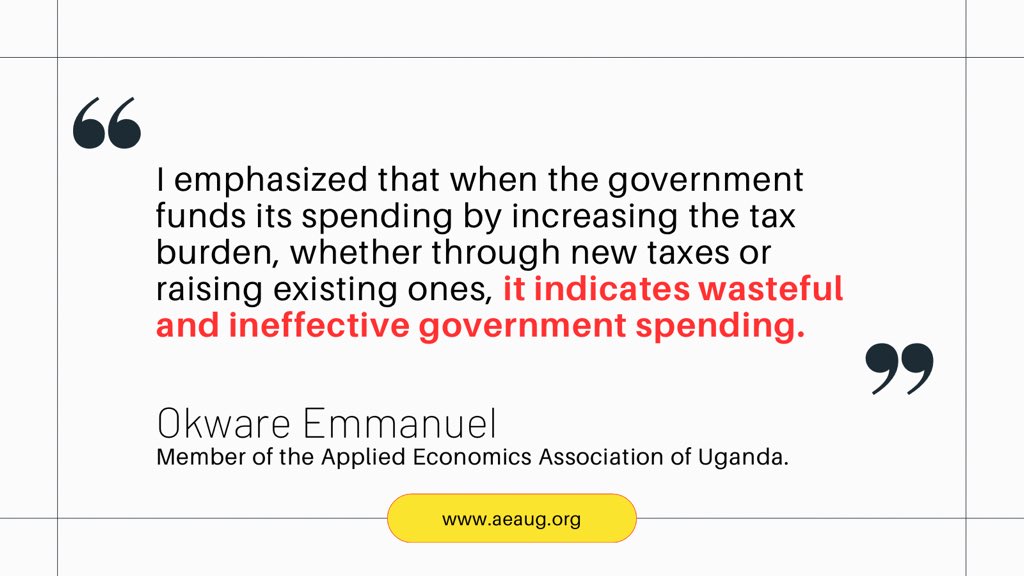
2. 40.16 trillion, of tax contribution. This will be mobilized (evidently) by raising some existing taxes and by introducing new taxes. This reflects increase in the tax burden on Ugandans and business. Projections for the coming few financial years indicate a similar trend.
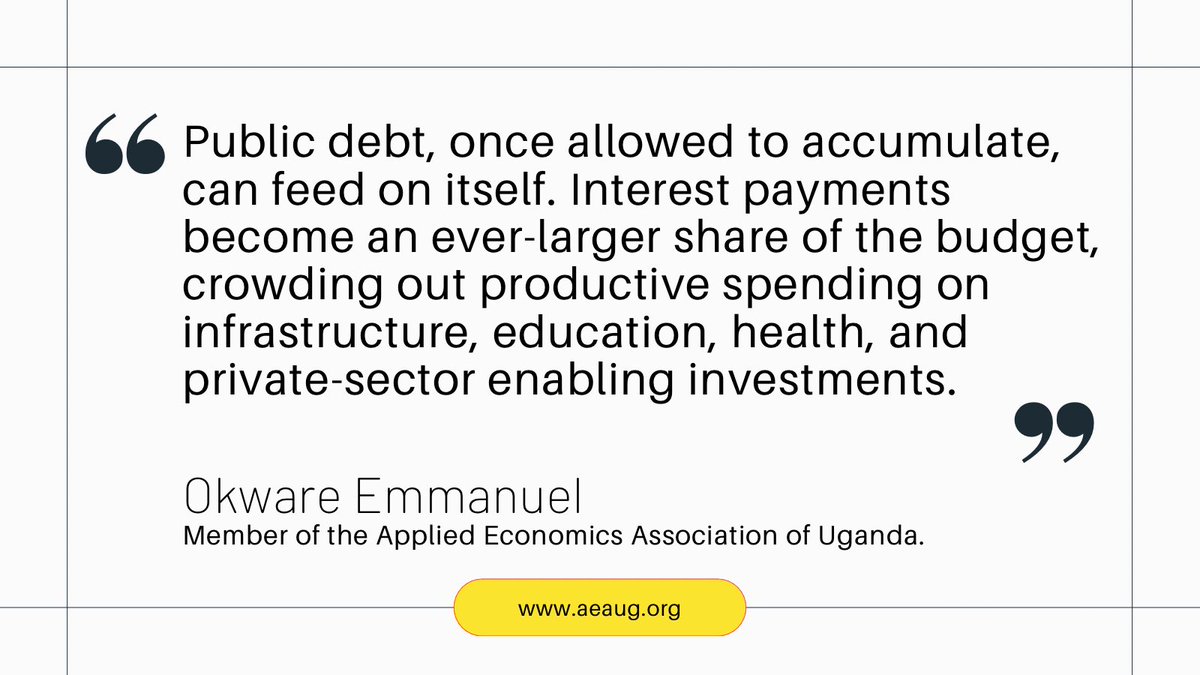
3. 11.97 trillions and 11.27 trillions, for domestic borrowing and external project financing to finance the budget deficit. These together will add a net stock of new debt of over 23 trillion.
4. 33.4 trillion, nearly 40% of that will be spent on debt servicing, not service delivery.
5. Out of 7.17 trillion for local government, 58.8%, the larger percent will be received to cater for wages. The smaller percent will be devoted to service delivery.
You are welcome.
#KnowYourBudget26 @ACODE_Uganda@centre4policy@CSBAGUGANDA@nbstv@HakiimsWampamba@ChrisHigenyi@nextradio_ug@CanaryMugume@SamsonMKasumba@aea_uganda@AyellaKanda@pwatchug
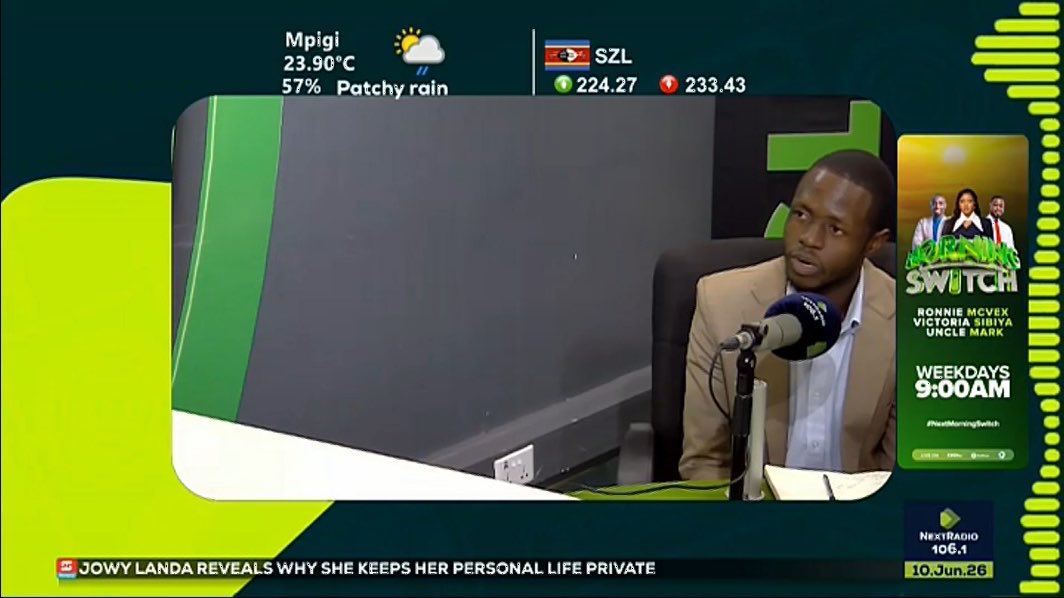
.@emmanuelokware_: For the past three years, Uganda’s inflation rate has been under 5%, which the Central Bank has been aiming for.
Our money supply over time has been well managed by the Central Bank, which is key in controlling inflation.
#NextBigTalk#NextRadioUg
.@emmanuelokware_: There are already economists studying the PDM, and the results around Kampala are actually amazing, showing that it is working to reduce poverty levels.
#NextBigTalk#NextRadioUg
.@emmanuelokware_: If consistency with PDM creates a culture of paying back, then banks as well will have to bring down their interest rates because what makes them raise them is the poor repayment culture of borrowers.
#NextBigTalk#NextRadioUg
#Mission_US_Market
Today marks the first consignment of Ugandan cosmetics into the US market!
I carry a message of hope to all customers and suppliers of @movit_ug
Their growth is a true reflection of your continued support and loyalty for their brand.
The Bill (National Drug and Health Products Authority Bill) introduces broader oversight
powers aimed at strengthening public health protection, consumer safety, and product
quality assurance. @PATRICKKUMAKEC7 writes. https://t.co/KXL52VdGSe
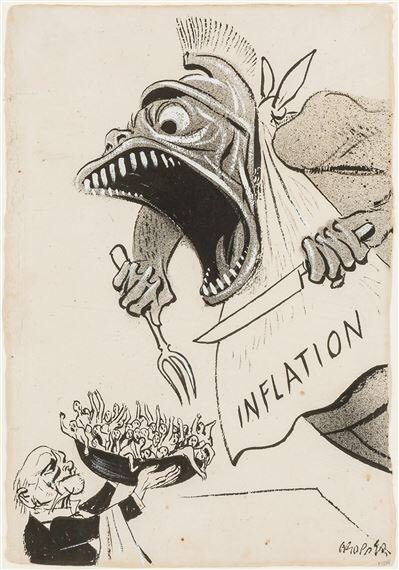
Earlier today, a journalist asked Mr. Governor — why the prices are still high even when inflation is reported within the medium term — his response was that the BOU target is not prices — but inflation — is it that?
Uganda’s National Drug and Health Products Authority Bill has been passed and is expected to take effect in July after Presidential assent.
The new law gives broader regulatory powers over the beauty and personal care sector.
@aea_uganda@mtic_uganda@UNBSug@BageineEjalu
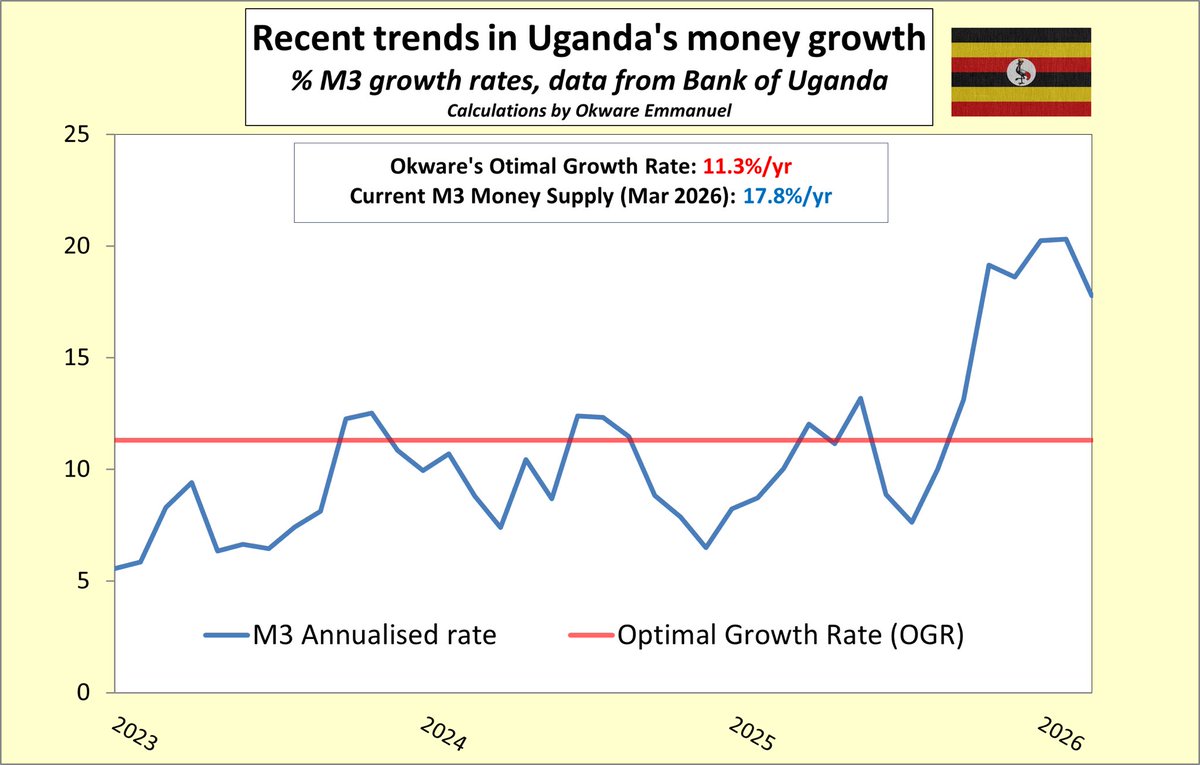
#UgandaWatch🇺🇬: Uganda’s CPI is 2.8/yr.
The good news is money supply declined in #March to 17.8%/yr from 20.3%/yr in February, the bad news is that it is still growing above Okware’s Optimal Growth Rate (OGR) of 11.3%/yr consistent with BOU 5%/yr medium target.
In both developed and developing economies, high and rising real interest burdens on public debt are not merely a bookkeeping matter. They reflect deeper monetary and fiscal imbalances. https://t.co/JHq3184ntg
HAPPY LABOR DAY UGANDANS!
The efforts by the Working Population has been instrumental to the Growth and Development of our Country, most especially to @nssfug contributions.
#LaborDay26