Istant Karma!: John Lennon porta la sua canzone a Top of the Pops
🎵 Nel febbraio del 1970 John Lennon pubblicava “Instant Karma! (We All Shine On)”, una delle canzoni più belle e coinvolgenti della sua prima carriera solista. Un brano nato in pochissimo tempo: la canzone venne scritta da John la mattina del 27 gennaio 1970 e poche ore dopo l’ex Beatle era già negli studi di Abbey Road per registrarla.
Alla produzione c’era Phil Spector, mentre tra i musicisti troviamo anche George Harrison alla chitarra acustica, Klaus Voormann al basso, Alan White alla batteria e Billy Preston alle tastiere. Una registrazione realizzata in tempi record, che diede vita a uno dei singoli più importanti di Lennon.
🔥 “Instant Karma!” colpisce subito per il suo ritmo trascinante, il pianoforte e il potente ritornello “We all shine on”.
Il testo parla del karma e delle conseguenze delle nostre azioni: ognuno è responsabile di ciò che fa e può contribuire a rendere il mondo un posto migliore.
📺 Una delle testimonianze video più interessanti della canzone è la partecipazione di John Lennon a Top of the Pops, il famoso programma musicale della BBC.
L’11 febbraio 1970 John arrivò negli studi televisivi accompagnato da Yoko Ono e dalla Plastic Ono Band, composta da Klaus Voormann e Alan White.
Fu il primo ex Beatle a partecipare alla trasmissione con una propria canzone da solista.
🎬 Per l’occasione vennero realizzate due diverse versioni dell’esibizione, trasmesse dalla BBC il 12 e il 19 febbraio. John interpreta “Instant Karma!” con grande energia, mentre Yoko Ono attira l’attenzione con alcune trovate molto singolari.
👀 In una delle versioni Yoko è seduta accanto a John e lavora a maglia, con gli occhi bendati da un assorbente igienico. Nell’altra, sempre bendata, mostra alcuni cartelli con parole come SMILE, PEACE, LOVE, HOPE e BREATHE.
John e Yoko indossano fasce con la scritta People for Peace, per ribadire il loro impegno a favore della pace.
❤️ Rivedere oggi questa performance è un’occasione per ritrovare John Lennon in un momento di grande creatività, pieno di entusiasmo e con tanta voglia di sperimentare. “Instant Karma!” rimane una delle sue canzoni più belle di quel periodo e “We all shine on!” continua ancora oggi a trasmettere tutta la sua forza: un invito a ricordare che ognuno di noi ha qualcosa di speciale da offrire.
#JohnLennon #InstantKarma #WeAllShineOn #YokoOno #PlasticOnoBand #TopOfThePops #GeorgeHarrison #Beatles #PhilSpector #Yesterdaypills
JACK NICHOLSON winning a BAFTA for Chinatown. He accepted the award from the set of ONE FLEW OVER THE CUCKOO'S NEST. One of the great acceptance speeches.
Book Review: Let the Dead Speak: Spiritualism in Australia, by Andrew Singleton and Matt Tomlinson, reviewed on @SPR1882 website by Sarah Chumacero
https://t.co/XlWY36tlMM
my good friend, the Adelaide philosopher Chris Mortensen, died yesterday. Parkinson’s is a bugger of a disease as it relentlessly stripped him of all life’s great pleasures, including South Australian wines – and he was a connoisseur
🎯🎯😬 The Artworld Runs on Burnout. Can It Change? Passion has long sustained the arts. But as low pay, precarious work and constant visibility collide, many art workers are asking whether the industry is built to exhaust the people who keep it running https://t.co/jWANH5q1iy
Only seven people in the world have seen the “greenest green.” No printer can print the color, and no camera can photograph it. No pigment or dye in the shade can exist. “Olo,” named for the combination of cone cells the color stimulates, has been described as a highly saturated teal shade. Researchers at U.C. Berkeley generated it by using lasers to target a single type of retinal cell in a manner that does not occur naturally.
Humans perceive the world with three primary colors, not because the world is fundamentally composed of three colors but because our retinas typically have three kinds of color-perceiving cone cells. Each cone cell responds to a range of wavelengths within the visible-light spectrum—roughly corresponding to red, blue, and green. Our eyes are constantly moving: when we look at a blade of grass, or a clear blue sky, or a fire truck, some combination of each of the three types of cones are being stimulated.
But what does it mean for us to see a new color, even just a few of us? Rivka Galchen talks to an array of color experts, and considers what we can learn from the prospect of a new hue—about our visual-processing system, and about the nature of color itself: https://t.co/zAjNZjBlNh
O atacante norueguês Erling Haaland adquiriu a edição impressa de 1594 da Heimskringla, de Snorri Sturluson — a crônica mais importante da história dos reis vikings e da cristianização da Noruega por Santo Olavo II.
O exemplar, considerado o livro mais caro já vendido no país (cerca de US$ 134 mil), foi doado integralmente à biblioteca pública de Bryne, cidade natal do jogador, para exposição permanente ao público. Um gesto que une preservação do patrimônio histórico e reforço da memória cristã da Noruega.
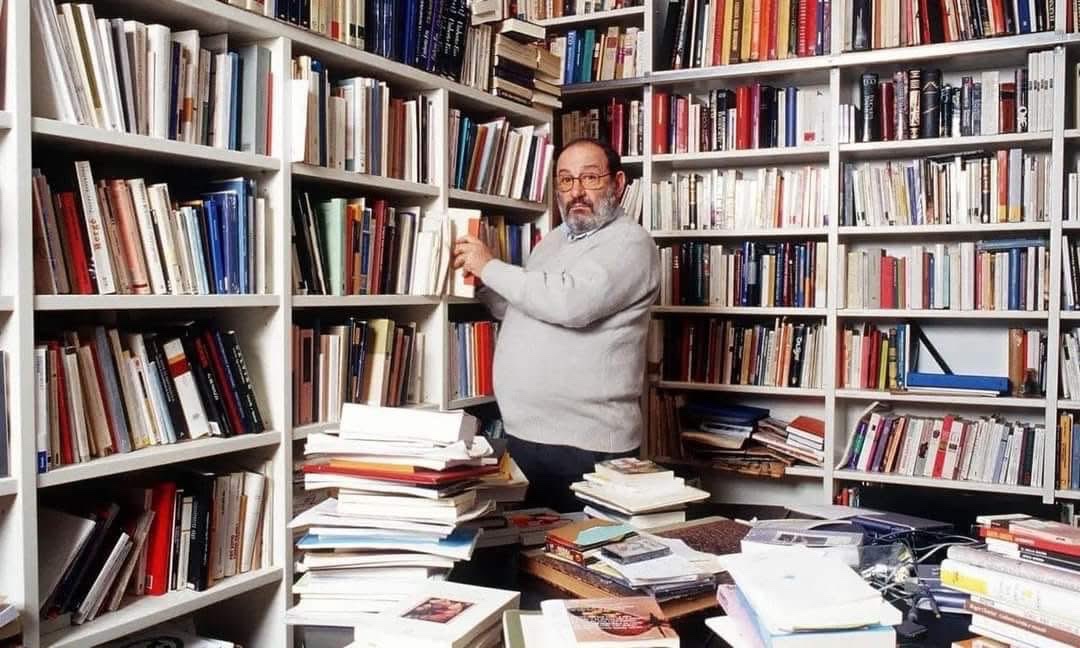
Umberto Eco, who owned 50,000 books, had this to say about home libraries:
“It is foolish to think that you have to read all the books you buy, as it is foolish to criticize those who buy more books than they will ever be able to read. It would be like saying that you should use all the cutlery or glasses or screwdrivers or drill bits you bought before buying new ones.
“There are things in life that we need to always have plenty of supplies, even if we will only use a small portion.
“If, for example, we consider books as medicine, we understand that it is good to have many at home rather than a few: when you want to feel better, then you go to the ‘medicine closet’ and choose a book. Not a random one, but the right book for that moment. That’s why you should always have a nutrition choice!
“Those who buy only one book, read only that one and then get rid of it. They simply apply the consumer mentality to books, that is, they consider them a consumer product, a good. Those who love books know that a book is anything but a commodity.”
‘Regrets? Number one: smoking. Number two: taking it up the wrong hole’: Tracey Emin on reputation, radical honesty – and Reform https://t.co/Ww8ExmyGeF