Bir avukatın paylaşımı:
“Müvekkil, Atatürk’ün hatırasına hakaret suçundan yargılanıyor. Hâkim duruşmayı 10 kasım saat 09.05’e vermiş.
Sirenler çaldı, salondaki herkes ayağa kalktı, müvekkil kalkmadı.
Hâkim de bir suç duyurusu daha yaptı, adam duruşmaya tek dosyayla girdi, iki dosyayla çıktı.”
They know that of course. However this is a grok translation error.
“Pilotun yaptığı hamle hayatını kurtardı” Pronoun located at “hayat-ın-ı” which is added to “life”. Basically for “her life” we use “hayatı” and “his life” we use “hayatı”. Same word.
Turkish is an efficient language; if the person wanted to express and have the focus on the gender they could have used “kadının hayatı” or “erkeğin hayatı” which would both put more emphasis on gender and the focus on that. Which the original post did not do. That is why I said Turkish is efficient. To be honest with you, Turkish language does not care about your gender generally, as previous commenter said; we have one pronoun when you want to point out “that person” we say “o”. So when you want to learn Turkish in the pronouns you will see this: “he/she/it/that etc. = o”
TL;DR: You should fight Grok translation, not the Turkish language or Turkish people. Cheers 🍻
They are not blind of course. However this is a grok translation error.
“Pilotun yaptığı hamle hayatını kurtardı” Pronoun located at “hayat-ın-ı” which is added to “life”. Basically for “her life” we use “hayatı” and “his life” we use “hayatı”. Same word.
Turkish is an efficient language; if the person wanted to express and have the focus on the gender they could have used “kadının hayatı” or “erkeğin hayatı” which would both put more emphasis on gender and the focus on that. Which the original post did not do. That is why I said Turkish is efficient. To be honest with you, Turkish language does not care about your gender generally, as previous commenter said; we have one pronoun when you want to point out “that person” we say “o”. So when you want to learn Turkish in the pronouns you will see this: “he/she/it/that etc. = o”
TL;DR: You should fight Grok translation, not the Turkish language or Turkish people. Cheers 🍻
They can tell that of course. However this is a grok translation error.
“Pilotun yaptığı hamle hayatını kurtardı” Pronoun located at “hayat-ın-ı” which is added to “life”. Basically for “her life” we use “hayatı” and “his life” we use “hayatı”. Same word.
Turkish is an efficient language; if the person wanted to express and have the focus on the gender they could have used “kadının hayatı” or “erkeğin hayatı” which would both put more emphasis on gender and the focus on that. Which the original post did not do. That is why I said Turkish is efficient. To be honest with you, Turkish language does not care about your gender generally, as previous commenter said; we have one pronoun when you want to point out “that person” we say “o”. So when you want to learn Turkish in the pronouns you will see this: “he/she/it/that etc. = o”
TL;DR: You should fight Grok translation, not the Turkish language or Turkish people. Cheers 🍻
People from the USA are always confident, even when they are in the wrong.
“Pilotun yaptığı hamle hayatını kurtardı” Pronoun located at “hayat-ın-ı” which is added to “life”. Basically for “her life” we use “hayatı” and “his life” we use “hayatı”. Same word.
Turkish is an efficient language; if the person wanted to express and have the focus on the gender they could have used “kadının hayatı” or “erkeğin hayatı” which would both put more emphasis on gender and the focus on that. Which the original post did not do. That is why I said Turkish is efficient. To be honest with you, Turkish language does not care about your gender generally, as previous commenter said; we have one pronoun when you want to point out “that person” we say “o”. So when you want to learn Turkish in the pronouns you will see this: “he/she/it/that etc. = o”
TL;DR: You should fight Grok translation, not the Turkish language or Turkish people. Cheers 🍻
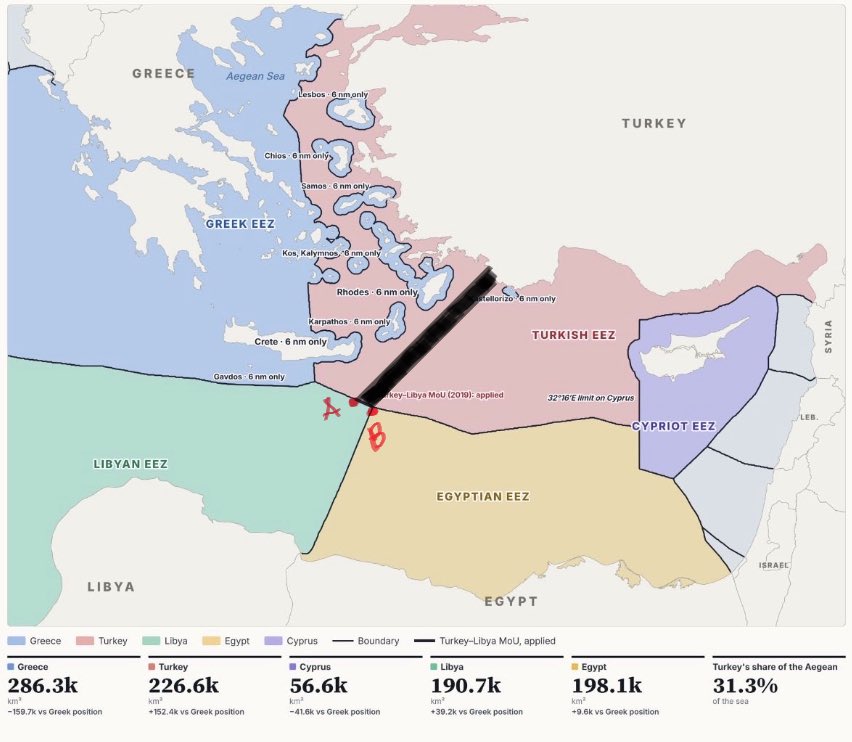
Deniz Hukuku, Uluslararası Hukuk, Adalet Divanı ve/veya Uluslararası Tahkim Mahkemeleri, şayet her maddelerinde/kararlarında özenle “Adil Çözümden”bahsediyorlarsa, Ege ve Doğu Akdeniz’deki bu ADİL PAYLAŞIMI görmezlikten gelemez, “adalet/eşitlik” bu şekilde sağlanır..⬇️
Ortada dolaşan çakma animasyon haritalarında Mısır’ın haklarının çalındığını iddia edenler aşağıdaki A ve B koordinatlarına baksınlar ve Mısır’ın, Libya/Türkiye Anlaşması ile %25 daha fazla Deniz Yetki Alanına sahip olacağını göreceklerdir…
Siyasi başka saikleri öne çıkaranlar, bu yüzden bir devletin deniz haklarından feragat etmesinin ne olduğunu henüz anlamamışlardır…
An English
If the Law of the Sea, international law, the International Court of Justice, and/or international arbitration tribunals consistently emphasize an "equitable solution" in their articles and rulings, they cannot simply ignore the "equitable sharing" required in the Aegean and the Eastern Mediterranean—for this is precisely how justice and equity are achieved.
Those who claim—based on the spurious, animated maps circulating—that Egypt’s rights are being violated should examine the coordinates labeled A and B below; they will see that, under the Libya-Türkiye agreement, Egypt would actually gain a 25% larger maritime jurisdiction.
Those who prioritize other, purely political motives clearly do not yet grasp what it would mean for a state to effectively renounce its own maritime rights.
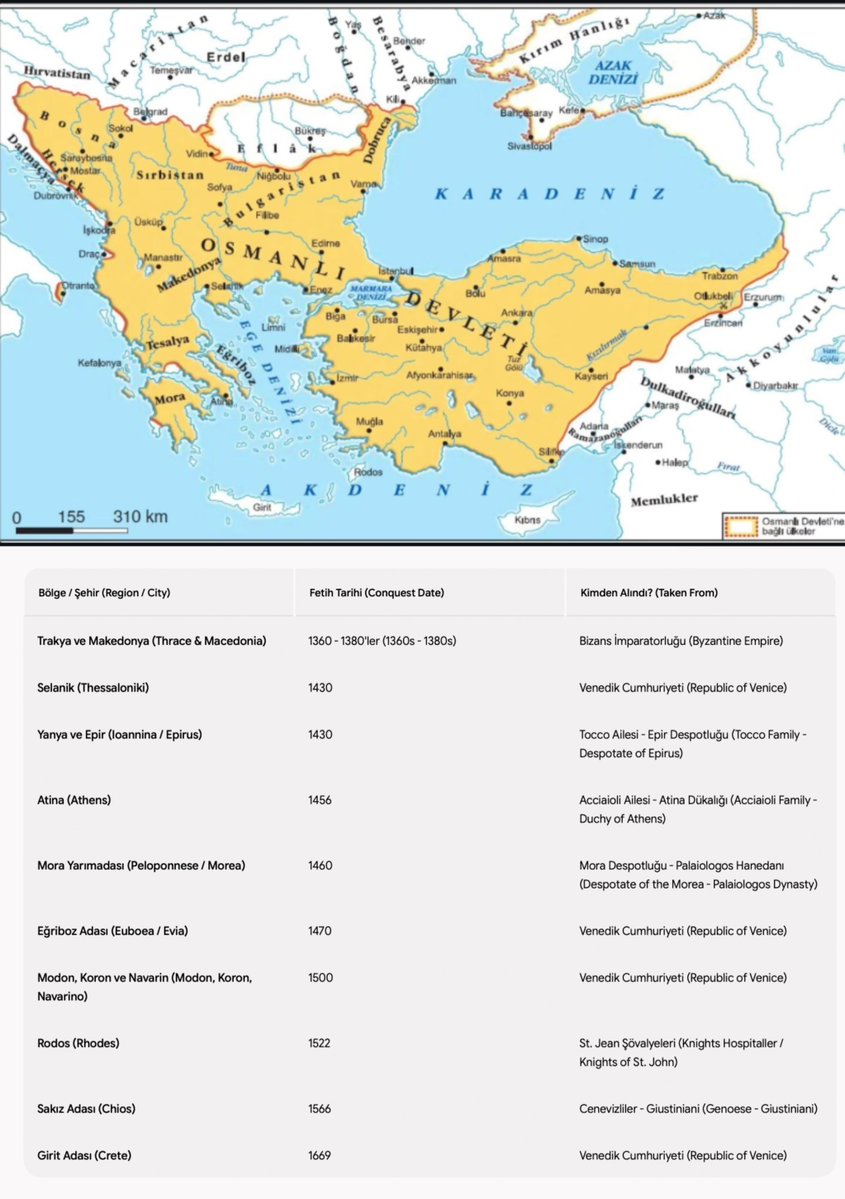
Yunanlar yıllardır ajitasyon yapıyor:
"Türkler topraklarımızı işgal etti" diyerek.
Biz o toprakları İtalyanlardan, Venediklilerden, Cenevizlilerden savaşarak aldık..
Siz tarihten yok olmuştunuz.. Devletiniz yoktu! Kendinizi yönetmiyordunuz!
Atina'yı İtalyan Acciaioli Ailesi - Atina Dükalığı yönetiyordu!
Osmanlı geldi de insanlık gördünüz!
📌Selanik (Thessaloniki) | 1430 | Venedik Cumhuriyeti (Republic of Venice)
📌Yanya ve Epir (Ioannina / Epirus) | 1430 | Tocco Ailesi - Epir Despotluğu (Tocco Family - Despotate of Epirus)
📌Atina (Athens) | 1456 | Acciaioli Ailesi - Atina Dükalığı (Acciaioli Family - Duchy of Athens)
📌Mora Yarımadası (Peloponnese / Morea) | 1460 | Mora Despotluğu - Palaiologos Hanedanı (Despotate of the Morea - Palaiologos Dynasty)
📌Eğriboz Adası (Euboea / Evia) | 1470 | Venedik Cumhuriyeti (Republic of Venice)
📌Modon, Koron ve Navarin (Modon, Koron, Navarino) | 1500 | Venedik Cumhuriyeti (Republic of Venice)
��Rodos (Rhodes) | 1522 | St. Jean Şövalyeleri (Knights Hospitaller / Knights of St. John)
📌Sakız Adası (Chios) | 1566 | Cenevizliler - Giustiniani (Genoese - Giustiniani)
📌Girit Adası (Crete) | 1669 | Venedik Cumhuriyeti (Republic of Venice)
Professor of International Law Alexis Iraklidis;
"Türkiye is right in the Eastern Mediterranean. Türkiye has a longer coastline than Egypt and we oppose Türkiye protecting its rights."
"I served as a diplomat in the Foreign Ministry for 15 years. I can say with confidence that Turks are not aggressive.
"Türkiye's theses in the Eastern Mediterranean are more rational and scientific."
"Greece's claim of 12 NM Territorial Water, 10 miles of airspace and the unilaterally determined Continental Shelf are against international law."
"The problems stem from the fact that most Greeks (including nationalists and even non-nationalists) tend to see the Aegean as a 'Greek lake' or 'Greek Sea'.
On the other side of the Aegean, in this sea, there is another country with a very long coastline ." "Somehow they forget that this country exists. Here again we see Greek ethnocentrism."
The Greek regime also endorses Türkiye's proposals for a solution. However, they dare not take any action, for fear of the public reaction.
Girit'ten çizmemeniz takdire şayan. En azindan hukukla ilgili bir takim hususlari anlamaya başladınız. Şimdi;
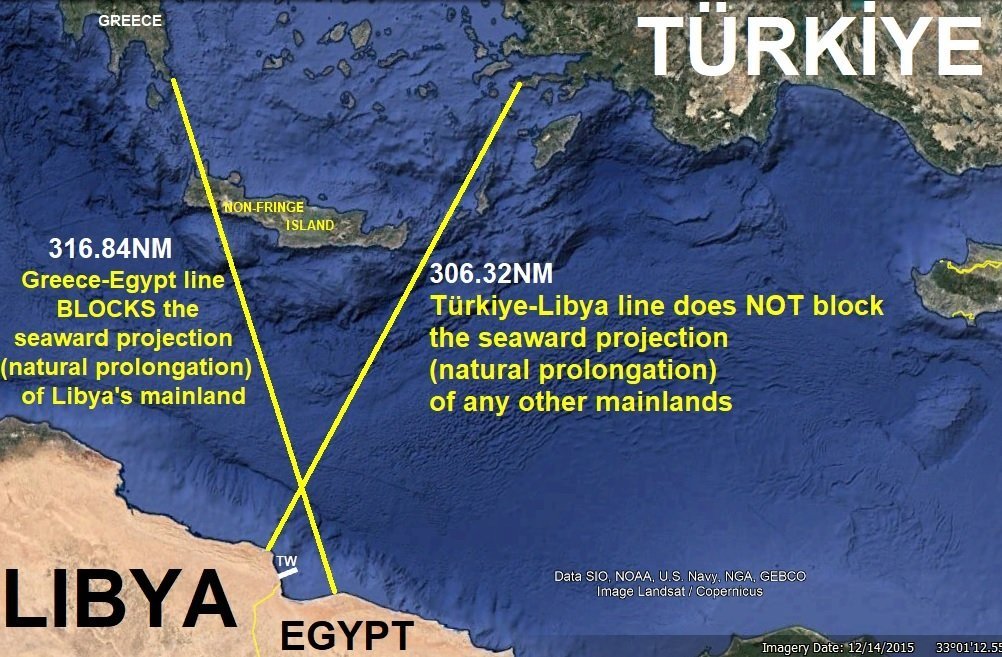
Yunanistan anakara devletidir ve eşit mesafe siyasi anakaradan ölçülür, buraya kadar doğru!
Yine sizin tezinizden yola çıkarsak Mısır-Yunanistan anlaşması coğrafyaya aykırı görünüyor. Çünkü Türkiye'nin Mısır ile olan mesafesi Yunanistan-Misir sınırını bloke eder.
Yani Yunanistan Libya ile "Libya Denizinde" anakaralardan esit mesafe ölçerek anlaşma yapabilir!
Yunanistan'ın levant havzasina bakan Doğu Akdeniz'de EEZ ya da Kıta sahanlığı yoktur!
The decision rendered by ChatGPT, in light of relevant ICJ and arbitral precedents...
AI Note:
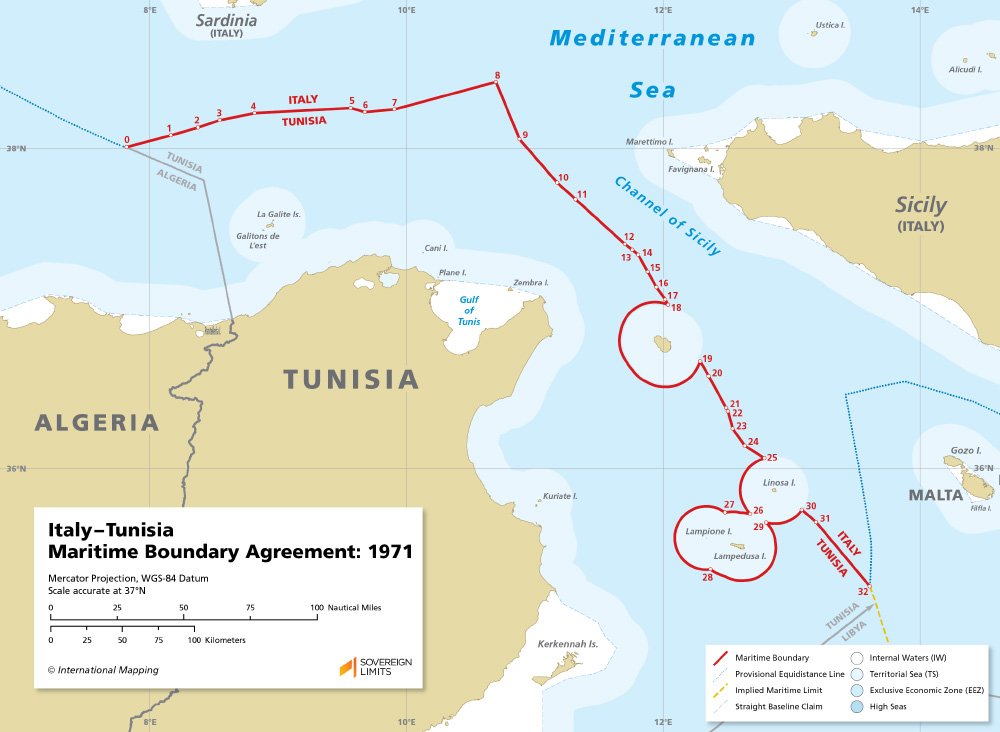
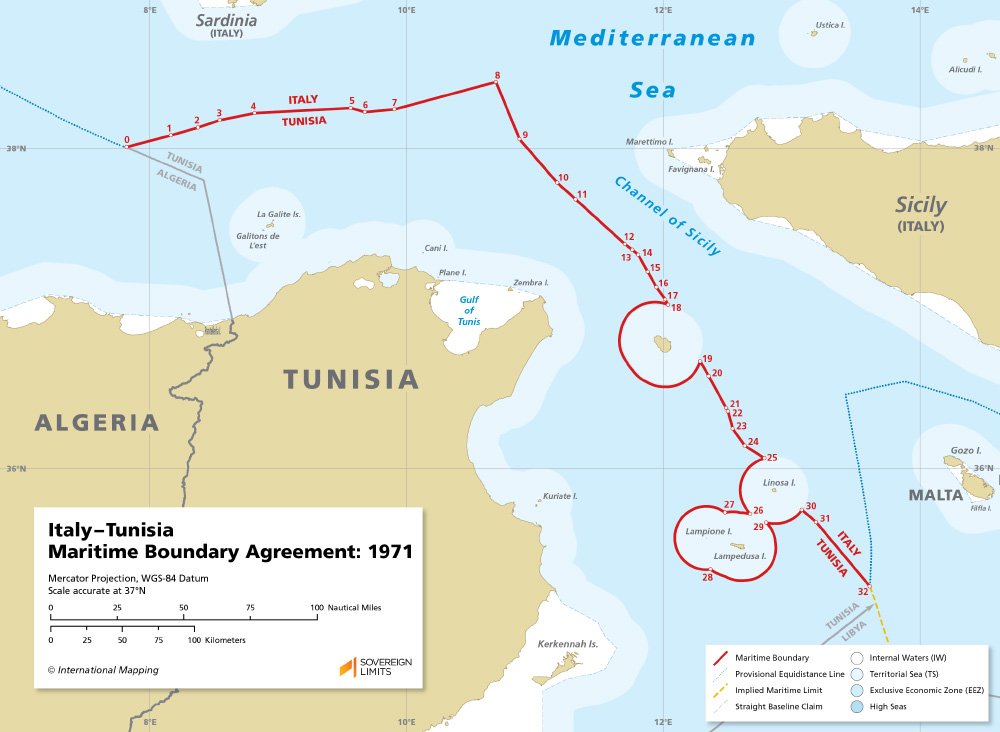
Reference is made to rulings by the International Court of Justice and arbitral tribunals: UK–France, Italy–Tunisia, and Bangladesh–Myanmar.
Crete is assigned a 25% weighting, while islands located within the Turkish continental shelf have been isolated, with their maritime reach limited strictly to their own territorial waters.
UAD emsal kararlarında 3 aşamalı metodoloji uygular. (Romanya-Ukrayna Davası-2009'dan sonra)
1- İlgili kıyı devletlerinin coğrafi konumları esas alınarak, anakara hatlarından (baselines) eşit uzaklıkta bulunan geçici bir sınır hattı (ortay hat) çizilir.
2- Birinci aşamada çizilen geçici hattın hakkaniyetsiz (adil olmayan) bir sonuç doğurup doğurmadığına bakılır ve gerekirse hat kaydırılır.
• Devletlerin kıyı şeritleri arasında büyük bir eşitsizlik olup olmadığı.
• Kıyı topografyası ve geometrisi: Körfezler, çıkıntılar, konkav (içbükey) veya dışbükey kıyılar.
• Adaların konumu: Adaların ana karaya göre konumu, büyüklüğü ve deniz yetki alanını "kesme etkisi" (cut-off effect) yaratıp yaratmadığı.
3- Elde edilen nihai sınır hattının, iki devletin kıyı uzunlukları ile bu sınırlardan elde ettikleri deniz alanları arasında aşırı bir oransızlık yaratıp yaratmadığı matematiksel olarak test edilir.
• Amaç: Ortaya çıkan paylaşımın hakkaniyetli (equitable solution) olup olmadığını ex post facto (sonradan) kontrol etmektir.
Türkiye ve Yunanistan arasındaki ortay hat ortalama olarak budur. Ortay hattın yanlış tarafında kalan Adaların etkisi emsal UAD ve Hakem kararlarina göre karasulari ile sınırlıdır!
We deeply regret how European officials choose political solidarity over international law whenever it suits their interests.
If the EU claims to uphold international law, it must apply the same principles consistently, not selectively invoke them to defend Greece and Greek Cypriot Administration while dismissing the legal arguments of Türkiye and Libya.
International law cannot be a matter of political convenience.
Tarafsızlığını ve inanırlılığını çoktan yitirmiş, yarım bir ülkeyi birçok uluslararası anlaşma ve kendi kriterlerini çiğneyerek üye yapmış haçlı zihniyetine sahip bir birliğin uluslararası hukuktan bahsetmesi komiktir.
Akdeniz'de iki egemen devletin yaptığı anlaşmaya "hukuksuz" demek hiçbir Uluslararası Hukuk normuna uymaz!
Yine Akdeniz'de hukuksuz tek anlaşma Mısır ve Yunanistan'ın hayali noktalarla yaptığı EEZ anlasmasıdır.
AB bizim için sadece pazardır. Küresel Etkinliğini çoktan yitirmiş bir bürokratik çöp yığınıdır.
Hi Palmos, I am replying because this is the first time I am seeing someone from Greece in X who is not “aggressive”.
Turkiye does support the Greek islands having rights. That is NOT what Turkiye disagrees on; Turkiye disagrees on Greece collectively drawing islands and zones to block out Turkiye’s access from The sea or making “disproportionate” claims on islands versus Turkiye’s mainland.
Why Turkish X accounts frequently referencing Lausanne treaty? Because 2 major points; 1) After Lausanne, both Turkiye and Greece had 3nm Territorial zone; which meant the Aegean Sea had much bigger international waters. This is fair and does not block Turkiye or Greece from Egean. 2) Islands ownership status (many small islands 150-200) in the region has a legitimate debate on status) and the the Greek islands mentioned in Lausanne stating “on the condition of demilitarized status”
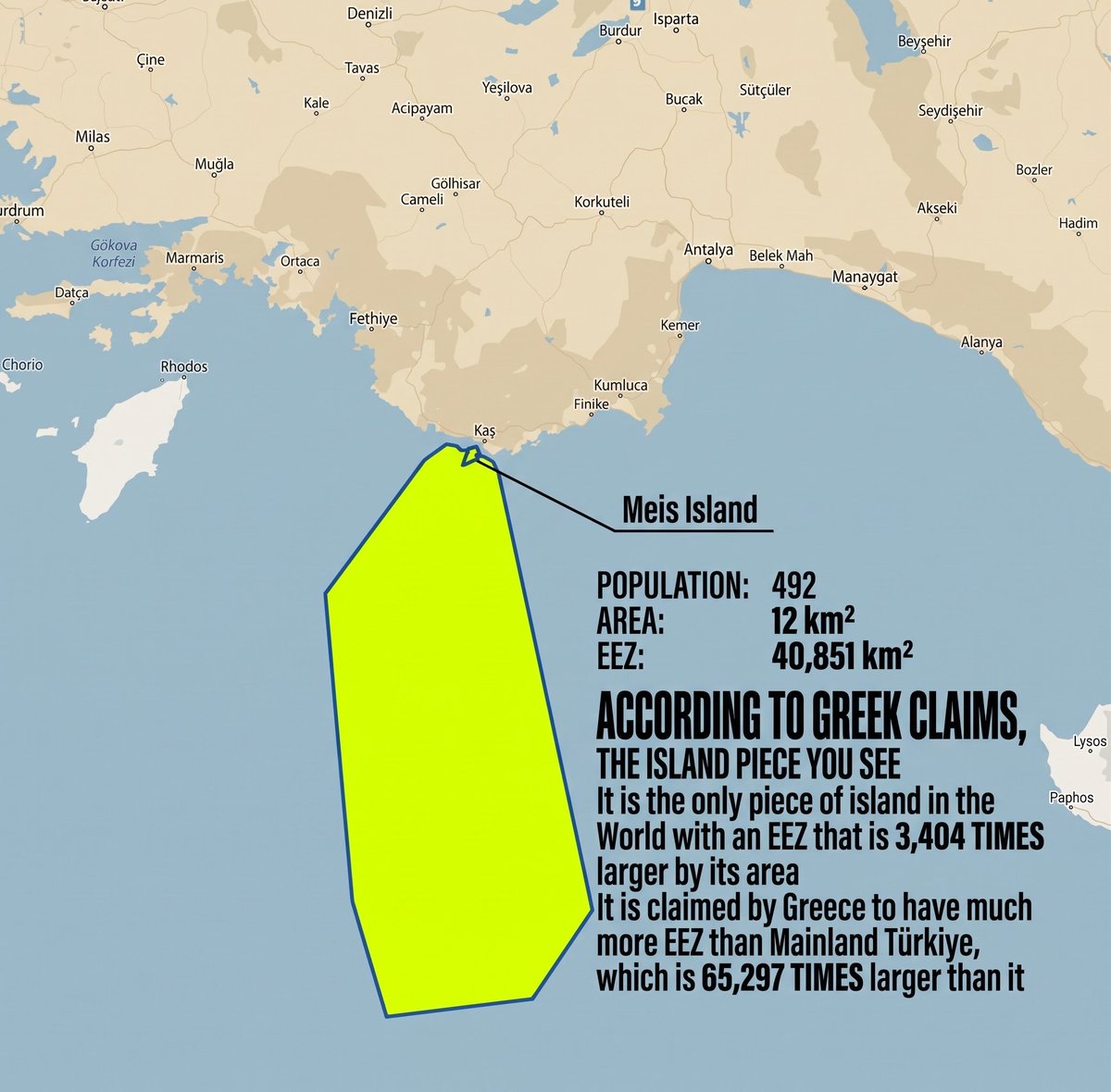
So what I am saying is, you can argue on for example meis having Territorial zone or EEZ. Meis’s south (away from Turkish coast) can have Territorial water; but reduced one. But Greece simply CAN NOT argue to draw a line from that island to Greek mainland to claim the entire sea; X users who does that is simply put: -Maximalist, -Warmongering, -Troll accounts. They only hurt the relations and I strongly believe They are traitors to Greece’s interests. Greece has the best solutions: Negotiate with Turkiye, improve relations! Putting military, radar systems or any of the such intentions are harming Greek interests more than you realize.
My most important comment on this is; Most of the Turkish or Greek X users do not realize that the final say on this matter belongs to Turkiye and Greece. No matter what law says. So if these two countries does not negotiate or use diplomacy; there will never be a solution and it will cause a crisis and eventually a war. But as far as I can see on X, majority of the Turkish users are just disagreeing on Greek X users maximalist maps. Which is fair in my opinion. However Greek users are mostly hostile, being racist and not even starting any constructive discussion. That also caused a lot of Turkish X users to show similar hostility. So it has not been going well. And Greek government and media to paint Turkiye as an “enemy” or arming the islands, never helped either. That is simply against Greek interests, in my opinion.
So TL;DR of my comment: 1) Turkiye disagree on being blocked on the Aegean and Mediterranean sea, therefore 12nm claims are a legitimate cause of war. 2) Greece is maximalist on drawing on the map with connecting the islands; not with the islands “Rights claim”. Greece can easily negotiate to separate two claims; i)EEZ and Territorial waters for Turkiye and Greece mainlands ii) Greece and Turkish islands Eez and Territorial waters. 3) Best action is to have diplomacy and good relations between Greece and Turkiye, and for the last decade, Greece had a lot of hostile policies, aggression and agreements against Turkiye.
Arkadaşlar;
Tarafı olmadığımız UNCLOS yani BM Deniz Hukuku Sözleşmesinin 121 nci Maddesi;
Adaların tanımını ve deniz yetki alanlarını üç temel fıkra ile düzenler;
-Ada Tanımı (1. Fıkra): Doğal olarak oluşan, sularla çevrili ve en yüksek gelgit anında dahi su üstünde kalan kara parçaları ada olarak tanımlanır.
-Genel Kural (2. Fıkra): “ADALAR AKSİ BELİRTİLMEDİKÇE” ana kara gibi karasuları, bitişik bölge, münhasır ekonomik bölge (MEB) ve kıta sahanlığı haklarına sahiptir.
-Kayalık İstisnası (3. Fıkra): İnsanların yaşamasına elverişli olmayan veya kendine özgü ekonomik hayatı bulunmayan kayalıkların MEB ve kıta sahanlığı bulunmaz.
Evet, 2nci Fıkranın başına dikkat edelim;
“Aksi belirtilmedikçe”��….. adalar MEB’e sahip olabilir…
Peki sizce aksi durumlar ne olabilir..??
İşte Aynı anlaşma bu AKSİ DURUMLARI da tarif eder..
Bu da 74 ve 83ncü maddelerde izah edilmiştir..;
Deniz Alanlarının Sınırlandırılması ve "Hakkaniyet İlkesi" (Madde 74 ve 83)
✔️Sözleşmenin kıta sahanlığı (Madde 83) ve MEB (Madde 74) sınırlandırmalarıyla ilgili maddeleri, devletlerin karşılıklı deniz sınırlarını belirlerken "hakkaniyete uygun bir çözüme" ulaşmasını şart koşar.
⬇️
•Aksi Durum: Bir ada coğrafi olarak karşı veya komşu devletin ana karasına çok yakınsa, okyanus ortasında değil de kapalı/yarı kapalı bir denizde yer alıyorsa ya da sınır çizgisini tek taraflı olarak aşırı derecede bozuyorsa (örneğin orantısız bir etki yaratıyorsa), genel kural uygulanmaz.
⬇️
•Sonuç: Uluslararası Adalet Divanı (UAD) ve tahkim mahkemeleri kararlarında, bu tür adalara coğrafi konumlarından ötürü "yarım etki" (half-effect), "sınırlı etki" vermiş ya da bazı durumlarda adaları tamamen enklav (sınır dışı/etkisiz) bırakarak geniş yetki alanları tanımamıştır.
AYRICA;
Tarihi Haklar ve Özel Anlaşmalar
Uluslararası hukukta devletlerin kendi aralarında yaptığı ikili veya çok taraflı antlaşmalar sözleşme hükümlerinin önüne geçebilir.
⬇️
•Sonuç: Devletlerin egemen iradeleriyle imzaladıkları bu özel statülü anlaşmalar, 121. maddenin 2. fıkrasındaki genel kuralın aksine bir durum oluşturur ve hukuken bağlayıcıdır.
Bu durumda da;
LOZAN gibi anlaşmaların halen geçerli olduğuna,
Tarihin büyük bölümünde bu Adalarda Türk hakimiyetinin olduğuna,
Bu Adaların oldu bittilerle el değiştirmiş olduğuna,
Bakarsak durum lehimizedir..!!
Özetle; "aksi belirtilmedikçe" ifadesi, bir adanın coğrafi olarak var olmasının ona otomatik ve sorgulanamaz bir şekilde 12 mil veya 200 mile kadar MEB veya kıta sahanlığı hakkı vermediğini; adanın niteliklerine (3. fıkra), konumununa ve tarihi/siyasi statüsüne bakılarak bu hakların kısıtlanabileceğini yansıtır.
İşte bu maddelere dayanılarak Tahkim Mahkemeleri ve Uluslararası Adalet Divanı Hakkaniyetli, Az Hakkaniyetli veya da Hakkaniyetsiz pek çok kararlar vermiştir..
Tahkime/Adalet Divanına gidilmesi için de tarafların anlaşmazlıklarında anlaşmaları lazımdır. Hem taraflar öncelikle konularda anlaşamadıklarından hem de bu yüzden başlarına mahkemede tam olarak ne geleceğini bilmedikleri için bu yolu seçememekte ve statükoyu devam ettirmektedirler.
Yani taraf olmasak da UNCLOS’a göre haksız filan değiliz.
Bilgi sahibi olunması açısından mümkün olduğu kadar özetledim..
Sevgiler…
Madalyonun Libya yüzü!
Libya Girit'in güneyinde, karasuları dışında çalışma yapan Yunanistan'a önce uyarı yaptı ve son hamlesiyle hukuksuzluğuna cevap verdi.
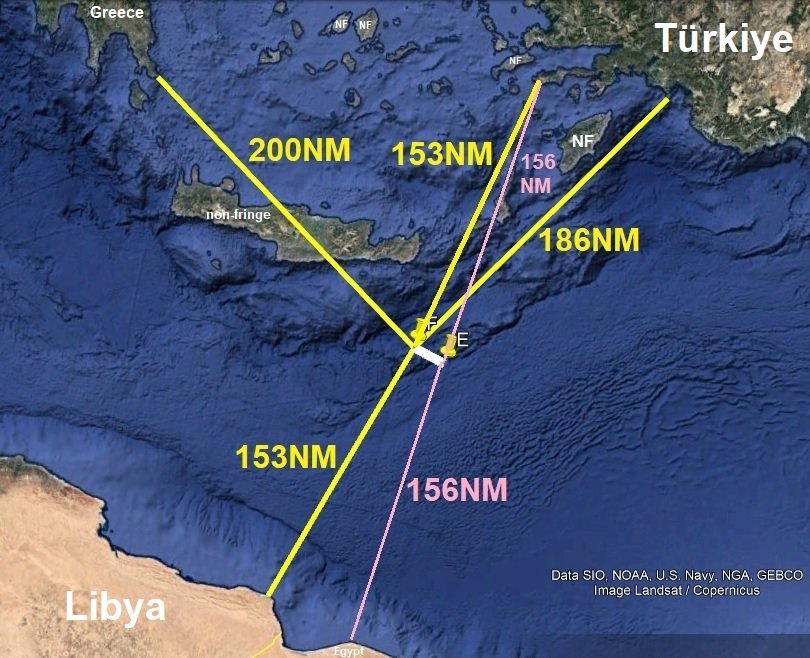
Yunanistan bir adalar devleti değildir ve "eşit mesafeler" siyasi anakara'lardan ölçülür!
Yunan anakarasından 200 deniz milinden daha az mesafede bulunan—ve kıyı şeridi boyunca yer almayan—adalar, kendi karasularının ötesinde münhasır ekonomik bölge hakkı doğuramaz.
Girit bir fringe ada değildir ve MEB hakkı "sıfır"dır!
Wait, what?! Oh my God! 😱
Now Türkiye must be absolutely terrified!
The mighty Ursula von der Leyen might even threaten to kick Türkiye out of the European Union!
Oh, wait… 😂
We're not even in the EU, are we?
How terribly embarrassing!
Of course, we did want to join. We knocked on your door for decades. But apparently, we weren't quite European enough.
Never mind. We still thought we should be helpful.
Millions of refugees to accommodate? Certainly! Why trouble Europe's delicate social equilibrium when Türkiye can shoulder the burden with a little financial assistance and a great deal of European gratitude?
European defence needs military capabilities? Naturally! From Estonia to Spain, Turkish military capabilities have contributed to Europe's security. Membership, of course, is an entirely different matter. Let's not get carried away!
A Customs Union that works rather more comfortably for European industry than for Türkiye? But of course! We wouldn't dream of disturbing such a beautifully arranged relationship.
European companies and banks want access to the Turkish market? Be our guests! Our largest private bank is even under Spanish control. How much more welcoming could we possibly be?
And now, after all these years of hospitality, strategic cooperation and economic accommodation, we are apparently expected to ask Brussels for permission to exercise our sovereign rights in the Eastern Mediterranean?
Oh, Madam President, how wonderfully imperial of you!
And how exactly do you propose to stop us?
With a stern warning from Brussels? A disapproving finger? Perhaps a French fleet? Or shall we expect a British military expedition to teach NATO's second-largest army a lesson in obedience?
How fascinating!
The very military capabilities Europe relies upon are apparently supposed to tremble at the sound of a Brussels press statement.
A raised finger is not a fleet. A declaration of disapproval is not an instrument of coercion. And diplomatic indignation, however theatrically delivered, is no substitute for actual power.
But surely there has been a misunderstanding.
We offered partnership, not guardianship.
We offered cooperation, not submission.
And we certainly never offered Brussels a seat at the head of Türkiye's sovereign decision-making table.
Our sovereignty is not a privilege granted by Brussels, nor is its exercise subject to European approval.
There is, after all, a limit to modesty. Even Turkish modesty.
Perhaps it is time Europe learned the difference between partnership and permission, between diplomatic rhetoric and geopolitical reality.
And Madam President, do forgive us if we fail to tremble.
You might wish to get used to it, afterall ...
😎
Avrupa Komisyonu Başkanı Ursula von der Leyen ve diğer üst düzey AB liderleri, açıklamalarında Türkiye ile Libya arasında deniz yetki alanlarının sınırlandırılmasına ilişkin anlaşmayı hukuki açıdan değerlendirmemekte, bunun yerine Avrupa Birliği üyesi Yunanistan ile Güney Kıbrıs Rum Yönetimi’nin tezlerini koruma refleksiyle hareket etmektedir.
Oysa söz konusu anlaşma, iki egemen devletin uluslararası hak ve hukuktan doğan yetkileri çerçevesinde attığı meşru bir adımdır.
Uluslararası hukuk, yalnızca Avrupa Birliği üyelerinin haklarını koruyan bir ayrıcalıklar düzeni değildir ve Türkiye ile Libya, egemen devletler olarak kendi hak ve çıkarları doğrultusunda karar alma iradesine sahiptir.
Hukukun üstünlüğü savunulacaksa, Avrupa Birliği yönetimi ve üye devletleri çifte standartlardan vazgeçmelidir.
Türkiye is not a party to UNCLOS, and under Article 34 of the Vienna Convention on the Law of Treaties, a treaty does not create obligations or rights for a third state without its consent. UNCLOS provisions therefore cannot be invoked against Türkiye.
Greece’s claims based on the tiny island of Kastellorizo (Meis) are a textbook case of disproportionate maritime jurisdiction. The island is roughly 10 km², lies only about 2 km off the Turkish coast near Kaş, and is roughly 580 km from the Greek mainland. Yet Greece seeks to attribute to it a continental shelf/EEZ of approximately 40,000 km² thousands of times its actual size effectively cutting off Türkiye’s access to large parts of the Eastern Mediterranean. International jurisprudence and the principle of equity do not support giving such full effect to a small, remote island lying on the “wrong side” of the mainland median line and in a semi-enclosed sea.
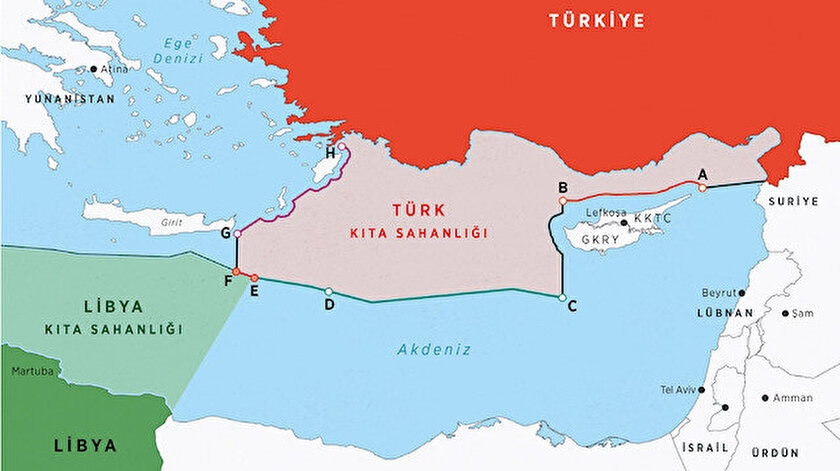
In contrast, the Türkiye–Libya memorandum on the delimitation of maritime jurisdiction areas (signed in 2019, registered with the UN, and recently ratified by the Libyan parliament) rests on the equitable median-line principle between mainland coasts. It is a valid bilateral agreement under international law and carries greater legal weight than unilateral maximalist claims that ignore geography, proportionality, and Türkiye’s long coastline.
Real international law is not about using one small island to dominate an entire sea; it is about equitable solutions that respect the rights of all coastal states.